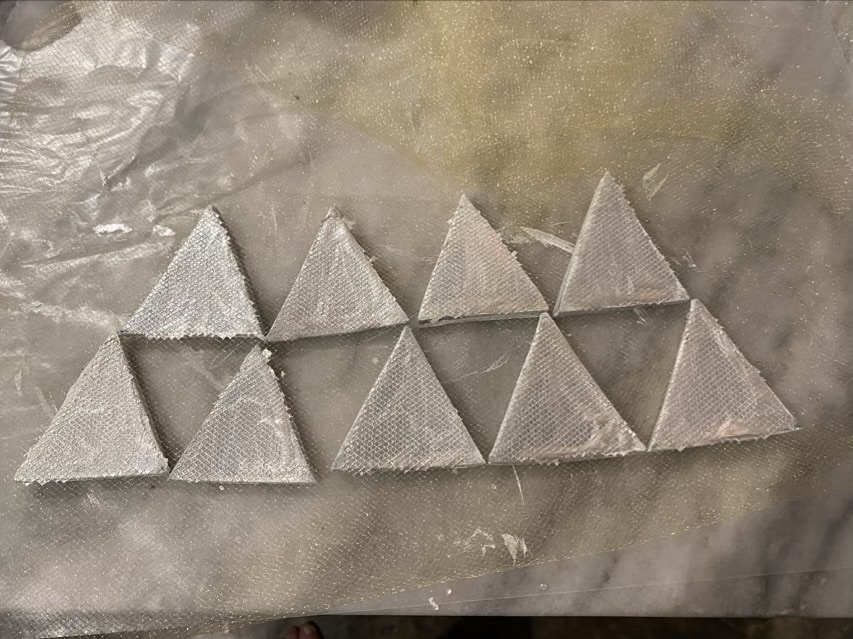
The bottom of the Zonai banner for my eldest’s Zelda Cosplay outfit was a challenge. In the images it looks like triangles hanging from the bottom of the panel. My jewelry cable method wouldn’t work because I would need to crisscross the wires, or bend them. I needed a way to attach them as if they were a whole fabric. Hm. Netting to the rescue. I cut the triangles from EVA foam sheet, painted them with pearlescent acrylic paint, then used the same paint to adhere the triangles to gold nylon netting.
Photo description: back of the triangles with the gold netting on top painted to the shapesPhoto description: gold netting trimmed and sewn to the bottom of the silk panel, back view
Tomorrow I will share pictures of the completed panel!
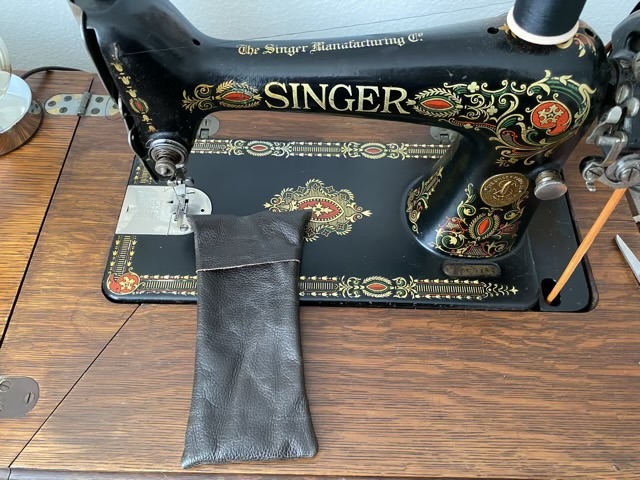
I had the chance to sew some reclaimed leather on my antique Singer 66 treadle sewing machine. This leather is thin and flexible so was easy to sew, I suspect that a modern machine would be able to handle it as well. (There are tales out there that these old machines are great for sewing leather, but the truth is much more complicated.) I did crank the machine by hand rather than risk the speed of the treadle, and I used upholstery thread (and found my purchased bobbins don’t fit, sigh.)
I wanted an envelope style pocket with the flexibility to thread on a belt, or hang from belt loops with carabiners.
Photo description: sewing thin soft leather on a Singer 66 sewing machine Photo description: pouch turned right-side out Photo description: pouch with carabiners through the central hole in the belt pass through
The design needs work. I like the hole in the belt loop and the flexibility it gives, but the flap makes it difficult to get the phone in. I ended up clipping the edges of the flap so it still helps the phone stay put, but is easier to get the phone inside. Not ideal, but experiments will continue.
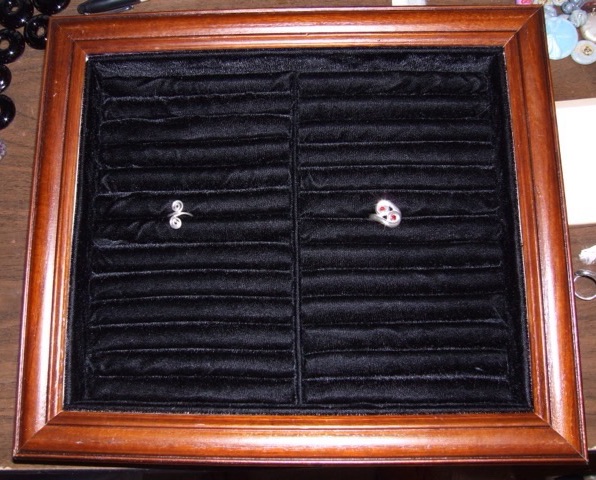
In March 2011 I made a shadow box into a ring holder for my sister. I sewed tubes of velvet and inserted foam rods, covered panels of paper board with velvet to line the sides, and bottom, then glued the velvet cushions tightly in place.
Photo description: velvet lined ring box built in a purchased shadow boxPhoto description: shadow box with frame reinstalled and two new silver rings added, one spiraled wire, the other made from silver clay
I designed it with the idea that it could hang on a wall and still keep the rings in place. I gave it to my sister with two new rings. I checked in with her and it is still in use over 13 years later!
I made an experimental pouch for my phone for when I’m wearing pants with inadequate pockets. It strings onto a belt, has quilted sides and an open top. I made it with two pieces of quilting fabric and polyester batting using my model 66 Singer Treadle machine, including the quilting.
Photo description: quilted phone case with golden ivy on a cream background sitting on the table with of a Singer treadle sewing machine from 1916
I like that I made the pocket for the belt with the seam in the back. I like that it is quilted. I’m not sure how I feel that is it open on top. So far I haven’t dropped the phone out of the pouch, but it would ease my mind if there were a small retention flap in there somehow. Hm. I shall contemplate… I think I have an idea. I’ll make another test case.
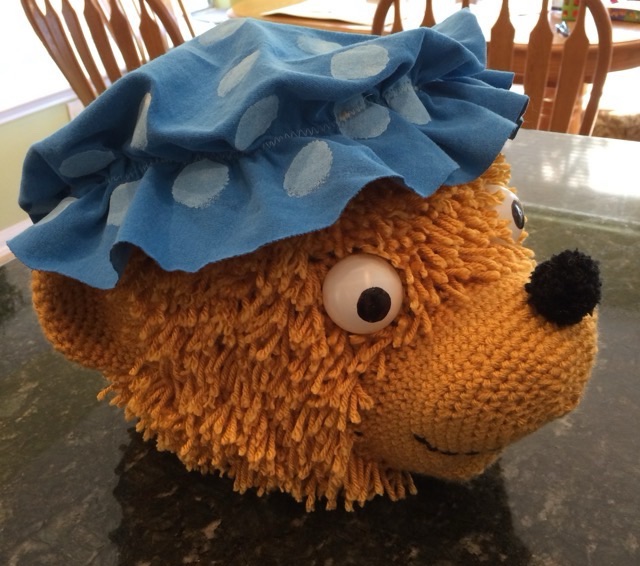
Going back to a pumpkin contest in 2016, here is my hand crafted pumpkin cover of Mama Bear of the Berenstain bears.
Photo description: crocheted bear head with latch hooked “fur”, half ping pong ball eyes, black pom pom nose, and blue mop hat sewn from an old t-shirt hand painted with polka dots
It probably really isn’t in the spirit of pumpkin carving, but at the time we lived in such a humid environment that pumpkins started rotting on day 1. The library would host an uncarved pumpkin contest (paint and glued decorations only) to avoid the rot. I rather like the crocheted cover, it is reusable.