When I am looking at an arrangement for my Barbershop chorus or quartet to sing, I look at the lows and highs for each part. I can’t keep the low note and the high note in my head and make changes while I read the chart, so I made something to help. I printed a piano keyboard, put it on my desk, and used figures to mark notes.
Photo description: printed key board with a small very bright pink 3D printed sheep, and Alex from Minecraft in a square boat
It amuses me that the closest markers I had to hand were a sheep and Minecraft figurine. There are actually several Minecraft figurines tucked around the house. I’m pretty sure there is a golden spider hanging out in a potted plant somewhere.
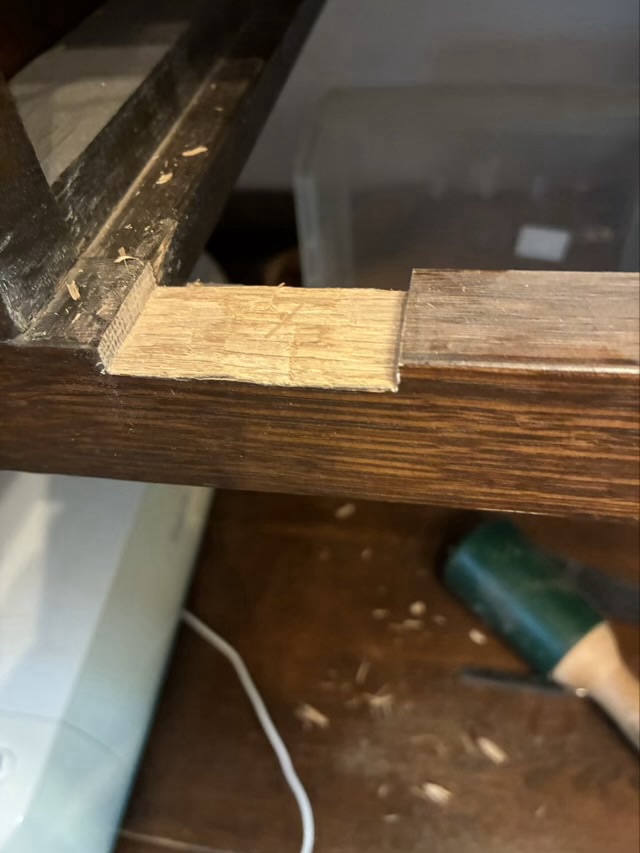
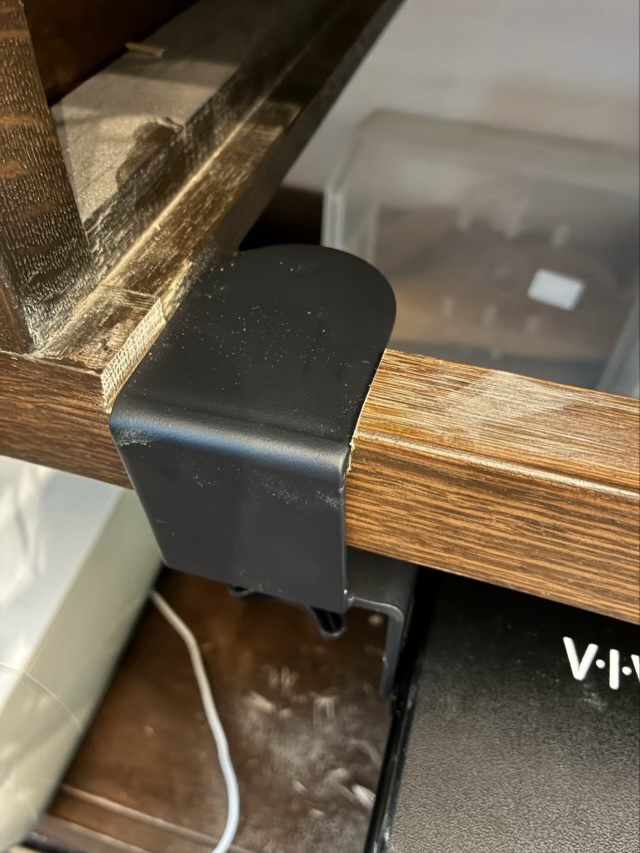
I had the idea to install an under mount sliding keyboard to a buffet table. This poor table has undergone many modifications as its purpose has changed over the years, and not once was it a buffet table. We purchased it new to be a TV stand, then it became a standing desk, then an electronics table, and now it is going back to being a desk. I purchased a clamp-on keyboard tray as there wasn’t much wood under the drawer to mount anything. Unfortunately the clamps wouldn’t fit under the drawer, and there is a gentle curve to the underside support that makes the right side thicker than the left. Hm. So I chiseled out space.
Photo description: dado cut into the frame of a drawer slot
I used a small pull saw to cut across the grain at the ends of the dado, then used a chisel and mallet to remove the wood between the cuts.
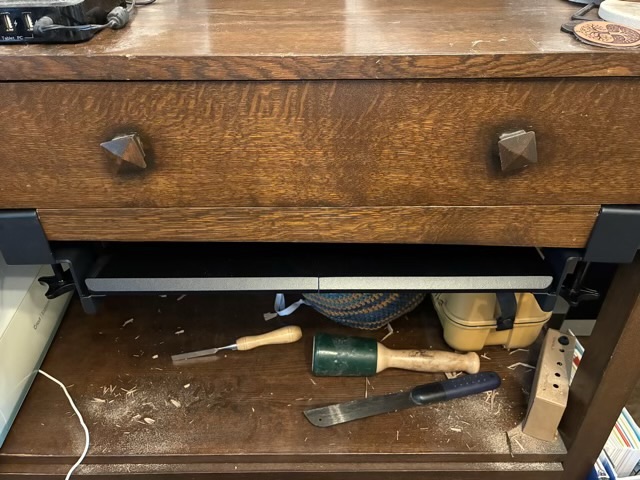
Photo description: clamp for a sliding keyboard in the newly cut dadoPhoto description: installed keyboard tray with drawer back in place (tools and sawdust still need to be cleaned up)
I’m pleased with the modification (which is good because there is no going back now). I can sit and use the keyboard at a comfortable height, or move the keyboard up and stand at the desk if I wish, depending on what I’m doing.
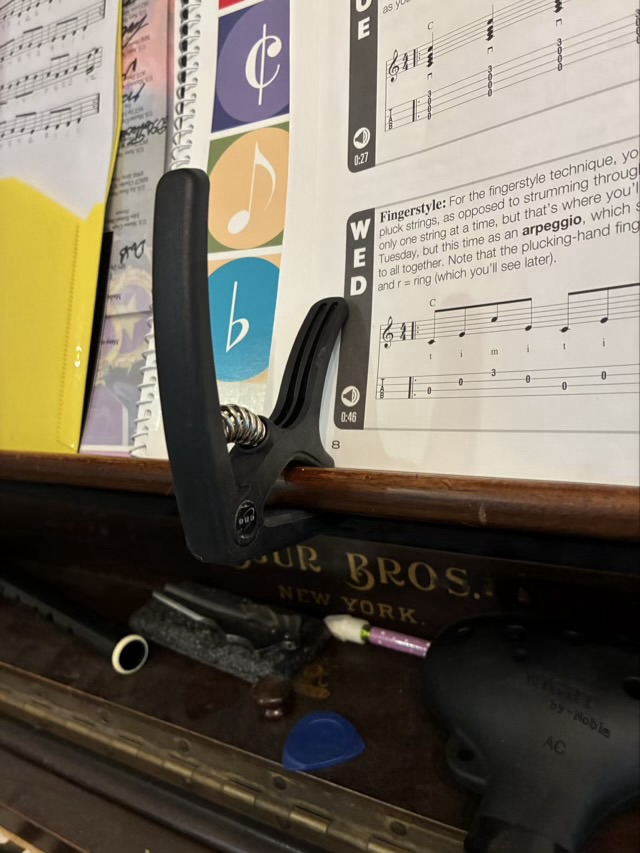
I found out that my ukulele capo works great on my piano as a page holder.
Photo description: capo clipped onto the page shelf on a 1920s upright grand, also in the picture on the shelf below, Irish whistle, jaw harp, and ocarina
Capos are usually used on the neck of a stringed instrument to the change key for a song.
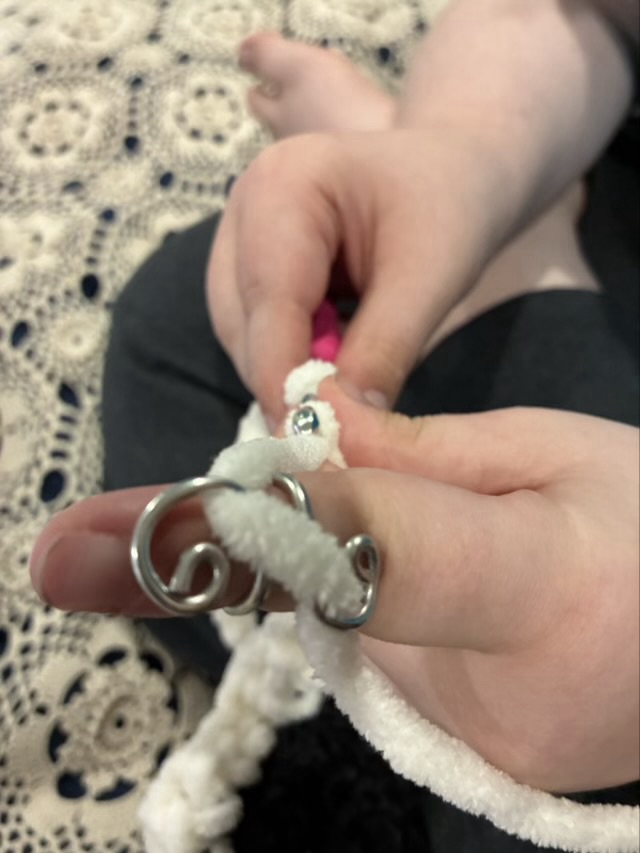
My youngest was wearing her yarn tension ring in such a way that her finger couldn’t bend, which caused pain issues after three hours of crocheting. So we modified the ring to make it smaller and I am encouraging her to wear it so the yarn runs along the back of her finger, and the ring doesn’t interfere with her knuckles. I have also been teaching her hand and wrist stretches to do periodically while she is crafting.
Photo description: yarn tension ring made of 14 gauge aluminum wire with two spirals worn on the index finger with chenille yarn running through the spirals to provide friction
It is a good idea to look at your ergonomics as you craft, especially if you have something you enjoy doing for long stretches of time. As with computer work, there should be scheduled breaks and stretching activities. This will help you enjoy your craft longer both each day and over the years.
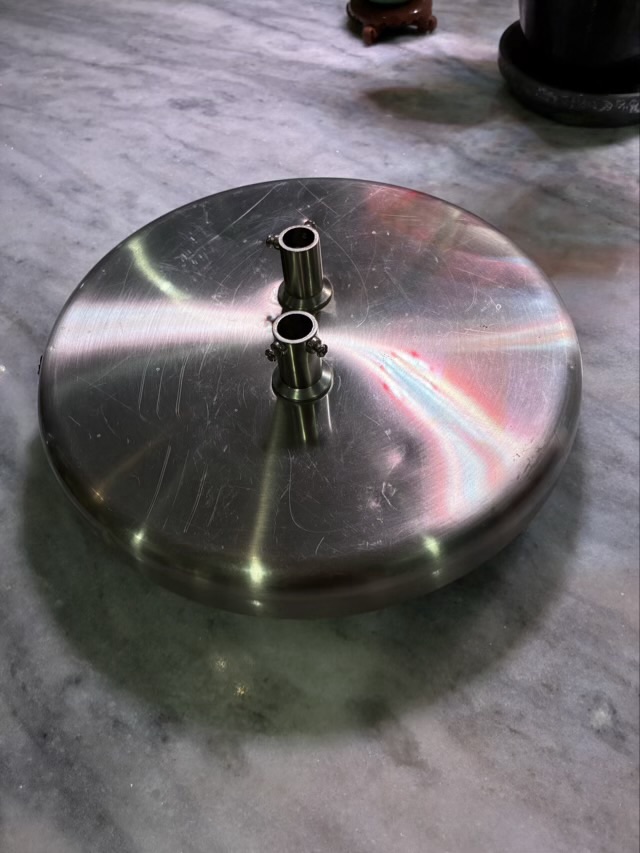
When our halogen light from the nineties finally gave up after 30 years of use, I deconstructed it and couldn’t bring myself to throw out the nice heavy base just yet. When rearranging my plants on the kitchen counter, and moving the grow lamps on stakes, I decided to combine the grow lamps with the old lamp base.
Photo description: old halogen lamp base with poles and wires removed
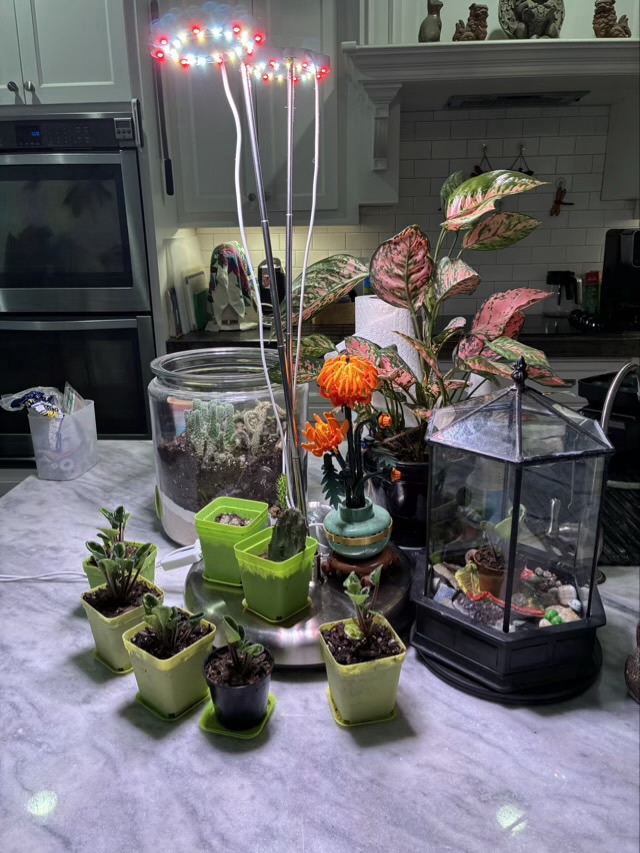
I had to get longer screws to secure the posts of the grow lamps into the stand, but I had some that worked in the garage. The result was quite acceptable.
Photo description: two terrariums and eight potted plants arranged around two grow lamps mounted into an old halogen lamp base