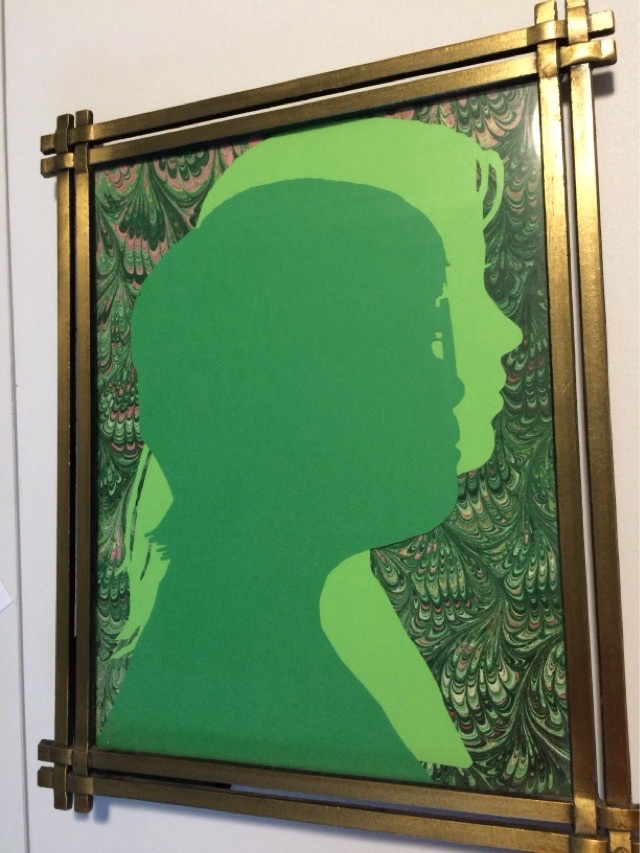
In April of 2016 I took pictures of my kids against the strong light of a window to get an image of their silhouettes. I then digitized the outlines and used my Cricut cutter to cut colored cardstock. My favorite result was where I layered the two cut outs on some beautiful hand marbled paper my sister gave me.
Photo description: silhouettes in dark green and light green on a marbled green background in a brass picture frame
I really admire the people with the skills to cut out silhouettes free hand. I leaned heavily on technology for this setup.
In December 2015 I made my youngest a playing card holder from thin card board and duct tape.
Photo description: card board and “Minion” duct tape card holder sitting on my knees holding thirteen playing cards
The concept is simple, a slot made from two folds of card board, the back fold slightly higher than the front, then a wide base so the cards stay steady. The duct tape holds it all together. I left the card board exposed where the cards are inserted, so the cards will slide in and out easily.
Photo description: side view of the same card holder ten years later, looking a little worn, but still perfectly functional
My youngest can use this to play Uno, even when the hand has nearly thirty cards. I am amazed that it is still working well ten years after I made it, and that it gets frequent use.
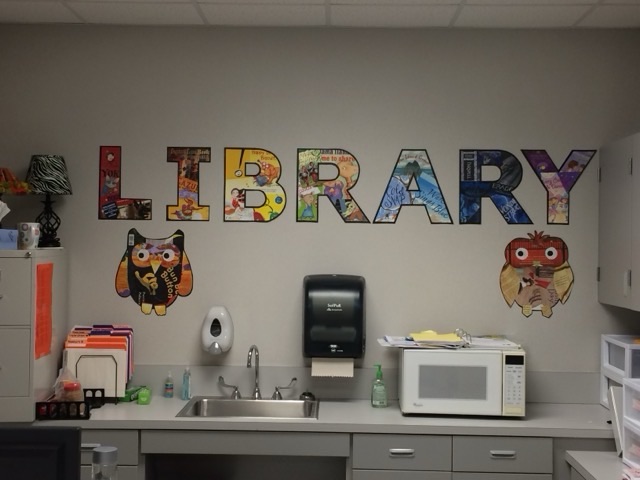
In October 2015 I was volunteering at my kids’ elementary school library. They had stacks of old dust covers for books and we had the idea of making a library sign using the colorful printed paper. I selected portions of book covers with coordinating colors and made each letter of the word “library” a different color of the rainbow.
Photo description: large paper based letters spelling “library” and two cartoon owls made of book dust covers and chip board hanging on the wall of the library officePhoto description: closeup of the letter “R” showing how many individual book covers were used for their colors, and outlined with black chip board
I did write on the back of each letter the names of the books that went into making up the color. The owls were made to coordinate with a backdrop of a collection of owls that was already displayed at the library.
It hurts sometimes. I’ve been struggling with my printer for longer than I care to admit, trying to maximize paper use and minimize waste. I try lying out a print double sided so that I can then cut them apart, but the printer doesn’t print consistently and the double sided is off set at best, or unusable.
After a particularly frustrating waste of 20 sheets of card stock, I walked away from the problem for a while.
Photo description: using a paper cutter to cut double sided 3.75×5.75 inch cards, card on the left is useable, but offset so that the text is right on the edge.
I don’t know why I’ve never considered cutting the card stock first. First. Then feeding it into the printer, which can handle small stock. I tested it the next morning, and had a 95% success rate. Much better than the 20% success rate of printing first. Bonus, I can get cut three 3.7×5.75 inch cards from a single letter sized piece of card stock. That is one extra per sheet than if I printed (which with my printing tolerances would be impossible to achieve).
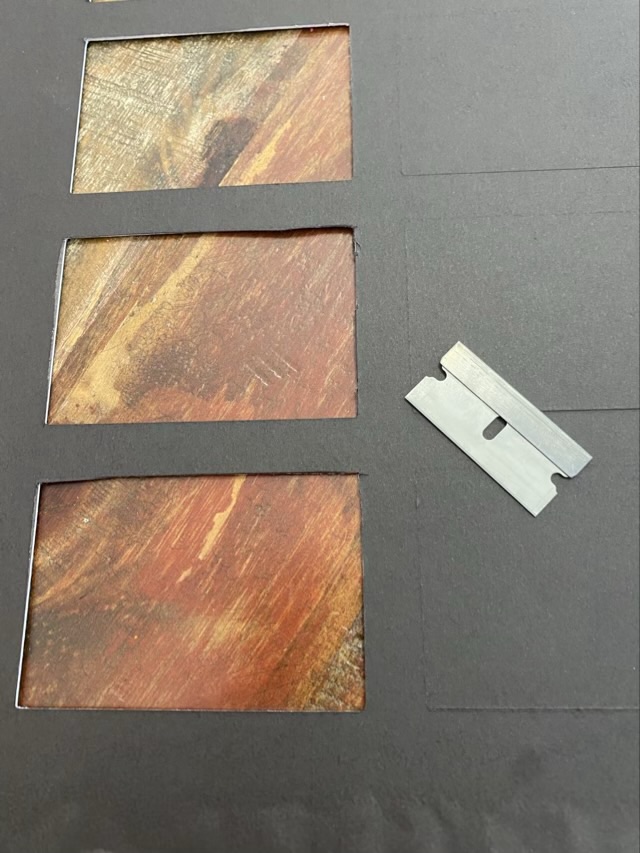
I took my Cricut cutter to extremes to cut a photo mat. The material is a little thicker than recommended. I used the deep cut blade, a 12×24 inch mat, more pressure, and a setting that traced the pattern twice. It didn’t quite get all the way through the mat board, so I used a safety razor blade to finish the cut.
Photo description: using a safety razor blade to finish cuts in mat board, the matboard cover lifted a bit when removed from the Cricut mat, but it is on the back
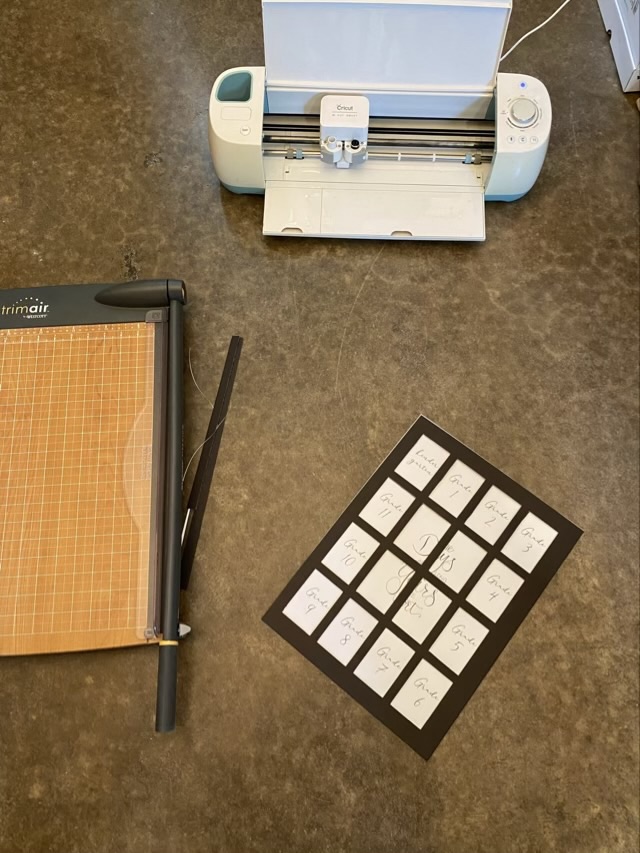
The resulting mat has spaces for 16 2×3 inch photos for my youngest’s school photos. All the commercially available mats only had 13 spaces, kindergarten through 12th. I needed spaces for preschool too. I bought mats larger than the frame, which allowed me to trim down the outside with my paper cutter and make sure the Cricut cut rectangles were centered.
Photo description: finished mat over the original 13 space backing to show the new divisions, my paper cutter and my Cricut on the floor because that is the only space that can accommodate a 24 inch cutting mat (not pictured)