Looking up into the trees is one of my favorite things. Balance is important not only physically, but mentally, socially and personally as well. It seemed appropriate to combine the words with my photo. I put this one together in Adobe Illustrator so I could put the word on a path (I like words on a path better than warping text, for most applications.)
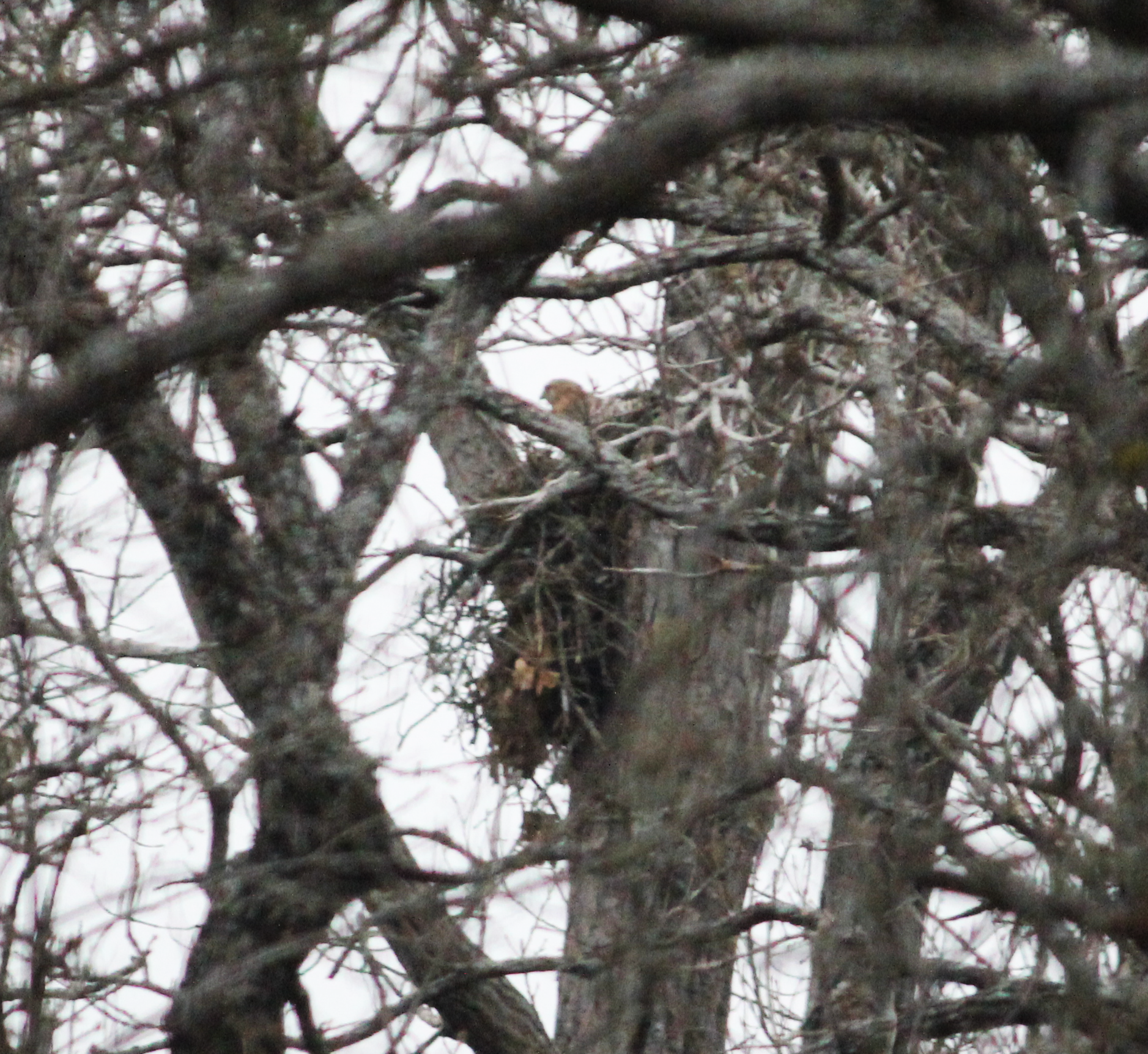
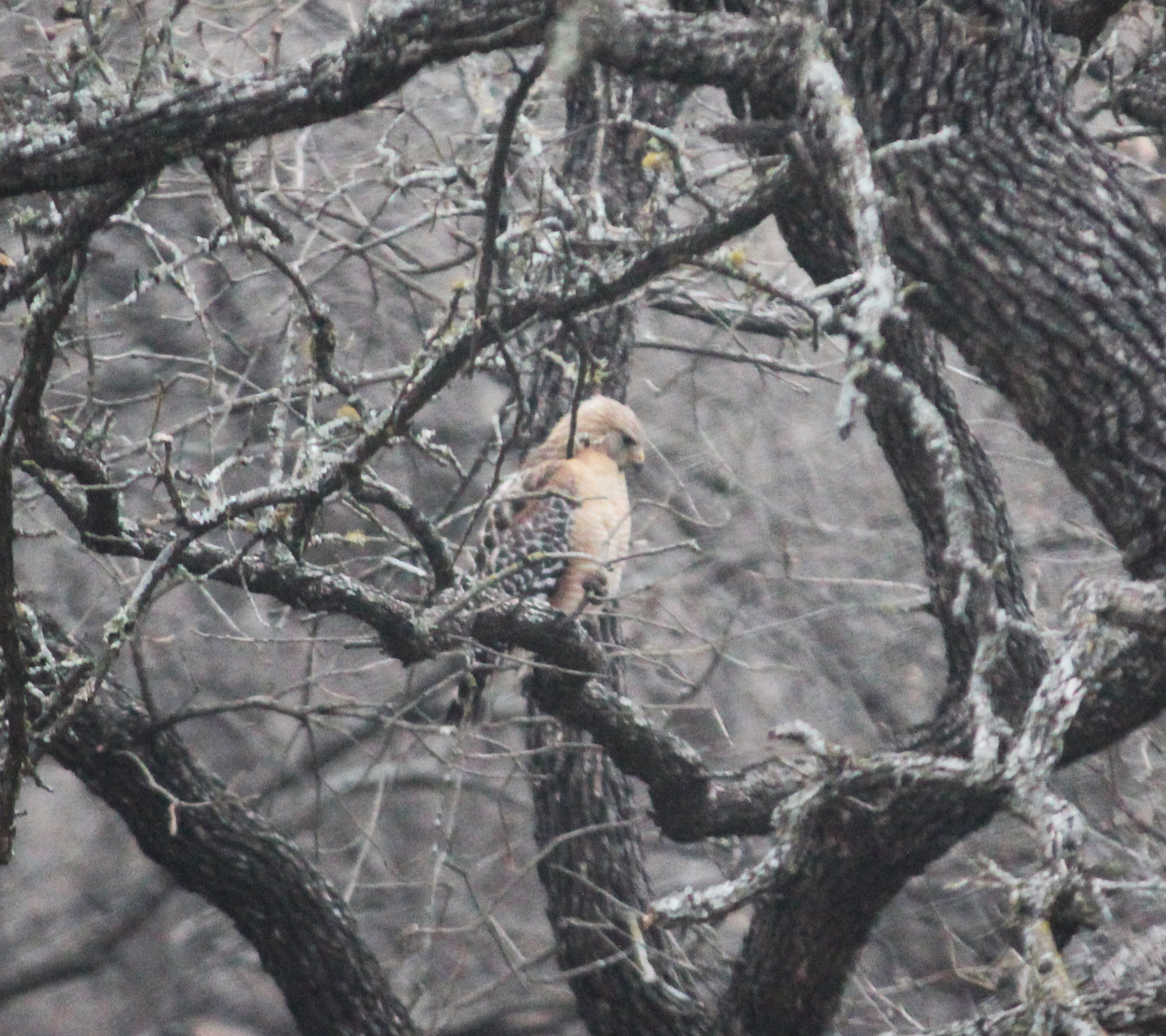
The hawks in our backyard have been quite noisy. It took awhile, but I finally found their nest in the tallest tree on the lot! Rather exciting to think that there is a possibility of baby hawks. Especially once we have the coop and runs secure from hawks.
One step at a time. Baby steps. It’s a big step. Stepping stones.
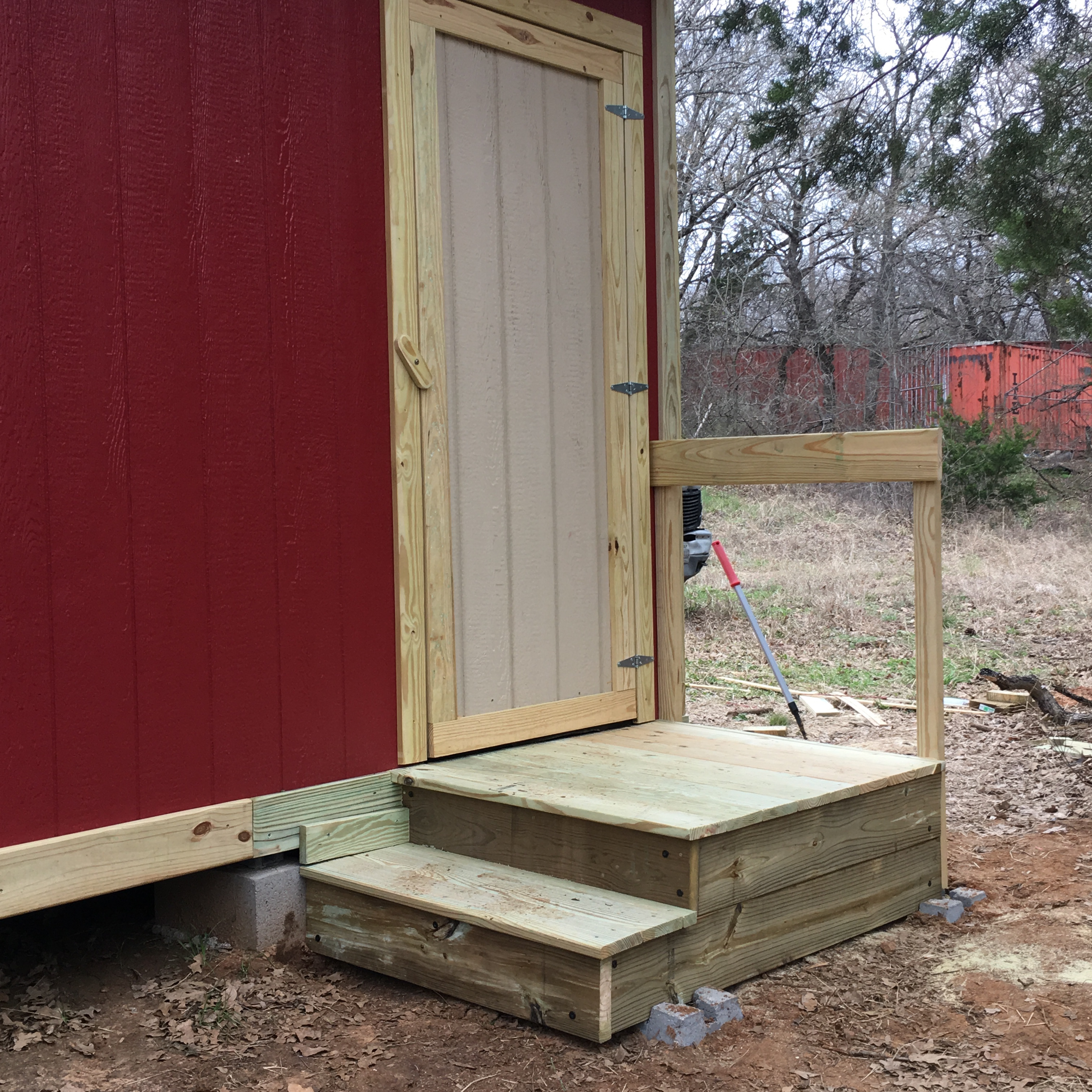
But in this case, it is steps for the back door of the coop! Dad and I made a step and a small porch out of treated lumber, with a rail to keep the door from going open too far (my husband’s good idea). They came out well! And when it started to sprinkle (darn it weather!), we put away the electric tools, got out the hand tools, and kept working under the front overhang. Yay!
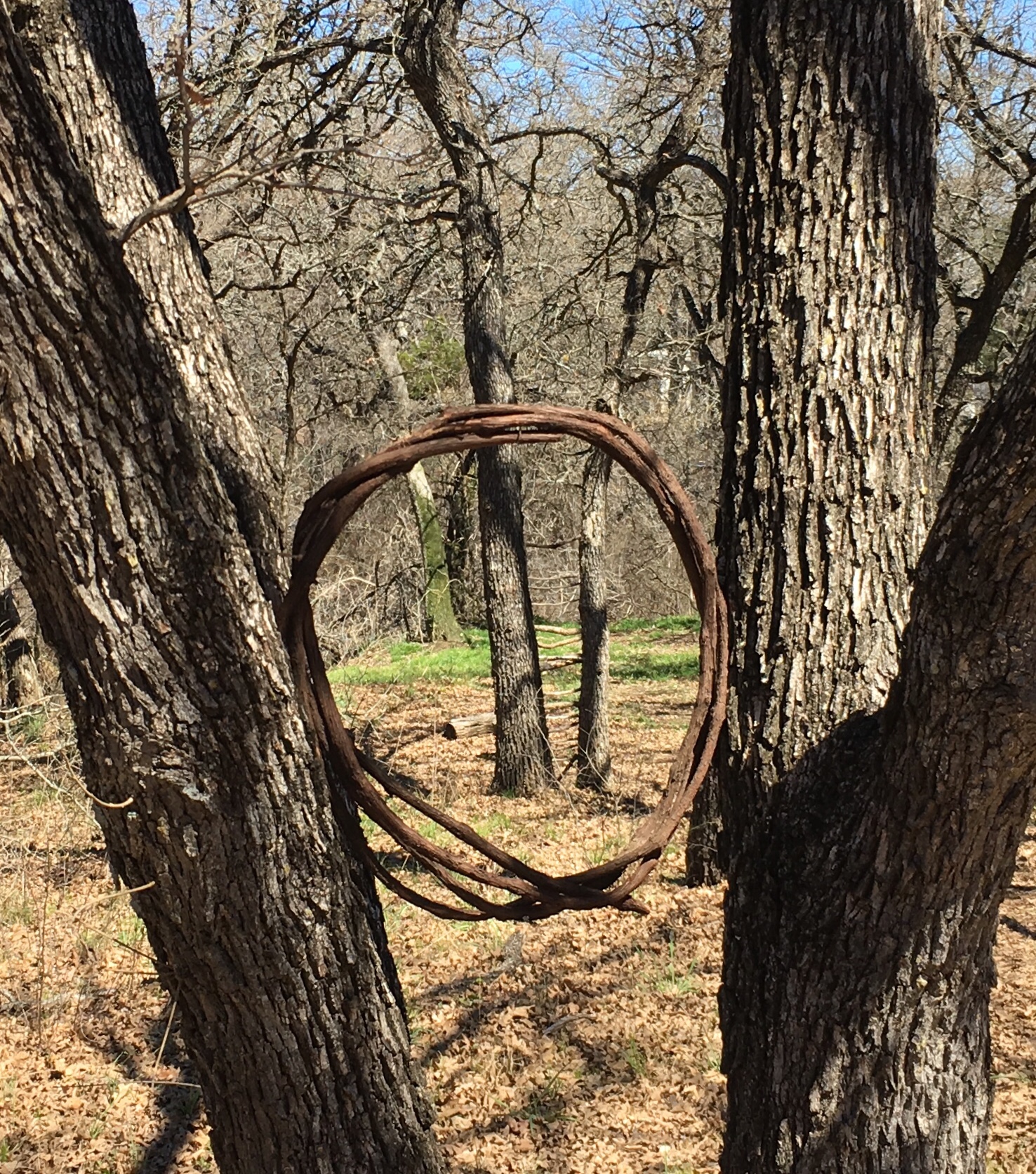
My eldest and I started a new land art project. We took a length of grapevine and twisted it into a wreath and wedged it between two trees. After I took the picture we started to weave bits of twigs and grasses into the wreath. We’ll take more pictures as the art develops.
First land art as seen through the second land art
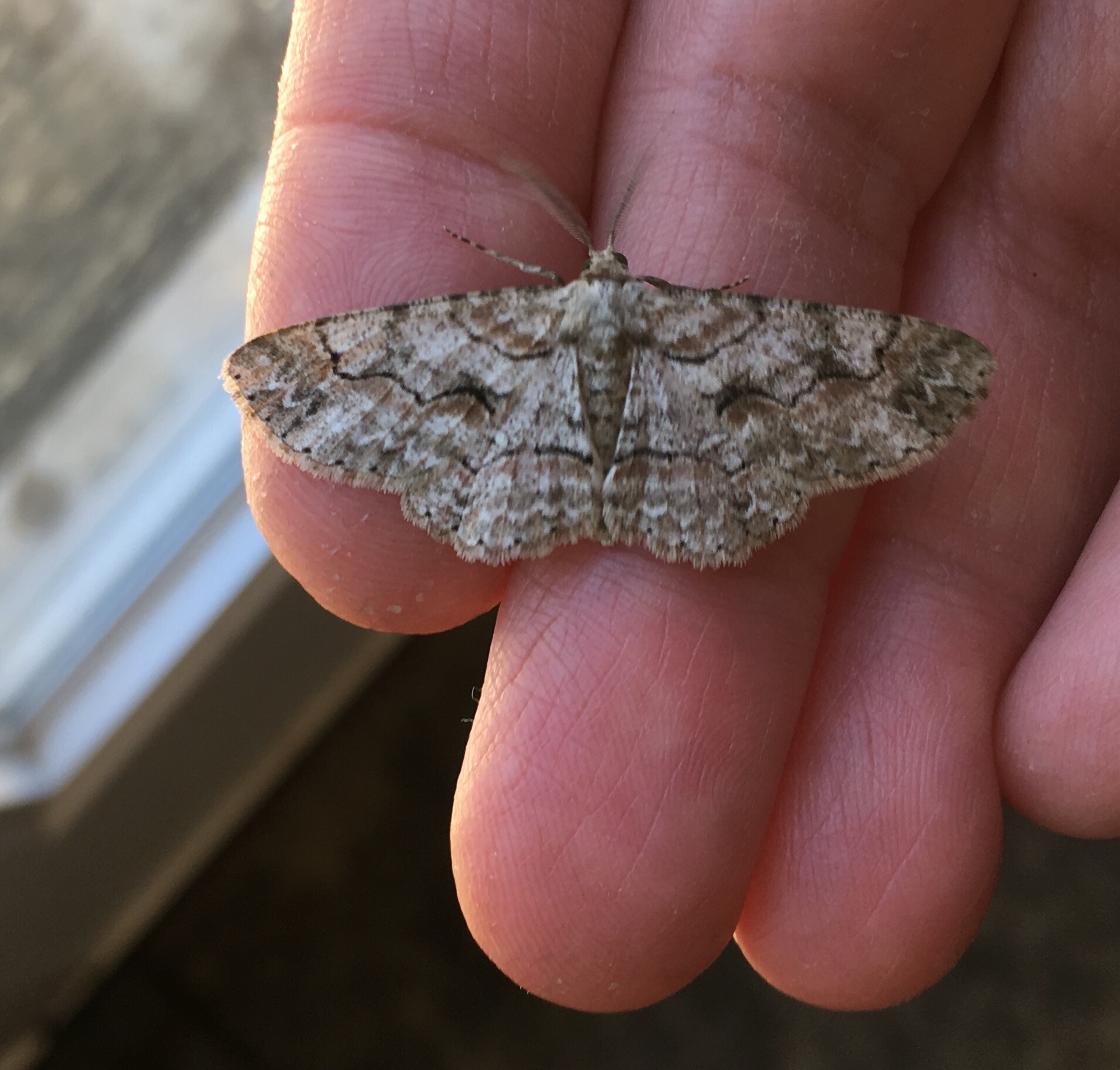
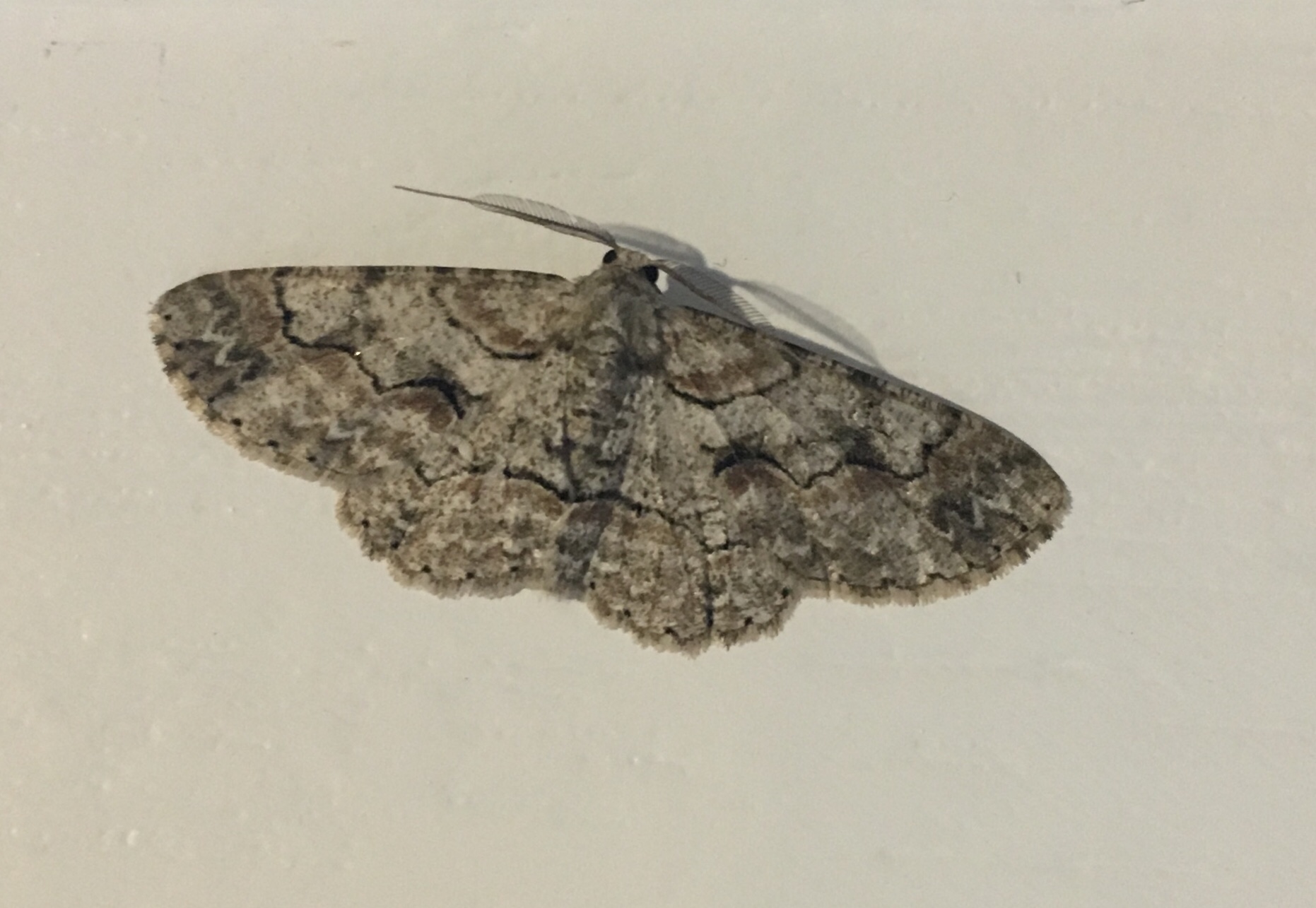
We have had a nice warm up, and our first moth in the house in months. I used the iNaturalist app to identify it. I do like this app, and as more people add observations, the better it gets. The first hit on this image was a moth observed mostly in Europe, which was not quite right. But down the list I found an image that matched with a corresponding observed area.
The Brown-shaded Gray Moth’s scientific name is Anacamptodes defectaria. My sister, a PhD in ancient history, tells me that “Anacampo” in Greek means “return”, and “Defectus” in Latin means “falling away”. According to Wikipedia, it does take wing February to November, and the larva feed on oak, poplar, sweet cherry and willow (we have many oak trees). It is also very difficult to find these moths when they are perched on tree bark.
Now I have to admit, I am guessing the species of this moth. I certainly didn’t closely examine the genitalia of the moth as suggested by this article from 1966 as the most definitive way to classify Anacamptodes. (Thank you again to my sister for unearthing the article.)
How do I personally feel about moths? I love the lacy pattern on the wings. Quite lovely.