More African violets!

I told my plant friend (who is also a singing friend) how I’ve been researching the African violets and how well the ones I have are doing, and she sent me home with a new African violet and two leaves from a miniature African violet! The collection grows!
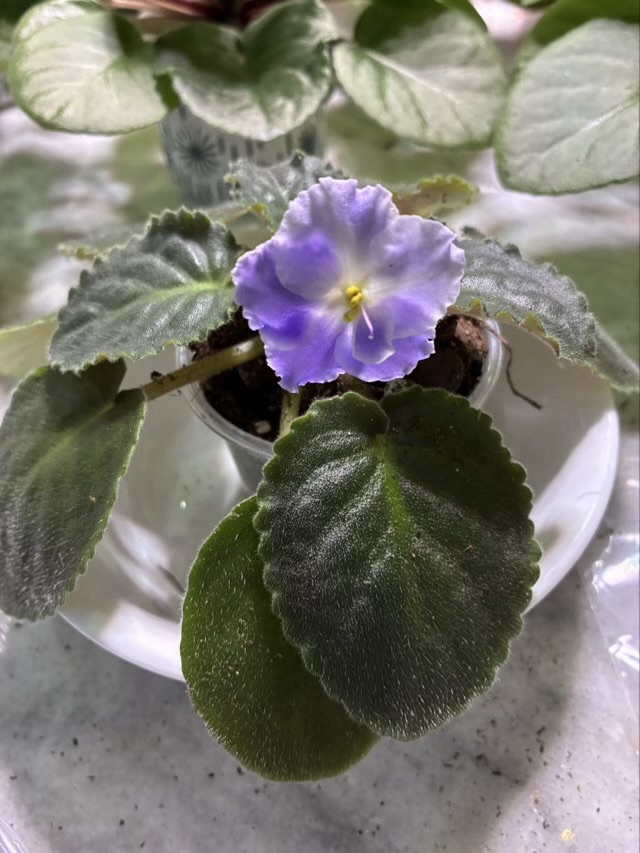
Photo description: African violet with medium dark green leaves and a frilled bloom with purple and white coloration

I also found out that once a plant has lost its identity and name it is called a NOID, or No-ID. There are so many named varieties (16,000 according to the African Violet Society of America FAQ) and African Violets bloom differently under different conditions, which makes identification of a named variety impossible by visual means. A hybrid plant is named if it comes from a traceable named source. Most big box store African violets are not named, according to the AVSA. So I will be learning the descriptive terms and use those to describe my violets. I like that there are so many varieties, and they are growing well for me.
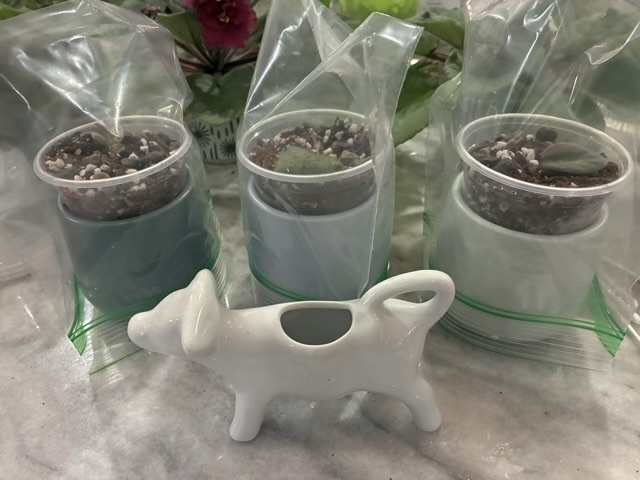
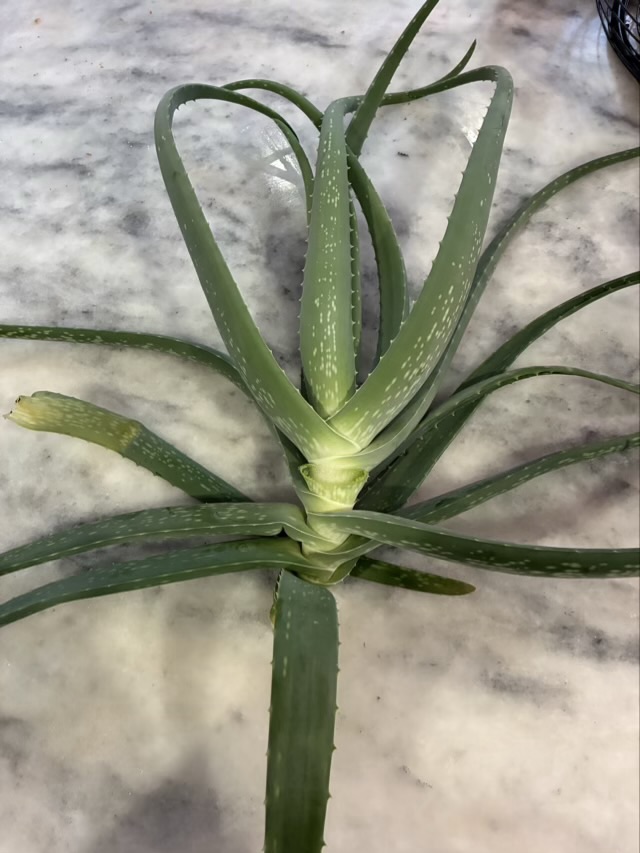
Photo description: tiny makeshift greenhouses made from ceramics cups with plastic liners filled with African violet soil and each pot has a cut leaf from a plant for propagation purposes, small cow creamer being used to carefully apply moisture

Aloe vera

I am rearranging the plants in my home (to make room for more African violets), and my aloe plant had become quite tall and rangy, but had new growth underneath. I cut off the larger plant and processed it with the intent of collecting the fiber.

Photo description: large aloe vera plant cut at the base
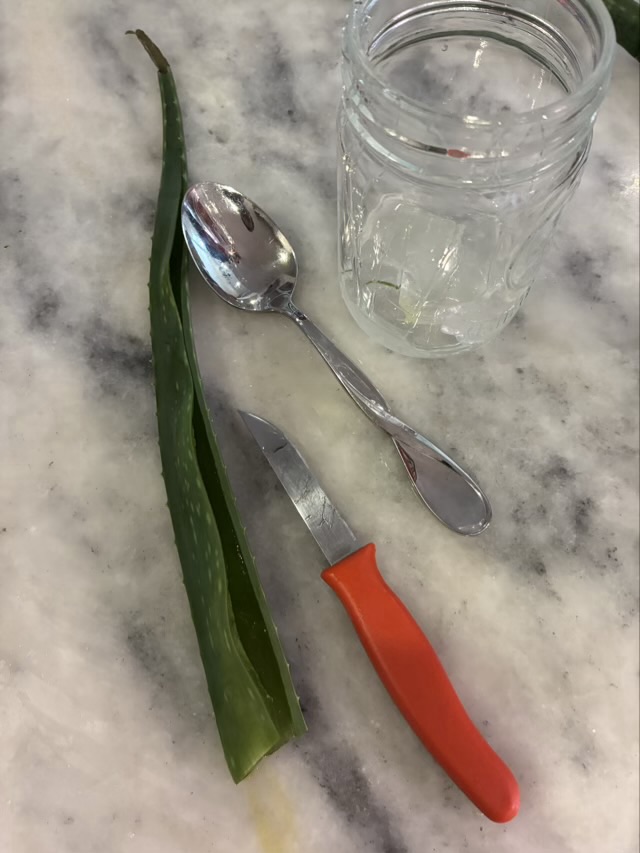
Photo description: removing the gel by slicing the leaf along the inside of one spiky ridge, then using a spoon to scrape the gel off the skin

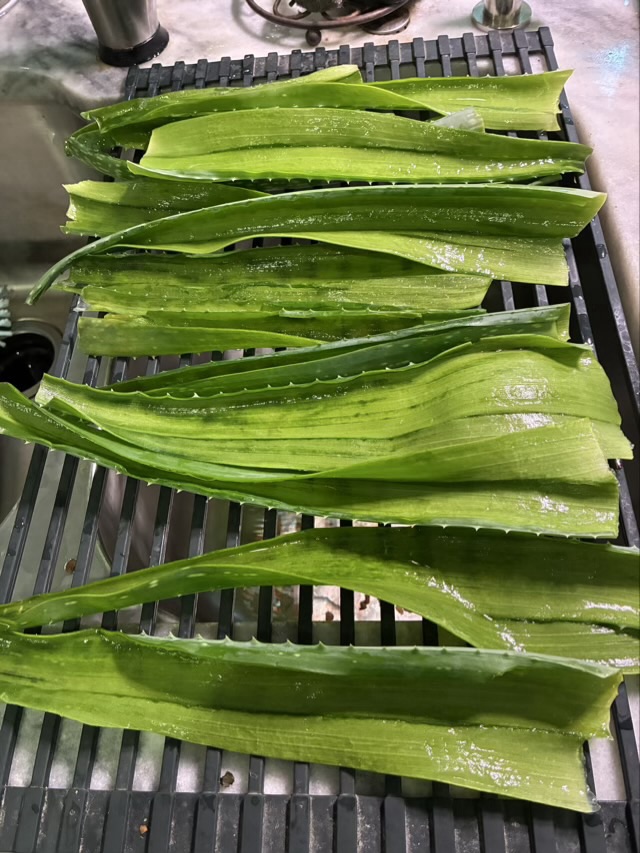
The gel scraped from the inside of the leaf is very viscous. I did save the clearest sections from the center in a mason jar, but the rest I wiped from the counter with a dry paper towel because water just makes it more slimy. I rinsed the skins and will let them dry before trying to comb out the fiber.

Photo description: collection of scraped and rinsed aloe leaf skins

I do love aloe vera gel for sunburned skin, and I read that if you rinse the gel well it is edible. Aloe latex is a substance that is next to the outer layer and can cause an unpleasant laxative effect if too much is ingested. I can’t even get past the idea of the feel of the slime in my mouth, so I think I will stick to topical applications.

African violet bloom

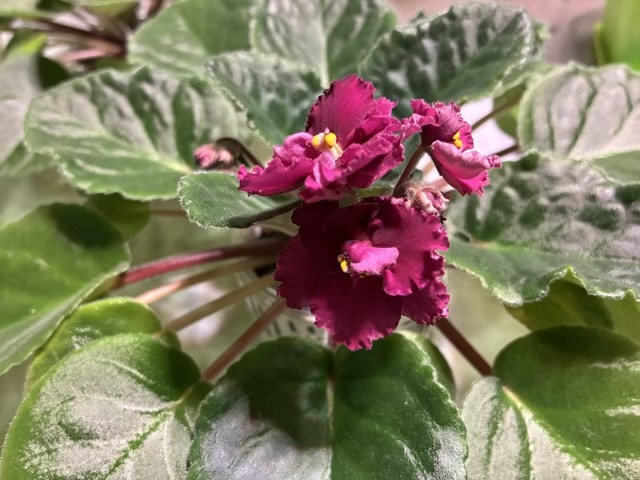
My African violet bloomed! My friend gifted me a mother leaf, which gave rise to six plants, which I put in individual lined pots that I could lift to put water in the bottom. I have been adding AV fertilizer once a month. I have discovered the African Violet Society of America website, and scrolled through their gallery of 3,000 varieties. The maroon color is really quite lovely!

Photo description: first blooms from my African violet showing a dark red semi-double pansy-type frilled edge flower, and medium green plain leaves

This could be a new rabbit hole…

Jewel orchid bloom

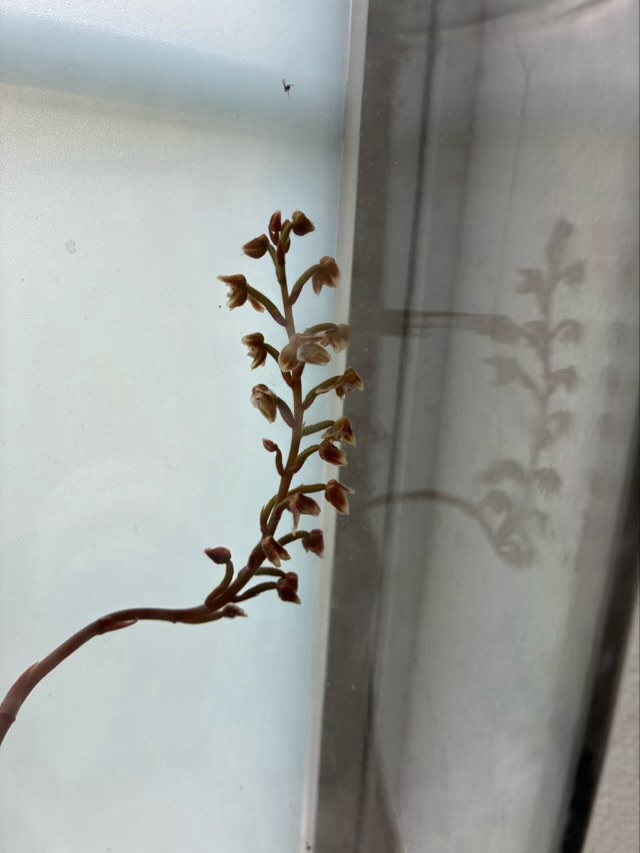
Here is a closeup of my jewel orchid’s bloom.

Photo description: photo taken through the clear acrylic cylinder so slightly diffuse of a jewel orchid bloom, with the reflection off the cylinder keeping in the moisture

It is not as showy as other orchids, but I’m still excited that I found a setup in which it will bloom. It is in a small mason jar full of live moss, and capped with a large clear acrylic upside-down vase, in a southern facing frosted bathroom window. I add water maybe once a month.

I didn’t hear it

We had a large tree fall in the back woods sometime during the last storms. We didn’t hear it fall, but it must have made a great tearing sound as it cracked and then dragged down a considerable amount of vegetative canopy.

Photo description: tree broken leaving about a 5 foot stump

This was a favorite hiding spot for the outside cats, and once the tree was down I could see why: there was a lovely little cavern in the trunk.

Photo description: cat hiding hole in the fallen part of the tree

The hollow trunk led all the way to the top of the tree, giving an escape route to any critter resting there.

The top branches fell across one of my paths, so I’ll gave to trim that back, but I’ll wait until fall when it is cooler and the chiggers aren’t active. Other than freeing my path, I’ll leave the rest to nature, which is the beauty of the back woods.

Speaking of, this is the remains of the woodpile that the builders left some 10 years ago when they cleared land for the house.

Photo description: old wood pile

Last Thursday I posted a picture of the pile from 8 years ago when it was well above cat height. There is not much left to hide in now.