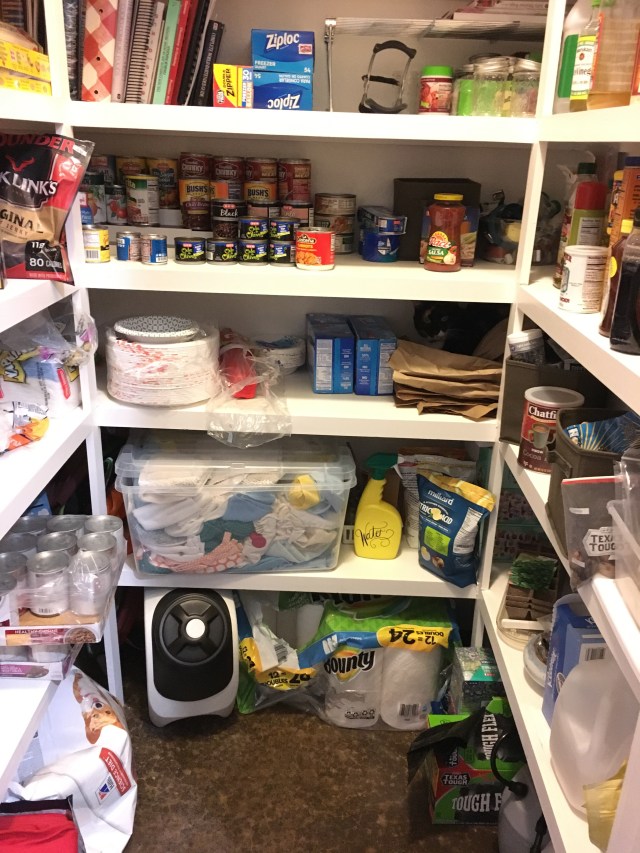
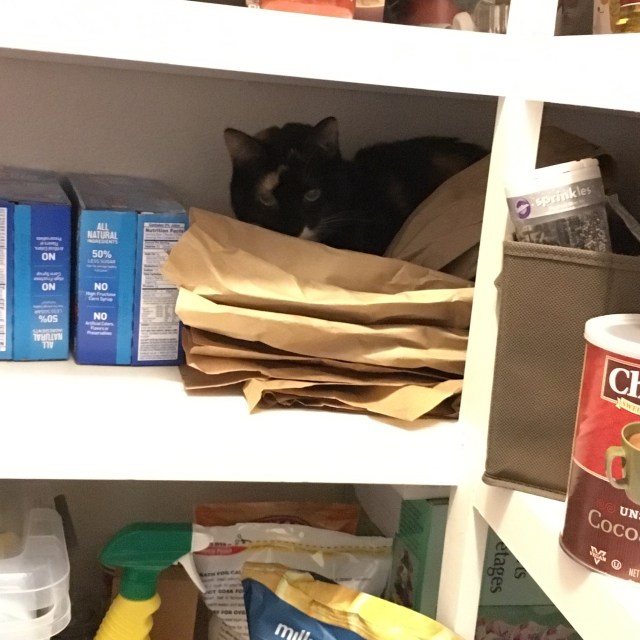
One of these things is not like the others. Can you spot the anomaly? Yes, I took a picture of my pantry. I cleaned and organized it recently, and although it is not magazine worthy, it is functional. It is the lurker that was picture worthy. Here, let me help you…
Cat in the pantry
Does that help? Silly cat found the stash of paper I’m saving for the chicks. We don’t get the newspaper, so I have been saving bags and packaging paper. Now it all smells like cat. But I’ve read that chickens don’t have a great sense of smell. Probably for the best.
She would get away with it too, but the paper crinkles fiercely when she settles down, so she gets caught and shooed out.
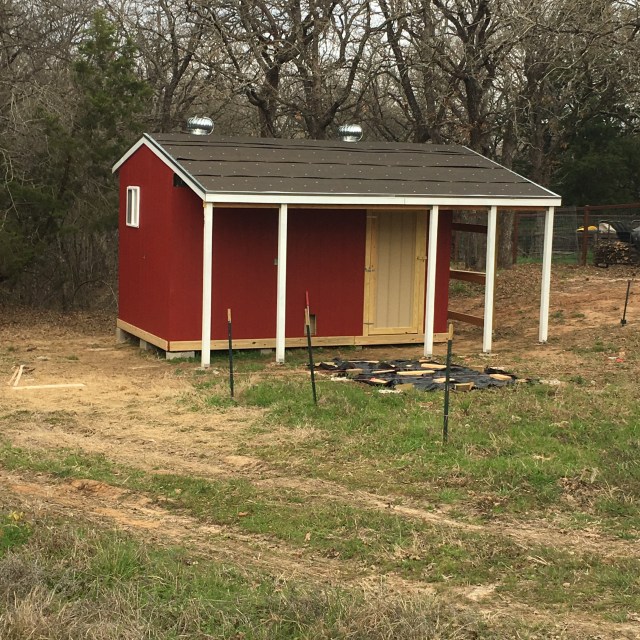
My folks are in town visiting and while the kids have been at school, my Dad and I have been working on the chicken coop. We now have doors! The weather will have to stay nice longer to get the doors and trim painted, but I’m so very exited that we are dried in!
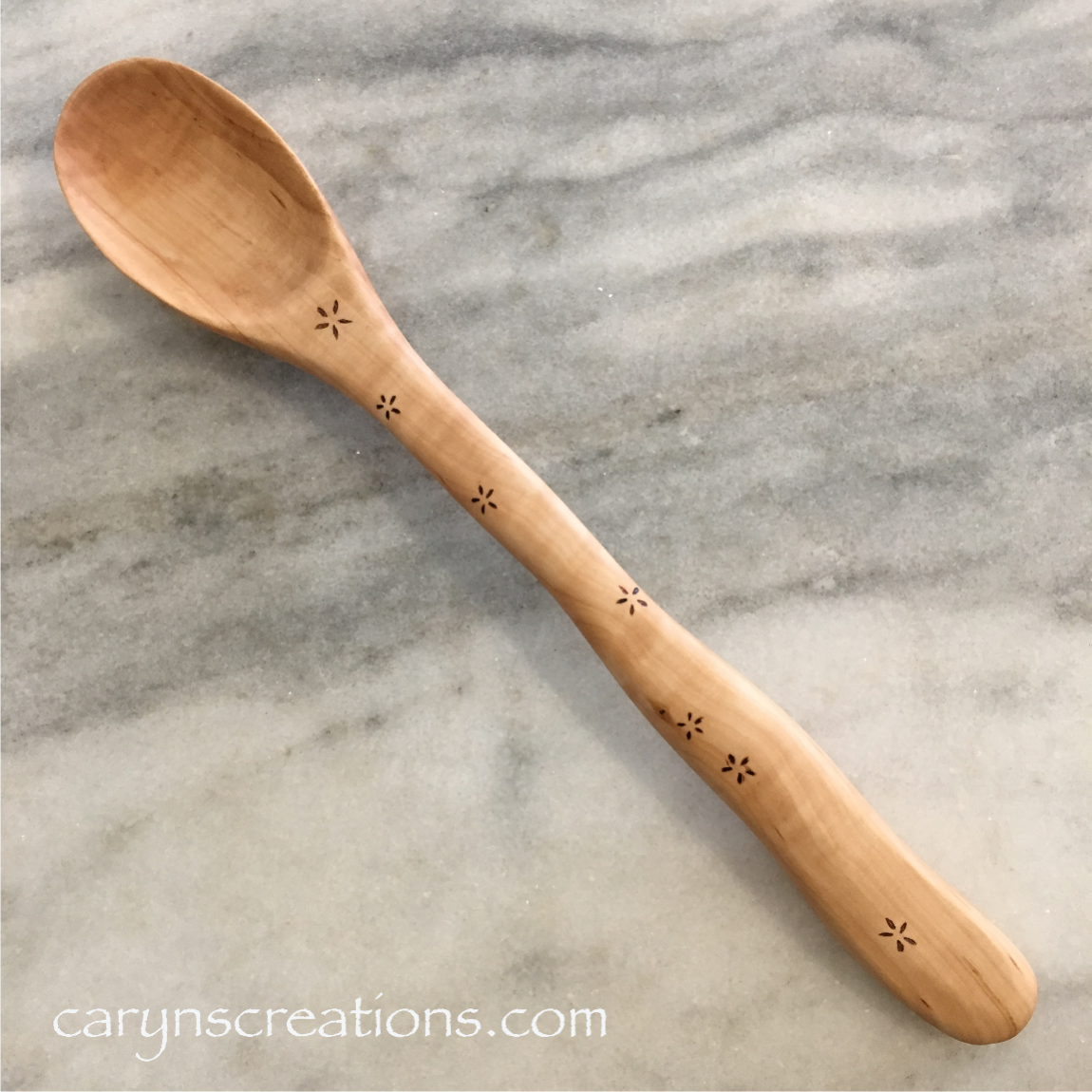
My Dad recently had a birthday, and as he has suggested that I get back into wood working, I decided to make him a spoon.
Hand carved apple wood spoon
When I was younger I really enjoyed wood working and carving. Then kids came along and when they were young I needed to keep an eye on them, so I couldn’t disappear into the garage for hours. And bringing sharp objects into the house was a safety hazard (not to mention that the idea of having to clean up saw dust and wood chips inside unthinkable.) So I turned to more child-watching friendly options for creativity: crochet, jewelry making, and other things that could easily and quickly be put down to figure out why it was suddenly quiet upstairs.
The kids have been in school for many years now, but somehow I didn’t really get back into wood working. Turns out I missed it. Picking out a piece of wood and taking chisel and bandsaw and sander to it to turn it into something functional and beautiful is incredibly satisfying. I haven’t tried spoons before, but I will again! I took progress photos to share:
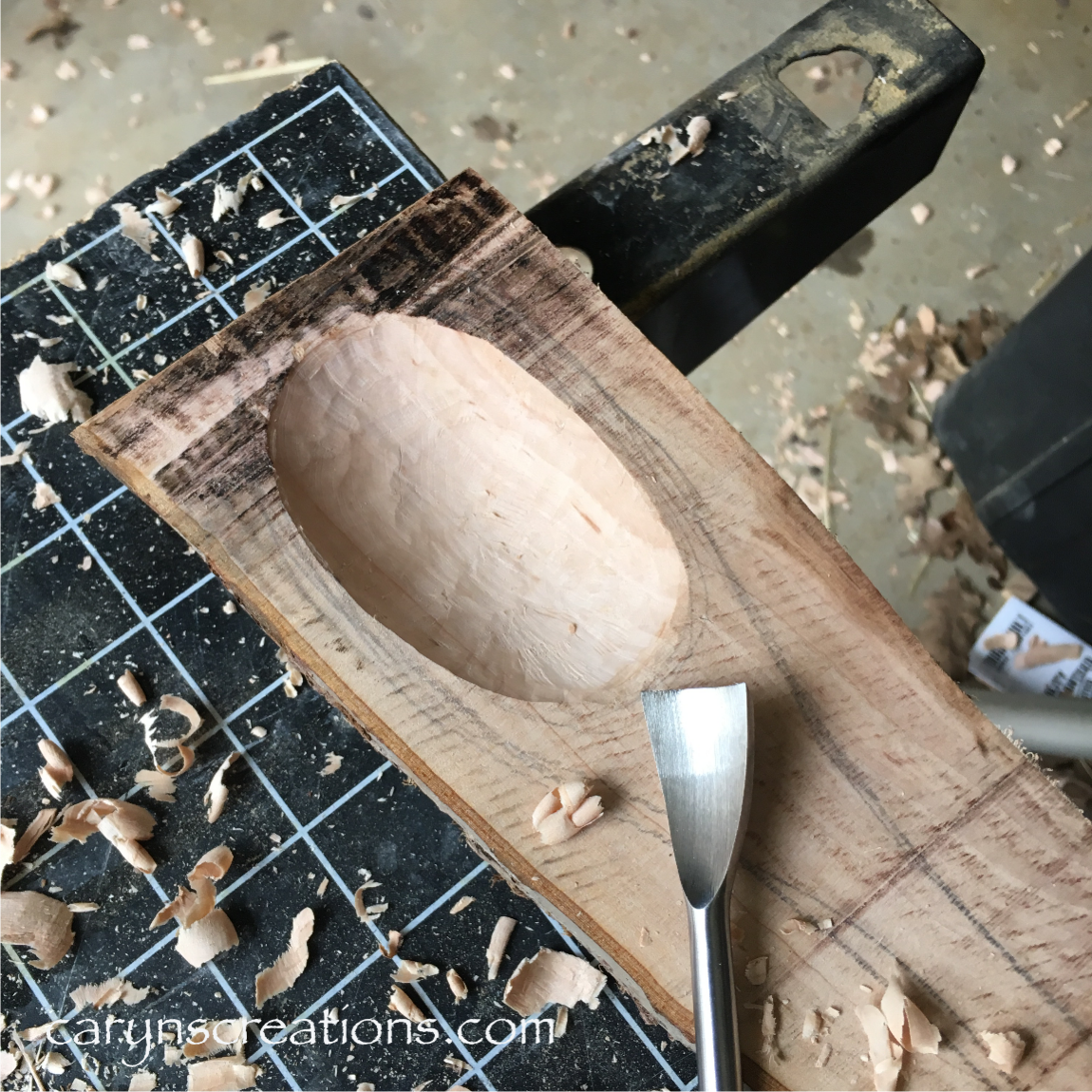
I cut a piece of applewood and used a fishtail gouge to shape the bowl of the spoon
This is after I used the bandsaw to cut away most of the excess. I wanted a flowing wavy shape to the spoon.
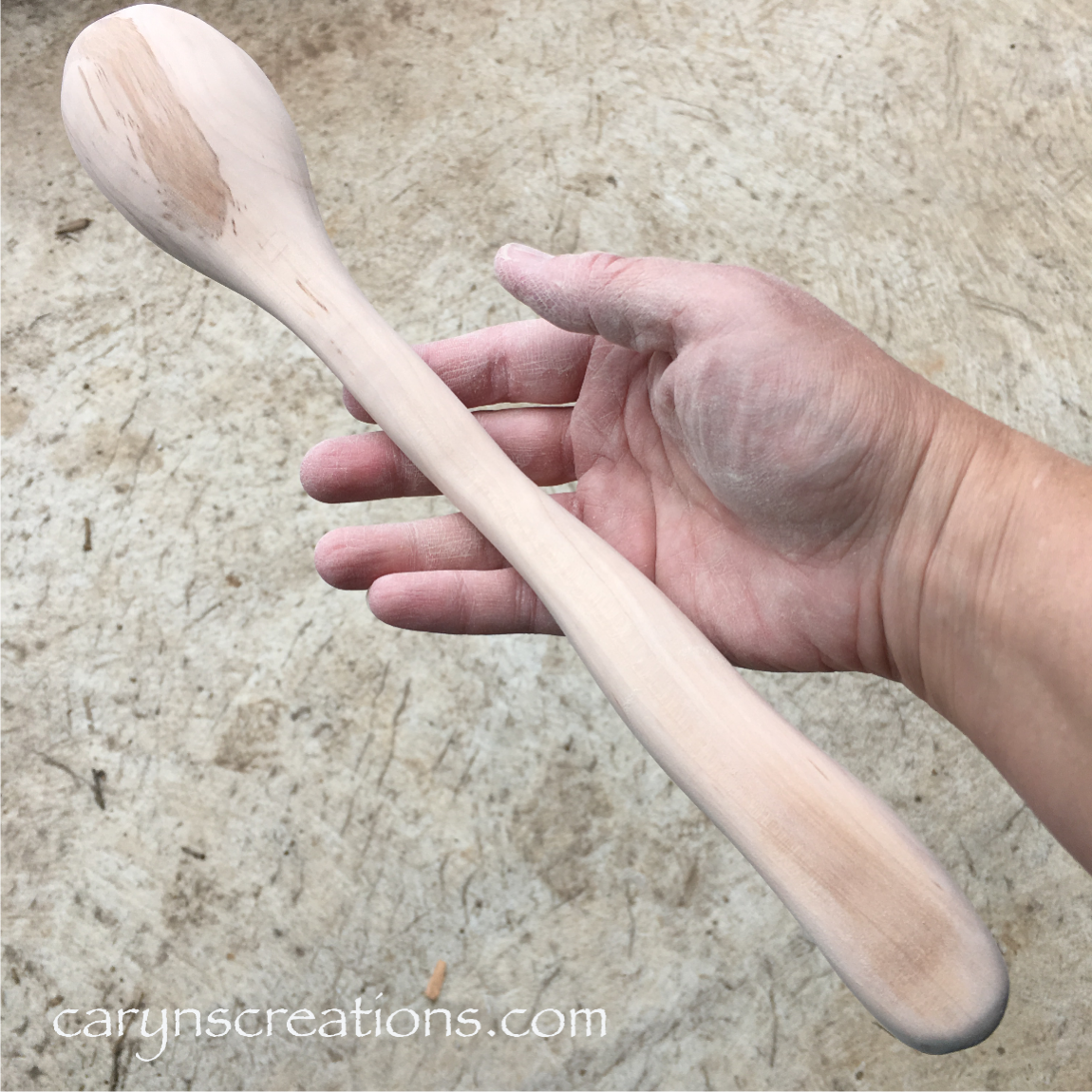
The back of the spoon after some time (and a few belts) on the belt sander.
Front of spoon after using the belt sander and following up with hand sanding.
After sanding down with progressively finer grit sand paper, I wet the spoon with water. The water helps raise the tiny splinters in the wood, and also gives you a good idea of what the final color will be.
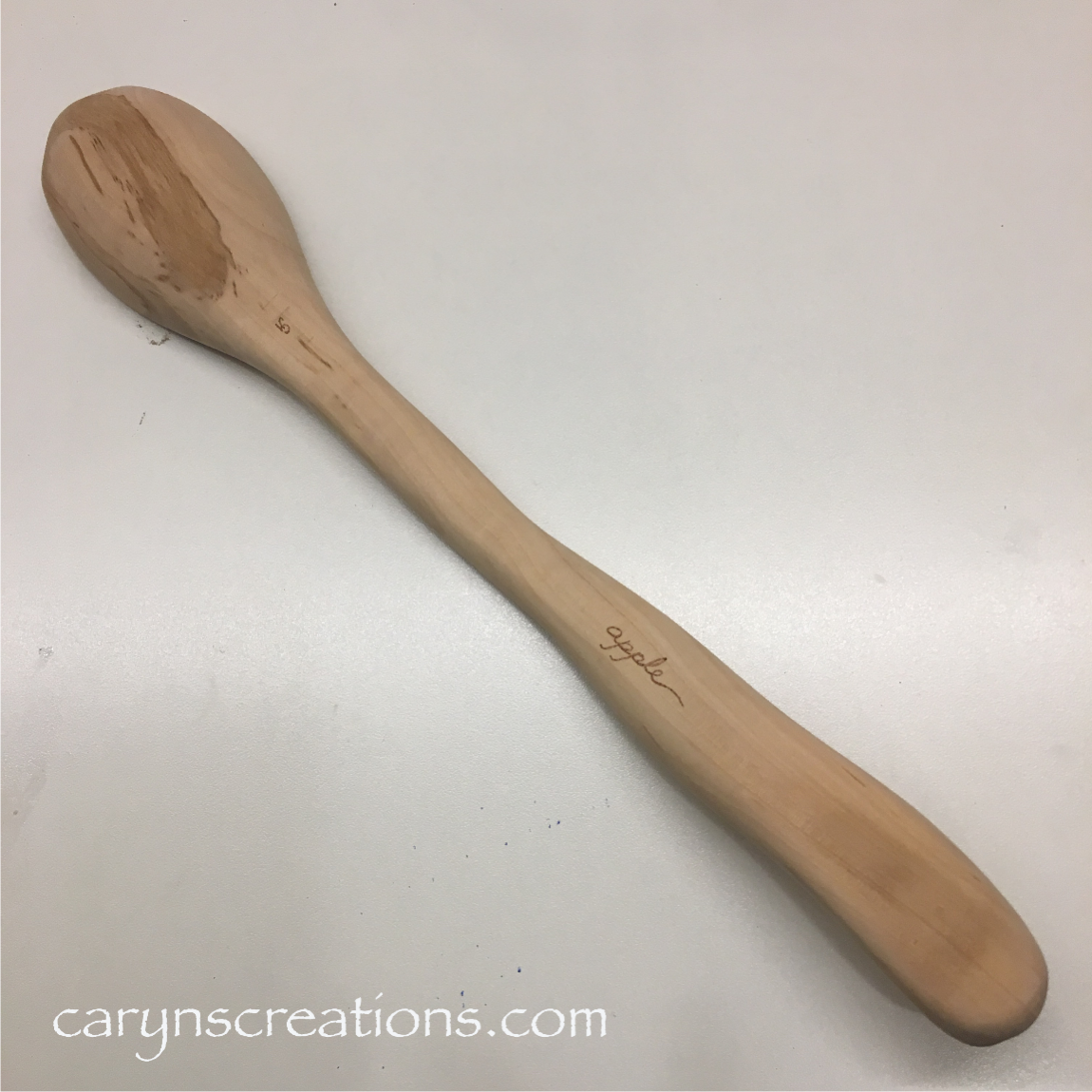
After the spoon dried, I sanded again with 320 grit, I used a wood burner to make apple seed designs.
Back of the spoon with wood burned “apple” and my mark.
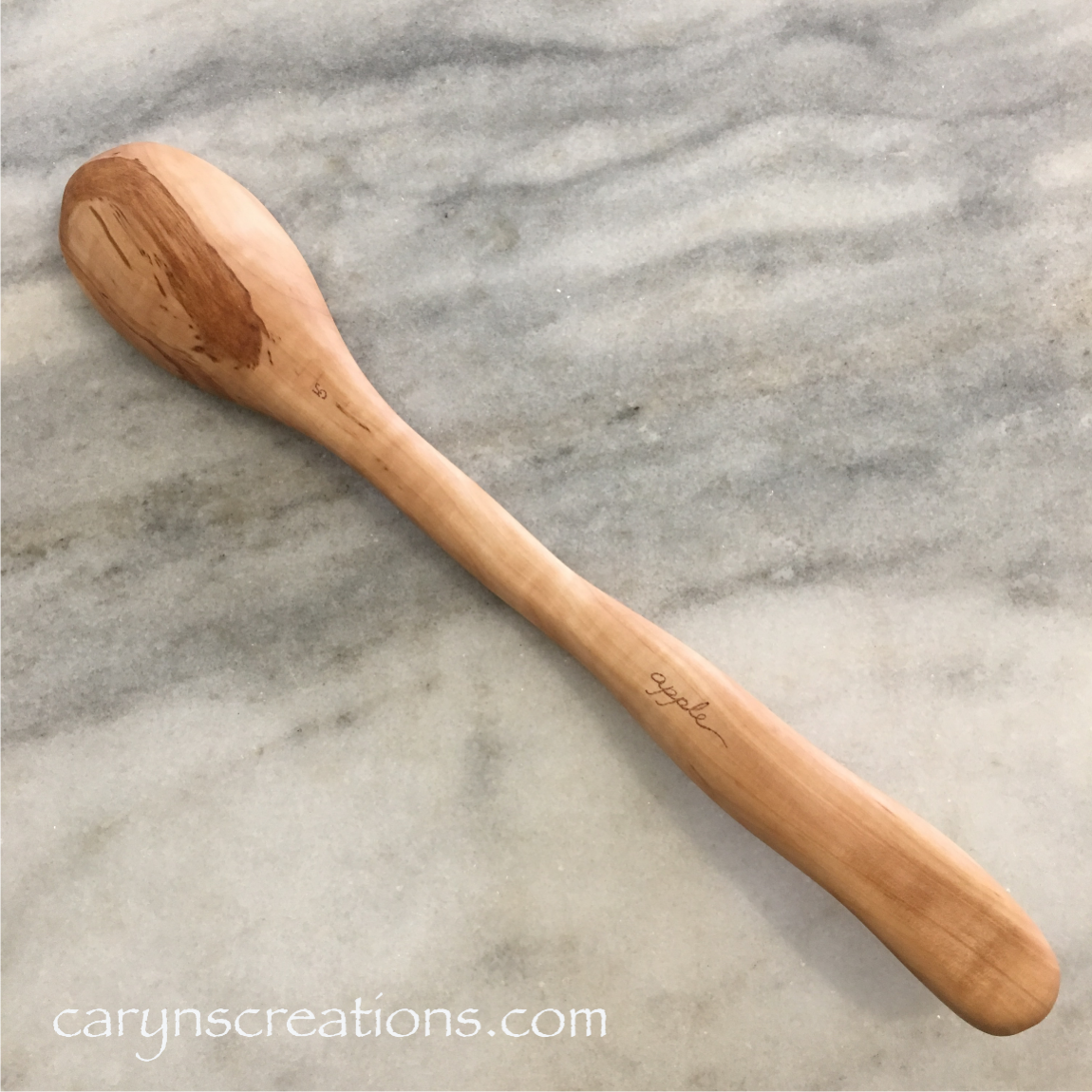
To finish the spoon I rubbed it with olive oil once each day for three days. I love the swirl of color in the wood on the back of the spoon bowl!
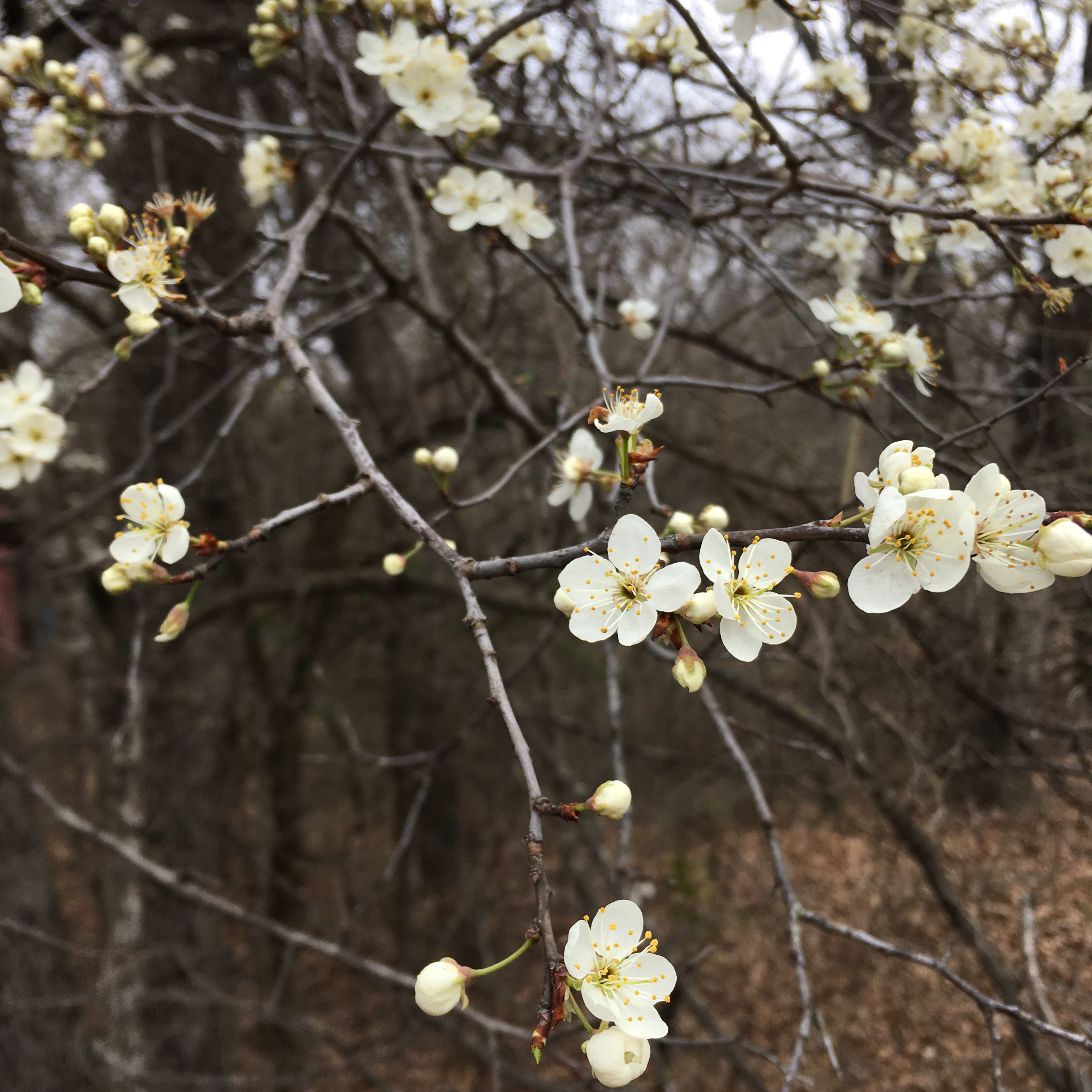
I’m quite excited to see a different kind of white bloom in our little woods. Wild plums! We actually have several of these little trees scattered through the property. I found many of them last fall and gathered and ripened the fruit (the tiny plums are too tart to eat straight, but make a nice jelly). I’m excited that I found at least two more this spring. Being the only tree in our yard with white blooms (we don’t have Bradford Pear or Callery Pear), they are easy to spot amongst all the other dormant branches. I’ve purchased some mylar ribbon to mark the trees so I can find them this November.
White blooms on a wild plum
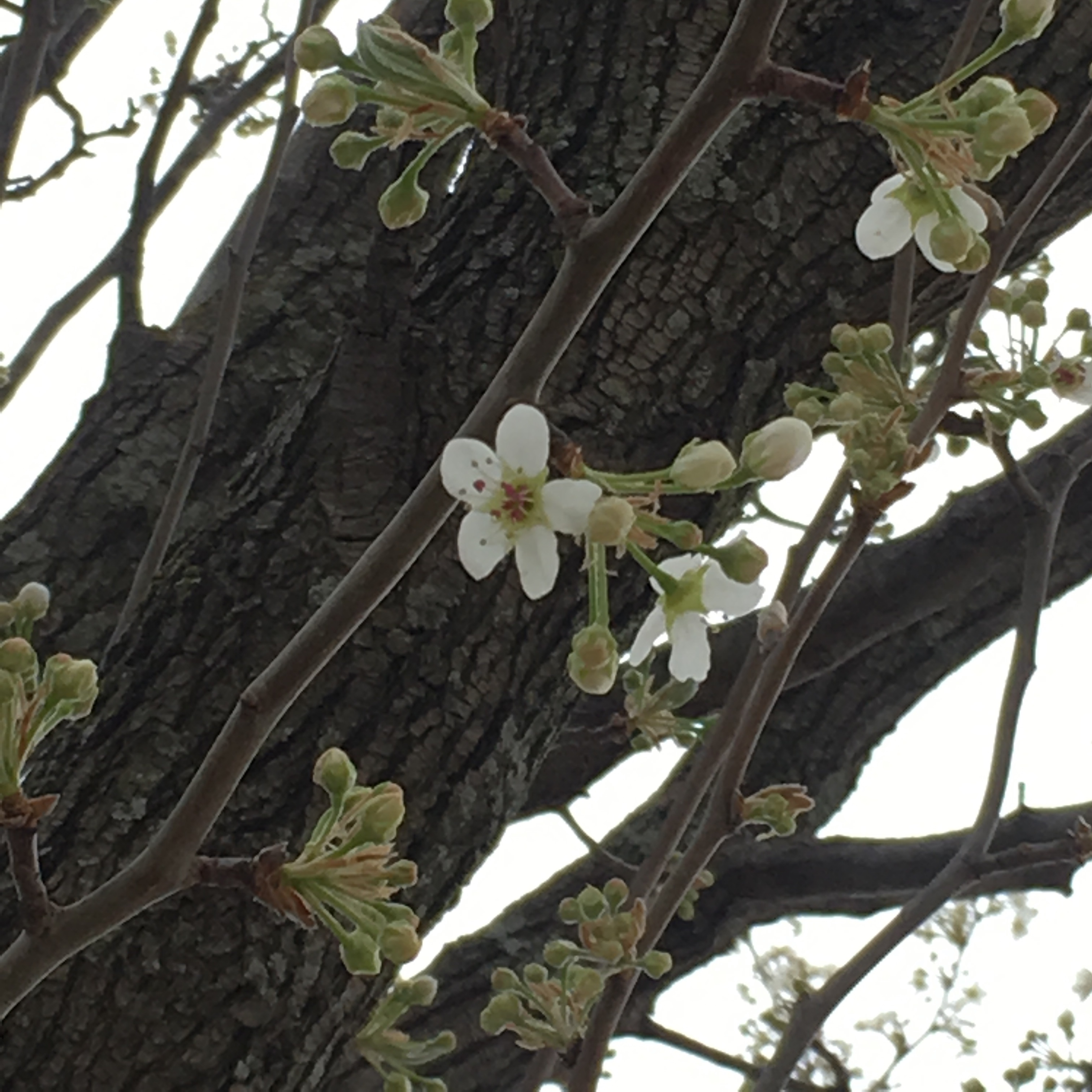
Now I have had a couple slight panicky moments thinking that we were harboring the dreaded invasive Callery Pear, but it is possible to tell them apart before they bear fruit. Bearly. #punintentional
Wild plum blooms
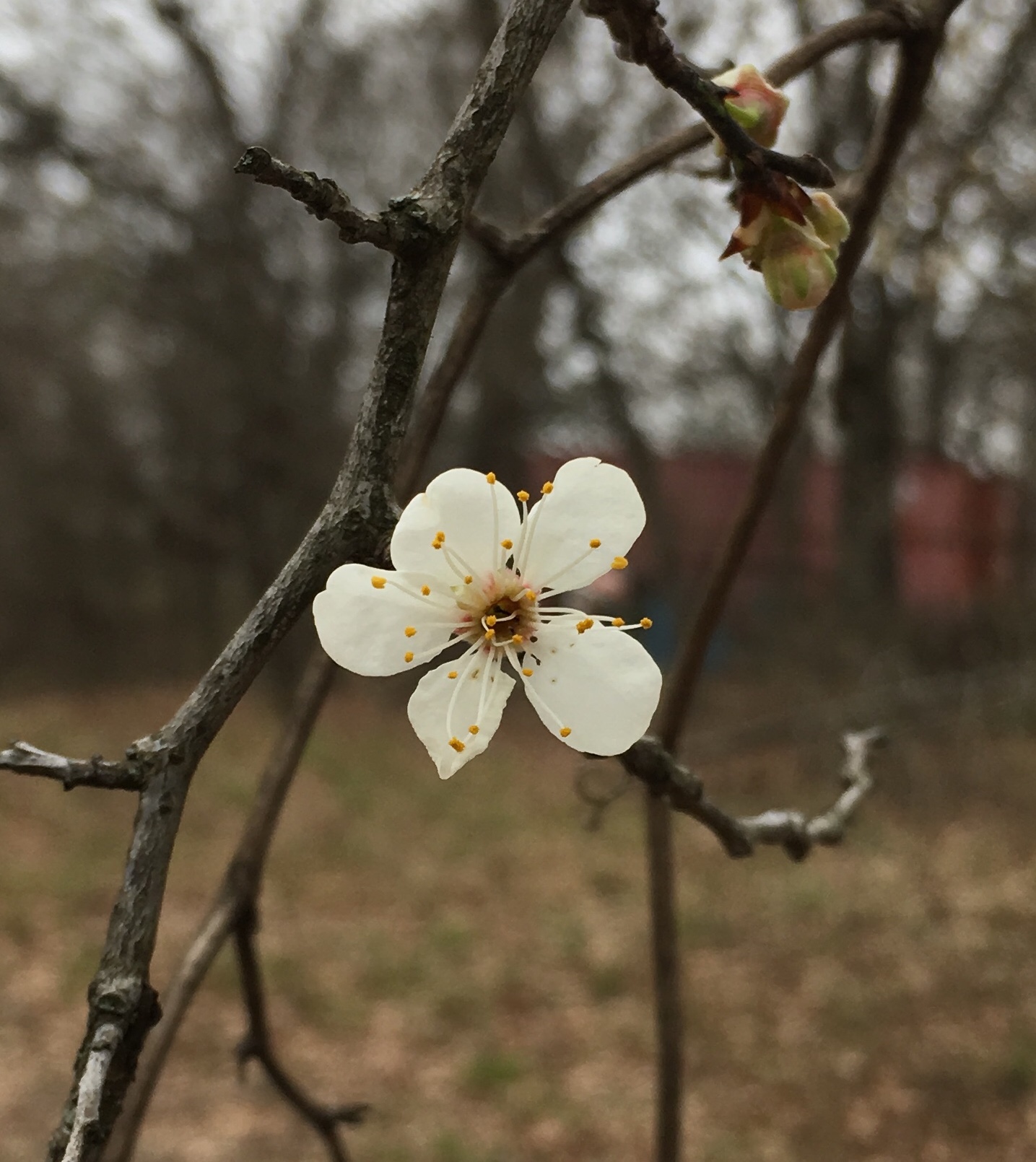
While they both bloom white first thing in spring, and they both have blooms with five petals, the ends of the stamens on the wild plum are yellow, and those of the Callery pear are reddish. And those of the Callery pear stink.
Wild plum flower
I’m hoping for enough tree ripened fruit this year for a few jars of jelly!
It is spring, and trees are starting to bloom. One of the first to bloom is the Bradford pear, which turns out to be a huge horticultural “oops”.
Bradford pear at a local elementary school
Although it can be beautiful, this ornamental tree was supposed to be sterile. Mostly it doesn’t bear fruit and mess up the carefully groomed sidewalks of suburbia, unless there are other pear trees. Then it apparently can pollinate with every other kind of pear. And those offspring have 3″ thorns, choke out native trees, and are considered an invasive species. Lovely.
And spotting the invasive Callery pear is also pretty easy in the spring.
Invasive species Callery pear along the road side.
Bradford pears are EVERYWHERE when you know what you are looking for. These are behind a local business.