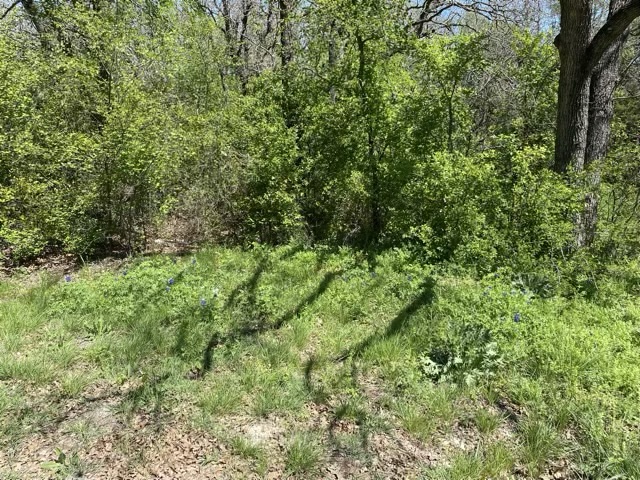
Photo description: grassy clearing with leafy trees in the background.
It looks like an April Fools joke, but it really is a bluebonnet patch. Here is a photo taken from another angle:
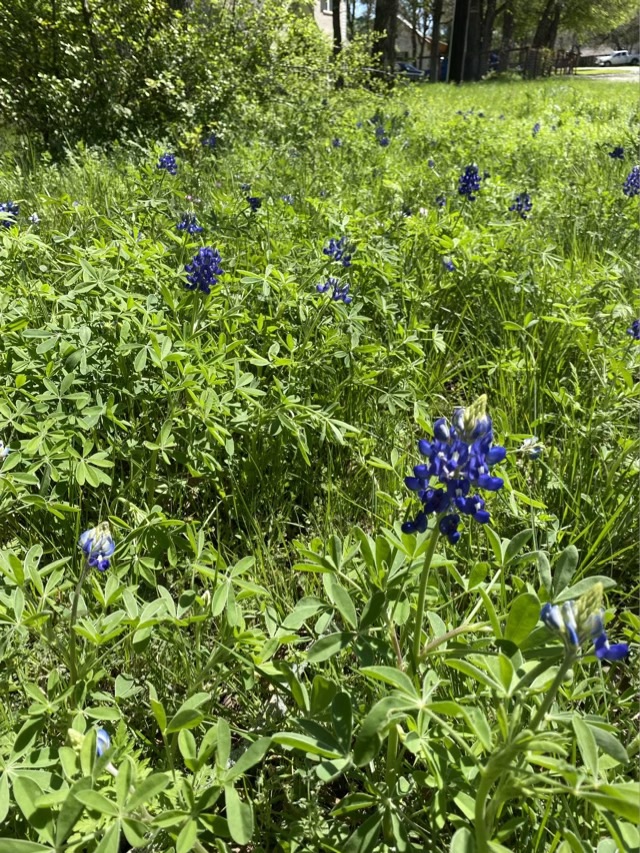
Photo description: sparse bluebonnets in a field of green, taken at a ninety degree angle from the first picture.
There are more bluebonnets in this area than last year; we’ve had a wet spring. Some of my neighbors’ yards are breathtaking with their bluebonnets. I’m hoping this patch continues to thrive and expand. We won’t mow it until late summer, when the state starts to mow its wildflower filled roadsides.
Photo description: gray tabby cat laying on a bag of metallic plastic easter eggs on the bed, folded bits of paper with jokes in the foreground.
I made up slips of paper with jokes on them to stuff in easter eggs. I used the OpenDyslexic font, which is brilliantly designed to visually weight down the letters and make each shape unique. Thor the cat decided that laying on the eggs was a comfy place to watch me work and take a bat at the occasional egg.
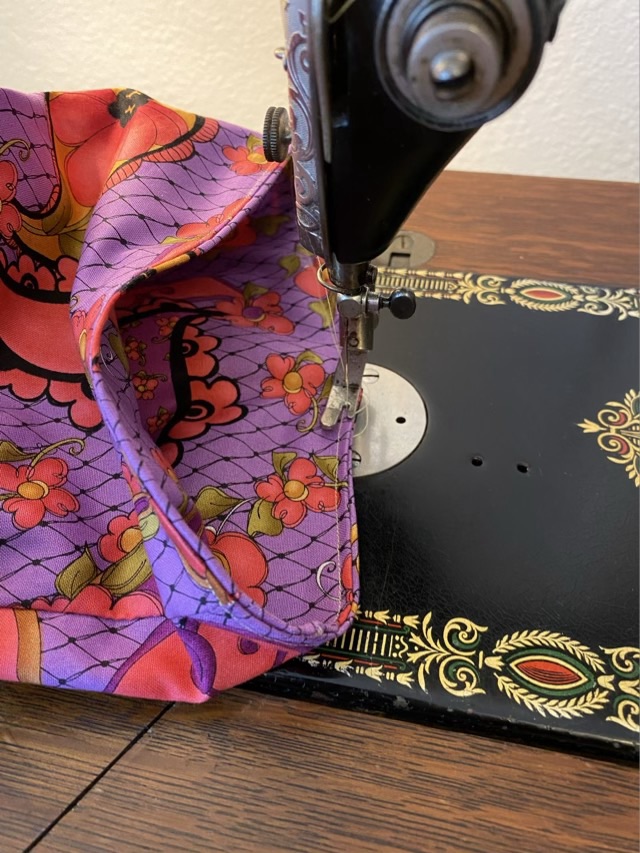
Last year’s Easter baskets are being used for storage. I needed something to put the candy and eggs in that wasn’t going to be then thrown away or contribute to the general clutter. Fabric baskets to the rescue. I used fabric and stabilizer from my stash, and sewed on the Singer model 66 treadle machine.
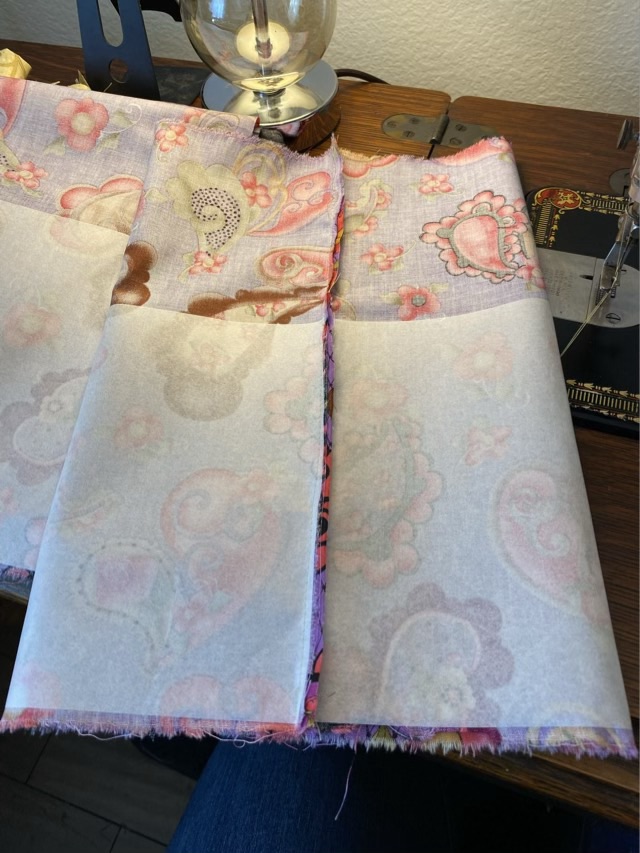
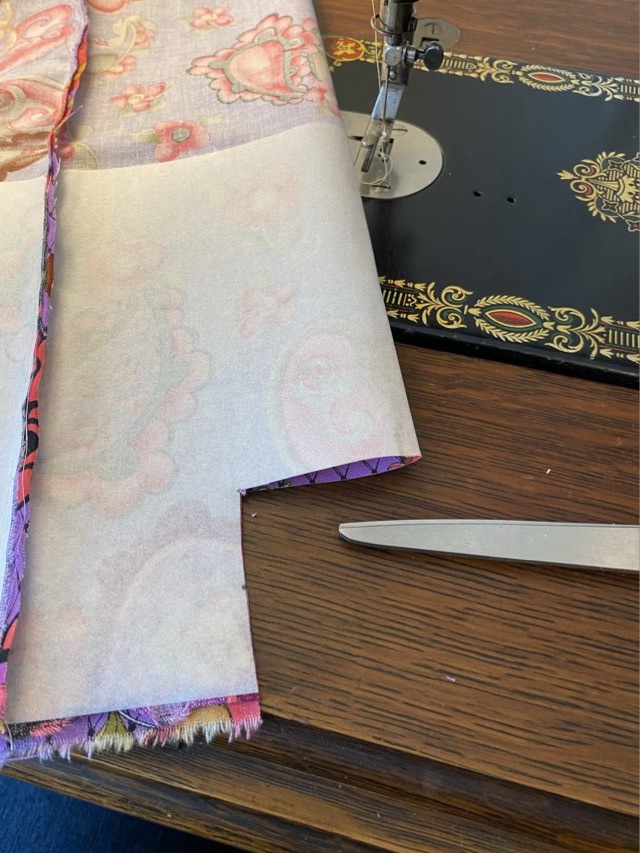
Photo description: finished bag with the top folded down to make a basket, sitting on the table of the treadle sewing machine.Step 1: 14×20 fabric with iron on interfacing on the bottom 2/3, sewn on the short end, right sides together, then the seam moved to the center.Step 2: 2.25” squares cut from the lower corners of the fabric tubeStep 3: bottom edge sewn togetherStep 4: box corners flattened out and sewnStep 5: Steps 1-4 repeated for the lining, then the two bags put right sides together and the top sewn, leaving a gap to turn the bag right side out, then the gap sewn closed by making a seam along the top edgePhoto description: another bag with fabric with a definitive direction. To get the fold to work, the inside fabric is upside down, so the crows on the fabric stay upright when folded.Photo description: unfolded bag, showing the full height
These bags came out quite tall, but since I didn’t put interfacing on the top third, they fold down easily. The interfacing I used did not stay fused to the fabric, and was quite papery, which would be great for a cat basket, but is slightly unwieldy for a treat bag. I recorded my steps here, but would not repeat these exact parameters. Future projects will involve experimenting with dimensions, and trying a softer interfacing, or maybe even batting and quilting. Hmm.
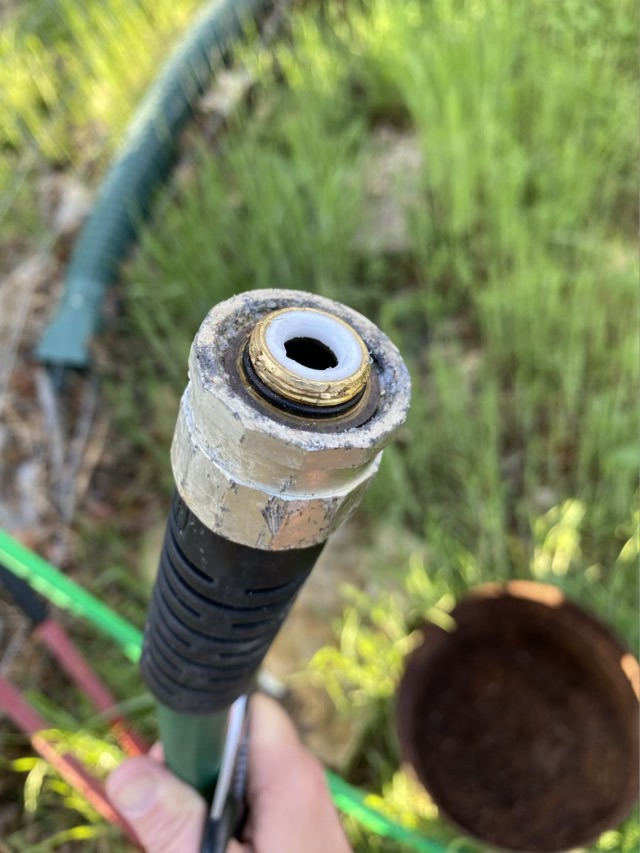
The brass manifold I use to route water to the coop and raised bed garden started to leak. I went to unscrew a hose from the manifold and part of the manifold broke loose, lodged inside the hose. It is not the first time this has happened. The hose on the top of the manifold was also corroded and frozen in tight.
Photo description: garden hose with the end ruined by a broken off manifold junction.
This time I ordered new hose ends, solid brass with a metal band clamp. I cut off the offending ends of hose with kitchen shears so I could replace the connectors.
Photo description: heavy duty garden hose cut off above the manifold, since it wouldn’t unscrew.
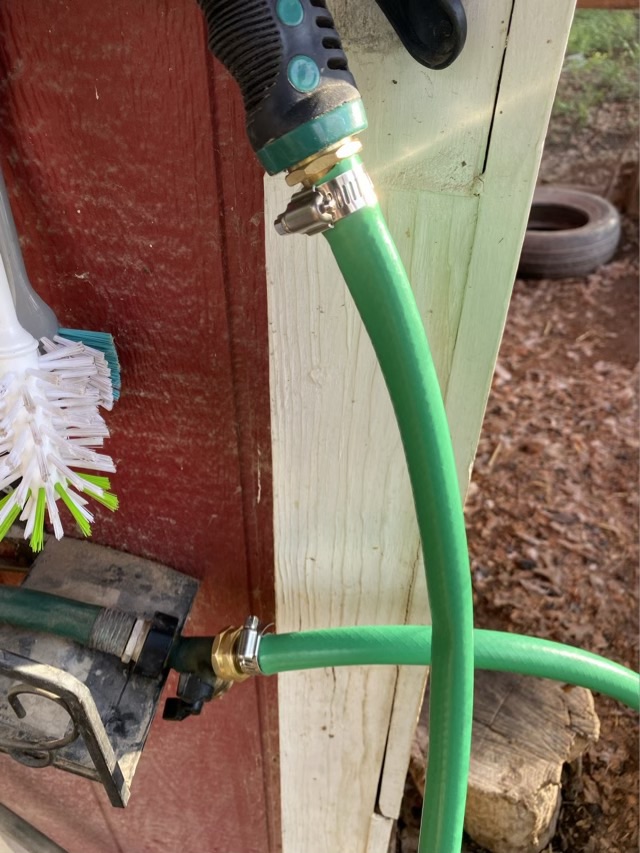
Pressing the connector against the fence post helped me wedge it into the cutoff hose. The female end was a little tricky with the loose ring, but attaching the male end made it stable enough to use the same technique. It really helps if you remember to put the band clamp on before attaching the new connector. Spoken from experience. I also used silicone tape in the threads this time.
Photo description: new brass manifold with repaired hose connectors.
The whole procedure was relatively painless and quick. It was definitely better than replacing the whole hose. I even replaced both ends on the hose in the chicken coop, that never did connect well.
Photo description: new hose connectors on the hose in the coop.
When we first moved to our house, there was a large wood workbench on the back porch, salvaged from an old workshop. Since it had been left out in the elements, many of the parts were warped and cracked. I disassembled the bench and reused the parts for projects around the house. One of those projects was a cat food cabinet made from two drawers and part of the workbench top. I turned the drawers sideways to make the sides of the cabinet, put on a top with back splash, and made a door with hinges. The wood I used for the door had a large split, which I reinforced with braces on the back and an old leather belt nailed to the front.
Photo description: Thor the gray tabby standing on the top of the recycled cat food cabinet.Photo description: the inside of the cat food cabinet showing how the original drawers were repurposed.
The problem with the wood top is that it was not smooth, so was hard to clean. To fix this, I added laminate adhesive tiles to the top, then gave the rest of the wood a boost with a rub down with Howard’s Feed-n-Wax.
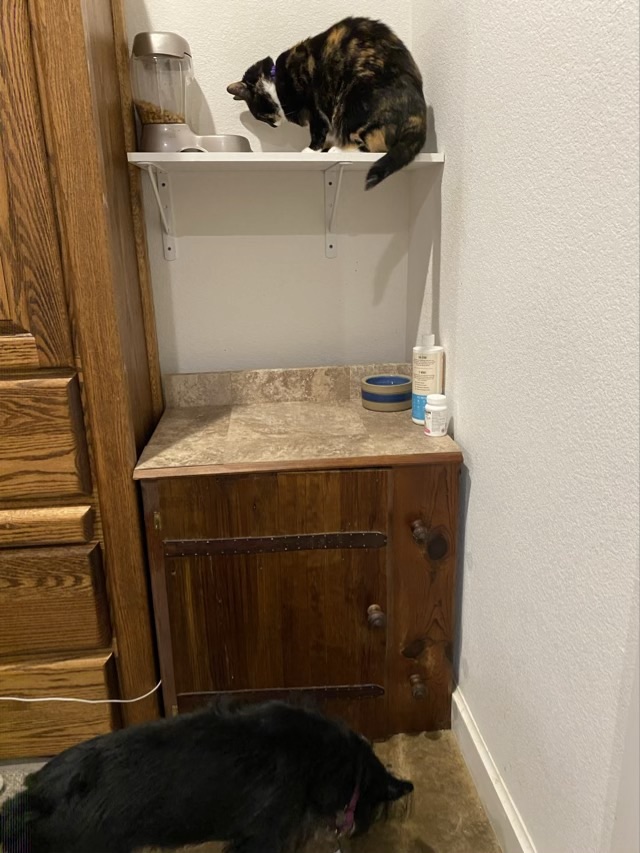
Photo description: laminate tile added to the top of the recycled cat food cabinet, also showing the melamine shelf above the cabinet with Izzy the cat eating crunchies, and on the floor, Missy the dog looking for fall out.
It took a bit of time for the cats to figure out that the new surface was stable, and Thor would rather his wet food bowl be put elsewhere, but the surface is so much easier to clean now.