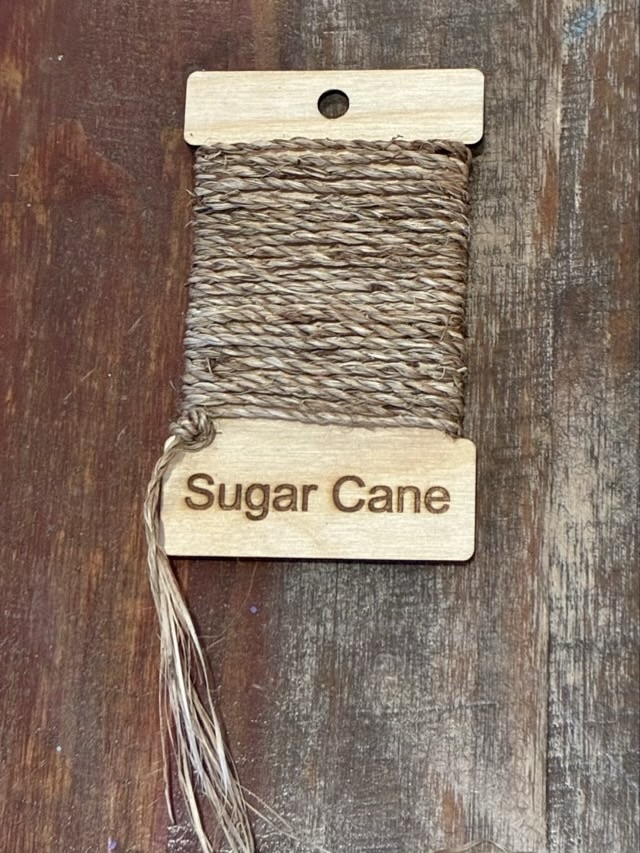
One of the other fibers I purchased from Conserving Threads was sugar cane, which has a very similar look and feel to the okra stalk fiber, but was in finer strands. I let this fiber rehydrate overnight in a damp towel and twined it at the same thickness as I did for the okra stalk.
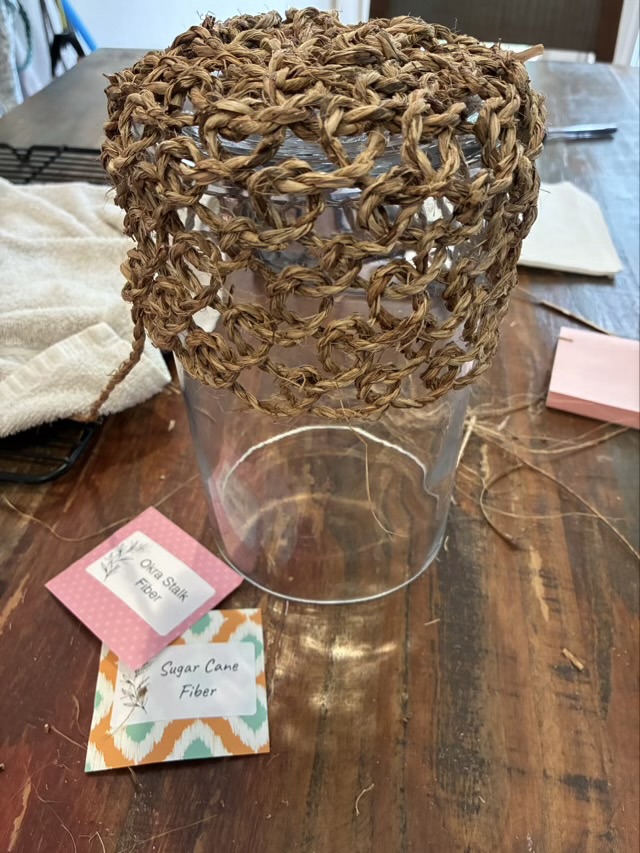
After I finished my twined card for the sugar cane, I twined the rest into the basket I started with okra twine. To keep the sides as even as possible, I used a glass cylindrical vase as a form to guide my loops.
Photo description: twined okra stalk and twined sugar cane stalk used to make a looped basket on a cylindrical vase form
I’m quite pleased with how closely the okra twine and sugar cane twine match in size, color, and sturdiness. Because the twine is robust but flexible, the looped basket holds shape, even when off the form and turned right side up.
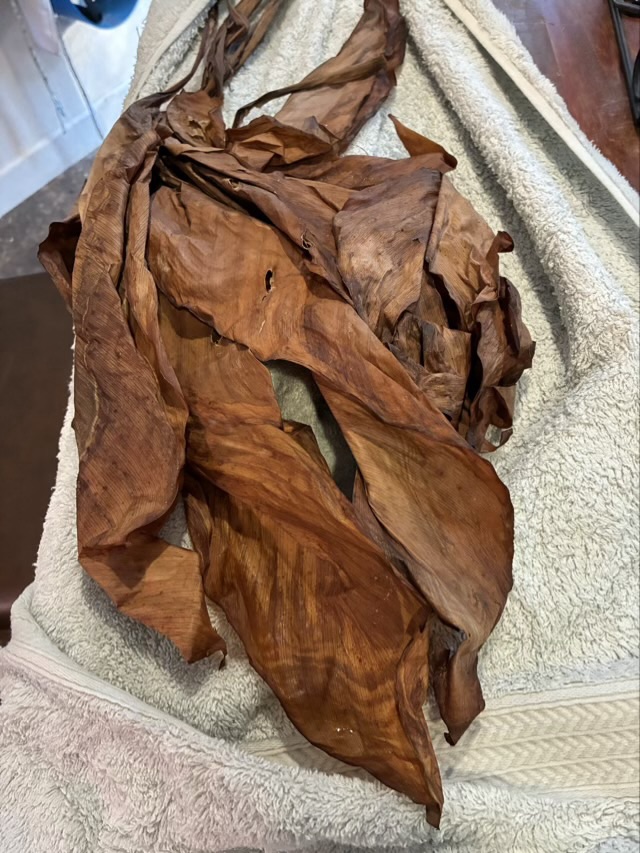
I collected canna leaves and stalks from very willing donors around town. These very tall herbaceous plants have large leaves and strong stems that have to be cut, not pulled. I dried the leaves, then rehydrated gently by wrapping them in a damp towel overnight. If twined or woven before drying, the material has too much moisture and will shrink significantly. By drying first, then adding back moisture just until the material is pliable, the shrinkage is minimized.
Photo description: dried canna leaves on a damp cotton towel
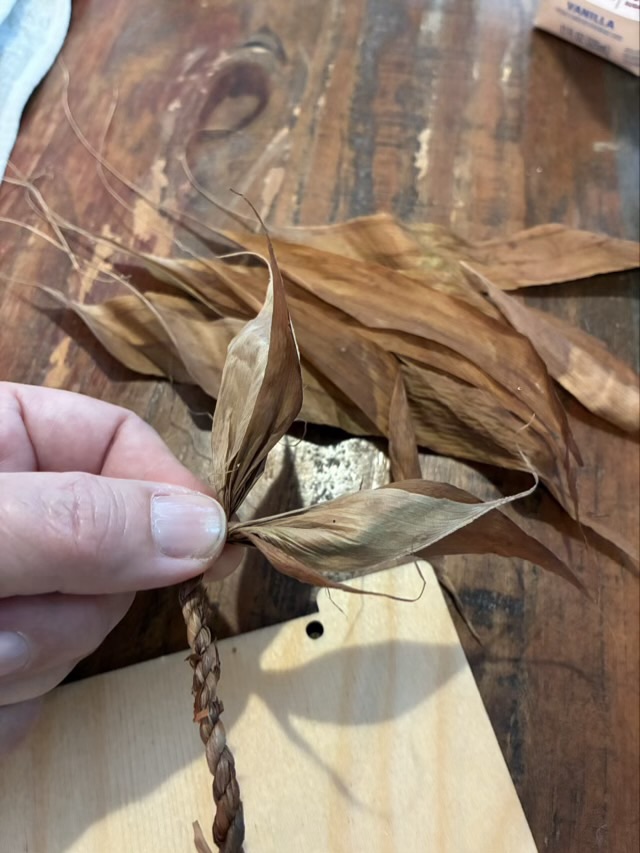
I tore the leaves into about one inch sections, separating most of the thin papery leaf from the long strands of the stem. Some stem fibers came away with the leaf.
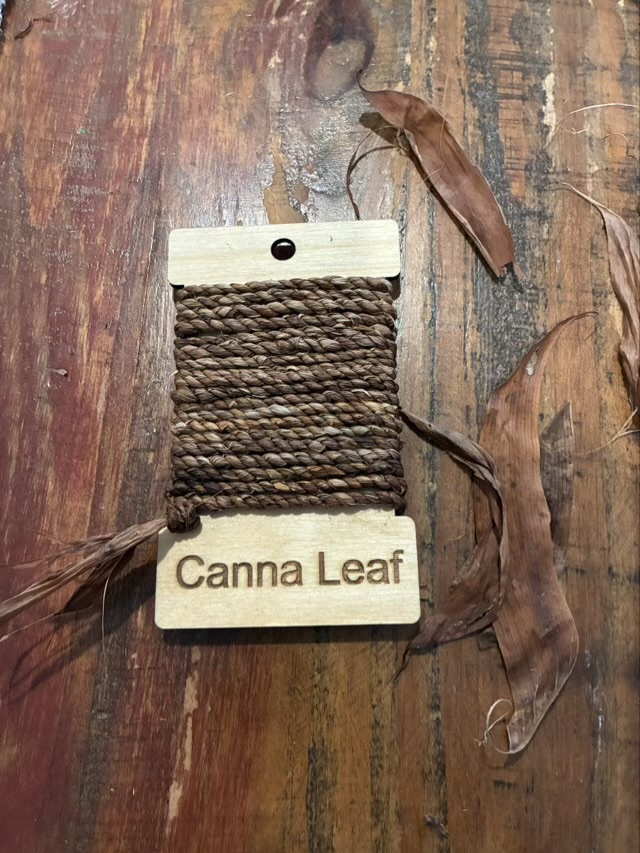
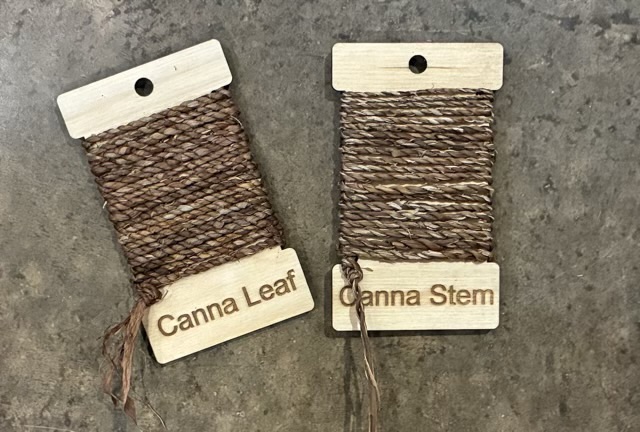
Photo description: strips of canna leaf in the process of twiningPhoto description: laser cut flat wood spool with canna leaf twine, loose strips of canna leaf next to the cardPhoto description: two twined cards, one made from the canna leaf, one made from the separated stems
The twined leaves have a fuller more even appearance, but the twined stem feels stronger.
I still have the stalks to process, which will involve retting, which is something new for me. I am hoping the retting process, which breaks down the material around the fibers, makes it easier to free the very strong stalk fibers.
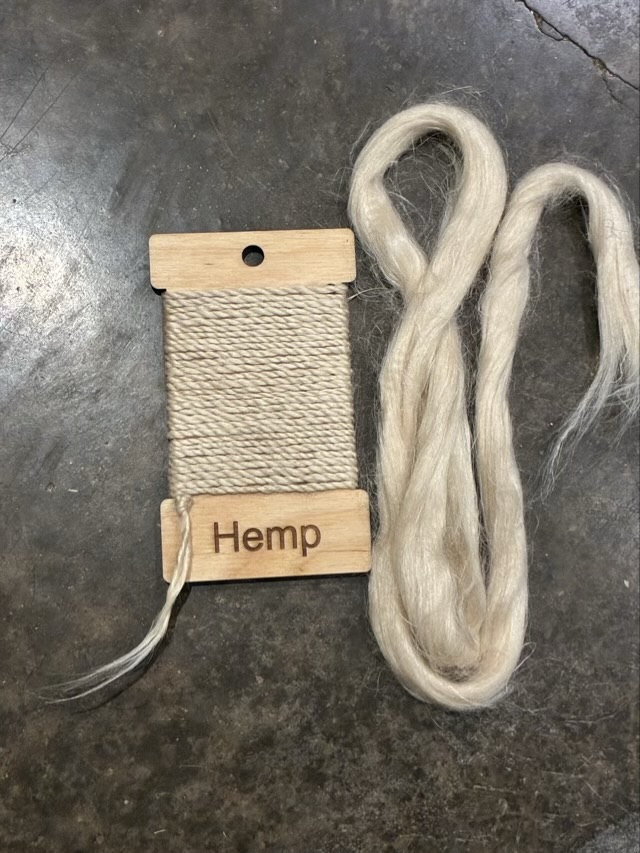
Next up for twining was some combed hemp fibers. I was rather surprised how short these fibers are, especially compared to flax, with a staple length of 3-4” for what I had. Other preparations can be longer. Still, it twines up well, especially using a small sponge to keep my fingertips hydrated.
Photo description: flat wood spool with twined hemp next to the sliver of hemp fibers, off-white with a gentle sheen
Another fiber artist was trying to figure out a mystery fiber and what they described seemed very similar to hemp: staple length, sheen, feel. I did a burn test to compare data and the hemp burned fast, leaving very little ash, and had a smell of burned paper, which is typical of cellulose fibers.
The twine itself is strong and flexible, and surprisingly soft.
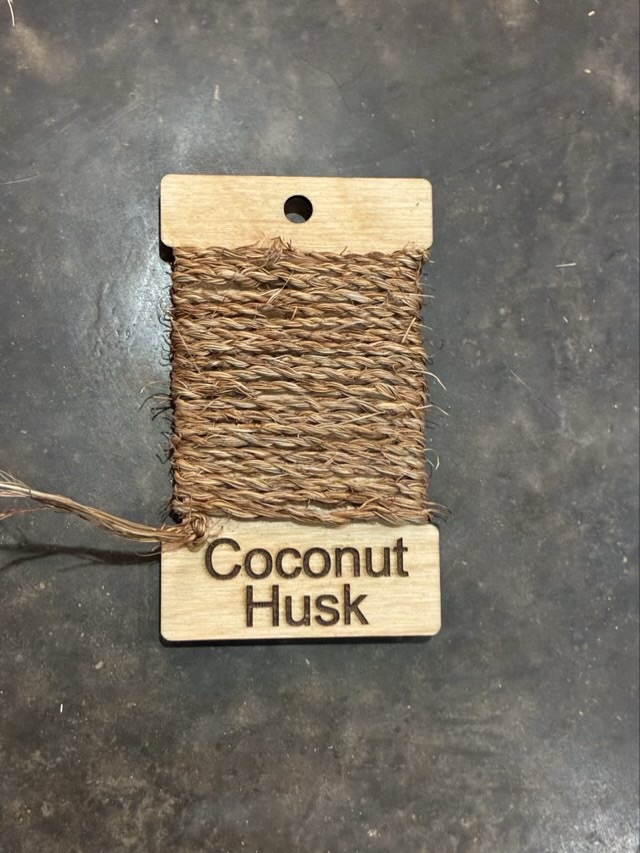
I saw coconuts for sale at the grocery store, with the husk and fibers still attached and had to buy some to experiment. I pulled off and processed the husk, separating the coir fiber from the peat, the began to twine. This is unpleasant fiber to work with. It is rough and short, but it is strong.
Photo description: laser cut flat wooden spool with twine make from coconut husk fibers
I see why the coconut coir fiber is used for thick mats to scrape off shoes, and heavy duty brushes. There are actually many interesting uses for coconut husk, the rest of mine will be used as mulch.
I am putting together a display to showcase a number of different twined fibers. I decided to make the twine holders 3×5 with large print so that they could be read from a distance, and used my laser cutter to cut them from 1/8” plywood. Each card is finished with Howard’s butcher block conditioner before I start twining.
First up is long line flax.
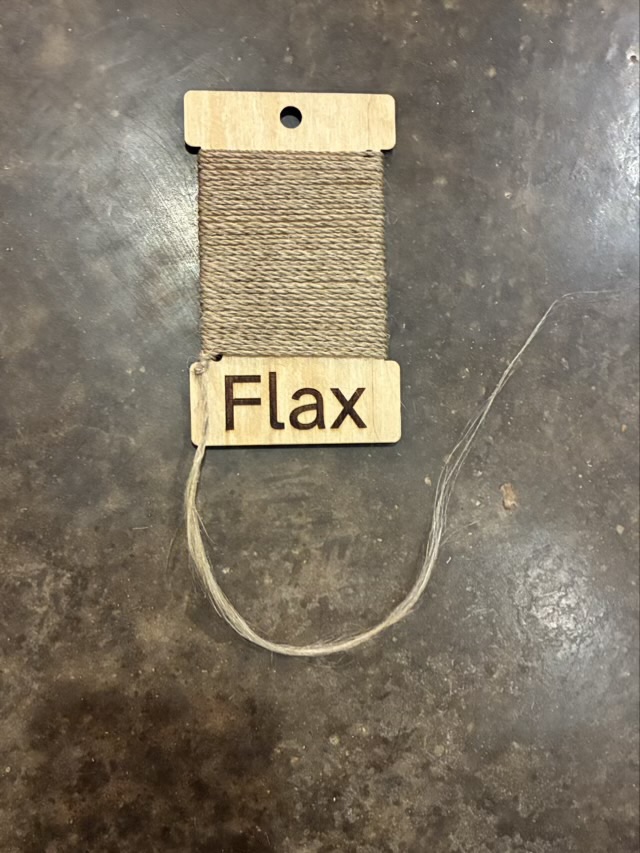
Photo description: twined flax on a 3×5 flat wood “spool” with the word “flax” fill engraved on the bottom, a hole at the top for hanging, and two start and end holes to securely attach the twine to the card
I love long line flax, the ideal product that comes from flax processing. It is easy to twine and very strong, but still soft. I left a tail on the twined example so that people can see what the fiber looks like before it is twined.
Flax has been grown and harvested for thousands of years to produce linen cloth. The fabric softens with washing, and its breathability is superior in hot environments. Long line flax is sold in stricks, a bundle of fiber twisted, then twisted back on itself to form a stable spiral. Tow is shorter lengths of flax left over from the long line processing, and can be carded before being spun. I find touching a damp sponge before twining helps me grip the fibers better. Spinners will keep a small bowl of water at hand to smooth their spinning. Flax needs less twist than cotton or wool when spinning and can be spun extremely fine, using just a few fibers.
Eve Schaub is currently doing a project to grow a dress in her backyard, and is growing and processing flax. She is doing a great job showing the process, bringing in experts to teach aspects of the processing, and doing so in an entertaining way. It is well worth following her journey.