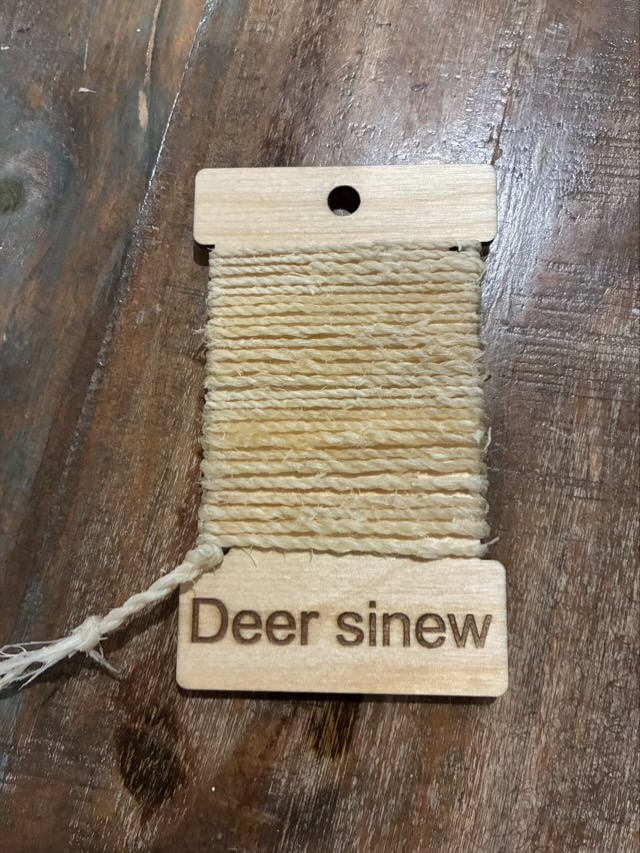
I was gifted some deer sinew from a local hunter to make my next twine example. I used a little bit of water to moisten the dried sinew to make it pliable, and oh is it pliable. I could put more twist in this than any other fiber I’ve worked with before it started to ply back on itself.
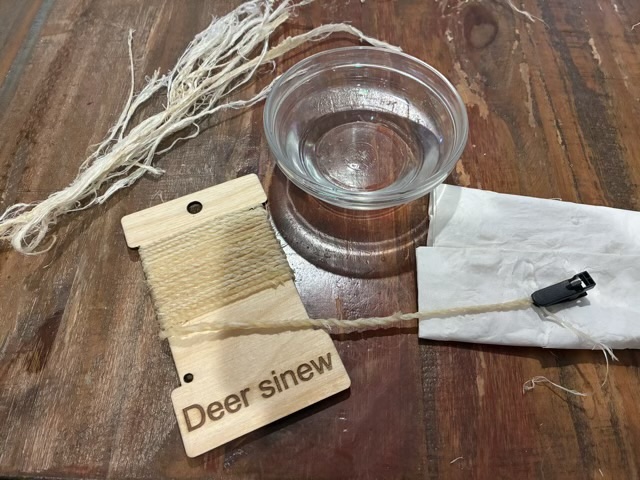
The collagen powder from the sinew made for sticky work, and I had to change out my bowl of water frequently, but the sinew is really, really strong, and very stretchy when damp. I did tear the sinew sections apart, but chose to make a thicker twine for this example. Sinew can be separated farther and twined very thin to use as sewing thread. When dry, the twine is hard until it is worked. I made an extra inch of twine past the card, knotting it on either side to test flexibility, and while it was wet it was rubbery, then dry it was hard and stiff, but once I bent and twisted it, it became flexible, but still very strong. It is easy to see why this material has been used as binding since before recorded history.