Twined card: paper napkin

It is actually possible to make a decorative twine with paper napkins. It isn’t strong, and don’t get it wet, but it is useful for decorating, and fidgeting while waiting.
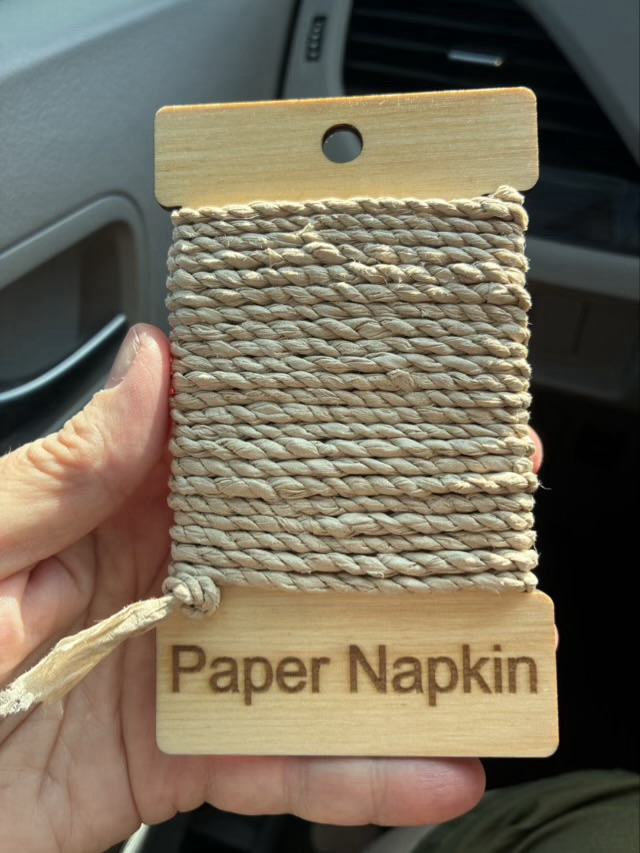
Photo description: laser cut flat wood spool with twine made from unbleached paper towels

Paper has a grain, tear it one way and it is fairly easy to get a relatively straight line, tear it the other and everything goes awry. I find the direction of the easiest tearing on a napkin and tear it into about 1” strips. You could cut it, but the ragged edges don’t matter once the paper is twisted.

To start, I twist the center of one strip gently, then bend the twist roughly in half. I twist one side away from me, bring it to the front, then twist the other side away, and bring it to the front. Each individual “leg” gets twisted the same way, and the two “legs” twist together in the opposite direction. This opposite twist energy balances the twine and strengthens the material.

To add in more strips I use a different method than usual. I fold the new strip onto the old strip and twist them together. I find this creates less bulk for this kind of twine than laying in a new piece from the middle. Staggering the length of the “legs” also helps smooth transitions.
Twined card: milkweed

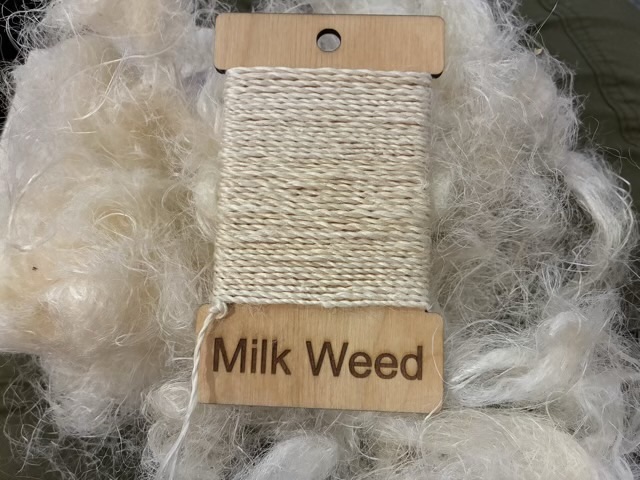
I have spun milkweed seed fiber before, but I have not yet worked with fiber obtained from the plant. I purchased it from Conserving Threads and it came uncombed in a large cloud of fiber. I pulled out long strands to twine, knocking loose many tiny fibers. Combing or hackling the fiber first would remove most of the short bits.

Photo description: laser cut flat wood spool with twine made from milkweed fiber

The milkweed bast fiber is more course than the seed fiber, but it is also stronger.

Twined card: agave

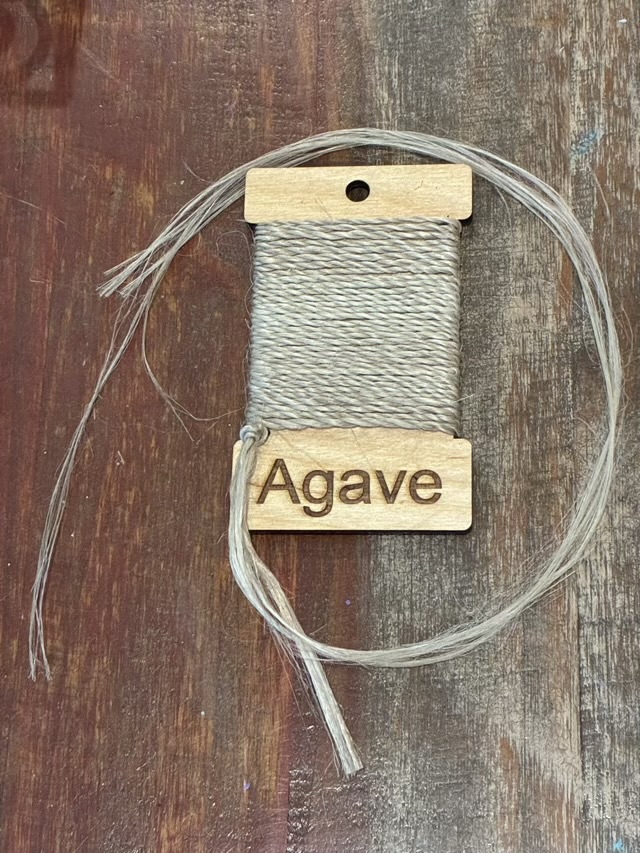
The agave plant, native to Mexico, has many beneficial uses, including providing a strong fiber good for rope and other textiles. It is a long line fiber, like flax, which makes it easy to twine.

Photo description: laser engraved flat wood spool with agave twine wrapped around it and long untwisted fiber hanging from the end

The bundles of fibers I was working with were cut on one end, giving the section a blunt end with many fibers ending at the same place. When twining, all those fibers would pop out of the twine at the same place. I used a small pair of sharp scissors to trim them.

Twined card: deer sinew

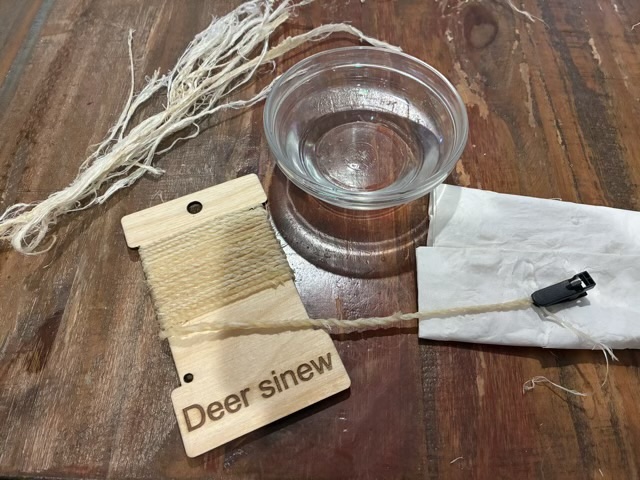
I was gifted some deer sinew from a local hunter to make my next twine example. I used a little bit of water to moisten the dried sinew to make it pliable, and oh is it pliable. I could put more twist in this than any other fiber I’ve worked with before it started to ply back on itself.

Photo description: twining deer sinew using a small bowl of water for my fingertips, dried sinew shown upper left

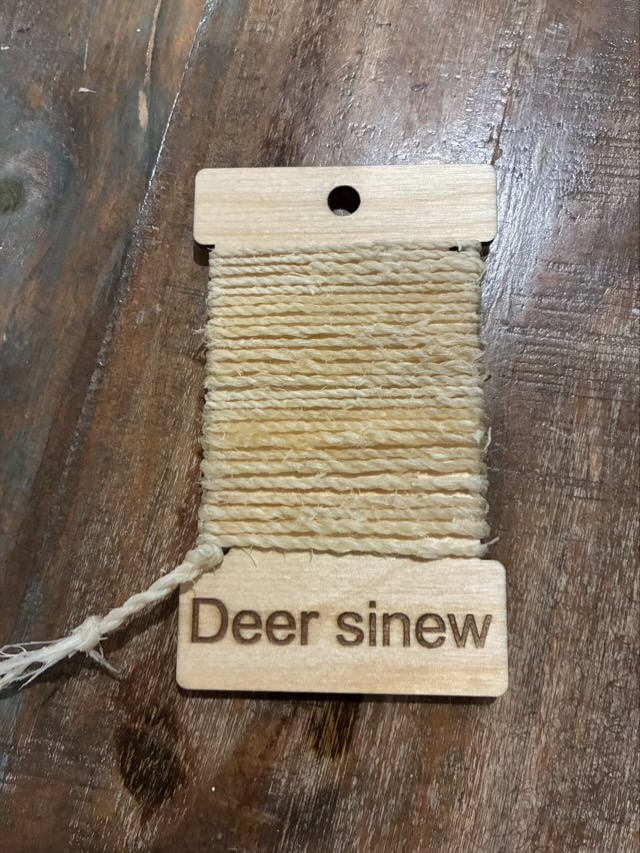
The collagen powder from the sinew made for sticky work, and I had to change out my bowl of water frequently, but the sinew is really, really strong, and very stretchy when damp. I did tear the sinew sections apart, but chose to make a thicker twine for this example. Sinew can be separated farther and twined very thin to use as sewing thread. When dry, the twine is hard until it is worked. I made an extra inch of twine past the card, knotting it on either side to test flexibility, and while it was wet it was rubbery, then dry it was hard and stiff, but once I bent and twisted it, it became flexible, but still very strong. It is easy to see why this material has been used as binding since before recorded history.

Photo description: finished deer sinew twine card

Twined card: sugar cane

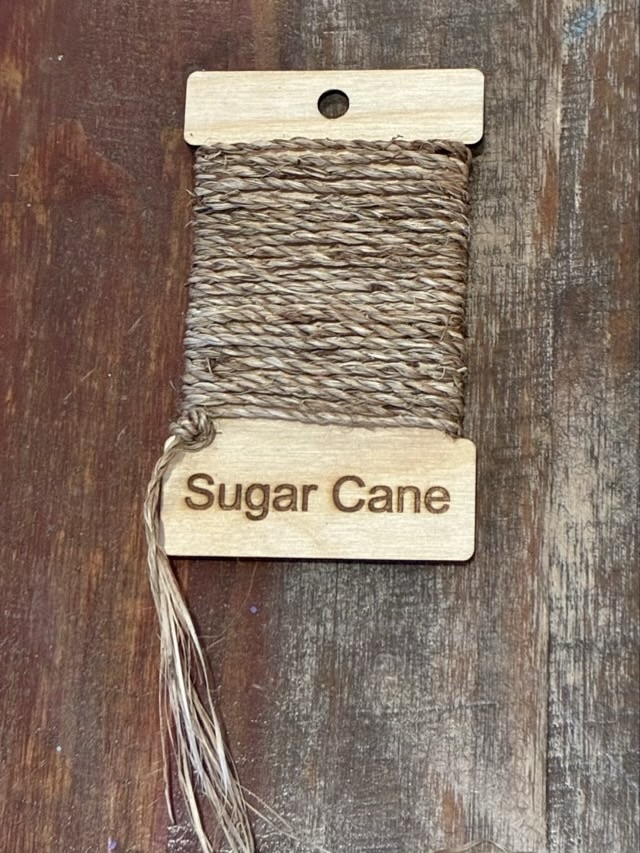
One of the other fibers I purchased from Conserving Threads was sugar cane, which has a very similar look and feel to the okra stalk fiber, but was in finer strands. I let this fiber rehydrate overnight in a damp towel and twined it at the same thickness as I did for the okra stalk.

Photo description: laser cut flat wood spool with twined sugar cane stalk

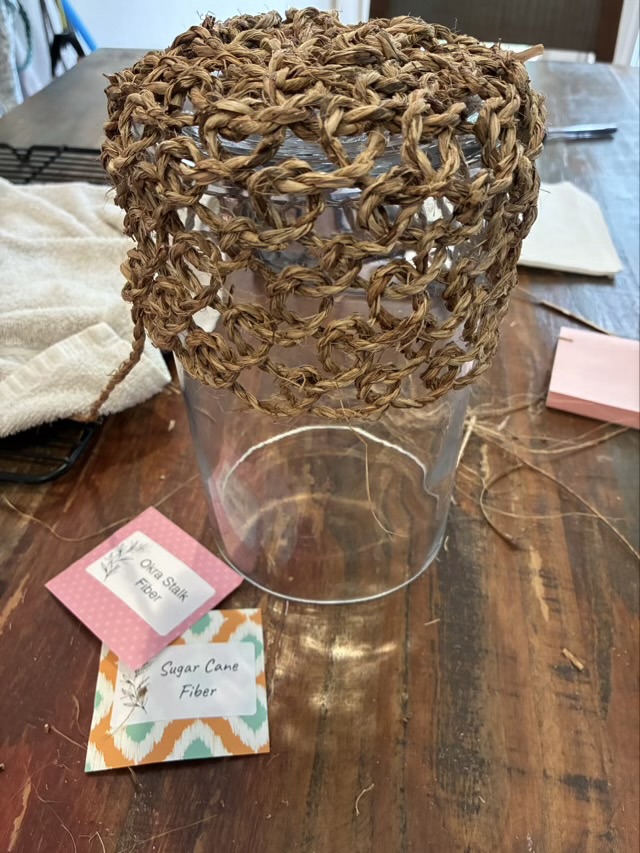
After I finished my twined card for the sugar cane, I twined the rest into the basket I started with okra twine. To keep the sides as even as possible, I used a glass cylindrical vase as a form to guide my loops.

Photo description: twined okra stalk and twined sugar cane stalk used to make a looped basket on a cylindrical vase form

I’m quite pleased with how closely the okra twine and sugar cane twine match in size, color, and sturdiness. Because the twine is robust but flexible, the looped basket holds shape, even when off the form and turned right side up.

Now to figure out a way to finish the top edge.