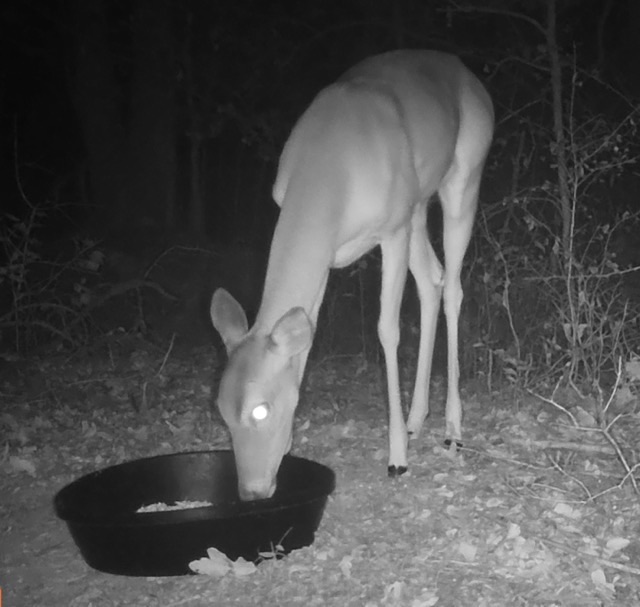
The trail cams have been taking pictures of critters other than raccoons. Here are a couple of the more unusual shots.
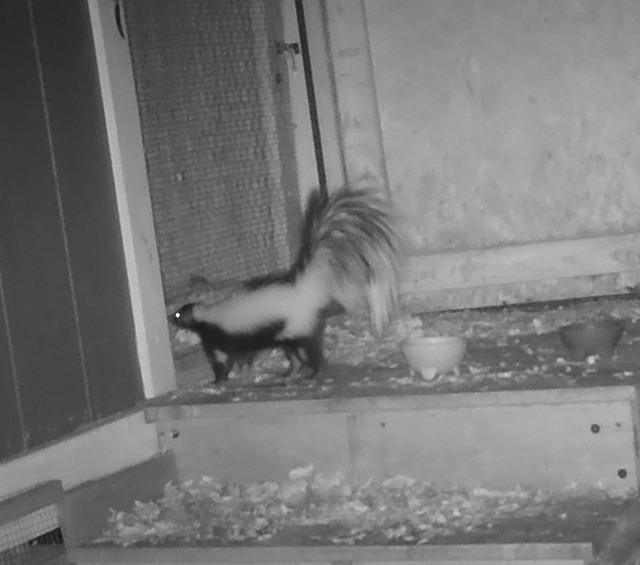
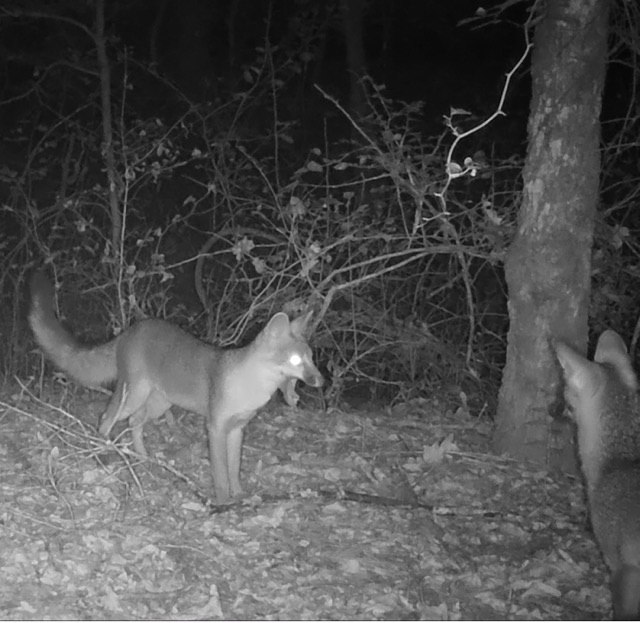
Photo description: night vision photo of two foxes in the back woods, one with mouth open and eyes aglow from IR flash

The trail cams have been taking pictures of critters other than raccoons. Here are a couple of the more unusual shots.
I set out to make a 7×9 rectangle using a different Tunisian crochet stitch every three rows or so. It became an observation on what stitches had the most pronounced curl and were harder to keep even on the sides.
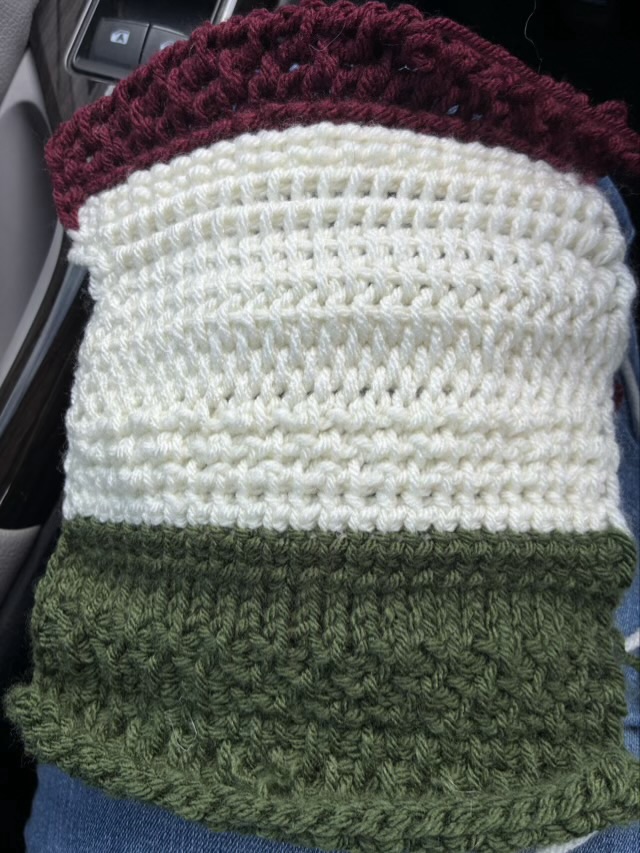
There are so many different ways to do Tunisian crochet, and each has a slightly different way to make the edges even, which I failed miserably to do. I ripped out this example to use the yarn for something else.
Note to myself: it is OK to do a swatch of Tunisian crochet, but don’t plan a larger project because the feel of the stitches on the hook under your hand is bothersome. Strange that, since knitting doesn’t bother me the same way. Maybe it is the loss of control of the hook that is irksome, where knitting needles don’t need the same kind of twist and turn movement. Hm.
In February 2019 I made my first wood spoon from apple wood.
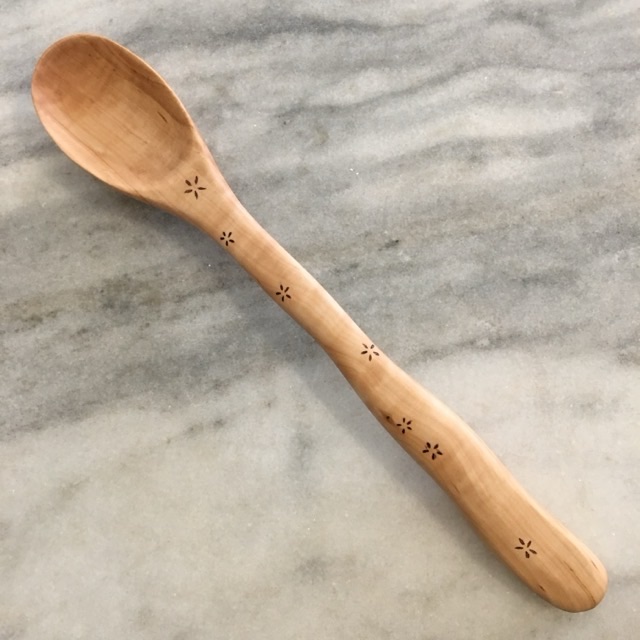
Here is the original post: https://crittersandcraft.blog/2019/03/08/spoon/
Making wood spoons is good to do to build skills, or to make an art piece. Modern manufacturing has brought the price of a wood utensil down under $5 at the grocery store.
I have warped my new Inkle loom again, this time for tablet weaving. I used the Tablet Weaver Design App to design a threaded-in pattern, meaning all the cards turn together to create the pattern, so I don’t have to track turns quite as closely.
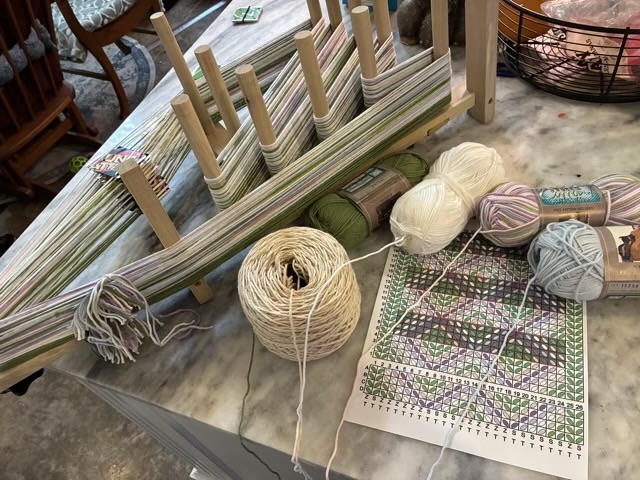
It usually takes me a bit to figure out how the cards are laid out. This time was particularly irksome as I had flipped the cards when setting it up, so the designed pattern actually showed up on the bottom of the band.
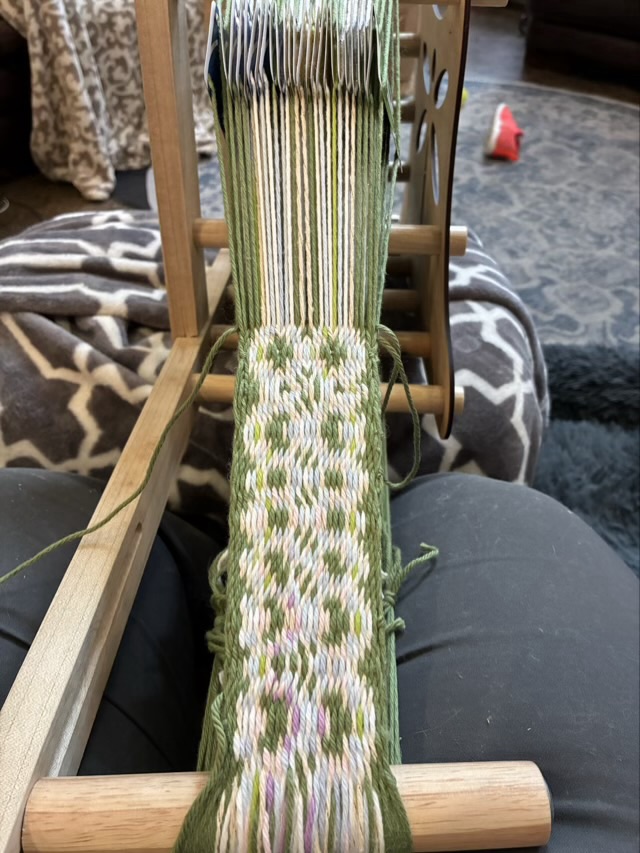
Luckily, I had threaded the cards of the tablet correctly and didn’t have to rethread any. I just had to figure out which way they all went, and what the starting position of the pattern looked like (“A” was on the bottom, nearest me).
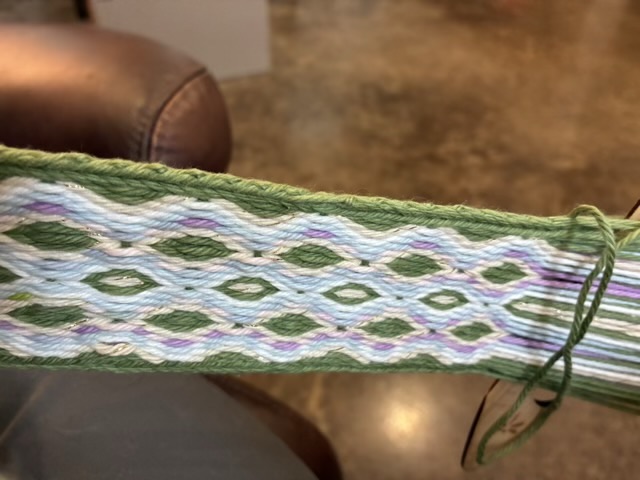
Although I have several inches of a wonky pattern, it does give me the opportunity to study how the S twist and Z twist twine together to make lines and shapes in the weave. Good data.
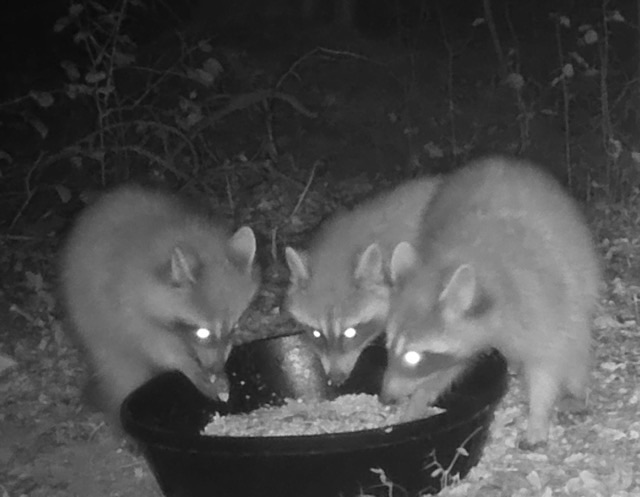
I purchased a large rubber dish to put out corn for the deer that visit the meadow. Apparently it is size 3R, for three raccoons will fit in the bowl, not four, and definitely not five, three.
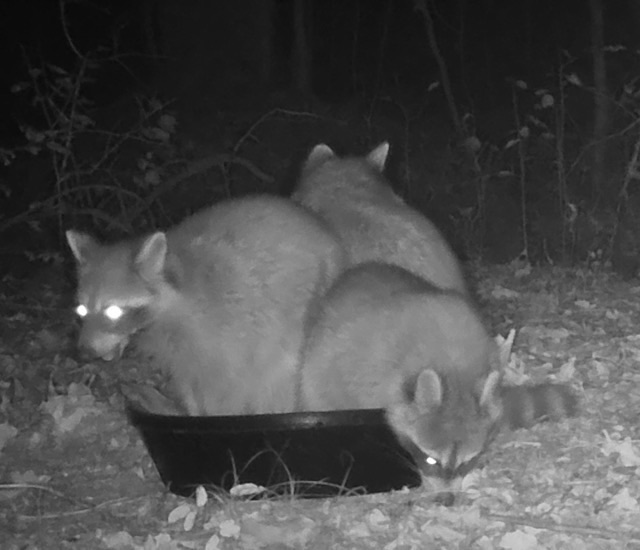
Apparently it is easier to guard the food from others if you sit on it.
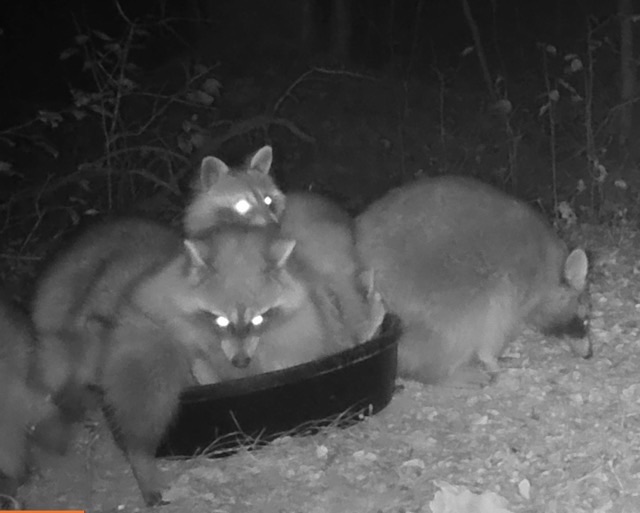
Prior to placing the dish, I had this trail cam set to take photos every 5 seconds, which gave me about a thousand pictures over the span of a month. I forgot to change the settings and when I checked the camera after 10 days there were 20,000 photos and the batteries were exhausted. Ninety percent of the pictures were of the gaze of raccoons sitting in the dish. After flipping through the photos I am quite sure there are at least two different families of raccoons living in the woods. There were definitely standoffs.
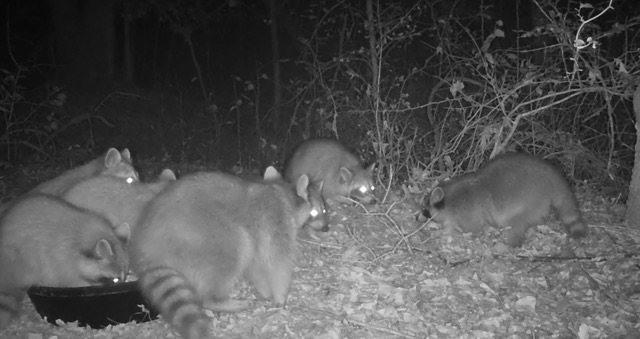
There is a hierarchy in the woods. The raccoons will yield to a deer that comes to the dish, and will yield to a skunk, but will not for cats or possums (neither of which seem interested in corn). The armadillos don’t care.