I’m enjoying spinning my cotton bolls. It is a meditative process, from picking the seeds out of the fiber to spinning it up. I have the time and no deadlines so I can enjoy the process. I absolutely see why cotton gins were invented, because seed picking bales of cotton by hand would be an arduous task.
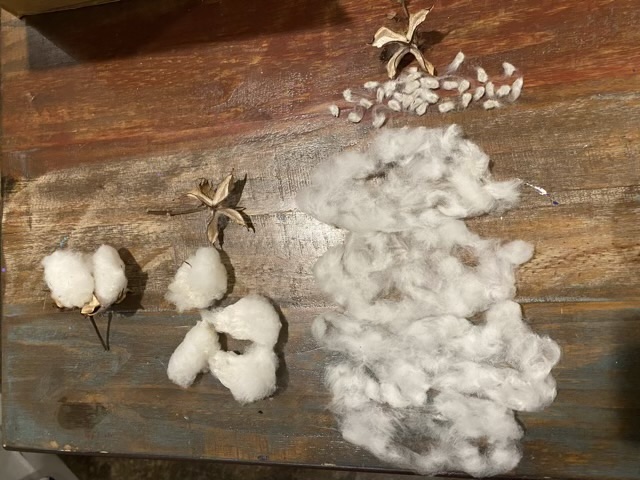
For grins, I laid out a cotton seed head, then another with the bolls removed, then another with the seeds removed.
Photo description: three cotton seed heads, the left intact, the middle with the bolls separated, the right with the seeds removed from the fiber
I also did a video showing how I remove the boll and seeds, then spin the fiber. I have not been carding the fiber, but experimenting with the pulled fluff.
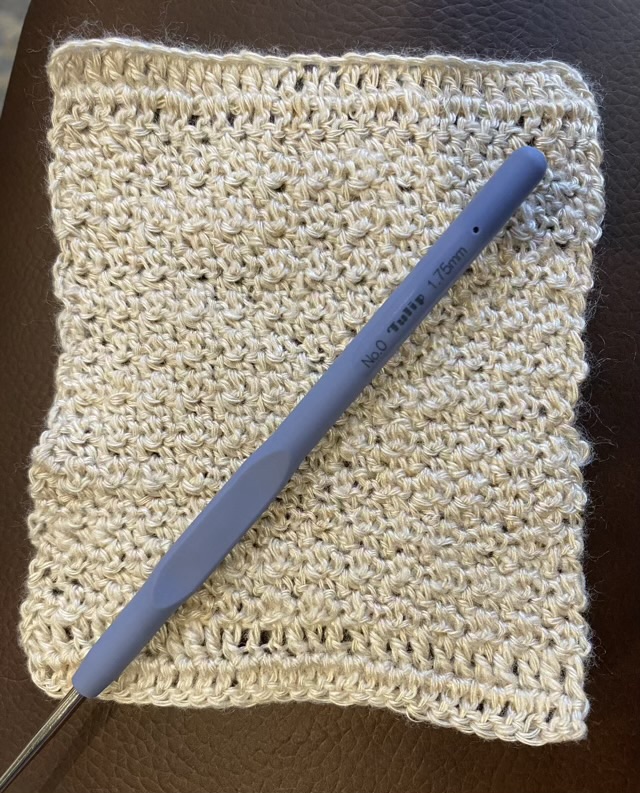
This is one of my favorite crochet textures. I’ve heard it called many names, but orange or lemon peel is what sticks in my head. It is an alternating pattern of single and double crochet stitches across, the on row two the single crochets go in the previous double crochet, and the double crochets go in the previous row’s single crochet. It takes a little time to recognize which stitch is which, but the finished project is very forgiving.
Photo description: swatch of orange peel crochet with double crochet top and bottom edge made with hand-spun mint infused cellulose fiber and a 1.75mm crochet hook
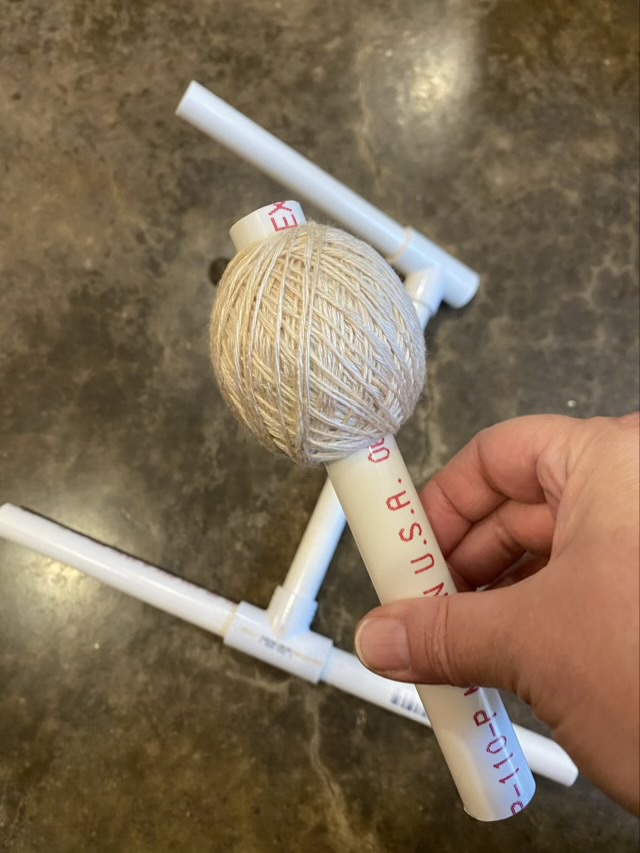
I finished plying the rose combed top fiber, wound it onto my PVC niddy noddy, and gave it a rinse. When it was dry, I took the skein and hung it over the back of a chair, but I went to wind it into a ball, and couldn’t find my nostepinne, or the rolled card stock I had been using. Hm. Then I noticed the PVC pipe is about the right size. Perfect.
Photo description: nostepinne style ball wrap on a PVC pipe from a home made niddy noddy
Are swifts and ball winders and wooden niddy noddys nice? Yes, of course. Are they necessary to the yarn making process? Nope. The back of a chair, or an extra pair of hands, and a rolled paper or a length of pipe will do.
I have been designing this graphic in my head for about two years, and have finally made it happen! It is available on Redbubble and TeePublic (which are sister sites, but carry different styles).
Photo description: “Sit and Spin” words in old script with the silhouette of a traditional spinning wheel and radial lines representing the action of spinning
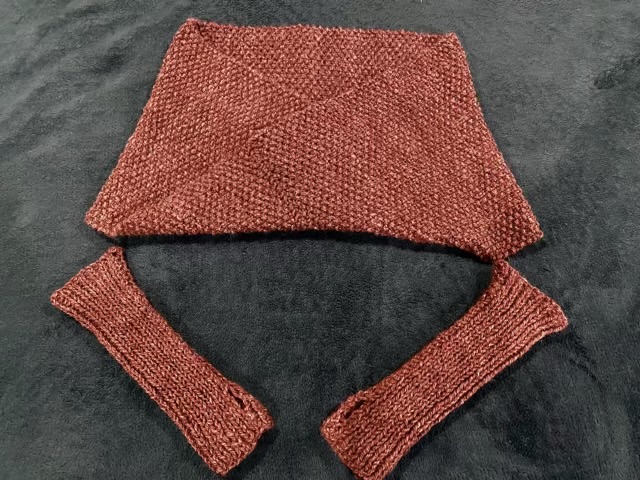
When I started knitting with my three-ply hand-spun merino/alpaca yarn, I wasn’t sure how much I would have. So the plan was to go a flexible route. I intended to make a wrap around scarf with sleeves, but rather than start with the sleeves, which locks me into the pattern, I started with a moss stitch on the body of the scarf (sleeves can be added later). When I knit the scarf long enough to go around my shoulders, it was obvious that I wouldn’t have enough to knit the additional third and have sleeves, so I made the scarf section into a shrug by sewing it into a Möbius ring. The Möbius shape allows the shrug to fit the wearer both at the shoulders and the elbows. A straight tube has less adjustability.
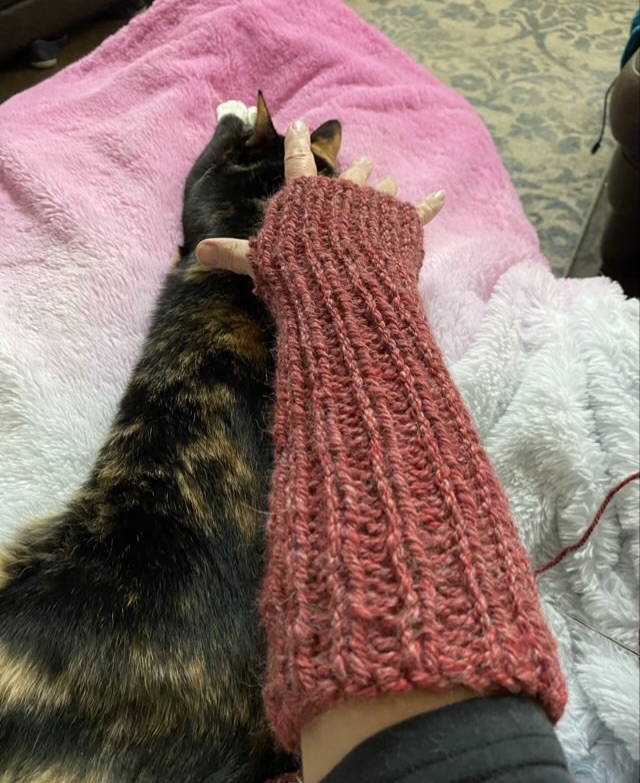
I then knit two long fingerless gloves in a rib stitch. To keep the gloves even, I worked from both ends of the yarn cake with size 11 circular needles, working both gloves flat at the same time. When they were long enough (I didn’t run out of yarn this time), I sewed up the sides and left a thumb hole (many thanks to my crochet friend for the suggestion!)
Photo description: hand spun, hand knit shrug and long fingerless glovesPhoto description: trying on one fingerless glove, calico cat for scale
The shrug and gloves have the same aesthetic as a scarf with sleeves, but with more flexibility for styling. And if you run out of yarn, at least there is one finished useable item.