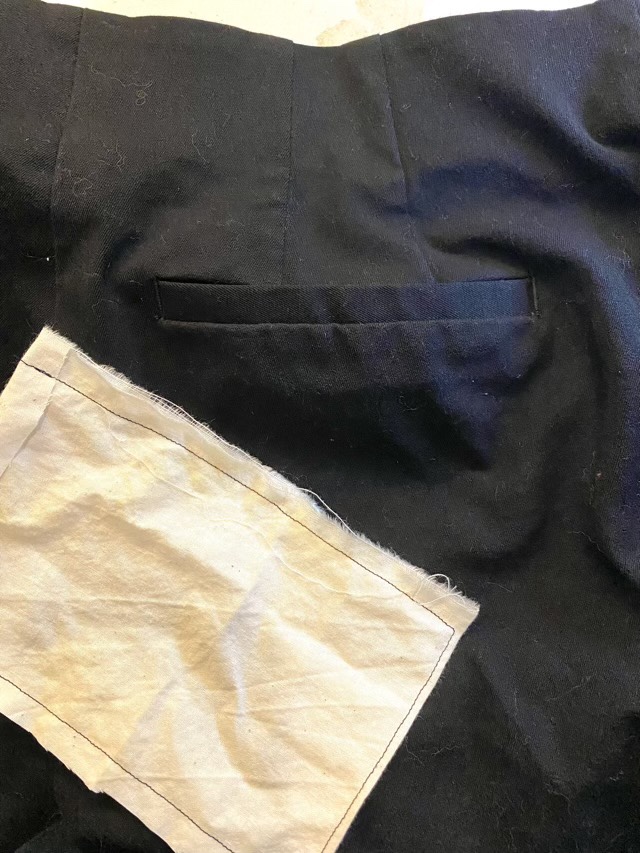
In the realm of clothing, there is nothing more abhorrent than a fake pocket. All the hard work has been done, with the fiddly finish and neat corners, why couldn’t the designer just add a real pocket? And not one of those shallow useless pockets, but proper pockets. I’ve heard the line “it changes the line of the garment,” well, then they are more concerned with themselves than with their customer. Ok, rant over. Let’s fix the issue.
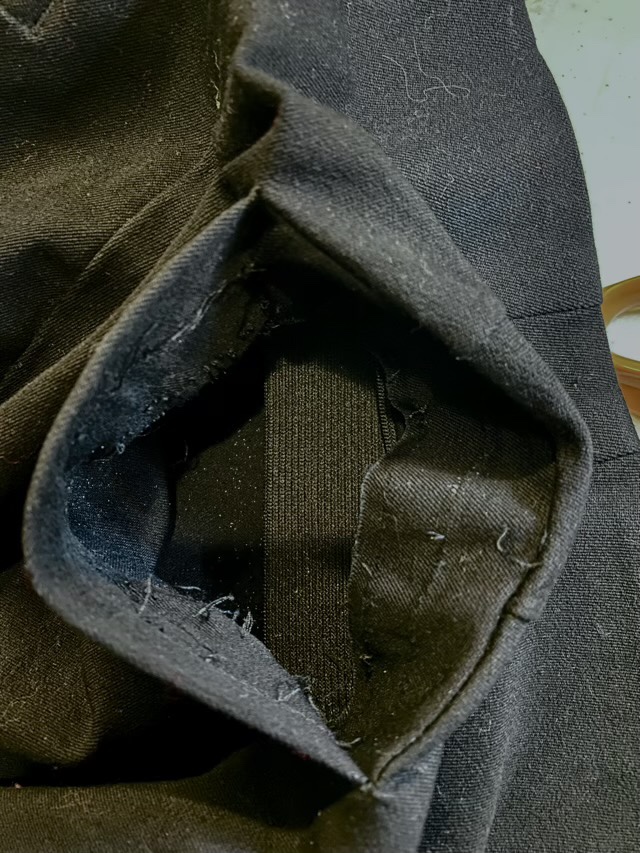
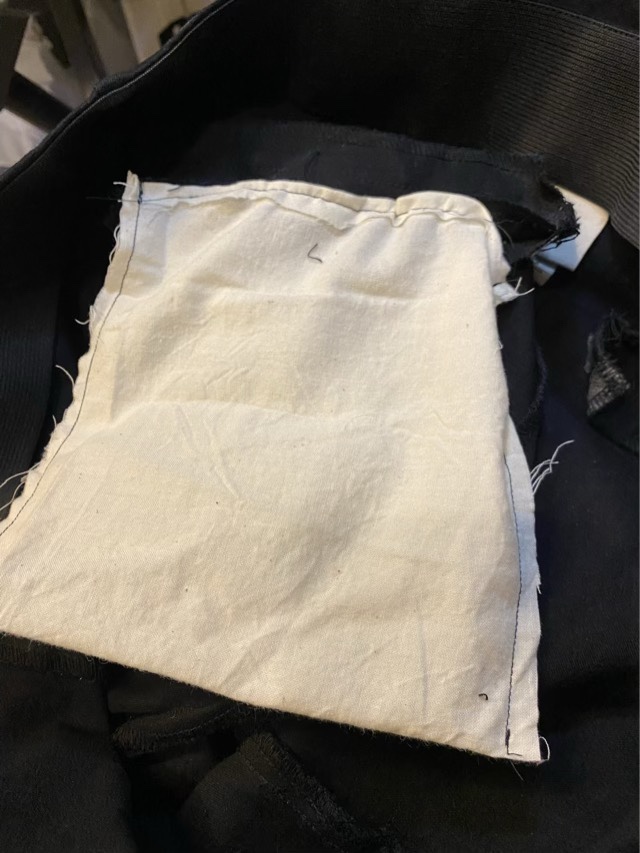
Fake pocket in women’s pants, with a simple cotton pocket ready to sew inClip the seam keeping the fake pocket closed, so it opensOn the wrong side, sew in the pocket over the pocket opening. You can fold in the raw pocket edges, and fold the pocket top out if you want to get fiddly. Sew along the front and back of the pocket opening, don’t worry if there are small gaps at the end of the seams, they will be at the top of the pocket.Pocket insert installed. Crises averted. Wrongs righted. Balance restored.
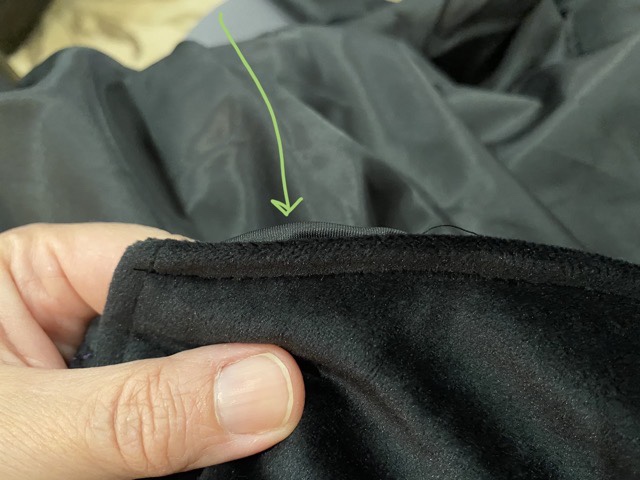
Inevitably when I sew a lining, a section of the lining slips and shows past the edge. I use pins and go slowly, but lining material tends to be slippery, especially when sewing satiny fabric to velvet.
Lining material showing past a edge
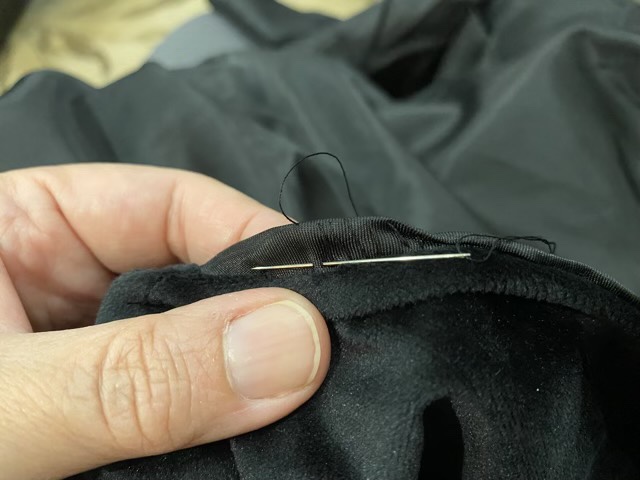
At this point there are several choices: hope no one notices (I know it is there!!), rip out the seam and try again (horror), or hand sew it. I have found a rather useful stitch to tuck in the offending blob of material.
Sewing a folding edge
To fold the lining in and keep it there, it works well to alternate small stitches near the original seam, then at the top of the original fold. Keep these stitches loose for four or five repeats, then gently pull the stitches tight. The fabric folds down and is secured!
Lining tucked and tackedNo lining showing on the edge of the velvet
This is part of an adjustment on a purchased velvet tail coat. It was faster and more economical to get a pre-made garment, then make alterations, than to make the jacket from purchased material and a pattern. Although I would have had the same issue either way; linings and velvet always gives me fits.
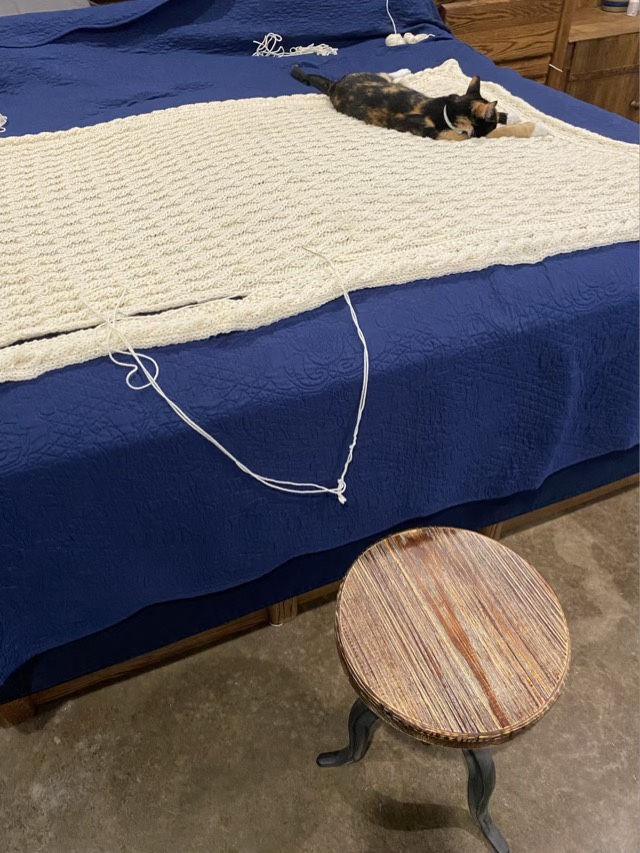
Time to sew the borders on Grandma’s blanket! I laid the center field and borders out on the king bed, and set up a stool so I could sit and sew. As an extra precaution, I used quilting pins to secure the borders to the middle at regular intervals.
Blanket laid out on the bed for sewing on borders
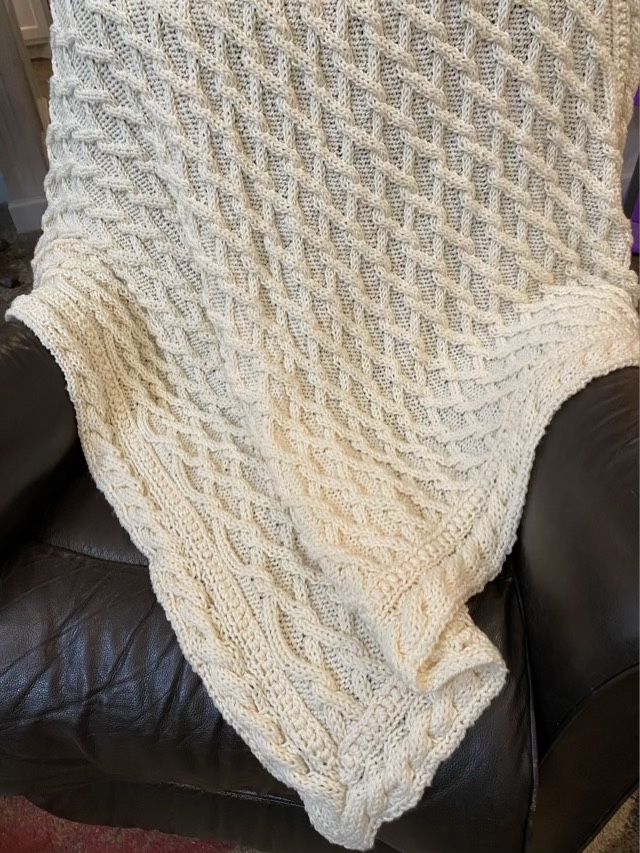
I used a mattress stitch, but with the border over lapping the center, by picking up stitches under the border edge and from the top of the center field. This hid the curled edge of the middle, but showed off the neat edge of the border.
Izzy demanding attention
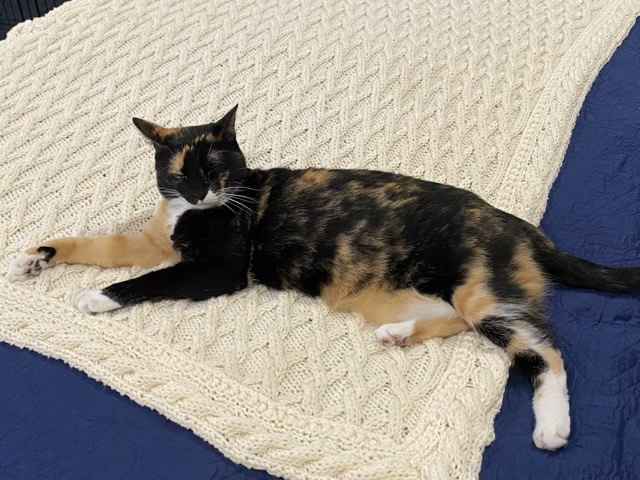
Izzy tried to get her tail into the stitching, but luckily I am adept at sewing around cats. She has been waiting for months to lay on this blanket. She made the most of it.
Borders sewn, Izzy content
I did wash the blanket and dried it in the dryer (deep breath, it is acrylic yarn, it can take it), to get most of the cat hair off.
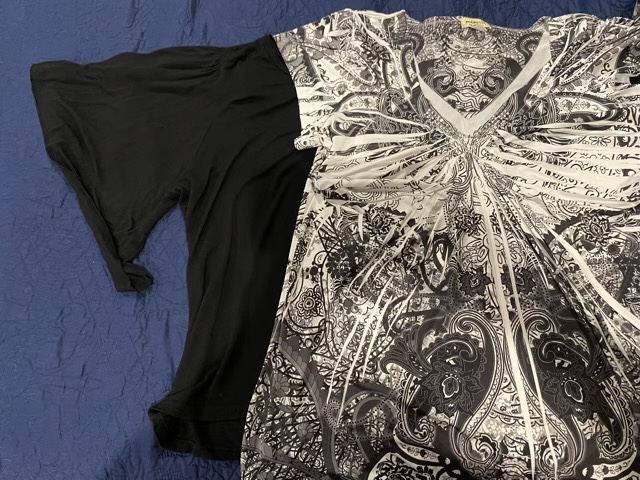
I have a printed shirt that I like the neckline and bodice, but am not fond of the cap sleeves. I have a black shirt that I love for the sleeves, but the body is lack luster. Time to combine!
Black shirt with great sleeves (left), and printed shirt with great neckline (right)
I took a seam ripper and removed the cap sleeves, then used fabric from the body of the black shirt to trim out the black sleeves using a backstitch (yes, by hand). A hand sewn backstitch has some flex and stretch, unlike a machine straight stitch. I used a whip stitch to put the new sleeves on, leaving a gap at the shoulder since I also like the “cold shoulder” style shirts.
Finished recombined shirt
Now I’m eyeballing the rest of my shirts to see what I can improve.
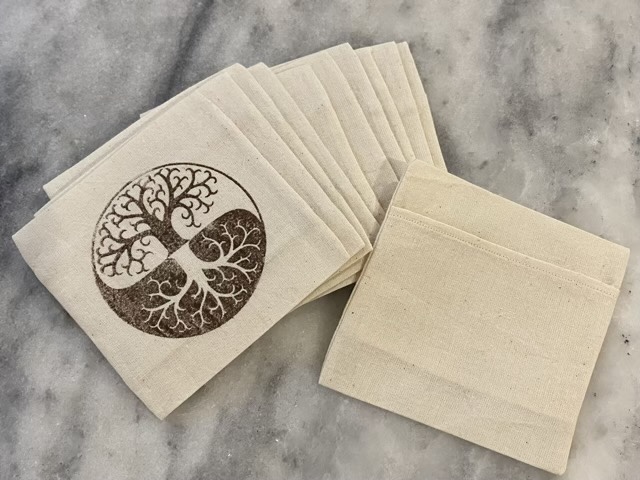
I had an idea for a small pouch that didn’t require a string tie, or button, or zipper. Inspired by couch pillow covers, these have overlapping flaps in the back that do well to keep small rigid items protected.
Stamping muslin
I wanted 4” square pouches, so tore an 11” strip of washed and ironed unbleached cotton muslin, marked 4.5” sections along the strip, and stamped my logo in the center of each section. To stamp, I squirted some fabric paint into a bowl, then loaded a sponge brush with paint to apply the paint to the stamp.
Making a 1/4” hem
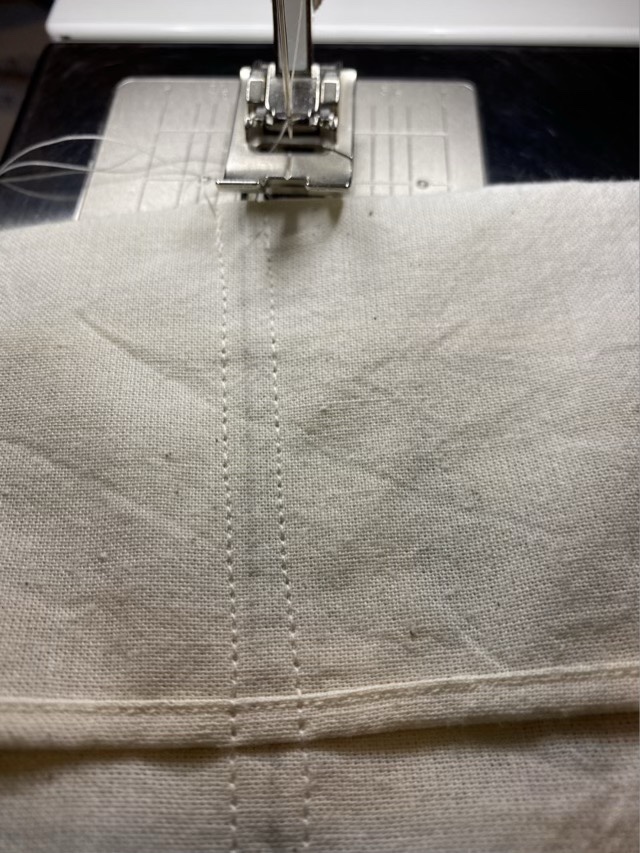
I hemmed both long edges of the strip with a 1/4” hem foot on my sewing machine. (Hands down, this is my favorite foot.)
Sewing adjacent sides of the pouches
To form the pouches, I folded the long strip inside out, with about a 2” overlap, then sewed 1/4” on either side of my pencil lines. A cut between the seams, clips of the corners, turned inside out and pressed, and I was able to fairly quickly produce many small product bags!