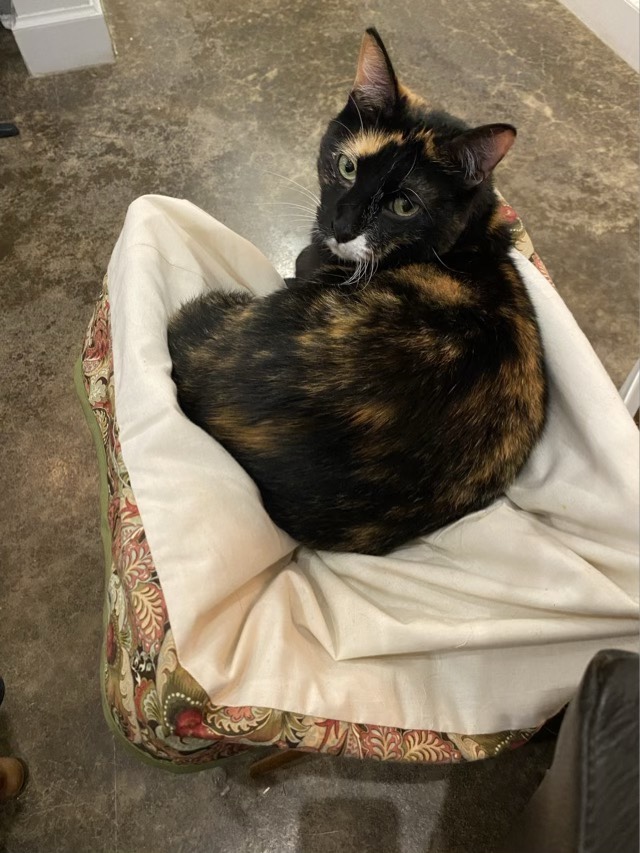
Izzy the cat loves when I sew quilted things. I recently sewed my sister a quilted bag and Izzy spent most of the time laying on the quilted pieces and purring. Loudly.
Izzy napping on my project
I rearranged my craft room recently and am trying the folding table in a new location. She approves, and really appreciates that there is room for her fuzzy butt. Especially if she can lay on fabric as well.
Quilted bag
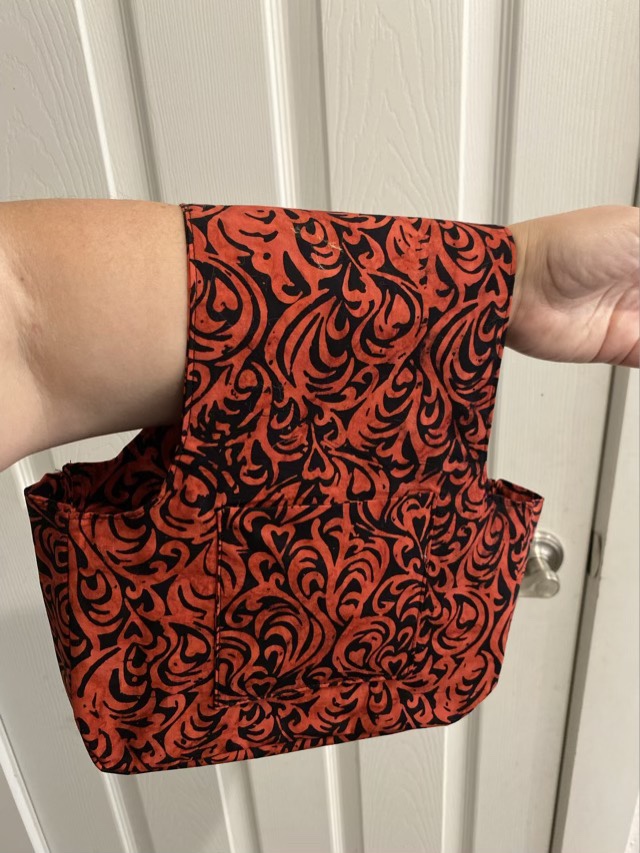
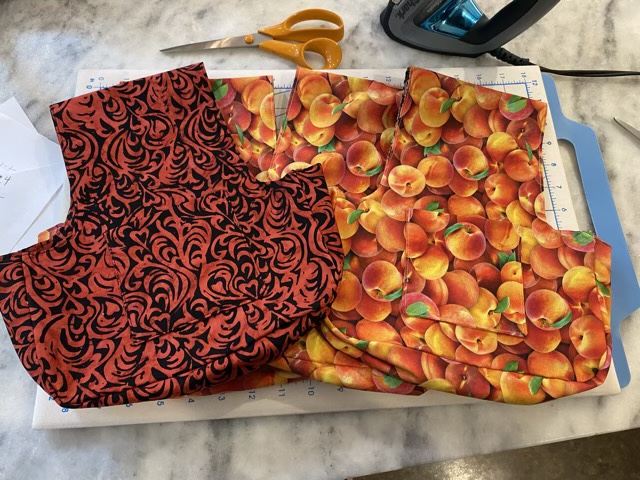
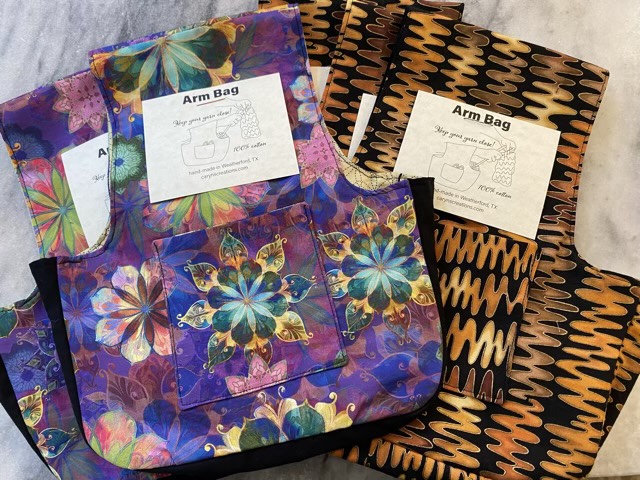
Here is the finished project, modeled after one of my favorite totes, with two external pockets, two internal pockets (one with zipper), and a bonus pencil pouch. I went a little crazy with the padding, so I’ll wait and see how it functions in the wild before I post any patterns or instructions.
I am not a fan of dye. I like color, don’t get me wrong, but bleeding, unintentional splotching, and staining the wrong item irritate me. Still every so often, I try again. I made my youngest a dress for the holidays (she doesn’t read my blog, so I’m safe to post today). I could design the dress for spinning as requested, but I couldn’t find the right sky blue color, so I purchased a white cotton knit.
Swing dress in white
Because it is me making the dress, I included a pocket panel across the front. Three sides of the pocket are sewn in and there are two openings, so it is rather like a hoodie pocket, but concealed.
Pocket!
After the dress was finished and hemmed, I dyed it. First I did an all-over dye with RIT Aquamarine, following the instructions carefully.
Dress in a dye bath on the stove to maintain temperature
I rinsed the fabric (for forever), and then while the garment was still wet, I dip dyed the bottom in a different dye bath of Royal Blue. I then rinsed again. Then I ran it in the washer. Then I ran it with color stay, then I washed it again before drying it.
Blue ombre dress (it is difficult to photograph blue)
From a distance the color came out as intended, but up close there are splotches and variations that were not evident after the initial dye bath. Hm. I’m still not a fan of dye.
I picked up a shirt when shopping with the kids and the neckline turned out to be way too low. So I added a modesty panel using cotton knit material. I did attempt to do the whole alteration on my machine, but I had a terrible time feeding the thin knit material consistently under the sewing foot. Frustrated, I turned back to hand stitching; the inside of the neckline had a convenient seam that made making an invisible whip stitch easy. I think the next time around I will hand stitch a decorative edge on the top as well, leaving the machine work for woven cotton and inside seams. The finished product has the look of layers, without the bulk.
Crescent of material cut to cover the low neck line of a knit shirtMachine stitched top edgeHand stitching panel to inside of shirt with a whip stitchInstalled modesty panel
I wanted to try my hand at making a dress for my youngest. I took one of her dresses that she likes and fits well and used it as a pattern to cut the new fabric. I did not cut or alter the old dress, just laid it out on the fabric and gave a generous half-inch seam allowance when I cut the pieces.
Using an existing dress as a pattern
My youngest loves pockets, so the dress had to have pockets, but I didn’t think front patch pockets like the original dress fit the fabric of the new dress, so I did a single layer seam pocket. The pocket is sewn to the front of the dress, but because of the big bold pattern, they are almost undetectable.
Pattern pieces cut for the new dress, sleeves, pockets, front and back
Dusting off my clothing sewing memory, I sewed the pieces together, top of shoulders first, then I finished the neckline (while it was easy to access) with a strip of the matching fabric. I put gathering stitches across the top of the sleeve to ease it into place, and sewed the shoulder seam next. I pinned the side seam and placed the pockets. I then sewed the pocket seam in back, and turned over and sewed a half inch for the pocket opening in front. I sewed the side seam down to the pocket and then from the bottom of the pocket to the hem. At that point I pinned the pocket to the front and sewed it in place, reinforcing the stitching at the top and bottom. I hemmed the sleeves and (…ahem) hem, the gave the dress a quick wash and dry.
New dress (left) with old dress (right)
The dress came out better than I expected and fit my youngest well. She appreciated the pockets.
I did the pocket the way I remembered, by using my hand as a pattern, which makes a nice looking pocket perfect for hands. I think next time I will make one that has a curve on top, but drops down along the seam to make the pocket more functional for things in addition to hands. I would also dip the front of the neckline a little more than I did, next time. And there will be a next time. It is hard to find appropriate clothing in the stores that fits. Although I might change my tune after the first trip to the fabric store. (This dress was made from fabric from my stash.)
In the realm of clothing, there is nothing more abhorrent than a fake pocket. All the hard work has been done, with the fiddly finish and neat corners, why couldn’t the designer just add a real pocket? And not one of those shallow useless pockets, but proper pockets. I’ve heard the line “it changes the line of the garment,” well, then they are more concerned with themselves than with their customer. Ok, rant over. Let’s fix the issue.
Fake pocket in women’s pants, with a simple cotton pocket ready to sew inClip the seam keeping the fake pocket closed, so it opensOn the wrong side, sew in the pocket over the pocket opening. You can fold in the raw pocket edges, and fold the pocket top out if you want to get fiddly. Sew along the front and back of the pocket opening, don’t worry if there are small gaps at the end of the seams, they will be at the top of the pocket.Pocket insert installed. Crises averted. Wrongs righted. Balance restored.