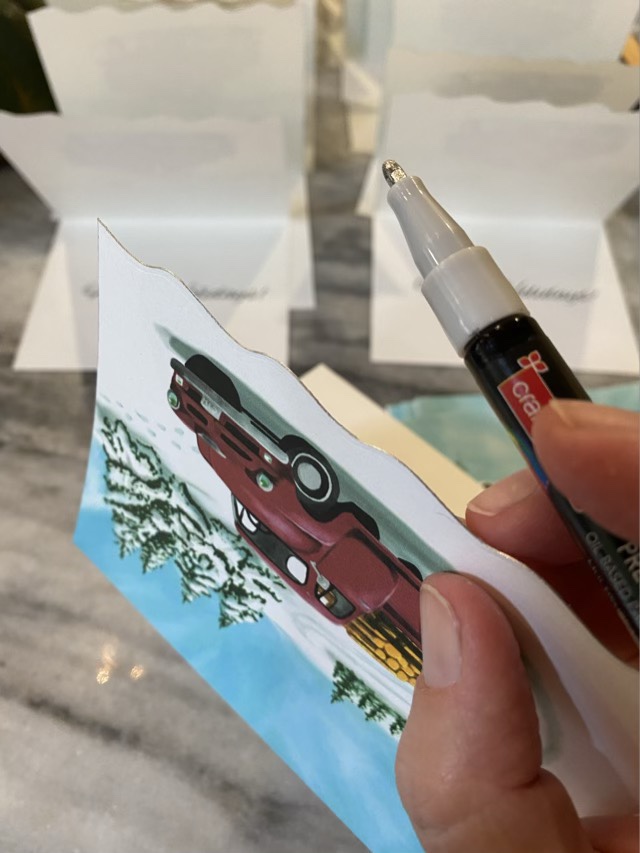
To add a little pizzazz to my greeting card, I ran an oil-based silver marker down the edge of the card stock to gild it. It gives a little definition to the edge, and a flash of sparkle. It worked well, though one pen only covers the front three edges of about 12 cards. This collection was a custom order, but I did a few extra and uploaded them to my Etsy site.
Gilding a greeting card with oil-based silver marker
I’ve been having fun designing “little red truck” digital paintings for a friend who needs greeting cards. I’ve posted the technical bits of the digital side on my business site (https://carynscreations.com/blog/), but I thought I would go into the hand finishing here and provide some tips and tricks that I’ve found along the way.
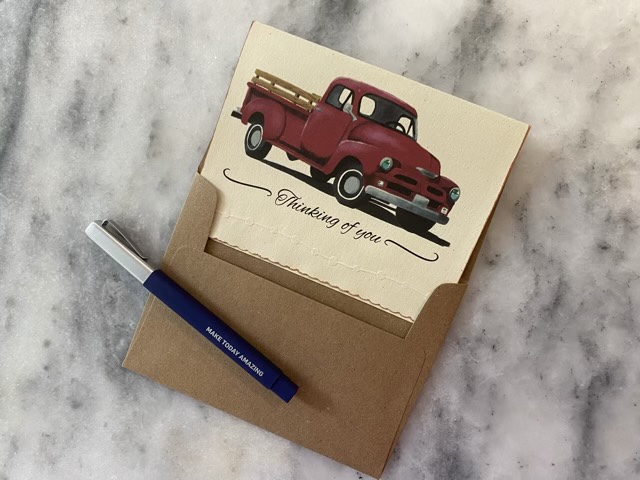
Little Red Truck card
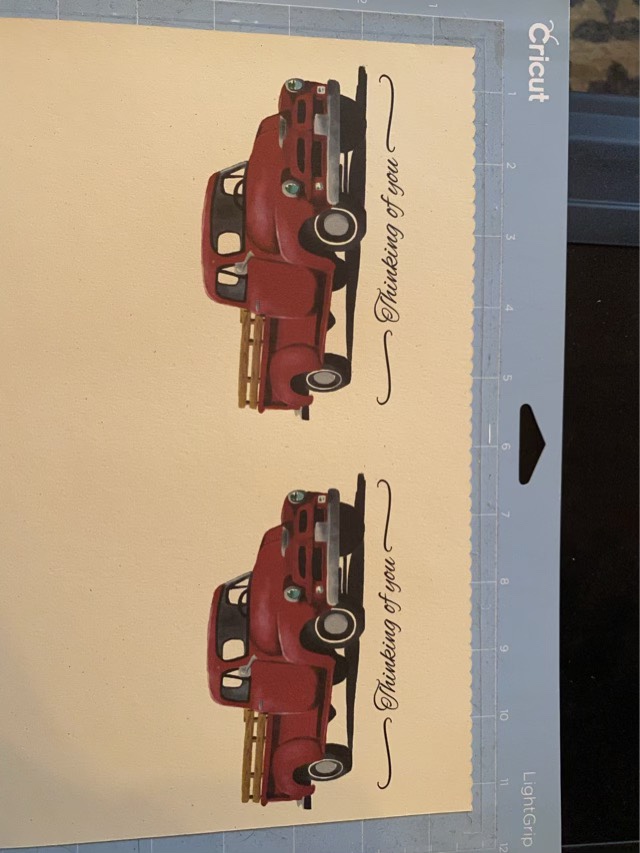
So the first hurdle was getting my image to print properly on my printer. When I would print from the computer, the colors would be faded and streaked. My printer has the capability to print pictures from USB, so I made my image a JPG, transferred it to USB, and printed directly from USB to printer. The print took forever to produce, but when it was done, it was glorious and imperfection free! And I print on 100% recycled card stock, which makes my heart happy.
Using an electronic cutting machine to do fancy edges
The next challenge was making a fancy cut on the front edge of the card. I bought a couple patterned scissors, but they are fiddly and are difficult to line up. So instead I designed some edges and used my Cricut to cut them. So much easier and faster than scissors or an x-acto knife.
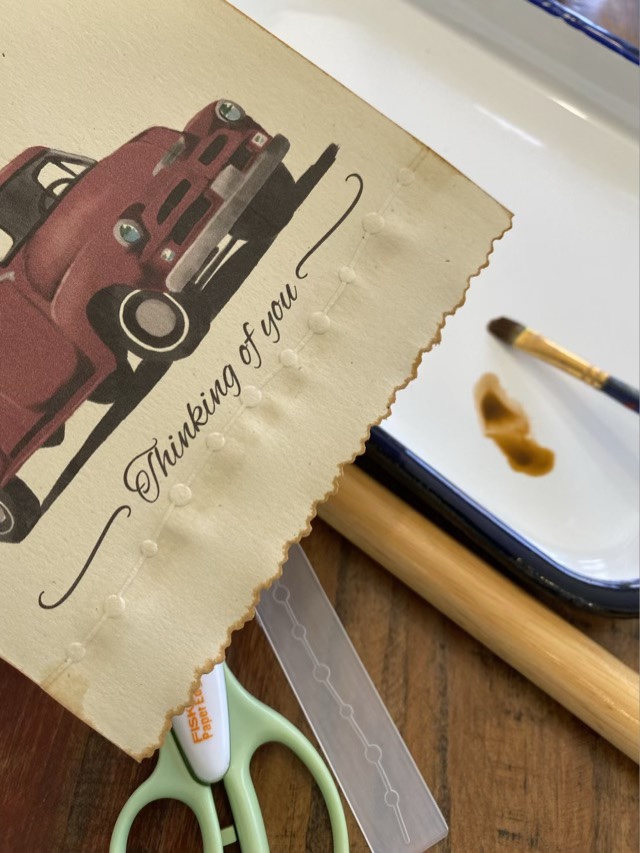
Embossing with embossing folders without a machine
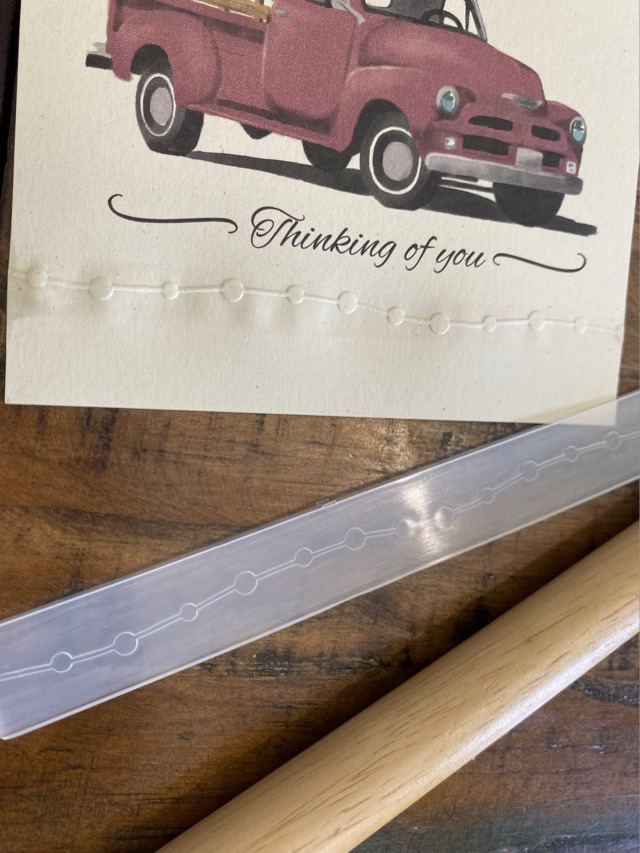
Although I have an electronic cutter, I did not want to buy an embossing machine. I discovered embossing folders and found that if you wet the paper and use a rolling pin or stick to press down on the folder, you can skip the machine. I have a modest set of four embossing folders. I need to figure a way to design and make my own, because that would just be cool.
Aging the edge
The next card improvement was aging the edge to give the card an antique look. I tried brushing the edge with a chalk ink pad, but was not pleased with the results. Instead, I broke out my water colors and used a sepia colored liquid ink. I like the effect best if I pre-wet the card edges, then carefully apply the diluted water color to the edge, so capillary action spreads the color in a pleasing way.
“Ironing” with a hot laminator
Finally, all that wetness added to do embossing and edge aging makes the cards a little warped. I found that it was easy and effective to run the cards through my hot lamination machine (without a lamination folder).
The cards, with a 100% recycled kraft brown envelope, are available for purchase on my Etsy site. If they are gone, I will make more. I do make sure that the pictures are of the actual item, rather than stating “items may vary” because I think it is important to see pictures of exactly what you are buying.
I spend a chunk of money on sketch books, both for me and my kids. I want them to practice their art skills, and they enjoy it, so it is a worthwhile sacrifice of paper. But purchased journals are usually heavy as well as expensive. To help lighten up my youngest’s backpack, I made some simple blank journals from printer paper, card stock, and upholstery thread.
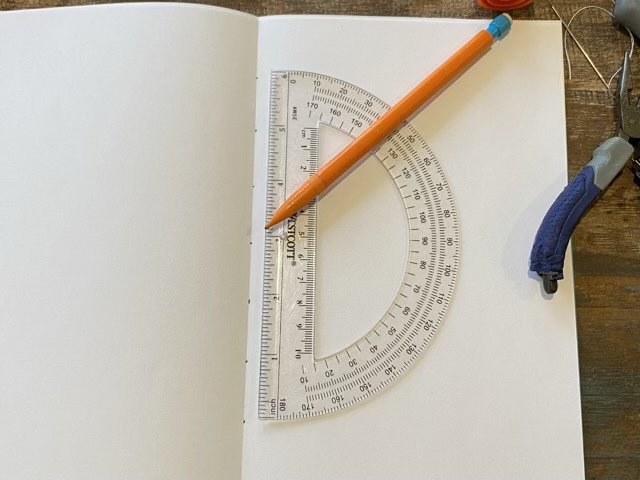
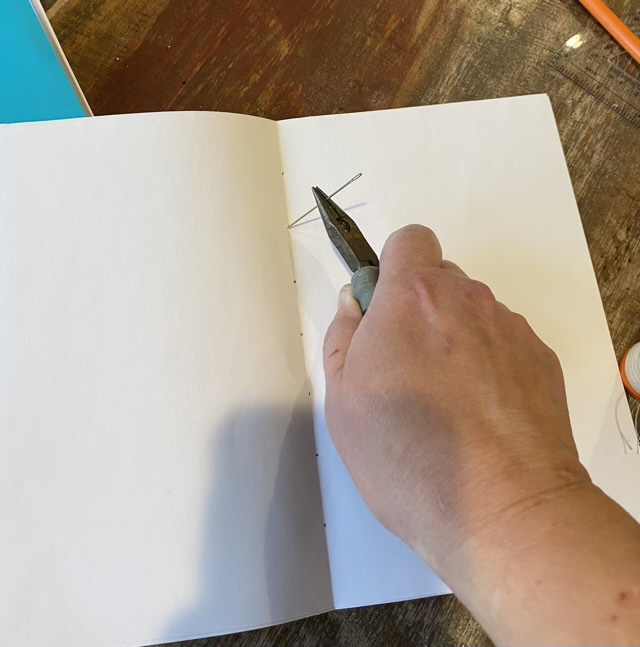
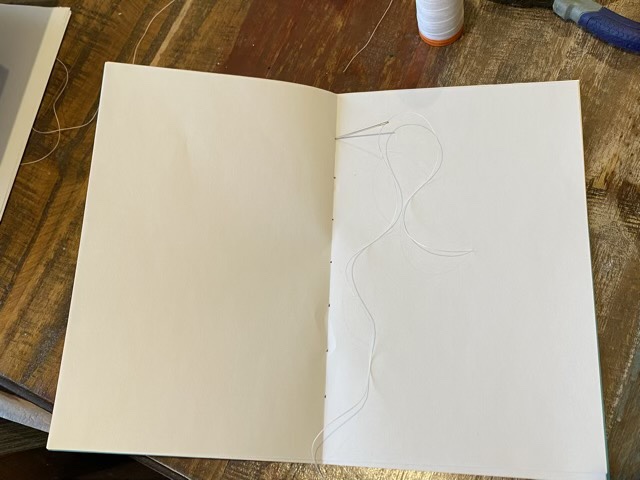
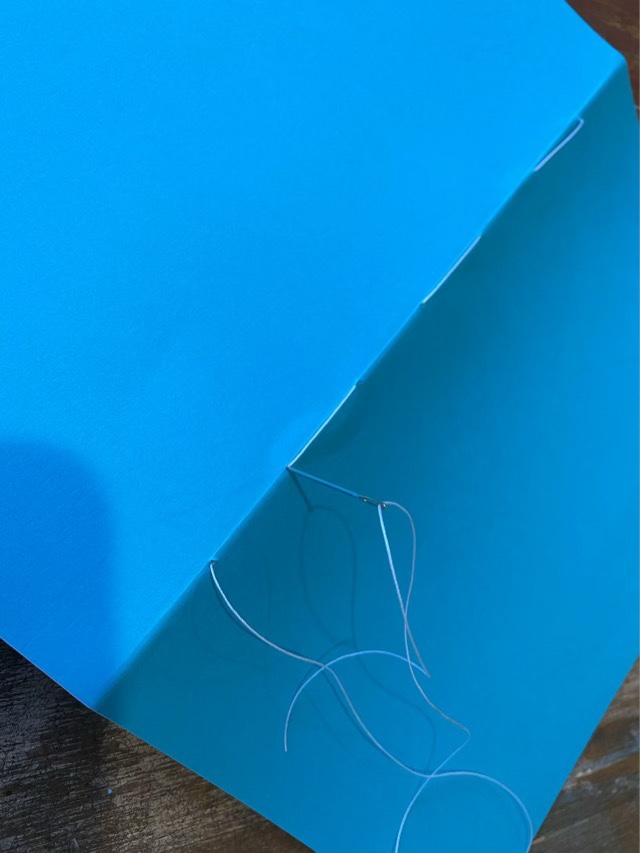
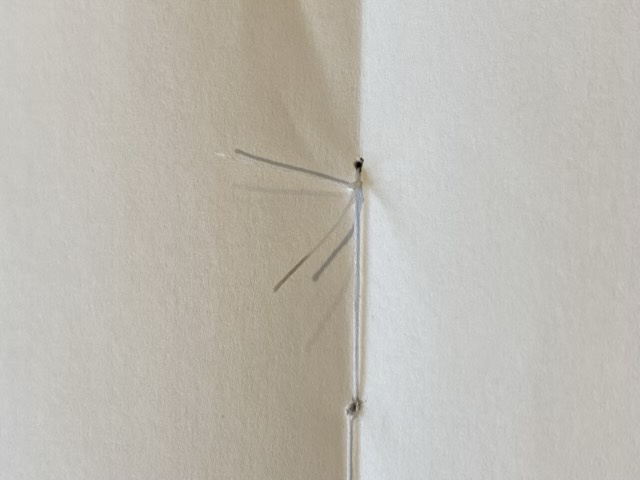
Fold 2-4 pieces of printer paper and one piece of card stock in half, open up, and mark points an inch apart along the inside foldPoke holes through all sheets of paper and cardstock using an awl or needle and pliers (if you’ve broken your awl)Cut a length of upholstery thread three times longer than the fold. Using a threaded needle, start at the top hole from the inside.When you get to the bottom hole, sew back up. This will cover the gaps with thread.On the inside, tie a square knot and trim the ends.You now have a simple, light, blank journal for a fraction of the cost of store bought.
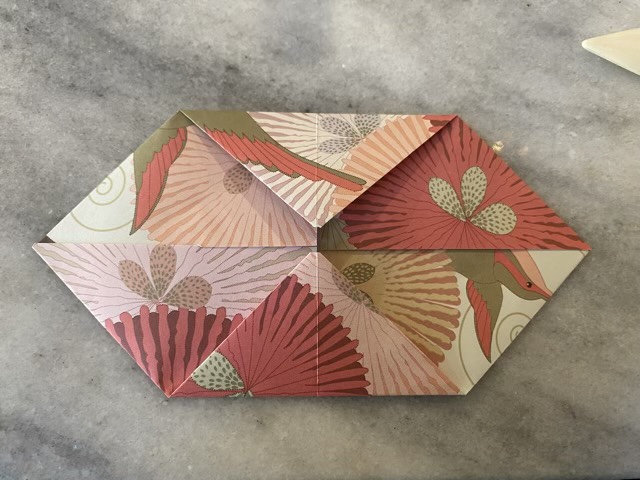
I was feeling weak when I walked through the craft store. I must have been, because a book of origami paper caught my eye and I bought it. A book. Of origami paper. What was I thinking? The pages were glued into the spine, rather than loose as in a package of origami paper, and even though I can bend the spine open to get the pages our relatively cleanly, they aren’t perfectly square. What to do with all this paper that isn’t quite suited for origami as torn? Maybe a wreath?
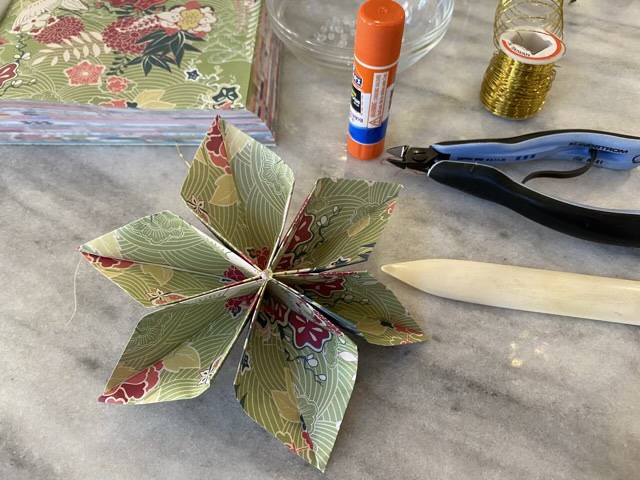
I found instructions for folded paper flowers (I’m not calling it origami, because it involves more than just folding), that uses wire, glue, and beads. I have wire, glue, and beads.
Paper flower
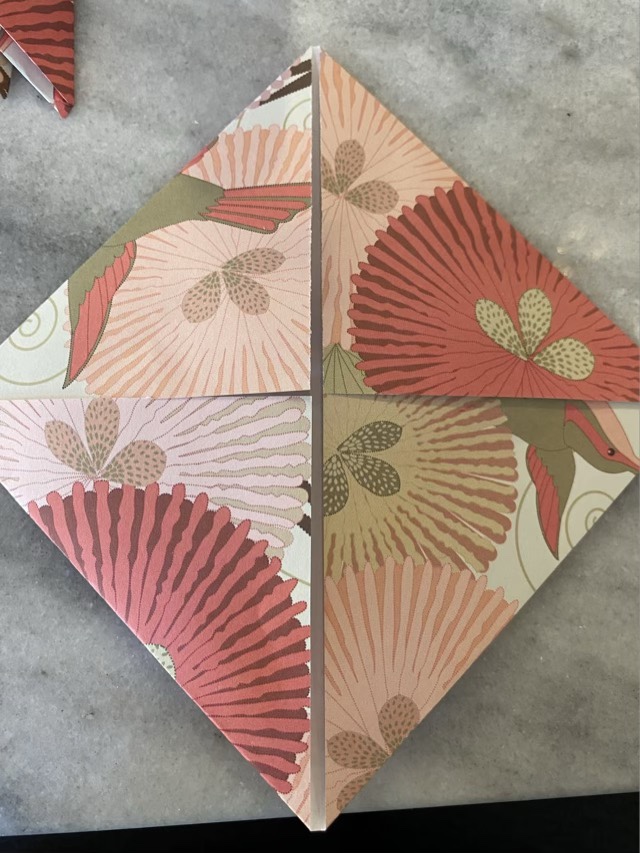
The way the flowers are folded allows me to hide the gaps due to the imprecise paper shape.
Folded paper with gapsGaps hidden in the fold
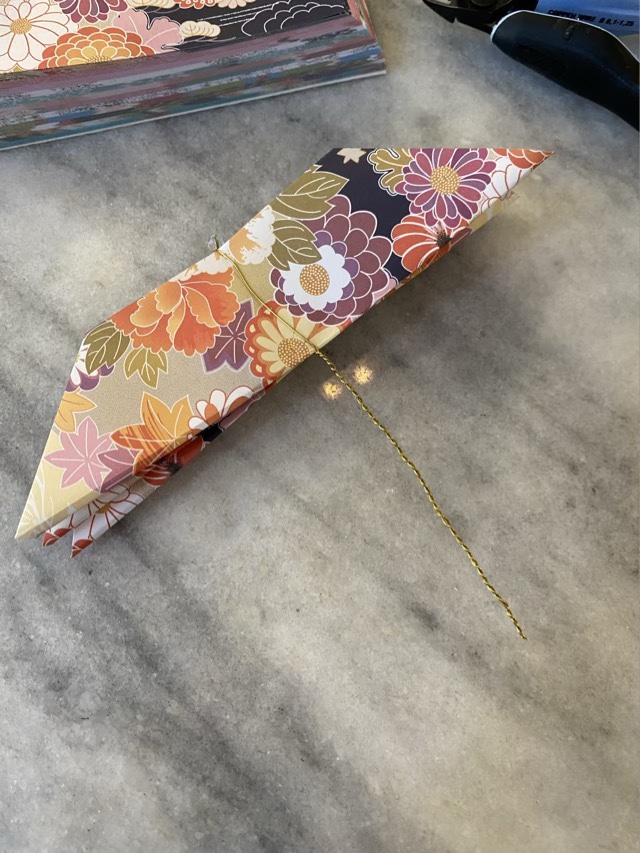
The way the wire goes around the paper, it makes sense to twist the two sides together to make a pick. Picks make it easier to stick the flower into a wreath form.
Wire twisted around three paper units
I’ll update y’all later on how the wreath comes out.
My eldest needs a journal as a prop for a play. The play is set in the 1920s and we didn’t want bright white crisp paper in the leather bound journal (I’ll get to the assembly of the journal in another post). I searched the internet and only came up with tea and coffee stains (and one that recommended burying the paper in the ground for two weeks). I needed eighteen sheets of paper aged; and the paper won’t hold up to handling when wet (we tried the tea method, no go). We also tried using a flame to slightly singe the paper, which was also time consuming with spotty (literally) results. I remembered a science experiment with invisible ink made from lemon juice. Could that work to slightly brown the paper? Yes, yes it can.
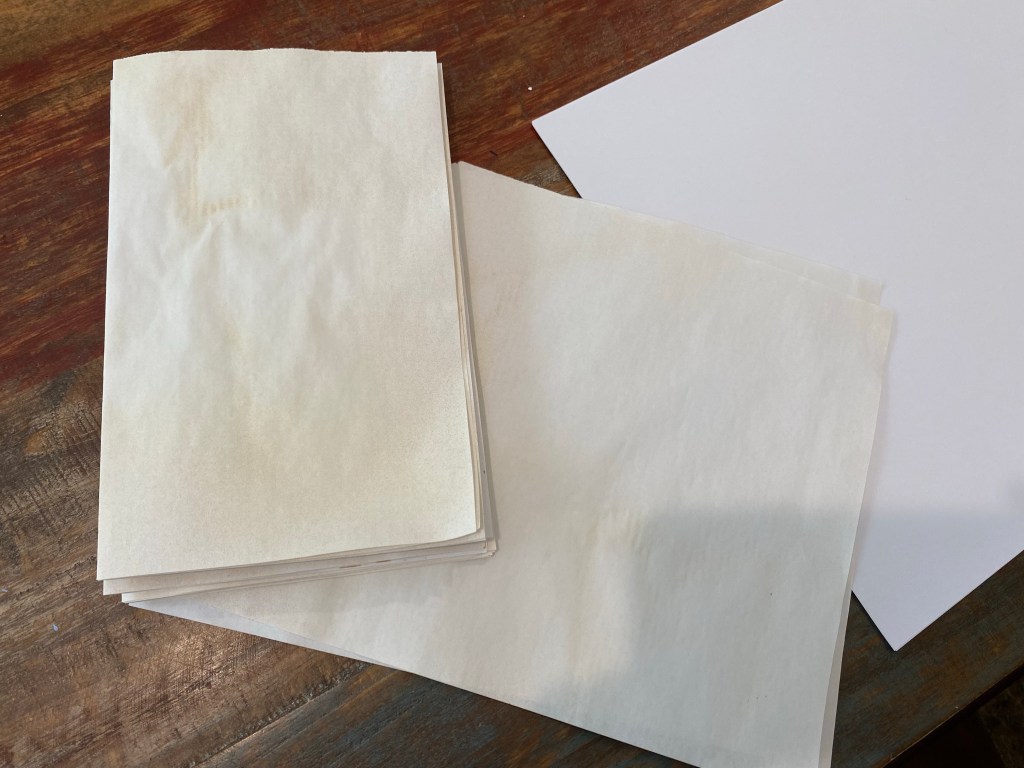
Aged paper folded into signatures (left) versus original paper (far right)
The method I found that worked best was to heat the oven to 350 degrees F, put a large cookie sheet in the oven, lay one piece of paper on the cookie sheet and mist it with a 50/50 mixture of lemon juice and water, and leave it in the oven for 3 minutes. I then flipped the paper over, misted again, and baked for 3 more minutes. An eye cleaner spray bottle works great for mist. The technique also wrinkles up the paper, so I needed to give the sheets a quick iron to get it to lay a little more flat. The results were exactly as I hoped! Now to finish the cover so I can assemble the journal.



 Critters and Craft