Twined card: canna

I collected canna leaves and stalks from very willing donors around town. These very tall herbaceous plants have large leaves and strong stems that have to be cut, not pulled. I dried the leaves, then rehydrated gently by wrapping them in a damp towel overnight. If twined or woven before drying, the material has too much moisture and will shrink significantly. By drying first, then adding back moisture just until the material is pliable, the shrinkage is minimized.
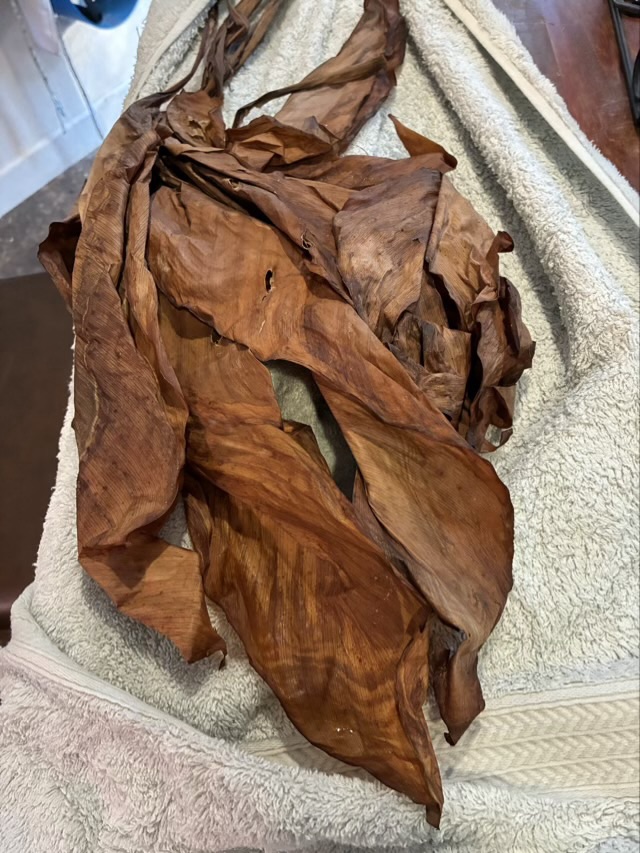
Photo description: dried canna leaves on a damp cotton towel

I tore the leaves into about one inch sections, separating most of the thin papery leaf from the long strands of the stem. Some stem fibers came away with the leaf.
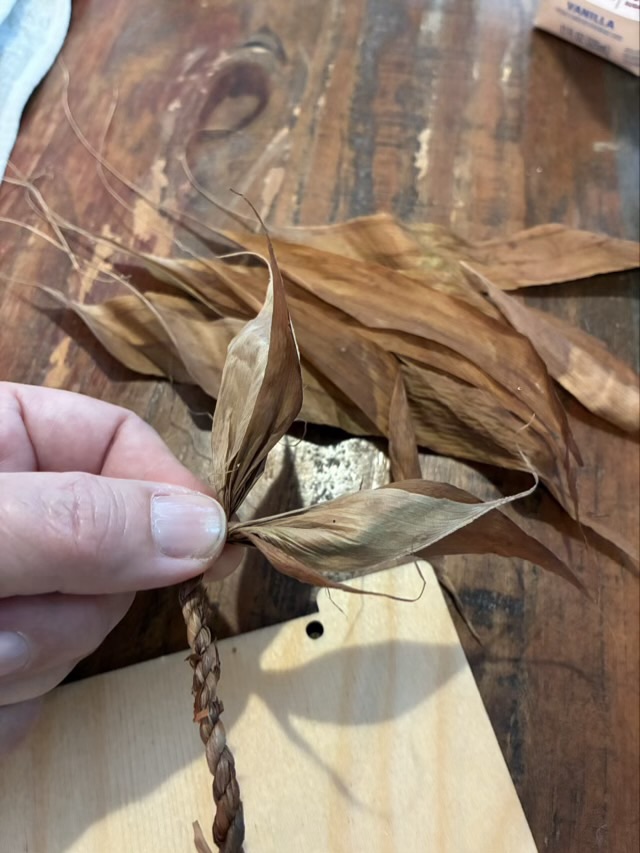
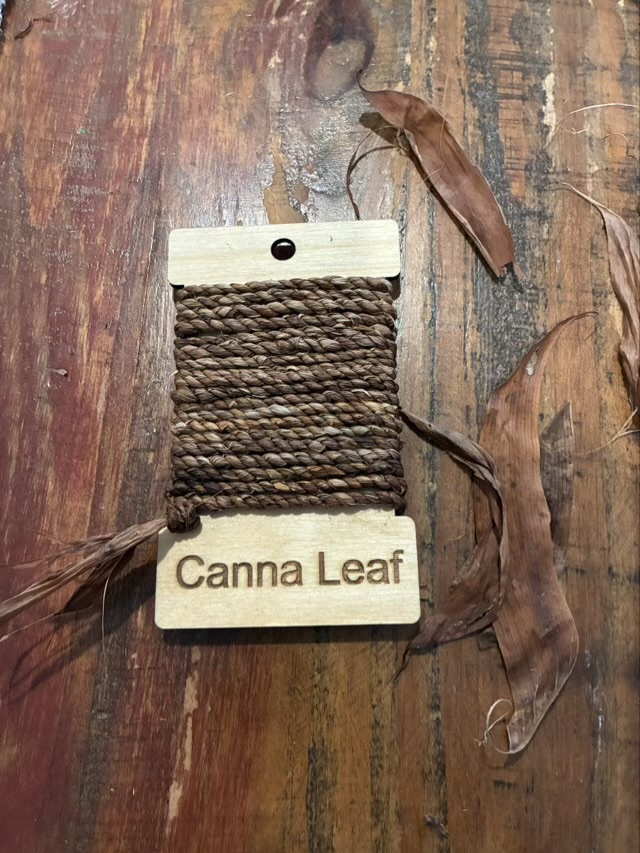
Photo description: strips of canna leaf in the process of twining
Photo description: laser cut flat wood spool with canna leaf twine, loose strips of canna leaf next to the card
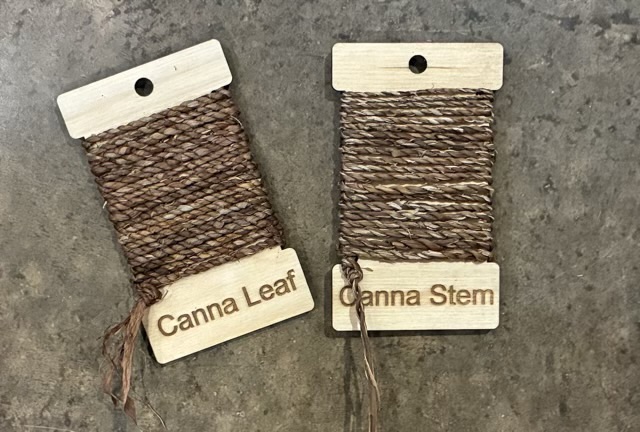
Photo description: two twined cards, one made from the canna leaf, one made from the separated stems

The twined leaves have a fuller more even appearance, but the twined stem feels stronger.

I still have the stalks to process, which will involve retting, which is something new for me. I am hoping the retting process, which breaks down the material around the fibers, makes it easier to free the very strong stalk fibers.
Crocheted leaf cluster

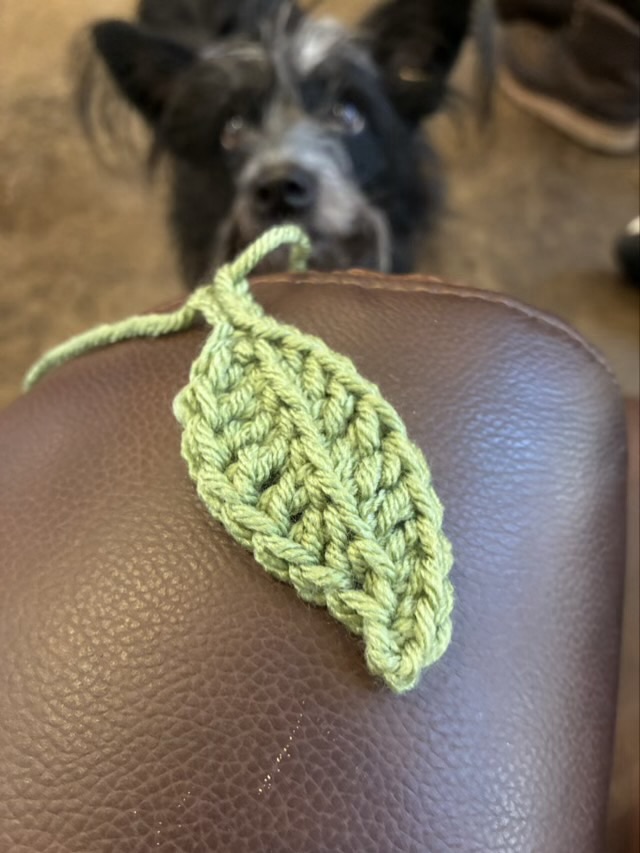
To crochet a simple leaf, my favorite method is to make a foundation row, then crochet in the back loop back down from tip to stem. The foundation row is regular crochet stitches with a single chain added in the middle of working the stitch. This gives a chain-like structure on both sides.

Photo description: crocheted leaf made in two “rows”

Here is a video, and below are written instructions.

Instructions for the leaf (American notation):

Stem: chain (ch) 5

First Foundation Half Double Crochet (ffhdc): yarn over (yo), insert hook in second chain from the hook, yo, pull up loop, ch 1, yo, pull through three loops.

Foundation Double Crochet (fdc): yo, insert hook through two side loops, yo, pull up loop, ch 1, yo, pull through two loops, yo, pull through two loops.

Fdc again.

Foundation Triple Crochet (ftc): yo, insert hook through two side loops, yo, pull up loop, ch 1, yo, pull through two loops, yo, pull through two loops, yo, pull through two loops.

Ftc again.

Two fdc.

Foundation Half Double Crochet (fhdc): yo, insert hook through two side loops, yo, pull up loop, ch 1, yo, pull through three loops.

Foundation Single Crochet (fsc): insert hook through two side loops, ch 1, yo, pull through two loops.

Ch 3.

Single crochet in back loop (scbl).

Double crochet in back loop (dcbl).

Dcbl.

Triple crochet in back loop (tcbl).

Tcbl.

Dcbl twice.

Half Double Crochet in back loop (hdcbl).

Slip stitch down the initial chain.

To make a sharper leaf tip, slip stitch the ch 3 together. To make different shapes, combine different numbers of stitches. You don’t necessarily need to match fdc with a dcbl.

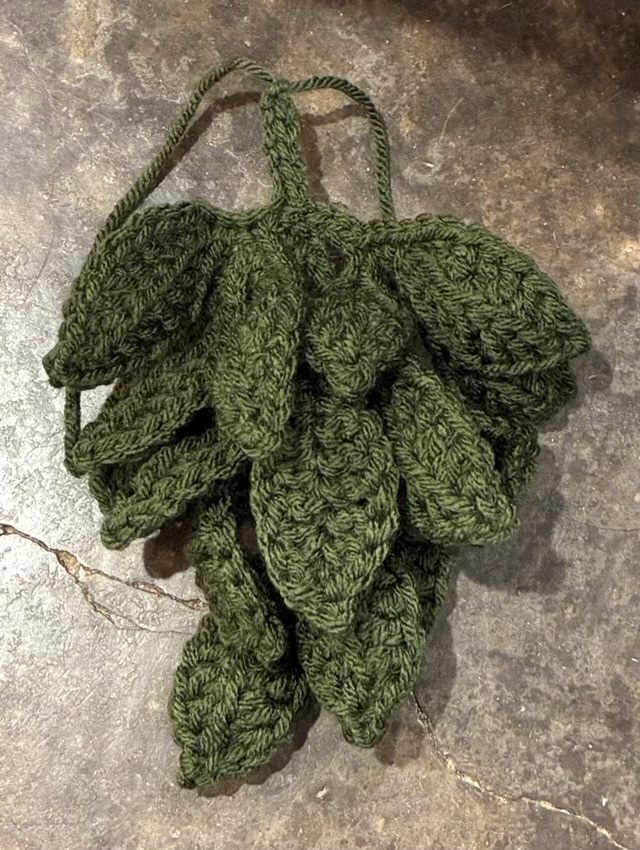
To make a cluster, finish a leaf, then chain again without tying off. Vary stem lengths. clusters of three work well.

Photo description: cluster of crocheted leaves

Crocheted leaf

I switched tracks on what I am doing with the yarn remnants. I decided a need a new front door wreath, and am now making crocheted botanical elements.

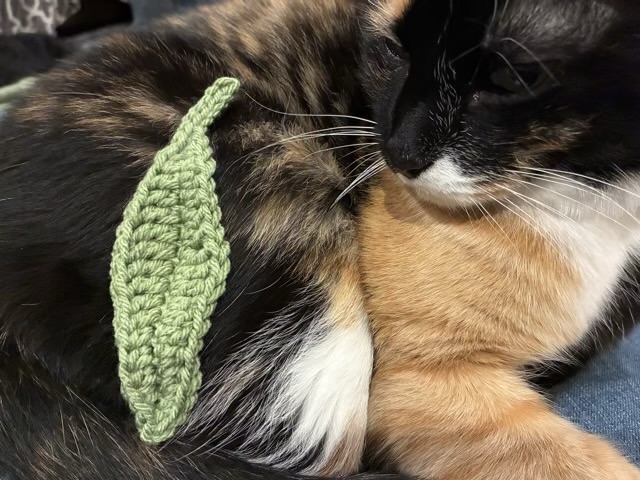
Photo description: green crocheted leaf laying on a calico cat

This first leaf started with a chain, then I worked each side of the chain with single crochet, half-double crochet, double crochet, and triple crochet to make curved sides. The stem is slip stitched.

It is a humble beginning, but I hope it will bloom into something remarkable.