PVC overtone flute

Watching YouTube shorts sent me down another overtone rabbit hole. There was a person with a flute with no finger holes playing a lilting beautiful tune. Wha?! Some quick internet research revealed the Koncovka, a Slavic shepard’s instrument made from a long wood tube. The flute has two overtone series possibilities, one with the bottom hole open and the other with it covered, giving this simple whistle an astonishing number of notes for something with no finger holes. My next question was how to make one, and I found this short YouTube tutorial to make a PVC version.

I have some thin walled PVC tubes from an old Ladder ball game. These pipes have become materials for other projects more than they were ever assembled for the game.

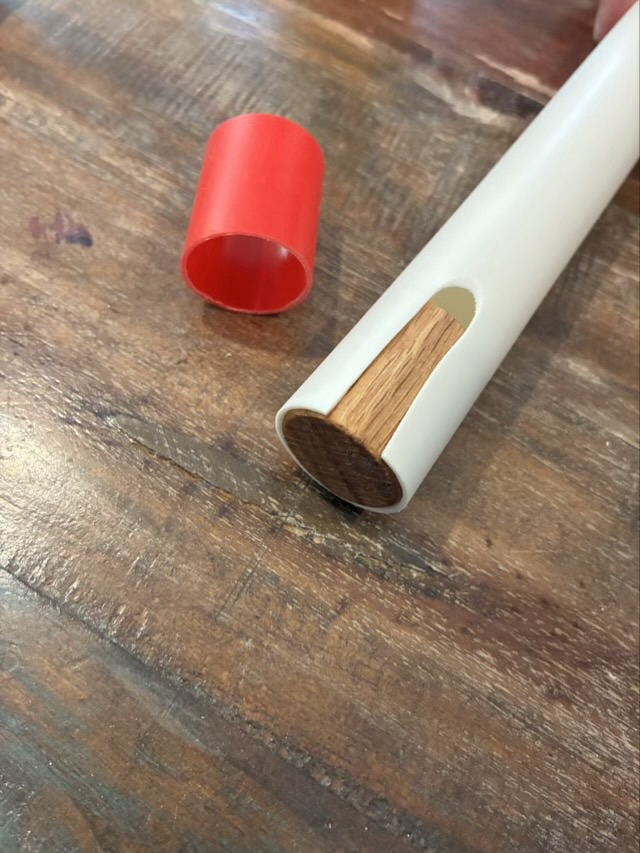
Photo description: PVC pipe with a slot cut and sanded smooth, a section of dowel sanded to fit snuggly inside the tube, and a short section of red PVC pipe the same length as the wood and split lengthwise
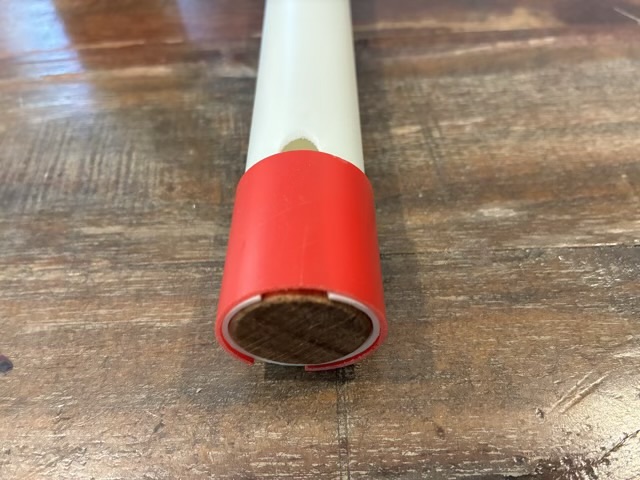
Photo description: wood plug finished with butcher block wax and fit into the top of the tube
Photo description: red sleeve placed over the white PVC to create a narrow hole
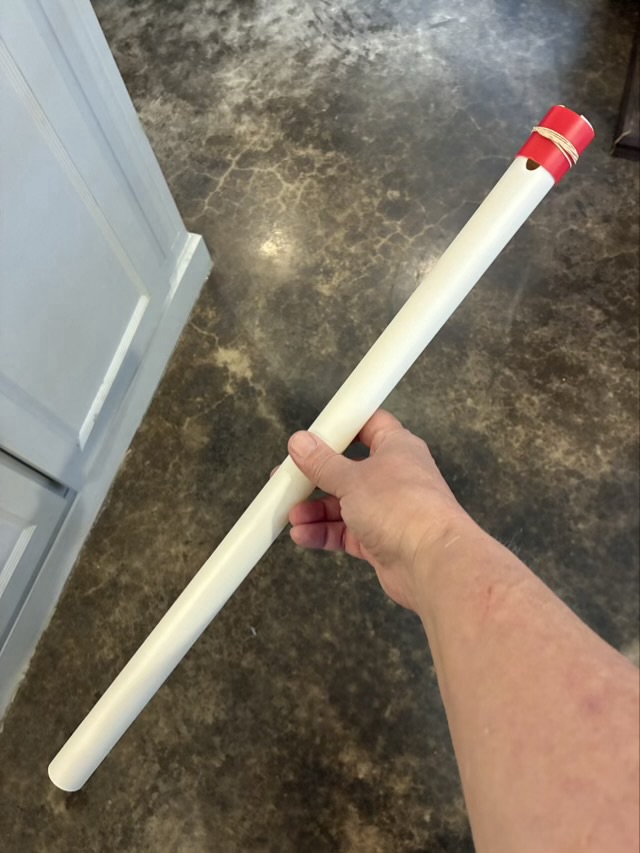
Photo description: rubber band around the red sleeve to keep it tight and reduce air leaking
Photo description: finished PVC overtone flute

The tone of the flute is quite pleasing and very fun to experiment with. Below is an audio file of me playing the PVC overtone flute I talk about in this blog post.

I love it when my crafting and music rabbit holes merge and open a new room.

Dress to skirt with pockets

I love the colors of this dress, but detest cap sleeves.

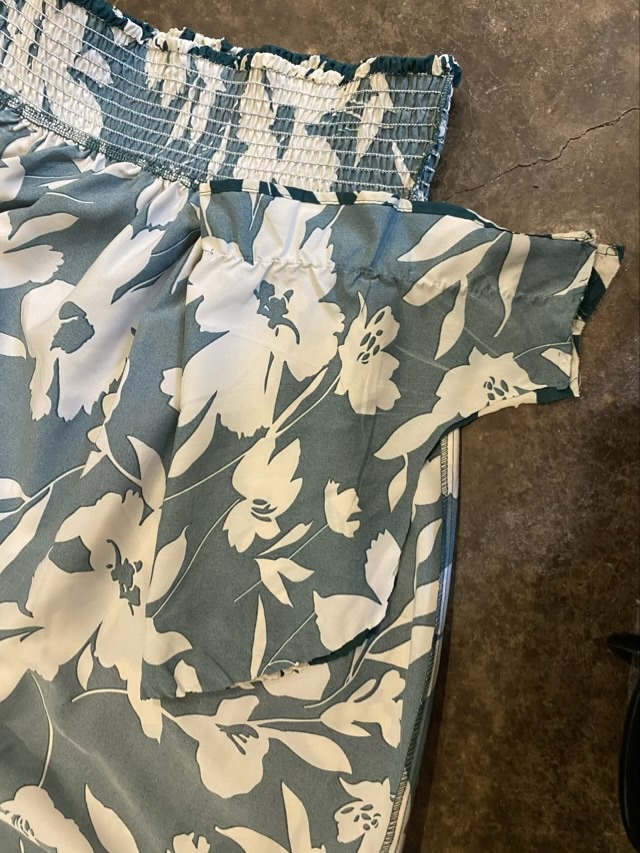
Photo description: green and white floral dress with shirred bodice and elasticized cap sleeves

I cut off the sleeves and neckline just below the arm pit, removed one line of elastic, and sewed a hem at the top. The shirred bodice is now a stretchy waistline for a skirt.

Photo description: top hem in progress, showing folding the fabric over twice and whip stitching it with white thread to the top line of elastic

Although I don’t like wearing cap sleeves, the fabric cut from the sleeve made a decent sized pocket.

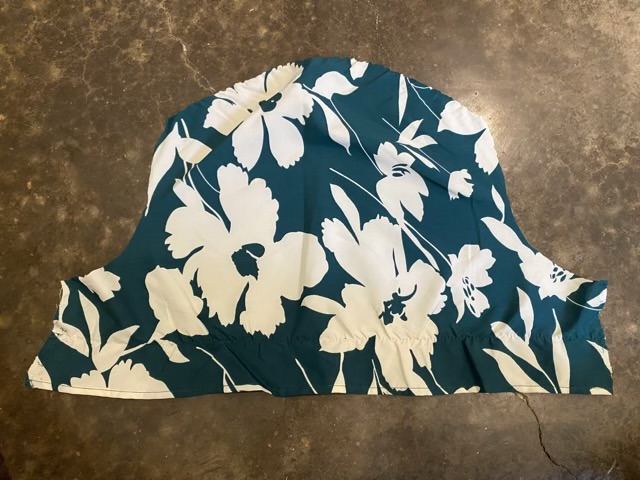
Photo description: sleeve fabric with elastic removed and seams cut away
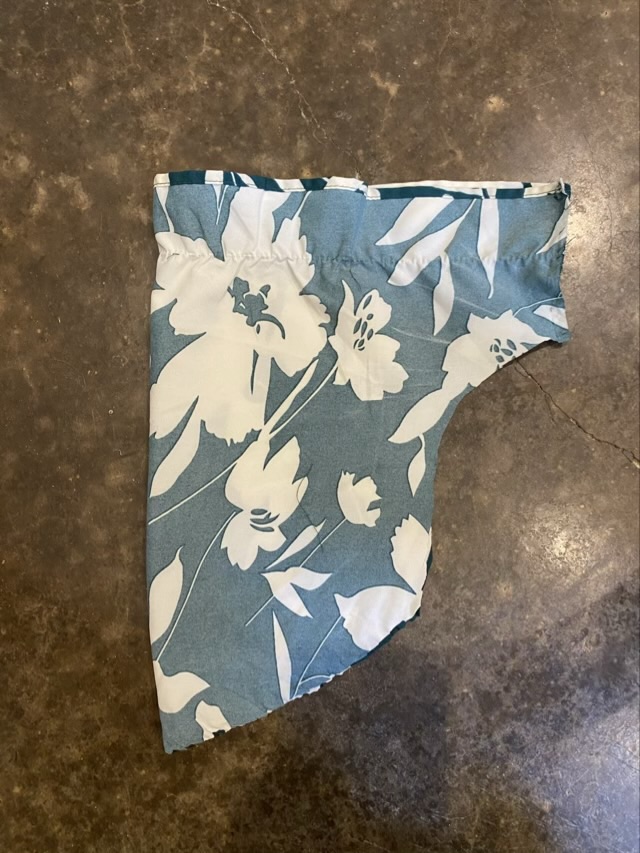
Photo description: sleeve fabric folded in half, right sides together
Photo description: folded sleeve fabric positioned on the dress in pocket position, later to be trimmed and sewn in

Picking out serger seams is not my favorite activity, but it is worth it to get pockets. I find it easier to cut the threads between the layers of fabric, rather than figure out which thread to cut on the surface. Once I had pocket holes in the side of the skirt, I sewed the pocket to the waistband, sewed the bottom seam, and sewed the pocket openings. I sewed reinforcement at the top and bottom of the pocket by sewing a stitch across the join of the four fabrics seven times.

Photo description: green and white floral skirt with pockets, phone showing the position of the pocket on the right

I now have a wearable maxi skirt with large pockets.

Pockets.

I will one hundred percent be showing off the pockets like the viral vulture pockets meme.

Recycled Bottle Wind Spinner

Awhile back I shared my new obsession with bottle cutters. One of the reasons for the obsession was that I really wanted to experiment with the material, and I had the idea to make a wind spinner.

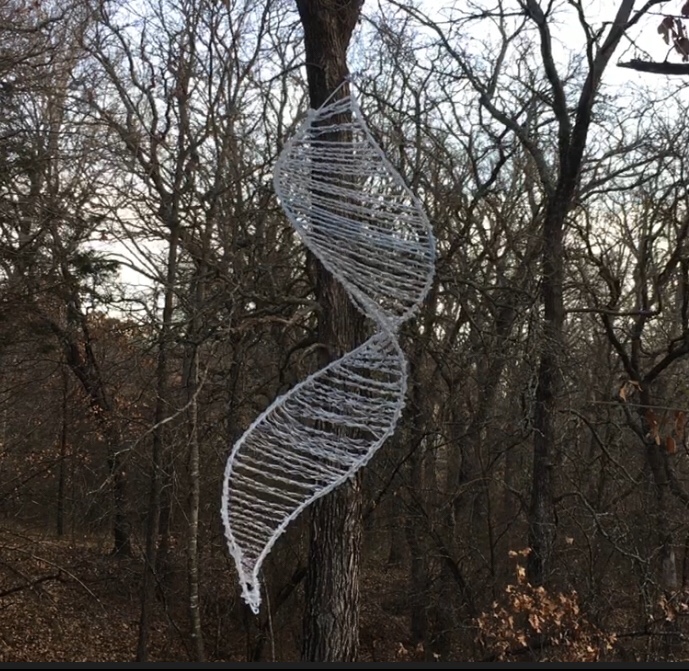
I love the wooden wind spinners that look like they transform their shape as they spin. I thought: “Could I do that with recycled materials?” Turns out I can! The bottle string is light and strong and fairly easy to shape with a little heat. And if anyone else wants to make a cool looking spinner with recycled materials, I made a video to show how I did it.

Not only is the spinner fun to watch in the wind, I hung it near the coop to scare away aerial predators and wild birds that may be carrying avian bird flu. (That is my story and I’m sticking to it. It is not at all that I have a fixation with kinetic sculpture.)