Waste to warmth

Making blocks is a great thing to do with the odds and ends of left over yarn you have in your stash. Warm Up America is a non-profit organization that gives warmth to those in need. One of their many ongoing projects takes 7”x 9” blocks either crocheted or knitted. Volunteers join the blocks together to make blankets. They have many free patterns, which is another way to increase your skill level with a smaller time investment, and make something truly meaningful. There is more than warmth in handmade items, there is connection and the knowledge that another person put time and effort into helping a fellow human. It is a philanthropic activity that is both physically and psychologically beneficial to both the maker and the receiver.

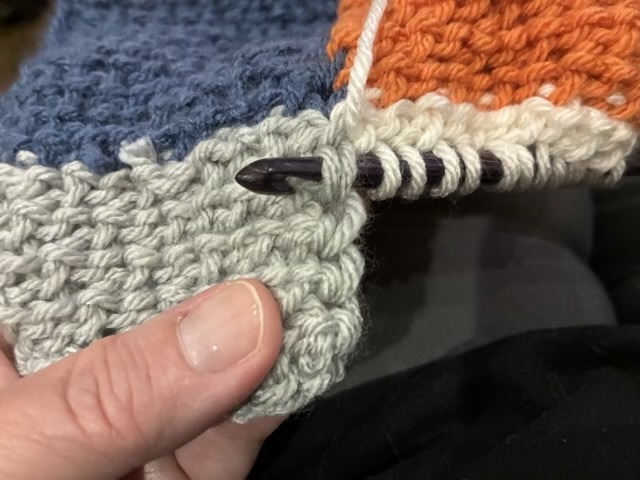
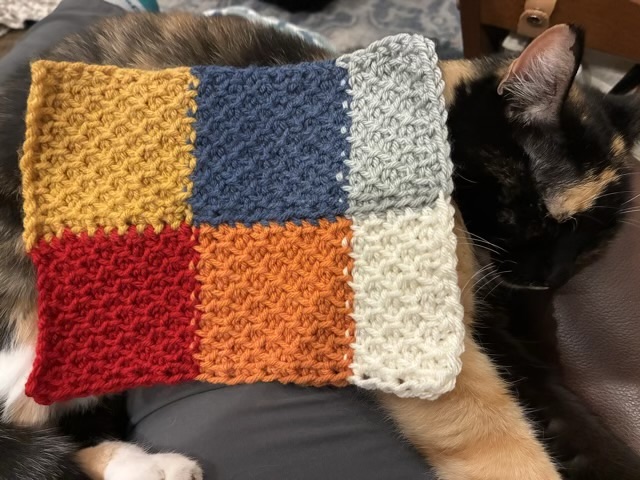
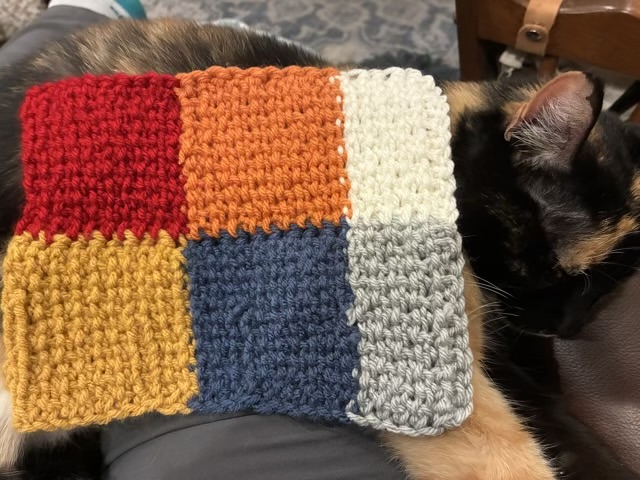
I made blocks with the diagonal squares pattern from Mary Maxim, which I love so much. I found worsted weight acrylic yarn crocheted with a size K hook with 8 squares by 10 squares makes a 7” x 9” block.

Photo description: 7” x9” crocheted blocks made with left-over yarn

The block on top in the picture above was made with alternating rows of color, which was an interesting experiment, but resulted in many, many, many ends that had to be woven in. Please weave in your ends!

Another square

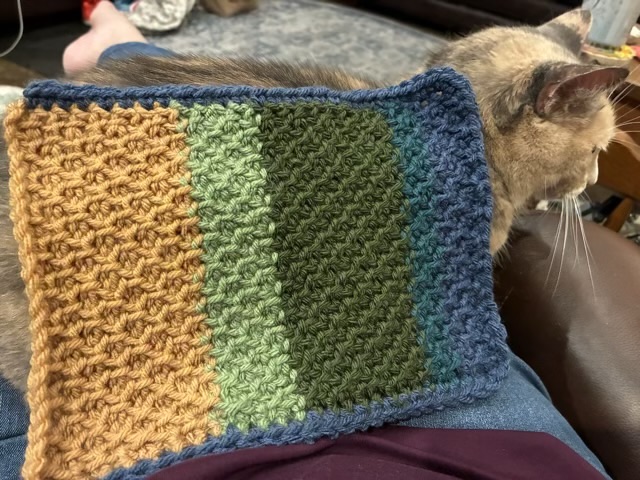
I forgot about this project. I started making every square in the book Granny Square Flair with fine alpaca yarn from Peru back in March. I was hoping it would be a travel project, but it requires way too much concentration as every row is different and I need to refer back to the pattern frequently. So I designated it a home project and it has sat next to my chair for a few months.

Photo description: completed “Ianthe” square made with teal alpaca yarn, laying on a calico cat

This is another forever project that will sneak in the gaps of other projects. I have no problem telling people my age, but asking how many open projects I have going will get you a flippant answer.

Finished diagonal blanket

I was finally able to weave in all the ends for the diagonal crochet blanket made from scrap acrylic yarn. Yes, I had to negotiate around persistent cats to do so.

Photo description: white, cream, gray, and green diagonally stripped crocheted acrylic blanket laying over a barcalounger chair

I did not add the edge because I’m so pleased with how even the edges came out, and how crisp the corners are, that I didn’t want to overshadow it with more stitches.

Photo description: calico cat curled up on the same blanket that is folded up on the ottoman

And the blanket will be staying in house, since it is a cat magnet. Izzy the calico is pleased.

The blanket is narrower than usual throws, but it works well on the chair, and is more a summer weight. The narrowness makes it easier to stick out a foot for temperature control.

The challenges

I finished crocheting my diagonal scrap blanket, and now just need to weave in the ends. The challenge is extracting the cats so I can actually do the work.

Photo description: two calico cats managing to be touching the same blanket, on which I need to work
Photo description: blanket separated from the cats to show all the ends that need to be woven in, done in scraps of white, gray, tan, and green acrylic yarn

I don’t mind weaving in ends, but this blanket sprouts cats as soon as I sit down, so it will take awhile.

Tension ring

My youngest was wearing her yarn tension ring in such a way that her finger couldn’t bend, which caused pain issues after three hours of crocheting. So we modified the ring to make it smaller and I am encouraging her to wear it so the yarn runs along the back of her finger, and the ring doesn’t interfere with her knuckles. I have also been teaching her hand and wrist stretches to do periodically while she is crafting.

Photo description: yarn tension ring made of 14 gauge aluminum wire with two spirals worn on the index finger with chenille yarn running through the spirals to provide friction

It is a good idea to look at your ergonomics as you craft, especially if you have something you enjoy doing for long stretches of time. As with computer work, there should be scheduled breaks and stretching activities. This will help you enjoy your craft longer both each day and over the years.