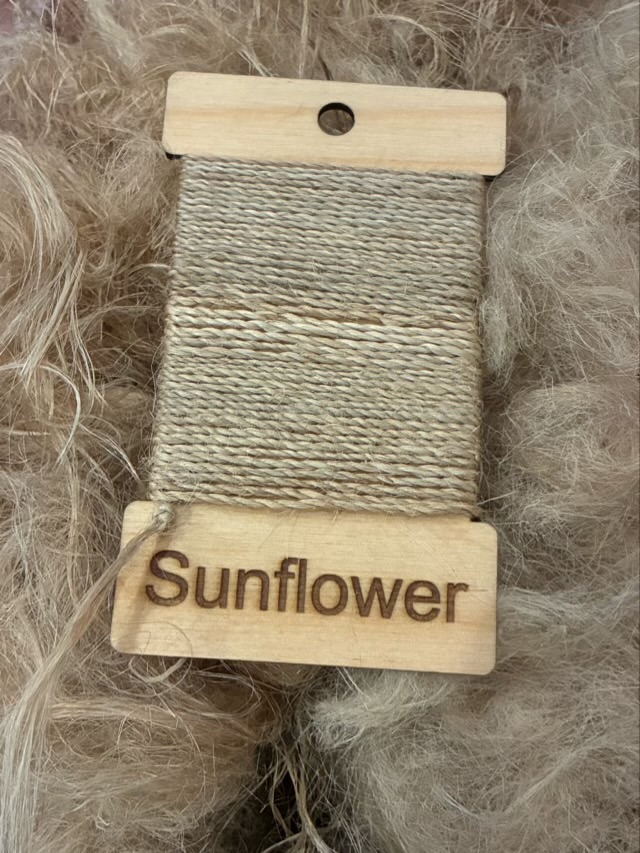
Next up for the twinging example cards is sunflower fiber. This is a long line bast fiber from the stalks of sunflowers. For me, this sunflower fiber feels similar to flax in length, fiber thickness, and when I twine it. It has a beautiful golden luster as well.
Photo description: laser cut flat wood spool with twine made from sunflower bast fiber, laying on a bed of uncombed sunflower fiber
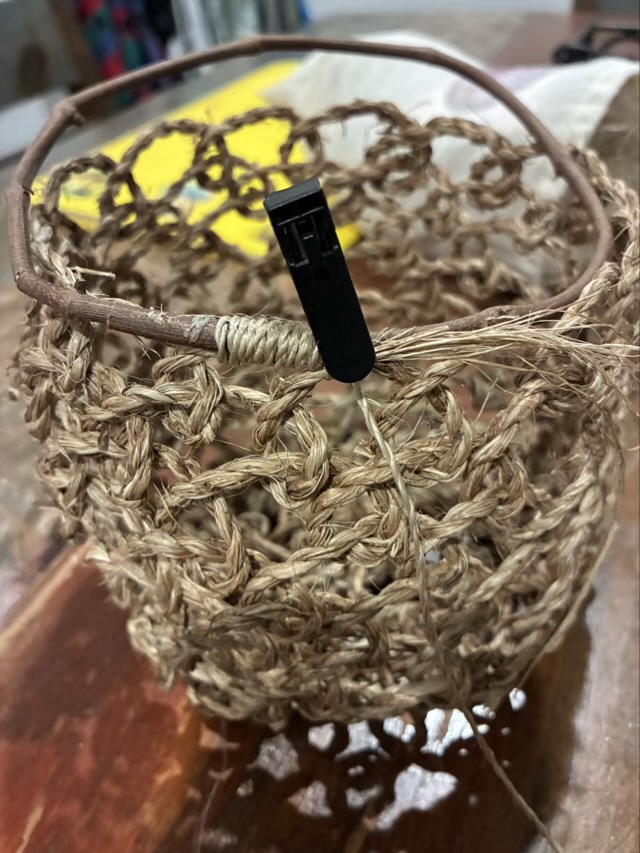
I used this sunflower fiber, along with a length of grape vine, to finish my okra and sugar cane basket.
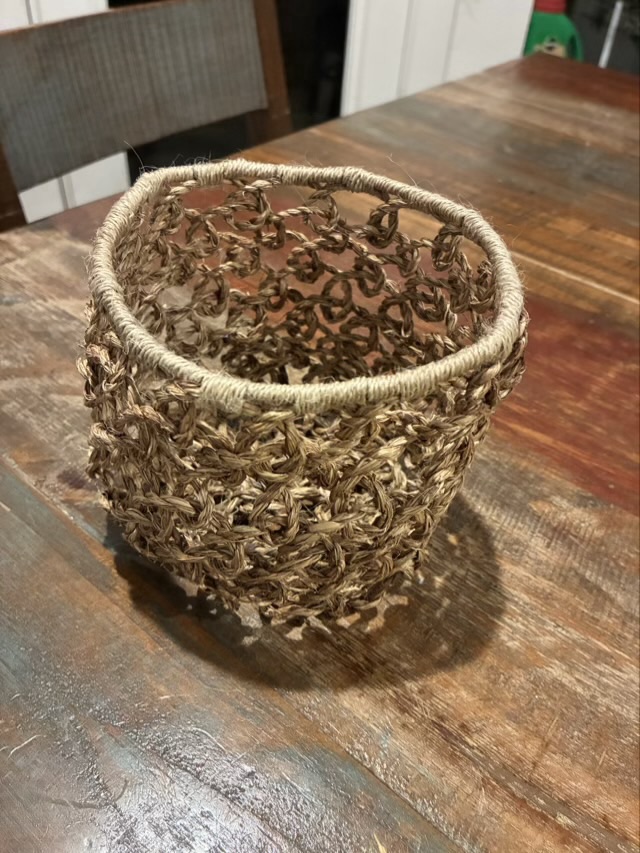
Photo description: in process: loop of grapevine bound to the top loops of an okra and sugar cane basket with sunflower twinePhoto description: “Crops basket” small looped basket made from okra fiber, sugar cane fiber, grape vine, and sunflower fiber
It is a surprisingly sturdy little basket that does have some flexibility, but can stand on its own. It pleased me that I was able to make it from the discard parts of commercial food crops, hence the name “Crops basket”.
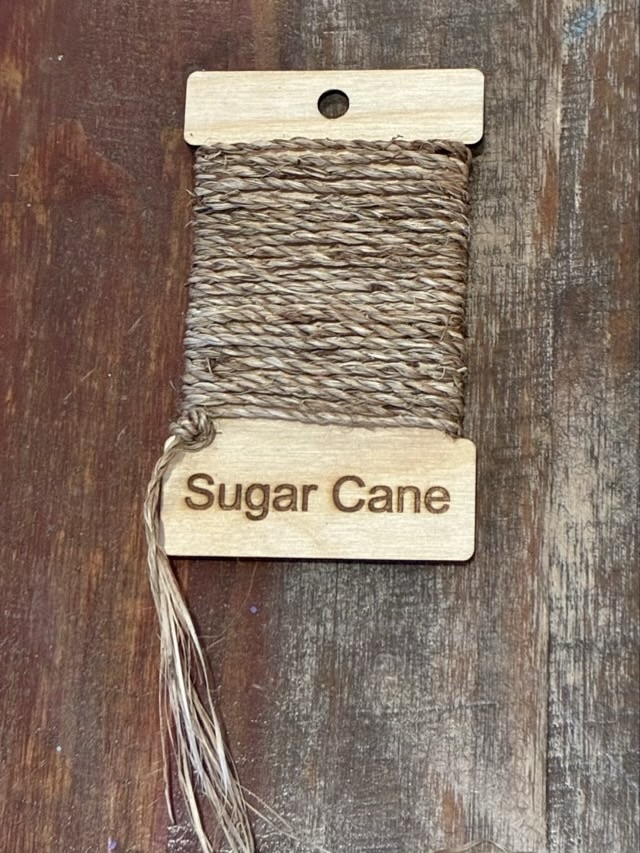
One of the other fibers I purchased from Conserving Threads was sugar cane, which has a very similar look and feel to the okra stalk fiber, but was in finer strands. I let this fiber rehydrate overnight in a damp towel and twined it at the same thickness as I did for the okra stalk.
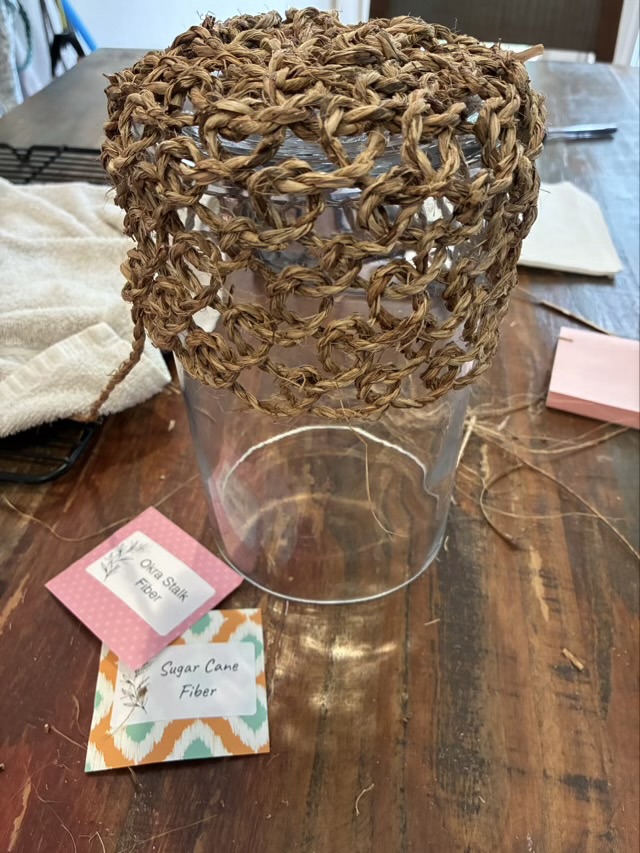
After I finished my twined card for the sugar cane, I twined the rest into the basket I started with okra twine. To keep the sides as even as possible, I used a glass cylindrical vase as a form to guide my loops.
Photo description: twined okra stalk and twined sugar cane stalk used to make a looped basket on a cylindrical vase form
I’m quite pleased with how closely the okra twine and sugar cane twine match in size, color, and sturdiness. Because the twine is robust but flexible, the looped basket holds shape, even when off the form and turned right side up.
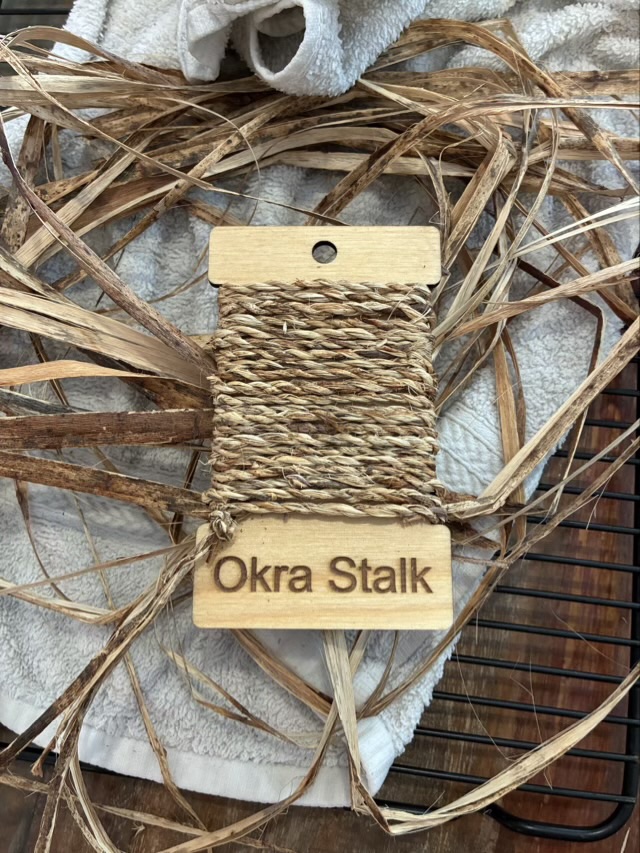
I purchased okra stalk fiber from the Conserving Threads shop on Etsy. This is a thick papery plant material, so to make it more pliable for twining I wrapped it in a damp towel overnight. The cordage I was able to twine is strong and sturdy, but rough.
Photo description: okra stalk fiber twined onto a laser cut flat wood spool laying on a pile of damp okra stalk
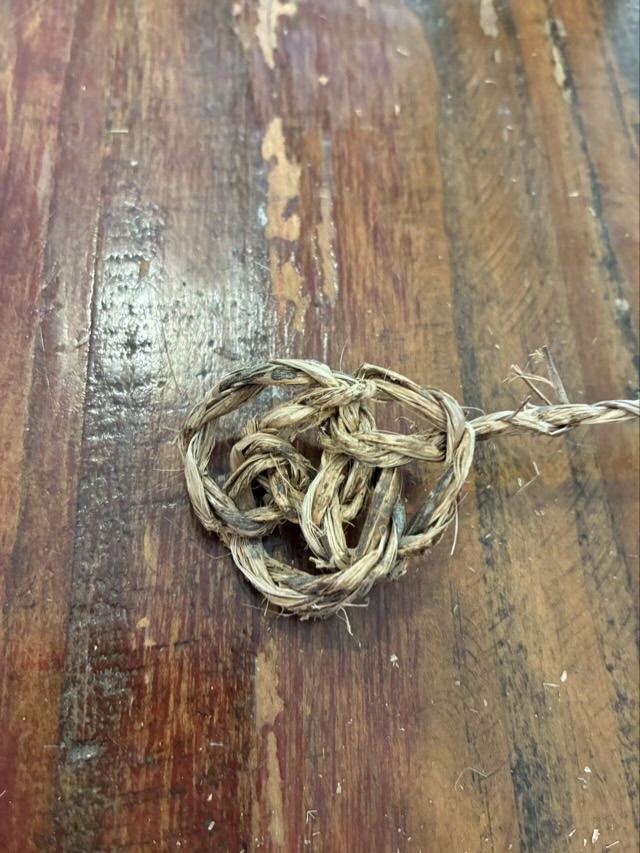
I put the entire bundle of fiber in the damp towel, but I didn’t need it all for the example card. Rather than drying out the extra, I decided to twine it and make a looped basket.
Photo description: beginning of a twined simple loop basket made from okra stalk
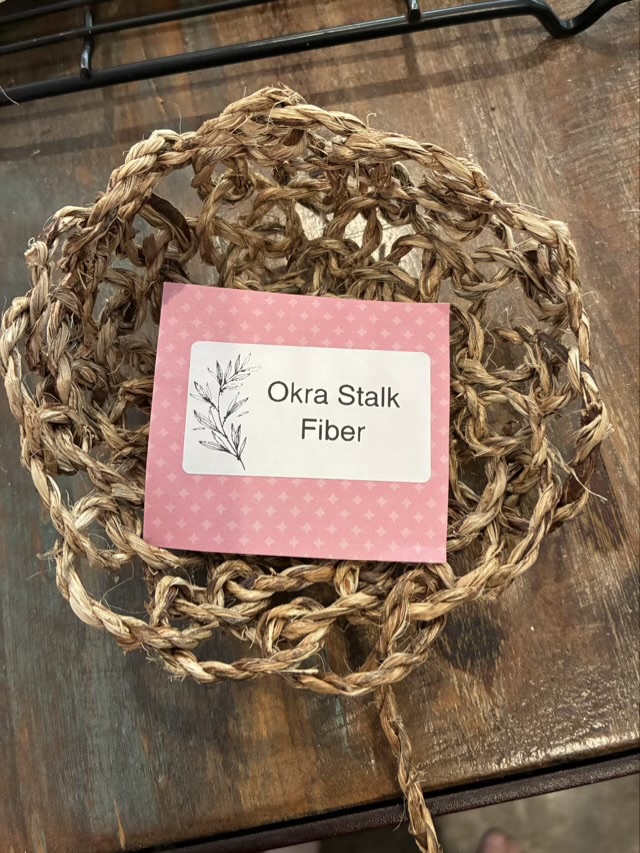
Using all the rest of the okra stalk in my bundle made a rather shallow basket, so I think I will supplement with another material.
Photo description: okra stalk basket after several rows of looping
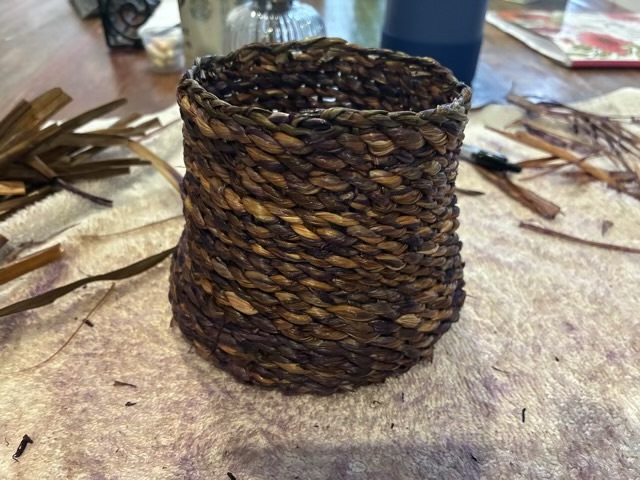
I made a small basket entirely from dried iris leaves. The spokes are large iris leaves, and I twined multiple smaller leaves together around the spokes.
Photo description: starting the twining with dried then rewetted iris leavesPhoto description: finished basket made from iris leaves gathered from my yard
The leaves were soaked more than was ideal for weaving, so to dry it I put it in the oven on low and weighed the basket every twenty minutes until the weight was constant, indicating all the water was gone. Air drying a basket that wet would have given too much time for mold to set in.
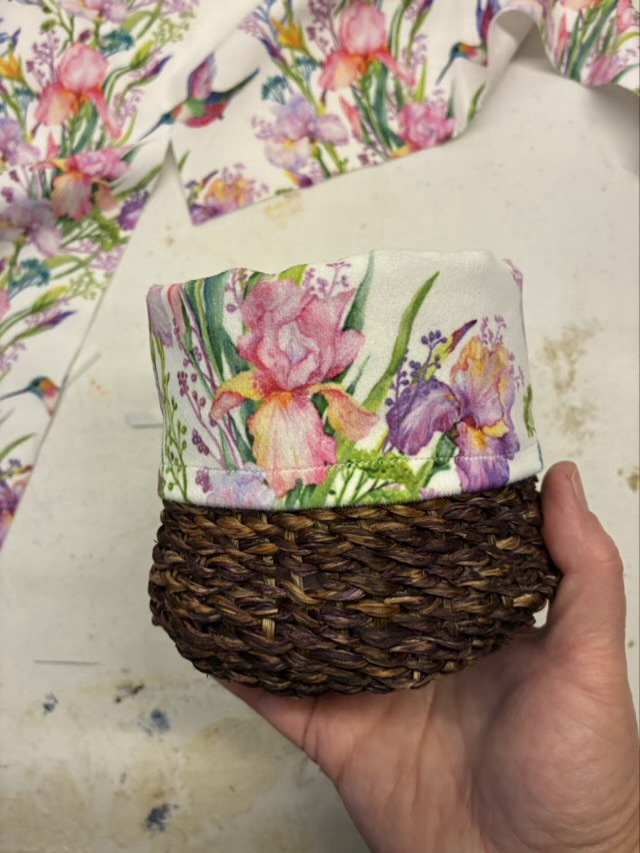
I found some iris printed fabric and lined the basket. It took me two tries to sew a liner that fit the shape of the basket, and I ended up with a single layer that wrapped over the top lip of the basket.
Photo description: iris printed fabric liner on the iris leaf basket
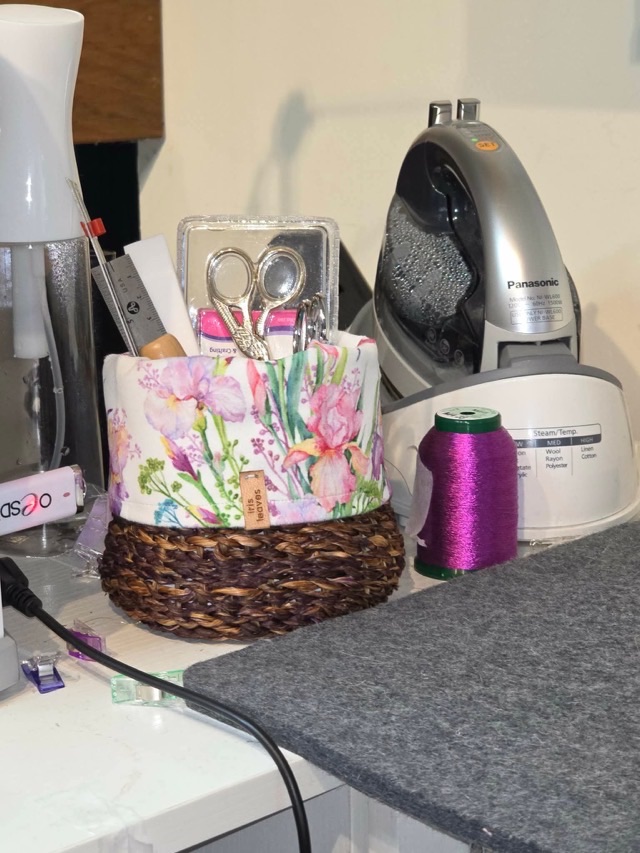
To finish off the basket, I added one of my new leather tags to the edge of the liner.
Photo description: laser engraved leather sewn-on tag that says “iris leaves”
I like twining, so plan on harvesting more iris leaves in the spring, drying, and practicing on more twined baskets.
Photo description: basket in use holding sewing tools
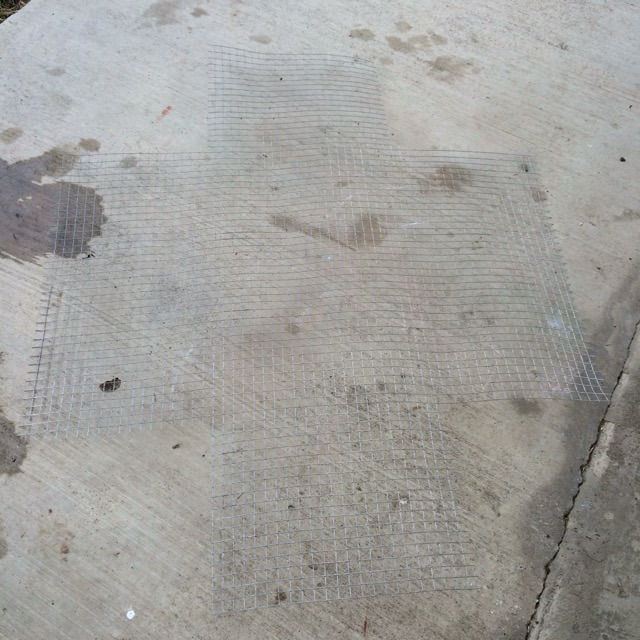
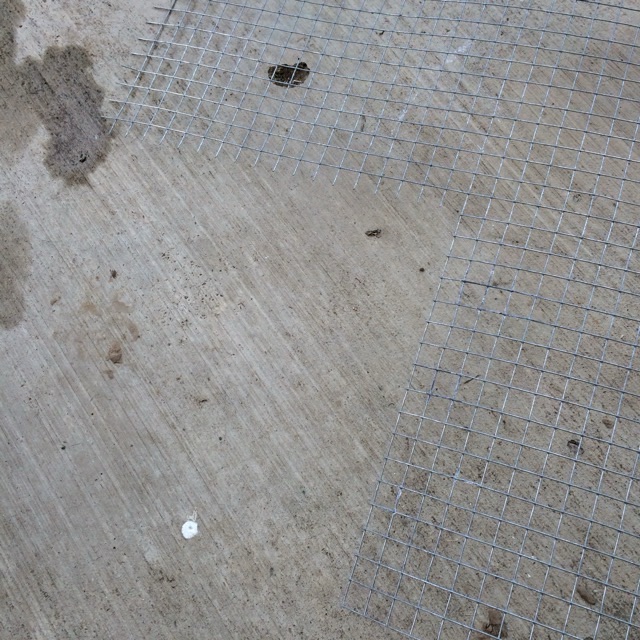
In July 2015 I was making custom wire baskets for a shelving unit in the house. I would draw out the size needed in chalk on the patio, flatten out 1/2” welded wire hardware cloth, and cut it with metal snips.
Photo description: basket pattern drawn on the patio in pink chalkPhoto description: hardware cloth cut into shape
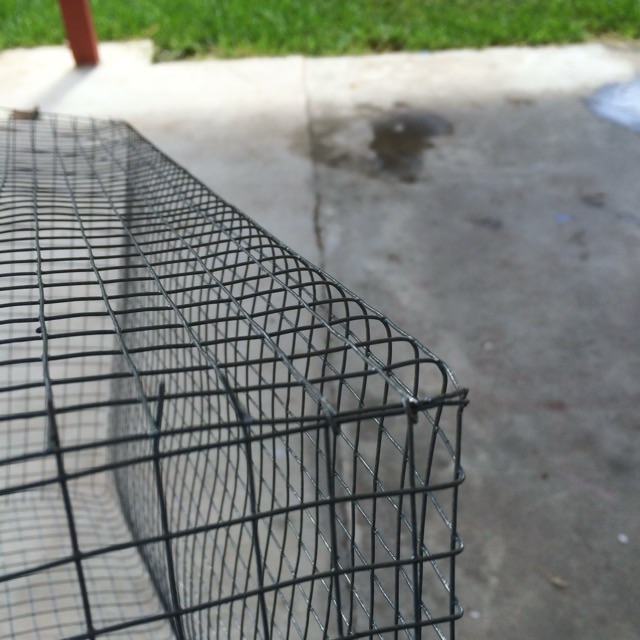
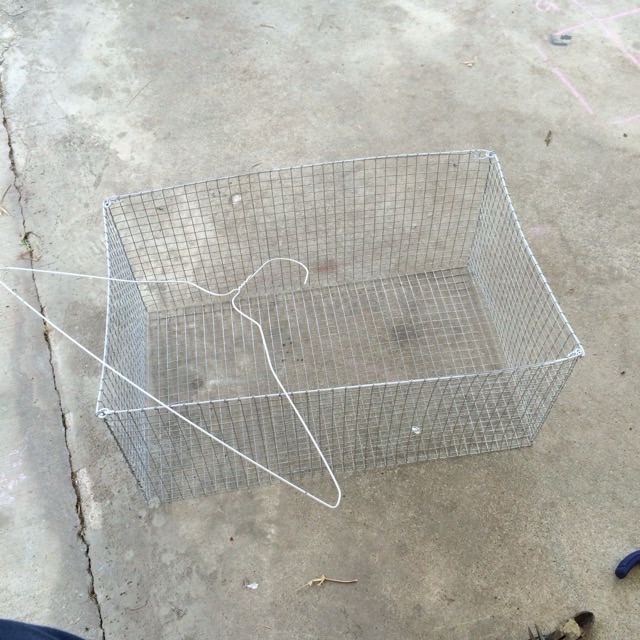
When I cut the hardware cloth, I left one side of the corner seam with a vertical wire, and the other side with horizontal wires free for a half inch. When I folded the sides up, I used needle nose pliers to loop the horizontal ends around the vertical wire.
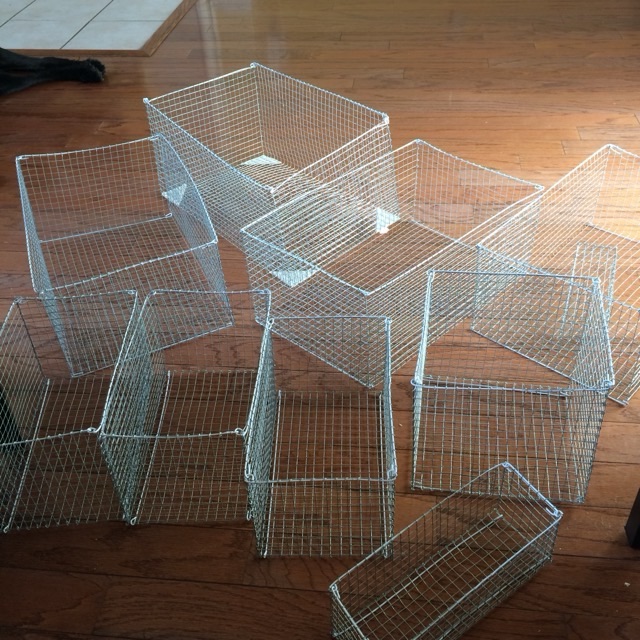
Photo description: close up of corner cut showing the free horizontal ends and the solid vertical edgePhoto description: close up of how the wire ends wrap around to secure the sides of the basketPhoto description: finished basket with hanger wire used to stabilize the upper edge of the basketPhoto description: nine wire baskets of various sizes
I experimented with ways to keep the hardware cloth from scraping the wood shelf. I sewed fabric to corners as one solution, and ran hanger wire on the bottom like sled runners on other baskets.