I’ve been thinking about doing some throwbacks to projects I did before I started this blog. Here is a crocheted and embroidered Roman style helmet that I made for my sister in 2016. Yes, I’ve always been a serial crafter.


I’ve been thinking about doing some throwbacks to projects I did before I started this blog. Here is a crocheted and embroidered Roman style helmet that I made for my sister in 2016. Yes, I’ve always been a serial crafter.
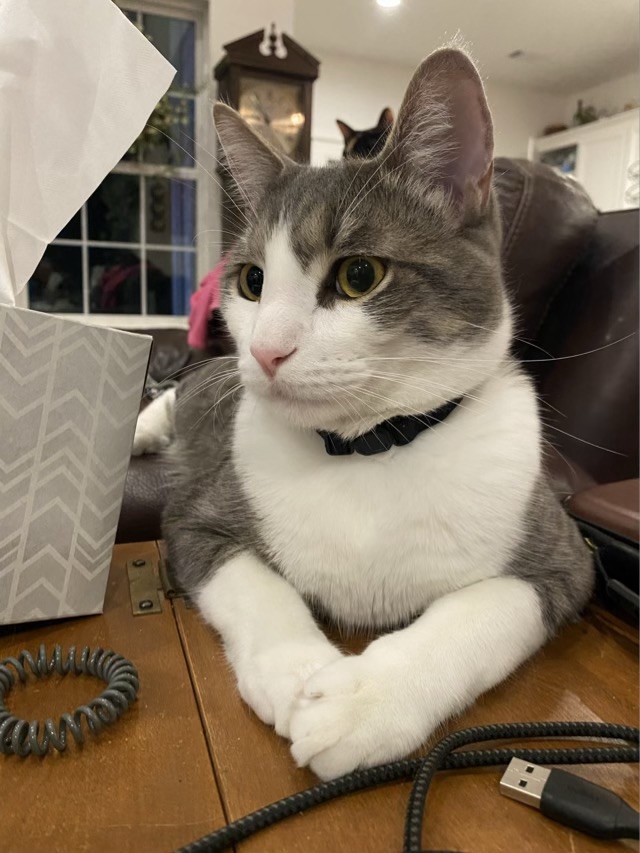
Here is a picture of my awkward boy, sitting across the couch and side table, paws together. Izzy the cat can be seen behind him through his ears. I almost captured the magnificence of his whiskers. I need to get him against a dark background because they are epic.
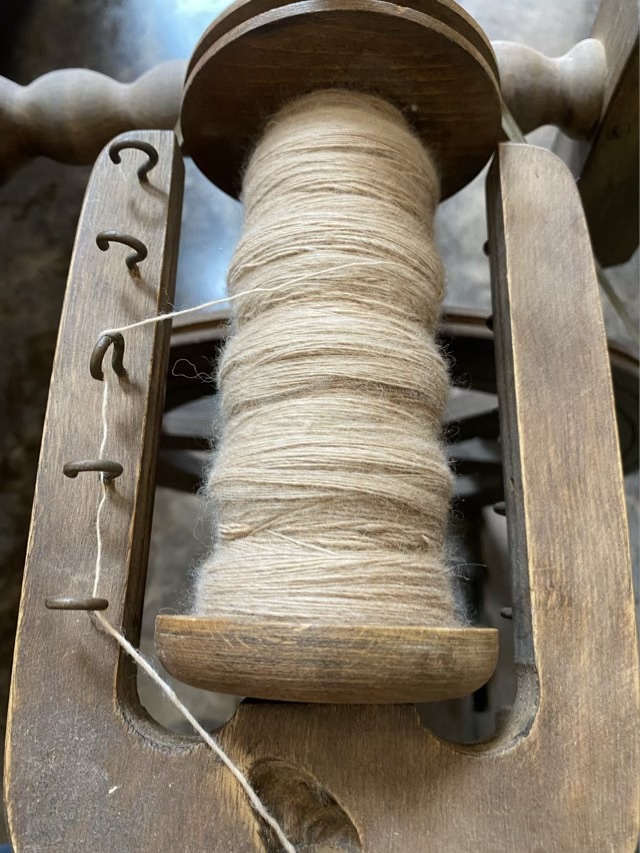
I’m still working on spinning the fawn-colored alpaca wool on my vintage Befra Willy spinning wheel. I’d like to get it finished up so I can give the wheel a good rub down with Howard’s Feed-n-wax, but apparently my fiber basket is bottomless. (Or I get distracted…)
Today’s distraction is an evenly wrapped bobbin. There are all sorts of devices out there designed to achieve a smooth wrap, rather than the bumpy wrap produced by the hooks on the flyer. A smoothly wrapped bobbin makes taking the yarn off the bobbin easier, with less potential for breakage.
I’ve been thinking on this, and noticed that I can turn my hooks and get a slightly different take up angle on the flyer. This helps a little, and if I did this from the beginning I would certainly be closer to that epitome of bobbin wrapping that seems to be so coveted.
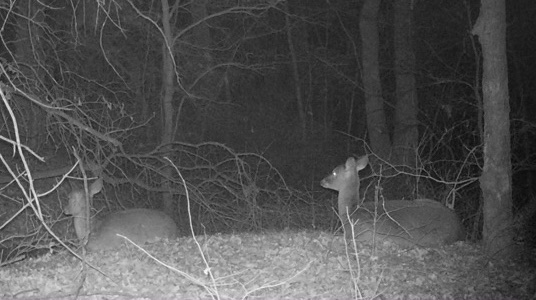
After getting mostly deer body parts on the trail cam, I adjusted it to look down rather than across and was rewarded with full body deer pictures! How many can you spot in the picture below?
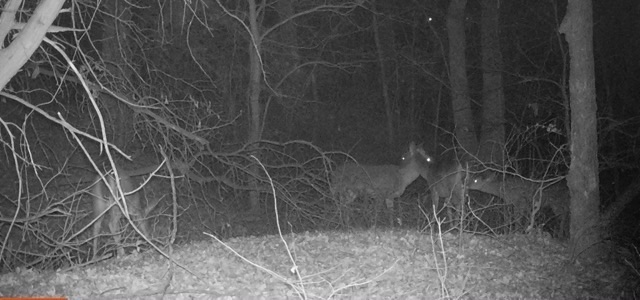
I find four deer, all does as far as I can tell. I do have the advantage of seeing all the pictures before and after this one, but here are all the deer circled.
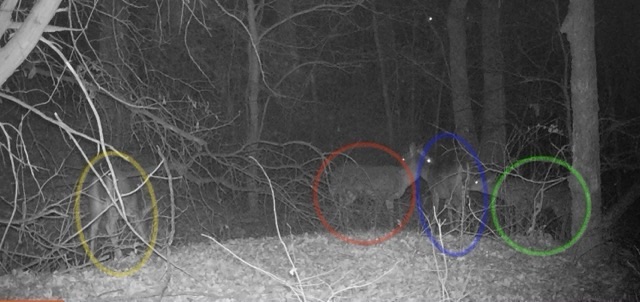
Even cooler, the deer rest within the camera view, so the trail cam is going to stay in this position for a while.
Crew neck t-shirt necklines bother me. I don’t like things touching my neck, but I do like the longer short sleeves and longer hem of crew neck shirts. I have found a new way to fix the problem.
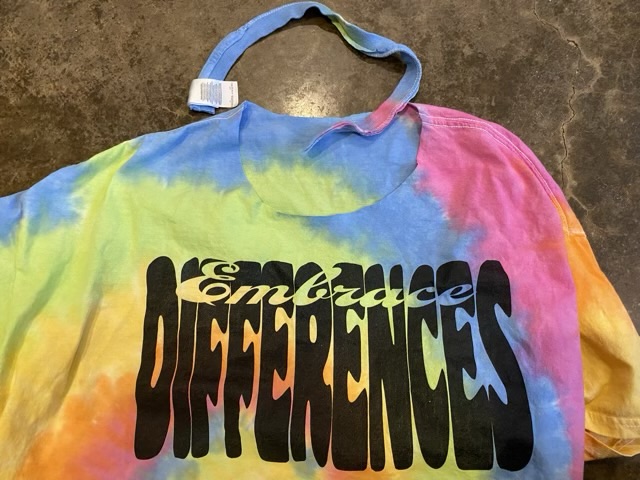
Rather than leave the raw edge, which looks OK from a distance but untidy up close, I whipped stitched a tiny hem around the neckline.

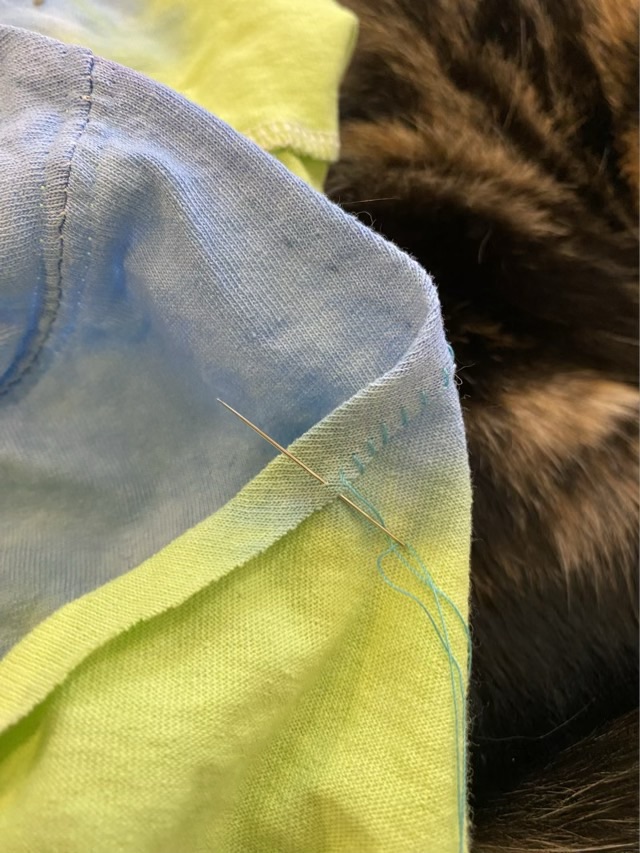
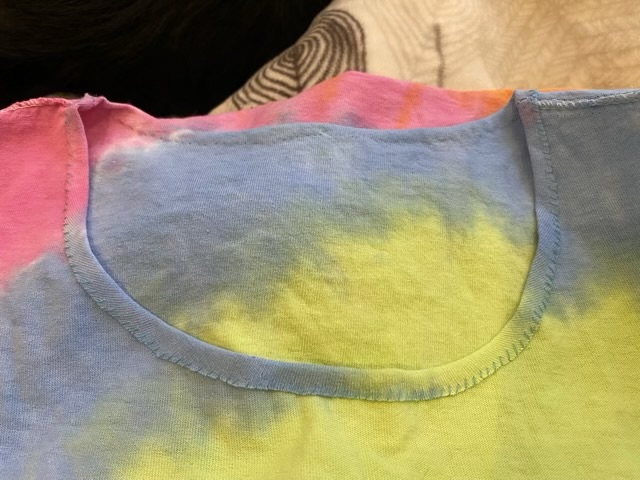
Yes, it is hand-sewing. I did see a tutorial that used a narrow zigzig machine stitch, but I’m not good with knits and machine stitching. I like sewing some things by hand because it gives me more control.

I liked this method so much, I pulled shirts from my closet and redid them as well!

