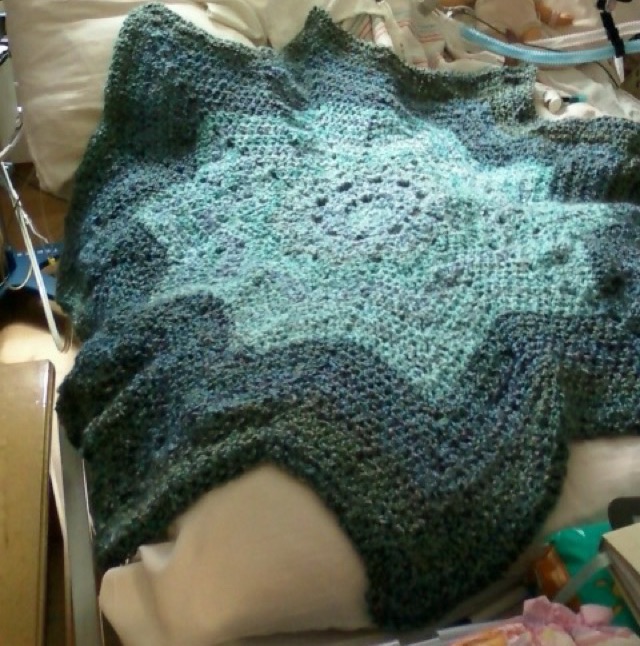
In 2012 my youngest was hospitalized for a total of 33 days with pneumonia and complications. I was a wreck. To maintain sanity I asked my family for yarn and sat in the PICU crocheting. I learned how to make star blankets and made two (I don’t have pictures of the first).
Photo description: green eight pointed crocheted star blankets and laying on a hospital bed
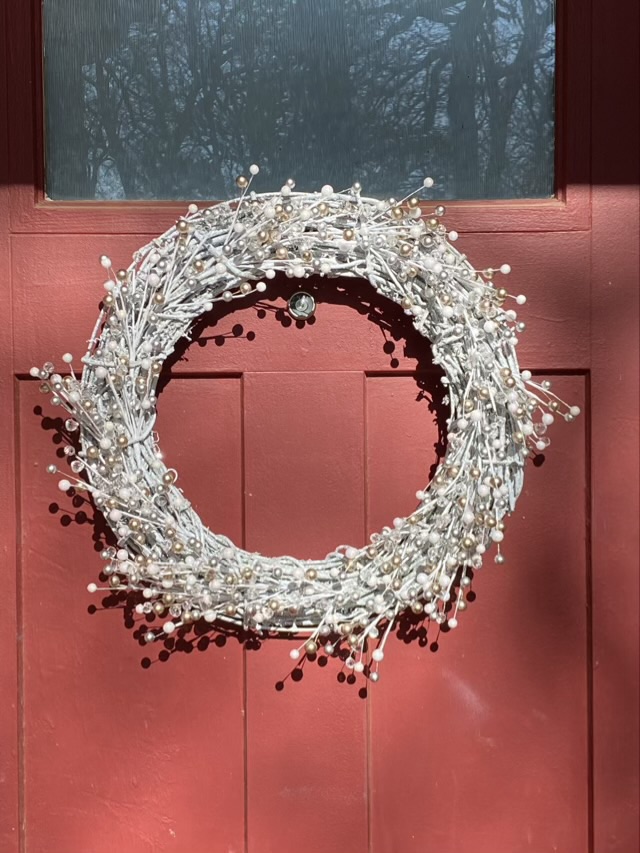
I wanted a winter wreath on my front door that didn’t have red or green, so I wandered over to a craft store, and because it was after the holidays, all of what I wanted was on super clearance. I found a painted and glittered vine wreath that has a wire base, and 27 picks that are silvery gold with crystals for under $20. Before the holidays the same wreath parts would have cost $160.
Photo description: winter wreath hanging on a red door
The pre-painted vine wreath was heavily covered and it was difficult to get the picks wedged into the shape, so I used heavy wire cutters to snip off half the length, which helped. My eldest thought I bought it as pictured (I should have taken a before picture!)
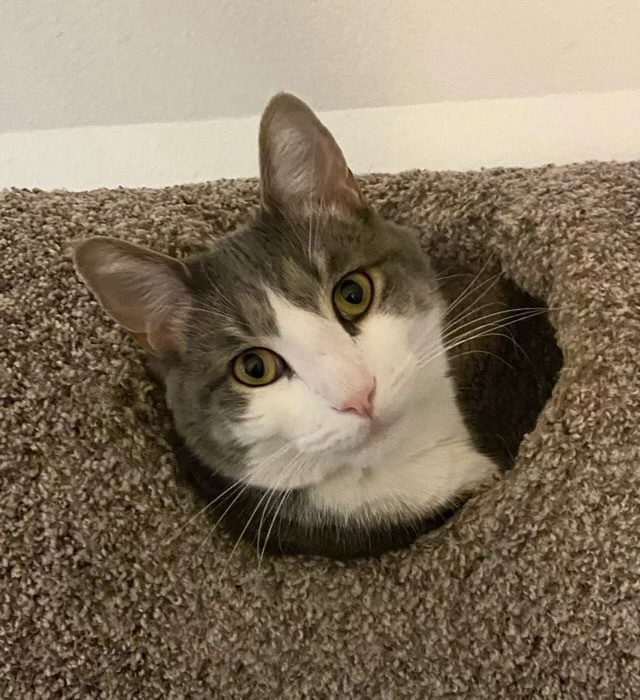
Photo description: Thor the gray tabby looking out the port hole in a carpeted cat tree
He is such a pretty boy, and so photogenic. He sings too. I’ve never heard a cat meow and trill with a musical quality. My family says it is because he grew up with singing in the house. Hm.
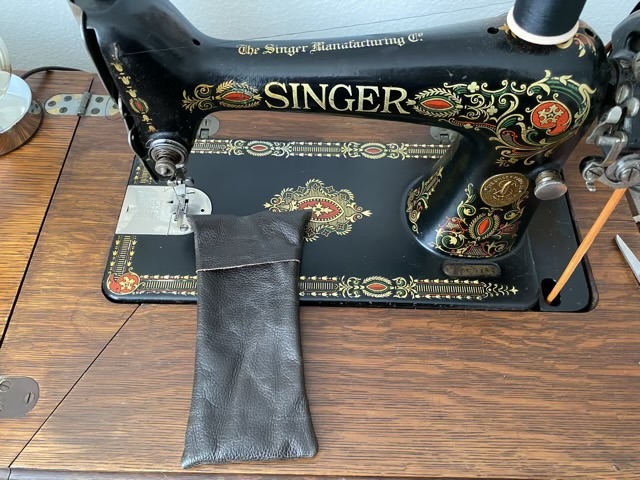
I had the chance to sew some reclaimed leather on my antique Singer 66 treadle sewing machine. This leather is thin and flexible so was easy to sew, I suspect that a modern machine would be able to handle it as well. (There are tales out there that these old machines are great for sewing leather, but the truth is much more complicated.) I did crank the machine by hand rather than risk the speed of the treadle, and I used upholstery thread (and found my purchased bobbins don’t fit, sigh.)
I wanted an envelope style pocket with the flexibility to thread on a belt, or hang from belt loops with carabiners.
Photo description: sewing thin soft leather on a Singer 66 sewing machine Photo description: pouch turned right-side out Photo description: pouch with carabiners through the central hole in the belt pass through
The design needs work. I like the hole in the belt loop and the flexibility it gives, but the flap makes it difficult to get the phone in. I ended up clipping the edges of the flap so it still helps the phone stay put, but is easier to get the phone inside. Not ideal, but experiments will continue.
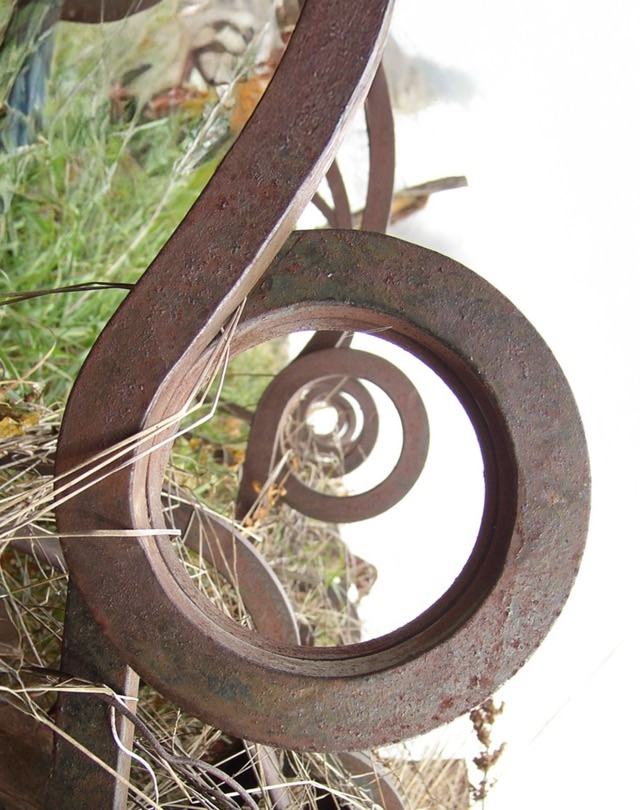
Photo caption: rusted iron spiral in the shape of a number 6
Today is the sixth anniversary of my blog! I did have a name change over that time from “of chickens and craft” to “critters and craft”. I do still have four chickens, and Wing Ding the Black Star hen is still laying eggs, even when there is snow on the ground, but things aren’t quite so chicken centric over here anymore. Now critters, we’re all about the critters, and making things.
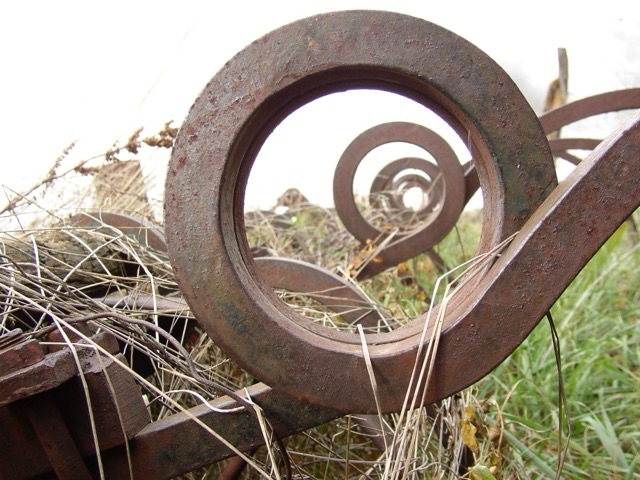
The sixth year anniversary token is iron. I found a photo I took of old rusted farm equipment and did a little Photoshop magic. I like using AI generation to change the ratio of photos and fill backgrounds on my own photographs and work. No fleecing other artist’s work in a dodgy way, and it is hard to anticipate all the potential uses of a photo when the shutter snaps. The original photo is below.
Photo description: rusted iron spiral from old farm equipment sitting in the grass
I also appreciate the search function in photo apps. It is still improving, but it only took a minute to find this photo in my gallery with the search terms “rusty iron”.