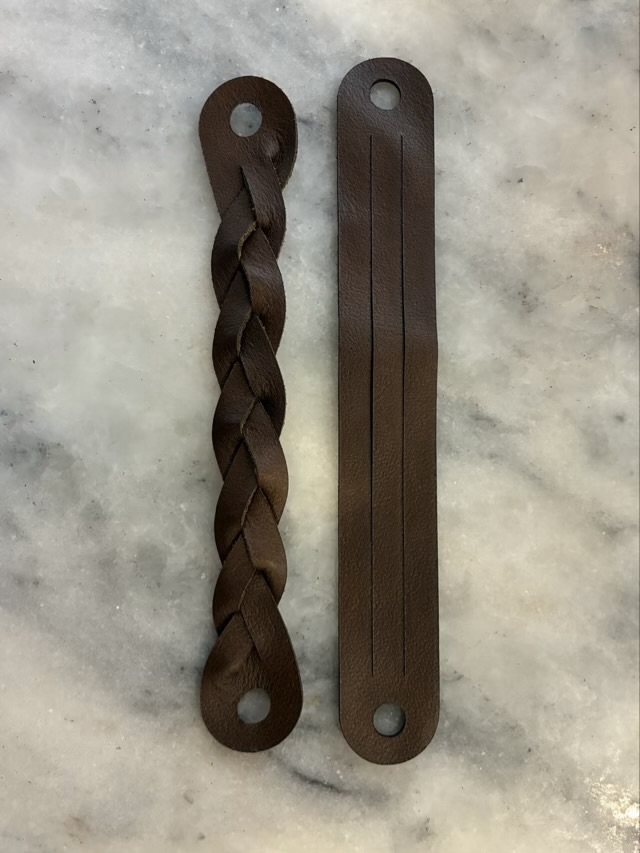
I’ve been fascinated for years with the magic braid done with leather where both ends of the braid are uncut. I found a good tutorial that uses reclaimed leather, and I had to try it.
Photo description: two pieces of leather reclaimed from an old recliner and cut with a laser cutter, the one on the left has been braided, the one on the right has not
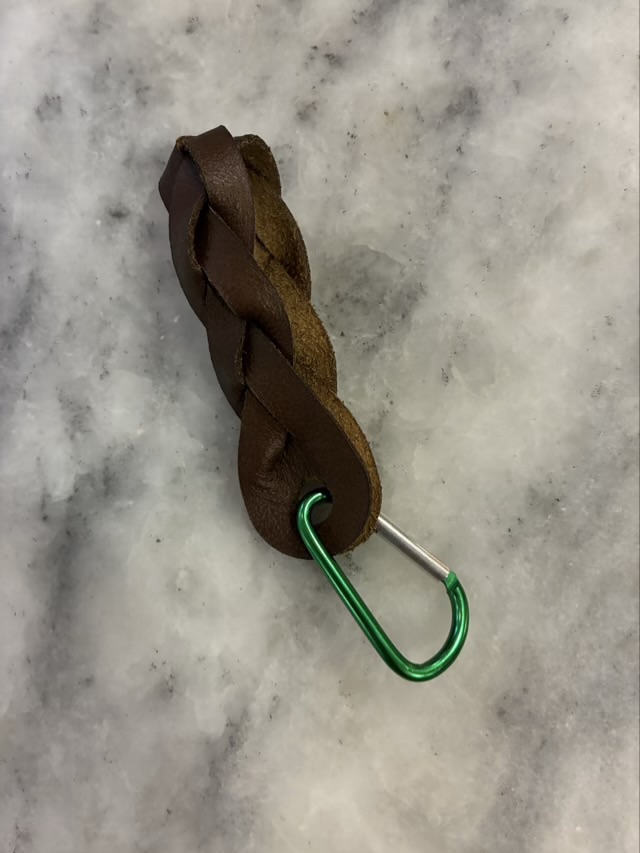
I did not make these into bracelets as in the tutorial, but into key chain fobs, by folding them in half and adding a clip.
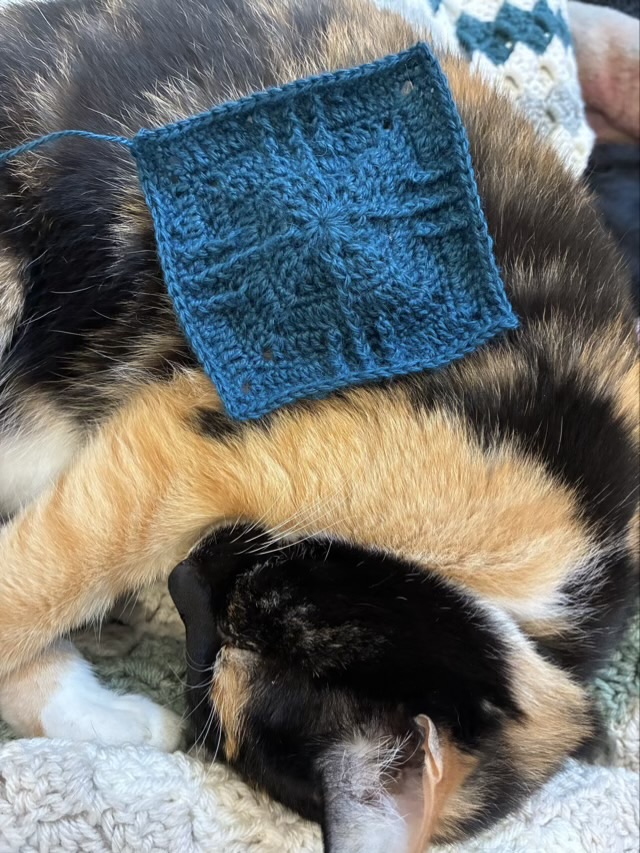
I forgot about this project. I started making every square in the book Granny Square Flair with fine alpaca yarn from Peru back in March. I was hoping it would be a travel project, but it requires way too much concentration as every row is different and I need to refer back to the pattern frequently. So I designated it a home project and it has sat next to my chair for a few months.
Photo description: completed “Ianthe” square made with teal alpaca yarn, laying on a calico cat
This is another forever project that will sneak in the gaps of other projects. I have no problem telling people my age, but asking how many open projects I have going will get you a flippant answer.
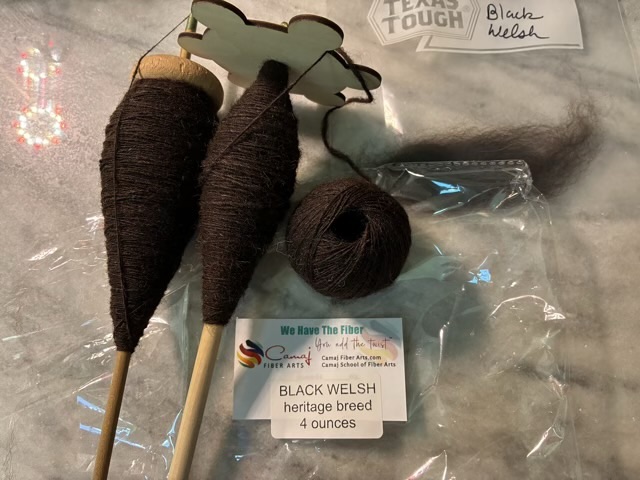
The Black Welsh Mountain Sheep is also on the Livestock Conservancy’s Shave ‘Em to Save ‘Em list as a threatened heritage species. I have finished single spinning my 4 ounce sample. It is very nice to spin, and I was able to achieve a nice thin single. My challenge for myself in this spin was switching direction half-way through, so I now have half the wool spun in the S direction, and half in the Z direction.
Photo description: spun Black Welsh Mountain wool on two spindles and one center pull ball, sitting on the original bag from Camaj Fiber Arts, and another bag with a lock of unspun wool
My plan is to do some parallel experiments with the two different spins in weaving, knitting, and crochet, until I run out of wool.
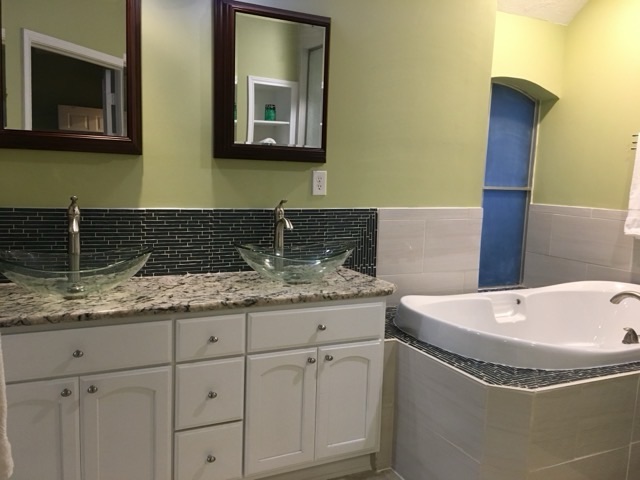
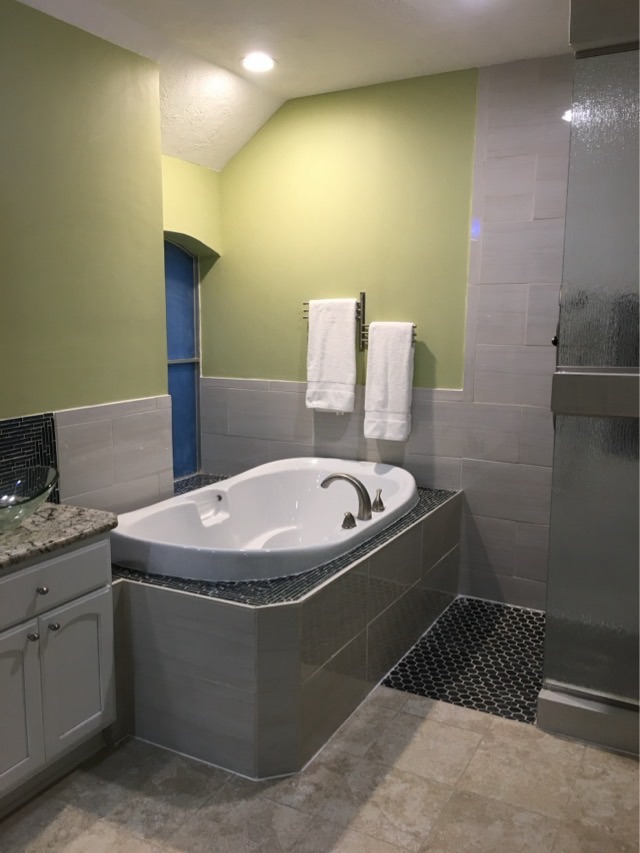
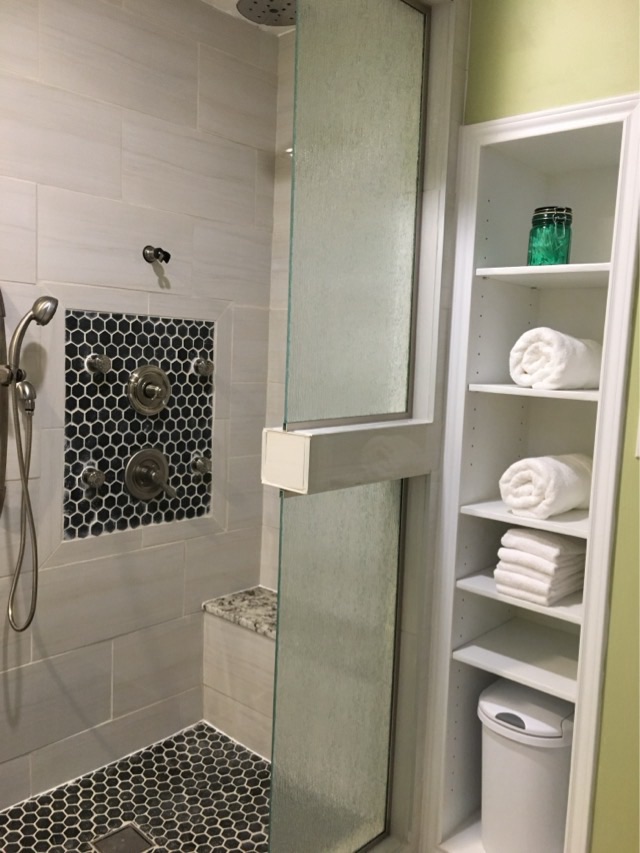
In November 2017 we had finished remodeling the master bath of our house, just in time to sell it. My husband designed and did the plumbing and structure, and I did the tile.
Photo description: Master bath dual bowl sinks with white cabinets and custom tile, the mirrors are also cabinetsPhoto description: deep tub (the largest we could get in the space)Photo description: walk-in shower with custom tile and bench and multiple shower heads, with built-in linen closet outside the custom glass panels
It ended up being a beautiful master bath. My husband had one shower in it before the house sold.
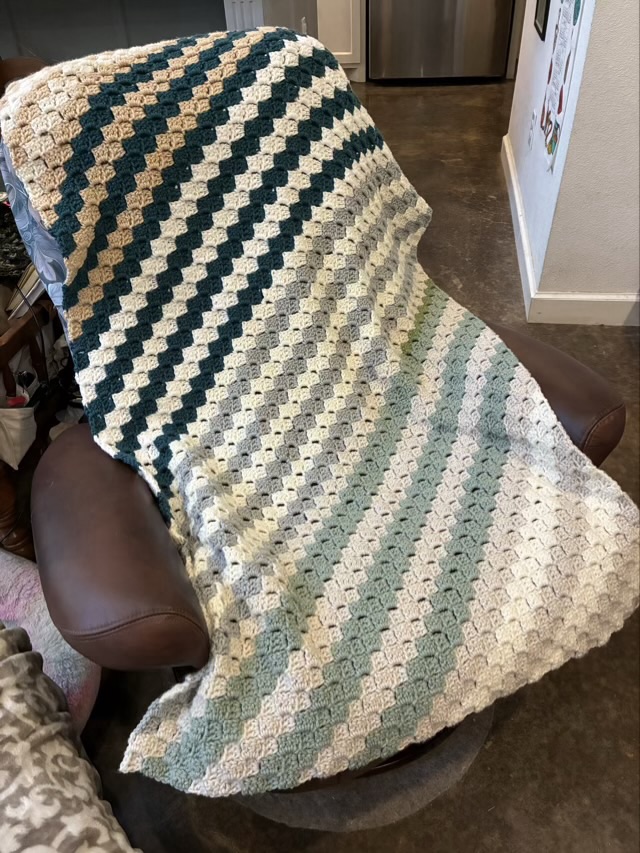
I was finally able to weave in all the ends for the diagonal crochet blanket made from scrap acrylic yarn. Yes, I had to negotiate around persistent cats to do so.
Photo description: white, cream, gray, and green diagonally stripped crocheted acrylic blanket laying over a barcalounger chair
I did not add the edge because I’m so pleased with how even the edges came out, and how crisp the corners are, that I didn’t want to overshadow it with more stitches.
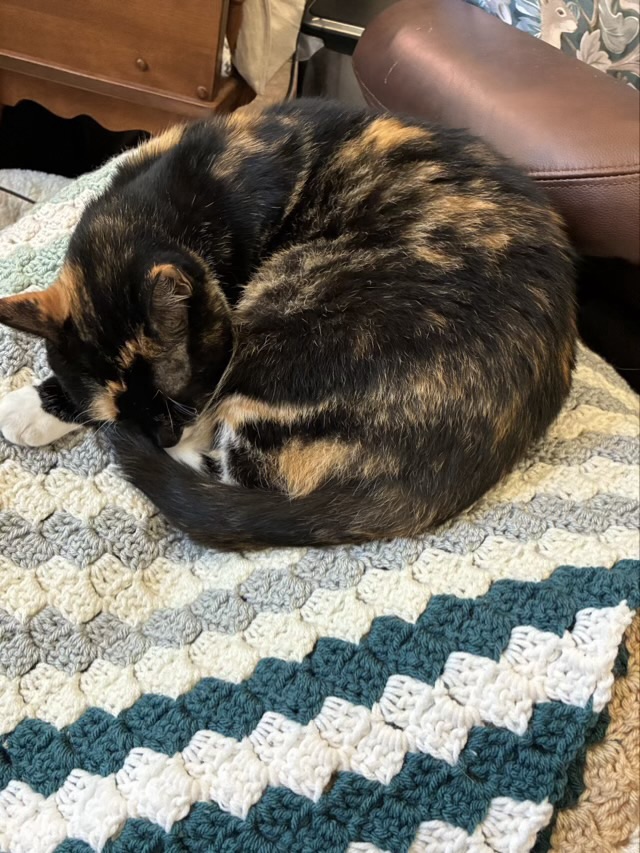
Photo description: calico cat curled up on the same blanket that is folded up on the ottoman
And the blanket will be staying in house, since it is a cat magnet. Izzy the calico is pleased.
The blanket is narrower than usual throws, but it works well on the chair, and is more a summer weight. The narrowness makes it easier to stick out a foot for temperature control.