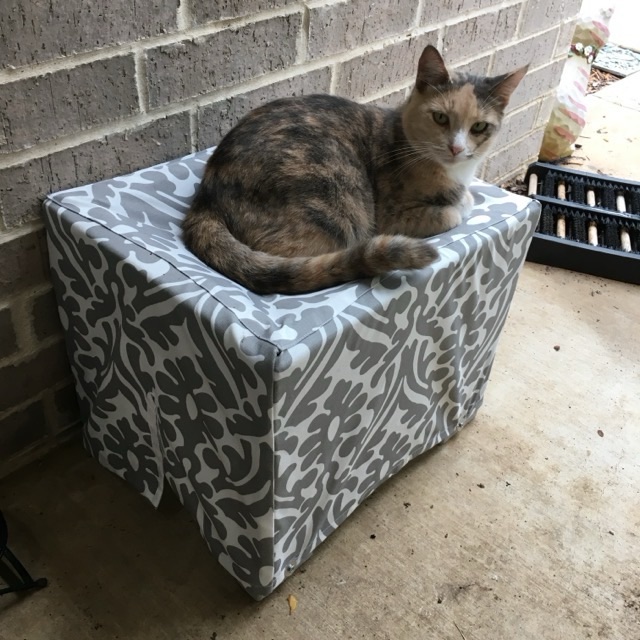
Photo description: Sophie the dilute calico on a wood framed fabric covered hammock and hide box made from white and gray patterned fabric
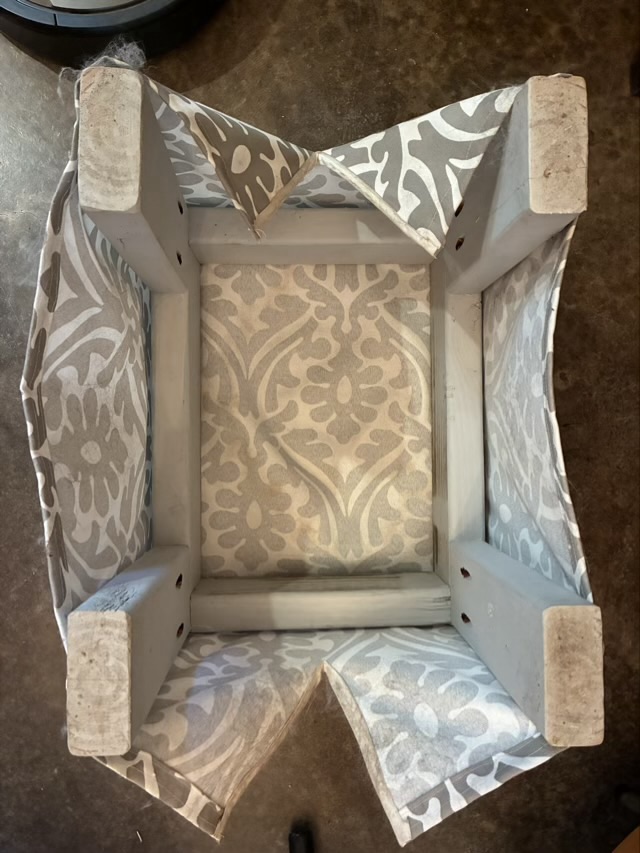
In September 2018 I made a second furniture item for the outdoor cat Sophie. This one was much, much more popular than the insulated bench. I started by making a small frame with 2x4s, then painted it.
Photo description: upside down cat box showing the painted frame, photo taken in 2026
I used outdoor fabric with a pretty white and gray pattern and sewed a cover for the frame, with two slits on each side secured with white bias tape. This was all before I started this blog, but I did make a social media cry.
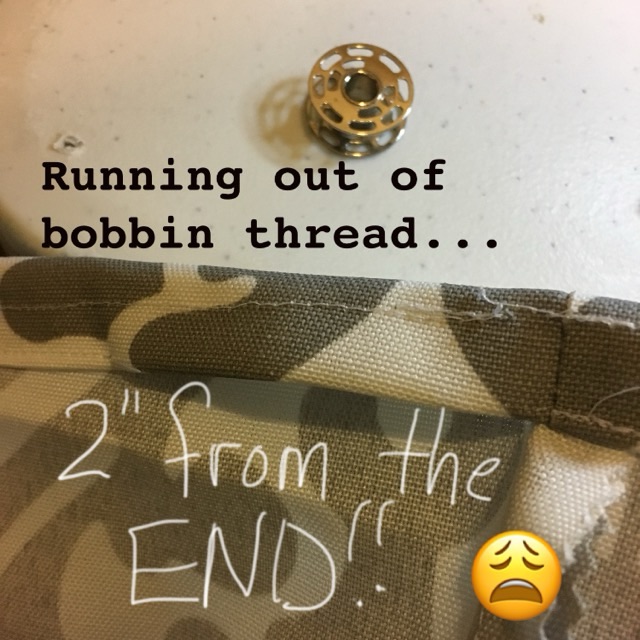
Photo description: “Running of out bobbin thread…” in type and “2” from the END!!” In handwriting, showing the bottom seam of the cover for the cat bench and an empty modern sewing bobbin and a crying emojii
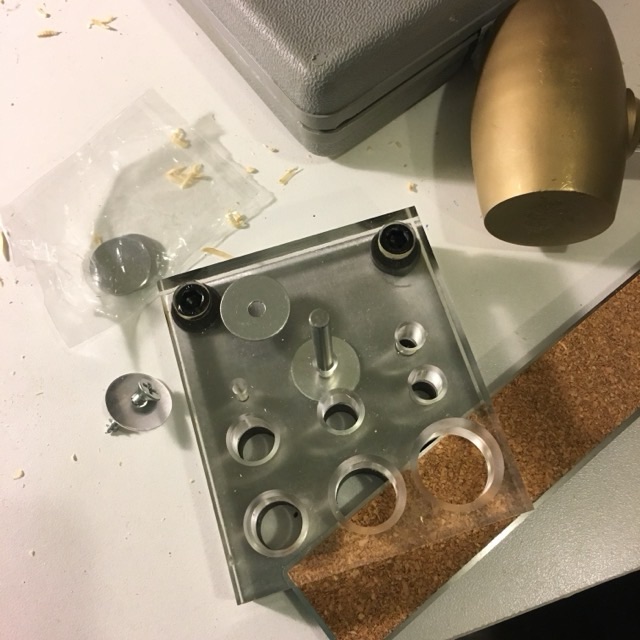
To keep the cover in place I punched my own washers from aluminum blanks. I’m not sure why I couldn’t find premade washers. I probably put them somewhere safe.
Photo description: disc cutter set up to punch a hole in the center of a circular aluminum blank
I used four washers and four screws to secure the bottom edge of the cover on the non-slit sides to the wood legs. This works quite well and has held up for 8 years.
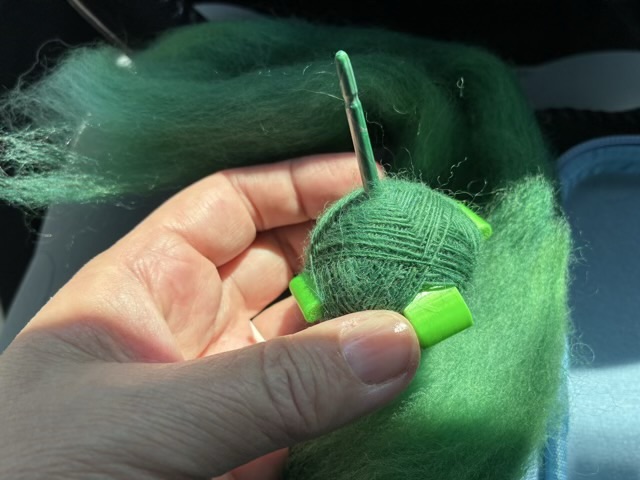
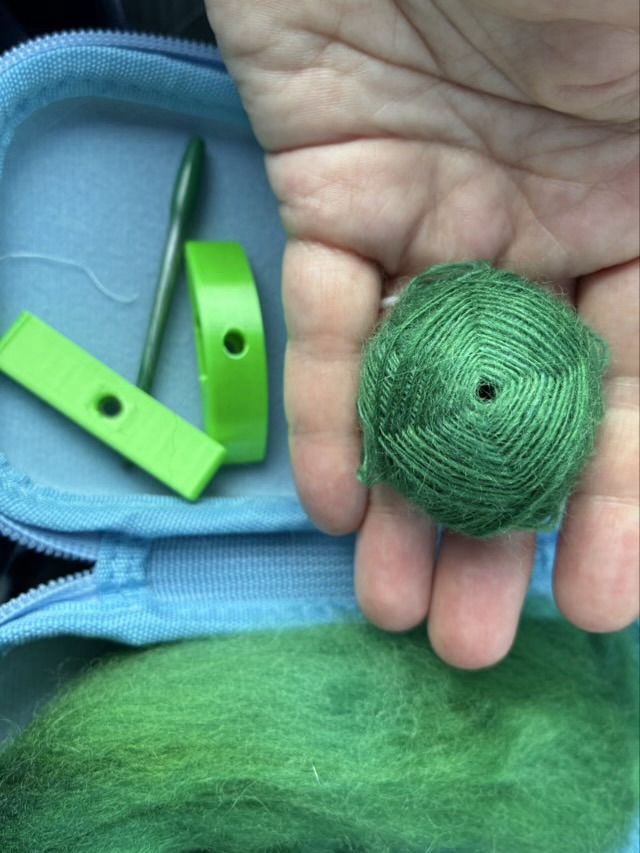
I have finished my first cop of yarn on my fempto spindle which was 3D printed by Turtle Made on Etsy. The cop of yarn from a Turkish spindle is typically called a turtle, I assume because it looks like a turtle in its shell.
Photo description: full Fempto spindle on green roving dyed by AnnieWherePhoto description: freed yarn turtle held above the roving, ridged case, and disassembled spindle
This is a particularly slow turtle, as it is in my car as an emergency craft, so the 9 months from start to finish does not reflect at all the actual time spent spinning.
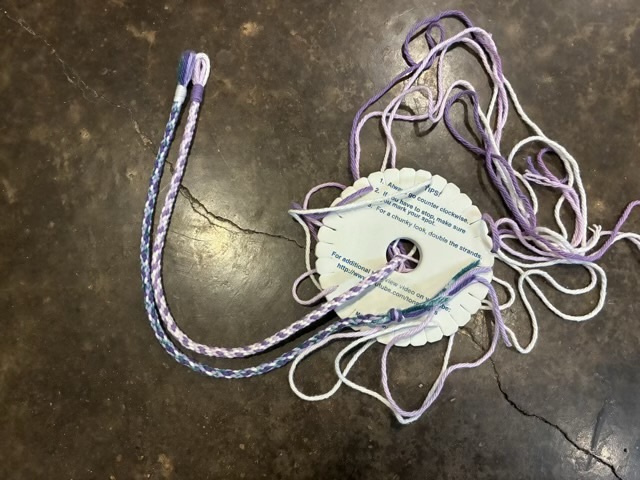
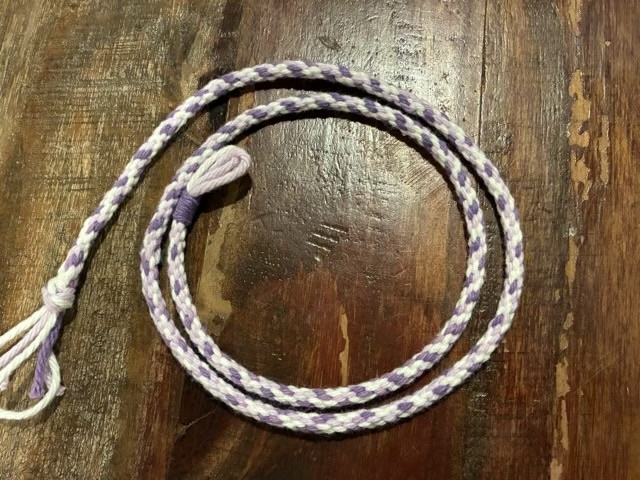
Braiding is common in cord making, so I did my 30 minute test with a foam disk (also called a Kumihimo disk). Here there is an added element of time wasting when dealing with the loose ends of the yarn. I initially cut lengths of cotton worsted weight yarn that I guessed would only take me 30 minutes to braid. It took 25 minutes. So I cut longer lengths and tried again. At the 30 minute mark I had a cord that was barely longer than the first cord because I had to manage the longer lengths of yarn tangling as I braided.
Photo description: foam braiding disk with a cord in process at the 30 minute mark and a finished cord that took 25 minutes, but is about the same length
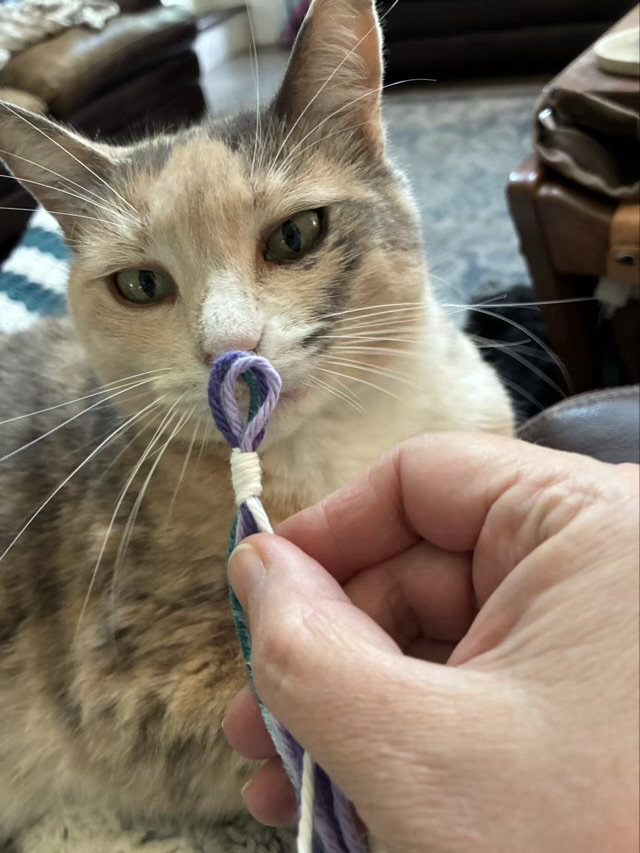
There are ways to manage longer lengths of yarn, such as using bobbins or spools. Sometimes those tangle too, and there is time used to unwind more yarn when needed. Dangling yarn ends also attract cat attention, which can cause delays.
Photo description: Sophie the cat sniffing the end of a lashed yarn bundle, she came up on my lap chasing the yarn
When I reached 30 minutes and still had unused yarn, I decided to push for another 30 minutes, rather than waste the yarn. In 60 minutes I created 28 inches of braided cord. The cord is dense and stiff, but has 15% stretch (20 inches can be stretched to 23 inches.)
Photo description: seven stranded finished cord braided with a foam disk in an hour
Braided cord is a length limited method because the yarn needs to be cut prior to beginning the braid. With yarn management, though, it is possible to braid quite a long cord. I wonder if the bobbins used for bobbin lace would work for braiding? Hm. Something to experiment with.
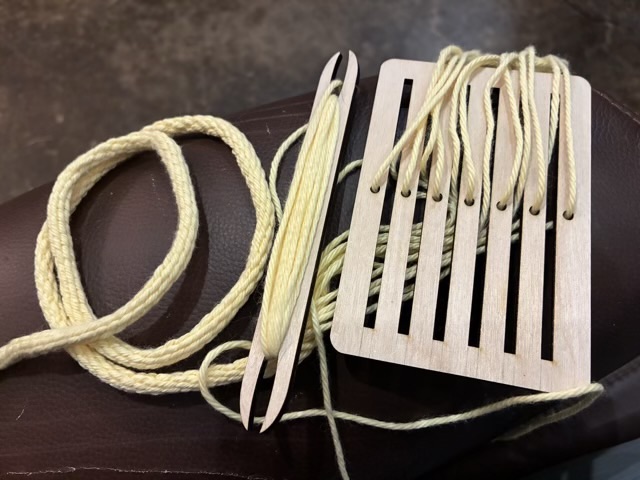
I have read about weaving a round cord, and I’ve been wanting to laser cut a heddle to experiment more with back strap weaving, so I combined the two with my 30 minute series.
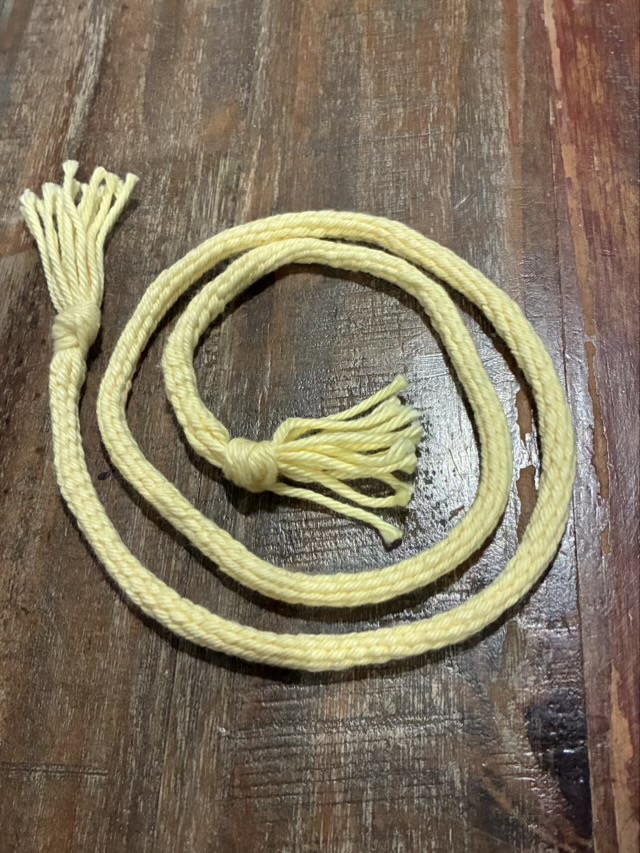
Photo description: laser cut rigid heddle and shuttle, with yellow worsted weight yarn woven into a cord
I cut 13 lengths of yarn and threaded them through the slots and holes in the rigid heddle, then tied knots at each end of the yarn bundle. I secured one end to my foot, and the other to my belt. I loaded the shuttle with yarn and started weaving. To weave a round cord the weft thread only goes one direction, rather than back and forth for a flat piece. It took a little time to get my rhythm, but once I learned to pull the weft yarn nice and tight, the cord making went smoothly.
Photo description: yellow woven cord with knots and tassels at the ends made from worsted weight cotton yarn
In 30 minutes I made 27 inches of cord. The cord is strong and dense with 6% stretch (27” stretched to 28.5”). Unlike i-cord or lucet cord, though, this type of woven cord has a limited length because the yarn needs to be cut before weaving begins. This is the kind of cord I would want for bag handles or load bearing clothing elements. It is also possible to weave around a core, which gives more strength and body options.
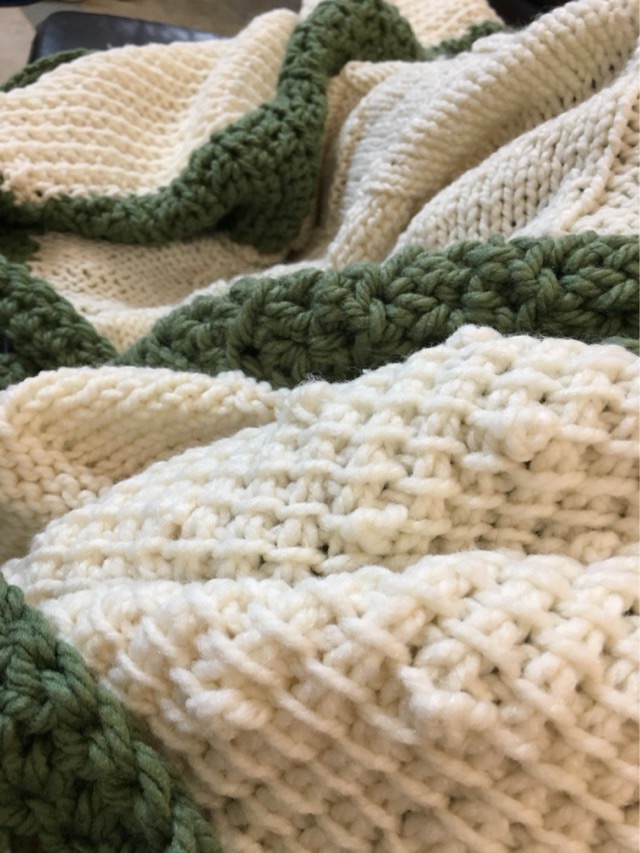
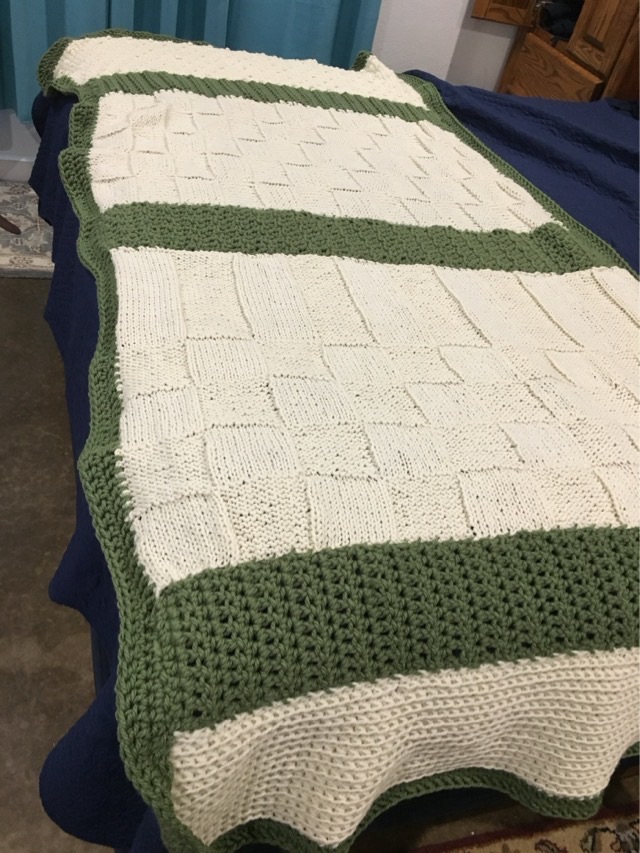
My grandmother had an unfinished afghan when she passed. It looked like she missed a pattern switch and the next step would be to rip out a whole section and she just decided not to and set it aside. I took the partial project and rather than rip out any stitches, turned it into a mixed method project, using different sections of knit and crochet to tie it all together.
Photo description: artful photo of the folds of the afghan which show all the different panel textures using knit, crochet, and Tunisian crochetPhoto description: finished afghan spread out on a King-sized bed
I deliberately made the afghan long at my Mom’s request, because most blanket throws can’t be wrapped around our feet and shoulders at the same time (we are taller than average). I couldn’t find the exact same yarn and dye lot, so added in a complementary olive green yarn to make it obtain the extra length.
This was a personal family project, but there is an organization called Loose Ends that helps families with unfinished projects that their loved ones have left behind find skilled craftspeople to complete the projects so the family has a final memento. You can visit the website or follow them on social media. Grab your tissues.