Cherry crochet hook

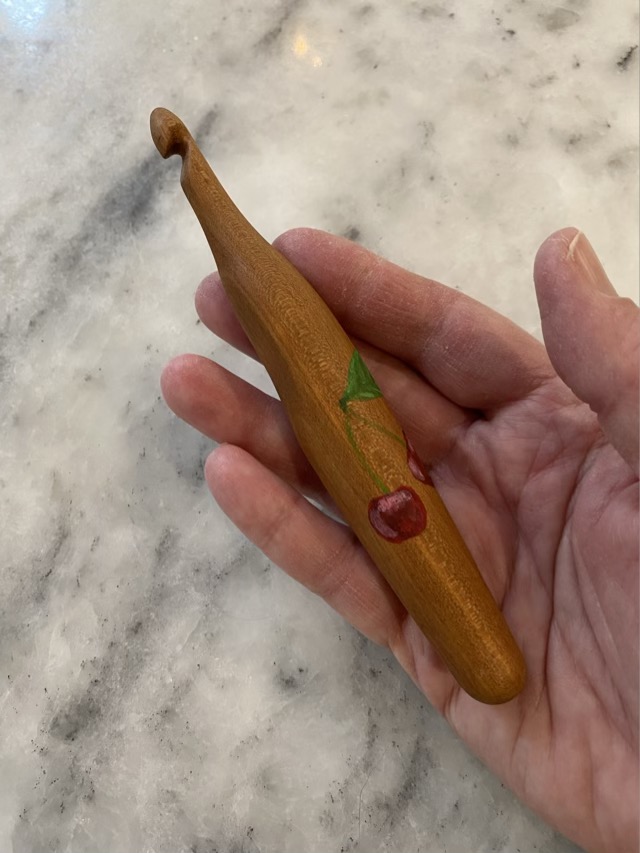
I hand-carved a crochet hook out of cherry wood from my Dad’s woods. I turned it on my lathe, carved in the ergonomic thumb indent, and the hook. After sanding it down to 400 grit, I painted two cherries on it (because cherry wood). When the paint was dry I started coating it with tung oil. The hook has actually been done since December, but I finally made myself make the Etsy listing. Honestly, making the hook was easier than putting together the listing with the pictures, video, and descriptions! (Yes, I even did a video, Missy makes a cameo.) I really need to do more of this so it isn’t so daunting. Oh, the hook? It is very nice, a smooth finish without being slick, and fits nicely in my hand. It is a size M, so for use with chunky yarn, and the short neck works well with single crochet stitches. The Etsy listing is here.

Hand carved ergonomic cherry wood crochet hook (with mini painting)

Student spindles

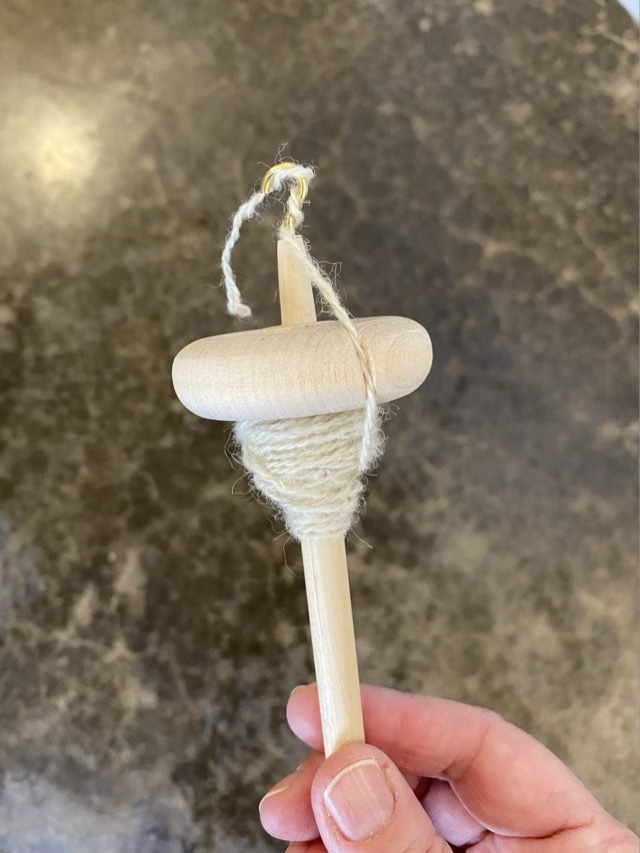
I made up another batch of student spindles. These are made from dowels, wooden toy wheels, and cup hooks. The only thing I work on is the dowel; shaping the top to friction fit the wheel, drilling a pilot hole for the cup hook, and this time, shaping a head on the other end so the whole thing can be flipped and used as a bottom whorl spindle or a top whorl spindle. Oh, I did also put a notch in the wheel because I read that helps beginning spinners, but my first student using one of these didn’t need it. Maybe another will.

New student spindles (right) versus my first handmade top whorl spindle (left)

The student spindles weigh in at under an ounce, which is much nicer than the behemoth top whorl spindle I made the first go round with a post oak whorl that tips the scales over two ounces.

I keep a stash of these spindles so that if I encounter someone that shows interest in learning to spin, I have something they can practice with right away.

Muddle

mud·dle /ˈmədl/ verb

  1. bring into a disordered or confusing state.
  2. mix (a drink) or stir (an ingredient) into a drink.

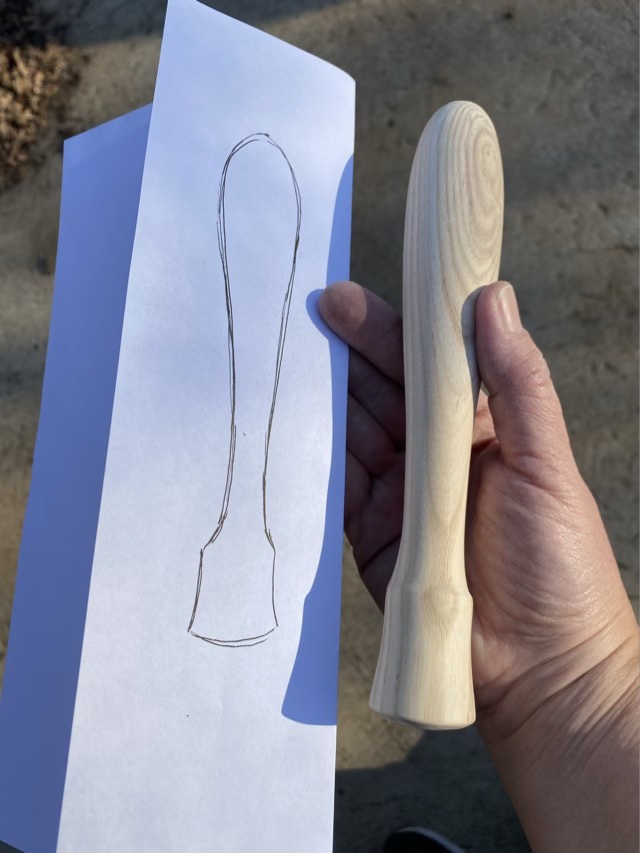
I like both of these definitions of muddle from Oxford Languages, but today we are specifically talking about muddling an ingredient into a drink. To muddle, it helps to have a muddler, which is a hand-held specialized pestle for gently crushing ingredients in a glass. I made this muddler out of a blank of ash wood by turning it on my lathe. First, I did a sketch of my desired profile, then roughed out the blank, refined it, and sanded down from 80 grit to 600. I used the parting tool to separate the muddler from the blank (which is nervous as this is done while the lathe is turning). I did need to sand the ends to remove tool marks.

Muddler sketch, with turned muddler
Muddler rinsed with water to raise the grain and get an idea of the finished color

This muddler needs a few coats of tung oil and some curing time, then it will be ready to send for testing.

Notch

I’ve added a notch to the whorl of my student spindle. I make these from a 5/8” hardwood dowel, a cup hook, and a toy wooden wheel. Using a belt sander, I shape the ends of the dowel slightly; the top to accommodate the screw-in cup hook and whorl, and the bottom to make a point so it can be used also as a bottom whorl spindle. I read that beginners should also look for a spindle with a notch in the whorl to help hold the spun yarn in place. That is easy enough to add with two quick cuts with a small saw and some progressive sanding starting with 120 grit and working down to 400 grit. I had to test the new feature, as you do, so spun up some Shetland wool. The notch lines up to the back of the hook to help prevent the yarn from spinning around the whorl. I am past that learning hurtle, but I can see how this might help a beginner, so I’ll continue to add the notch.

Small amount of two-plied Shetland wool made to test the notch in the whorl

Color changing spinning top

I made another toy top on my lathe. This time I painted it with red, green, and blue to see what would happen when it was spun. Our standard school book learning that red and blue mix to make purple doesn’t quite hold when it comes to reflected light. So the color is different when I spin the top than when I mix the paint, which is fascinating. The coolest part is when I made a video of the spinning top. Because of frame rate, the colors shift and spin through a rainbow in the video. To the naked eye, the spinning top remains magenta, cyan, and gray until it topples. Very interesting phenomena.

Top painted red, green, and blue
Acrylic colors mixed on a pallet (aka paper plate)
Colors as the top is spinning

It really is worthwhile to click on the video link, so I’ll give it to you again.