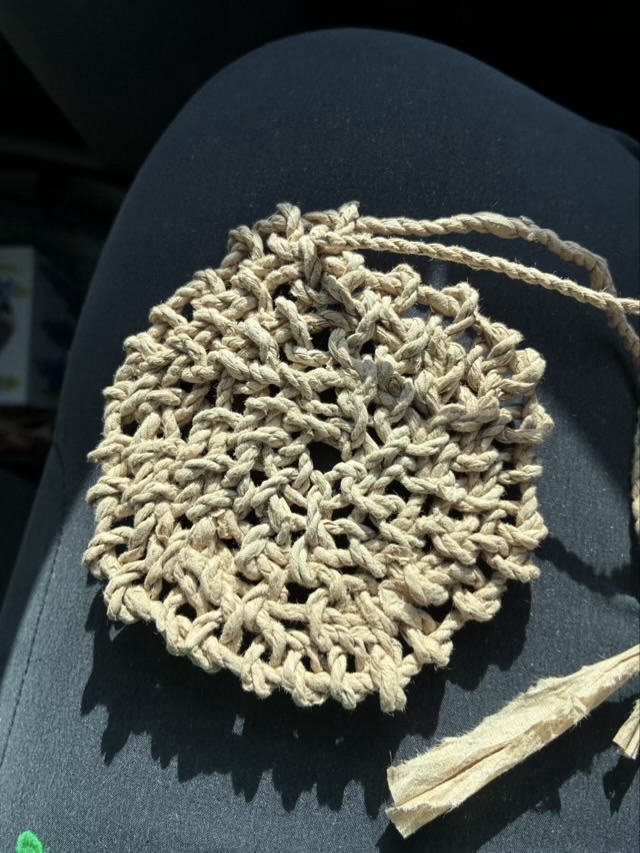
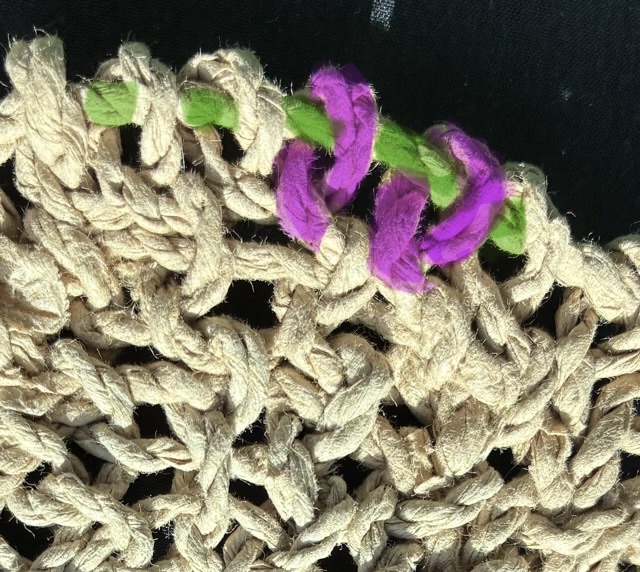
I have a car project for which I tear unbleached fast food napkins into one inch strips, twine the strips together, then add stitches to a loop and core basket. Well, I intended it to become a basket, but I am doing my stitches (button hole loop or Coptic stitch) upside down. It makes it hard to add the stitches because I’m going through a smaller loop.
Photo description: round loop and core base make from paper napkinsPhoto description: close up of the stitches with the core twine marked in green, and two loops highlighted in purple
Opening up the smaller loop to add the next row of stitches weakens the twine at that point, and paper twine is not robust stuff to begin with. I will probably continue to the end of the core twine (there isn’t much left), and experiment with preservation methods with the finished object. The feel of the fabric is quite nice, flexible but firm with an interesting texture.
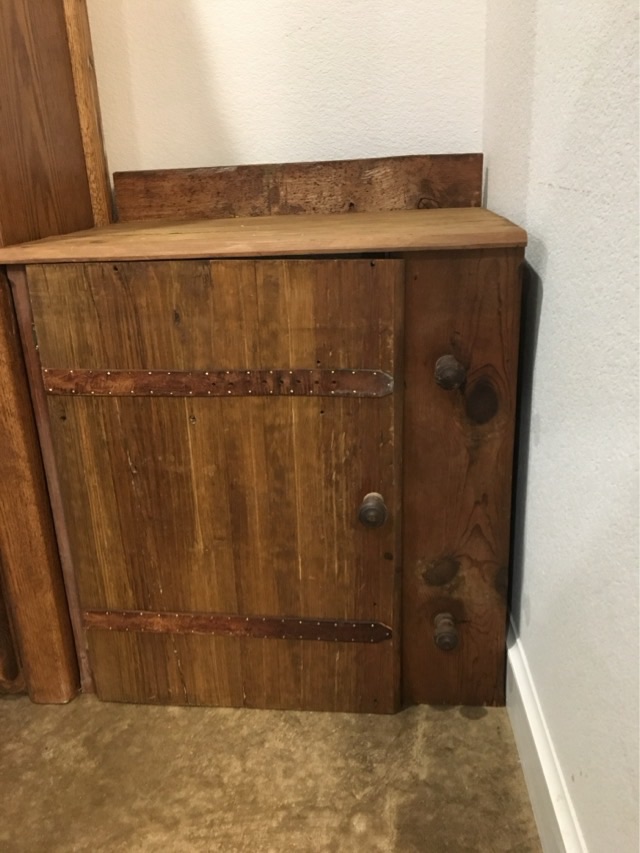
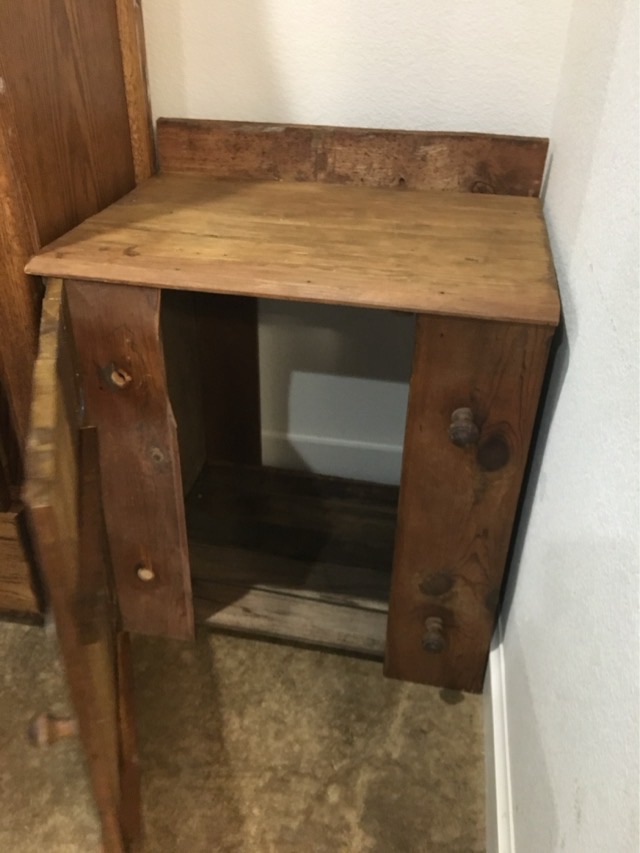
In January 2018 we were still working on setting up the new-to-us house and I needed a place to feed Izzy the cat. We had a space in the corner of the master bedroom and the previous owners left a large old wood workbench with drawers on the back porch. I used the drawers as the structure for a cabinet, and cut sections of the workbench top for the cabinet top, bottom, and door.
Photo description: cabinet made from old workbench drawersPhoto description: inside of the cabinet, showing the open back
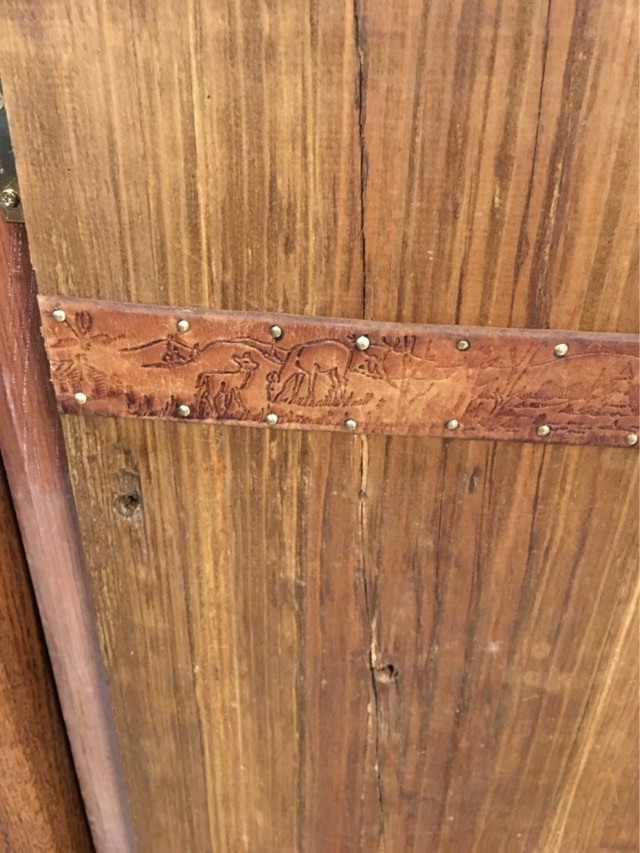
The door had a crack, so I used an old leather belt as strapping to reinforce it. It worked, because the door is still strong after 8 years.
Photo description: closeup of the leather strap showing the carving details from when it was a belt
I found a source of recycled cotton macrame cord from RockMountainCo, based out of Colorado, and some recycled glass beads from our local vintage store, The Haps. The combination of recycled/upcycled materials seemed very appropriate to make macrame hanging plant holders requested by my sister.
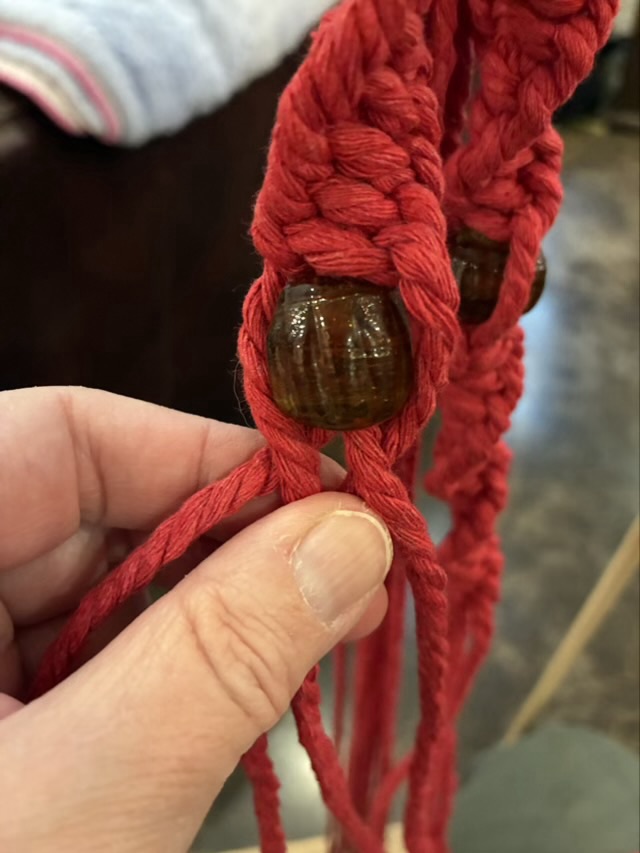
Photo description: close-up of the macrame in progress, adding a bead to the center two strands of a half knot twist
I found that my bag twining loom works well to hold macrame in progress, and to display the finished piece.
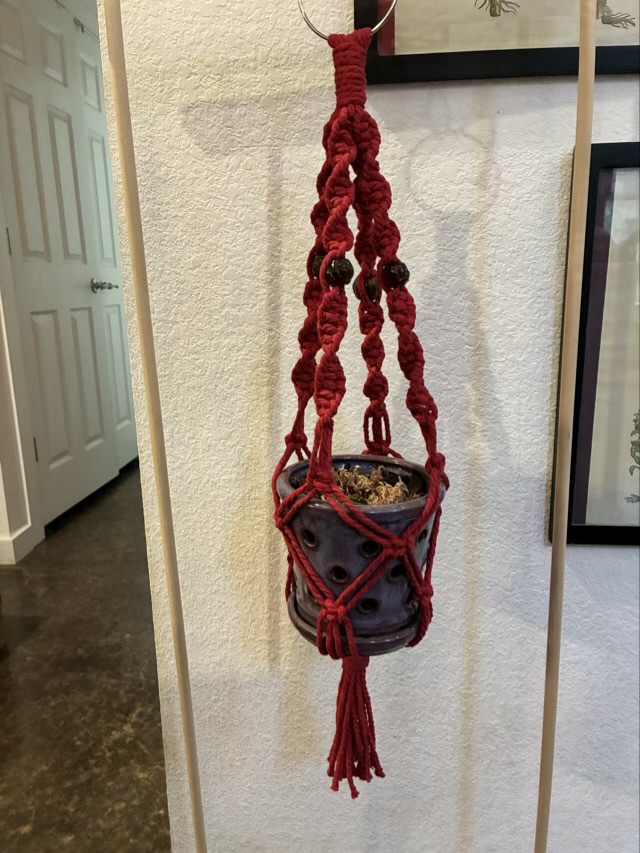
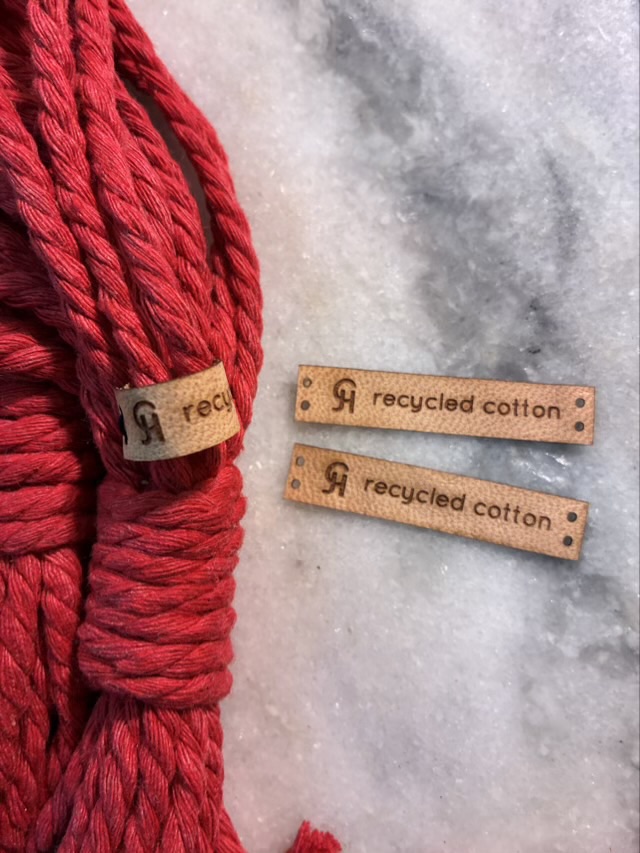
Photo description: hanging macrame pot holder made from red recycled cotton cord and recycled glass beads hanging from a bag twining loomPhoto description: leather tags marked with my signature and “recycled cotton”, one sewn into a circle on the macrame hanging
Technical details: I cut 8 lengths of 4mm cord 99 inches long, folded them in half through a welded metal ring, lashed the strands together with 30 inches of cord, made four half-knot twisted sections with 15 knots on either side of the bead, then three sets of offset square knots to make the body of the holder, finishing with another 30 inches of cord to lash the strands together at the bottom.
In macrame, when making a half-square knot twist, the two center cords function as a core, and don’t get knotted, so the outer knotted cords get short and the middle don’t. To balance this and make the most of the cordage, I used a bead to interrupt the pattern and switch the outer and inner cords. By making the same number of knots above and below the bead, the cords end up the same length. A little macrame trick for those that read this far.
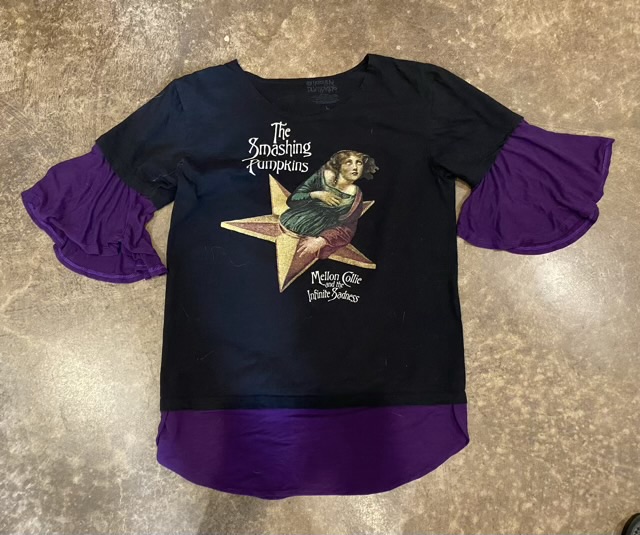
This poor shirt. I previously added crocheted elements, but didn’t like the way the sleeve crinkled in my elbow, so took off all the crochet.
Photo description: Black Tshirt with The Smashing Pumpkins cover art for Mellon Collie and the Infinite Sadness
It hung sadly in my closet along with another shirt that had acquired stains on the front. Eventually they caught my attention again and I combined them. I used the black shirt as a base, removed the flutter sleeves from the purple shirt and sewed them to the bottom of the black sleeves by adding gathers to match the circumference. Then I took sections from the unstained fabric to make a hem extension, overlapping the sides in a petal formation and adding a narrow hand sewn hemmed edge. Honestly I hand sewed all the added bits, because I like to.
Photo description: restyled tshirt with added purple at the sleeves and hem
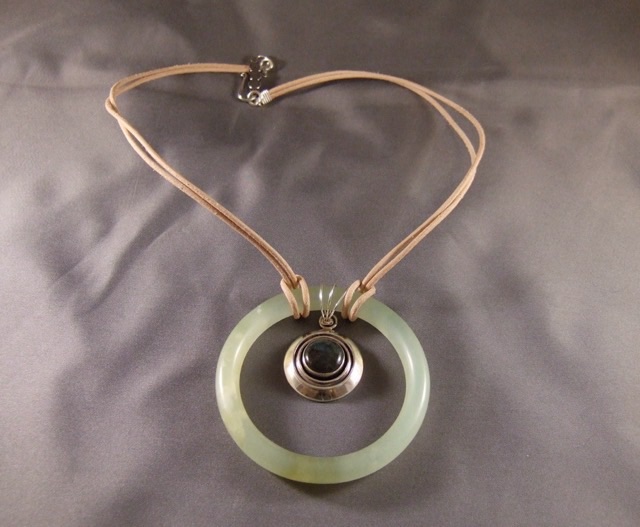
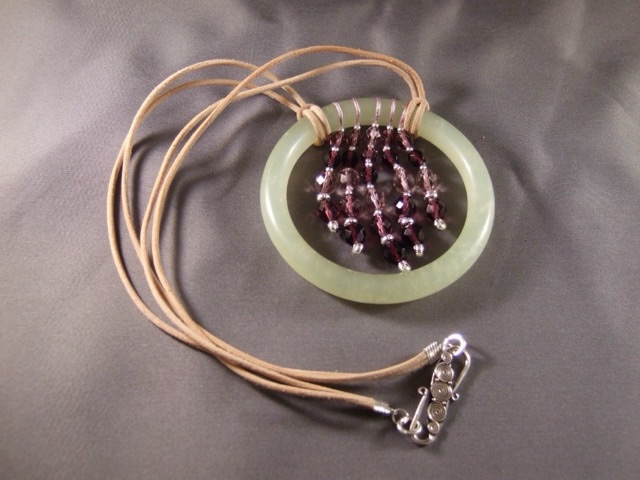
My grandmother-in-law had a pair of beautiful jade bracelets that were just slightly too small to slide over her hand. In April of 2008 I made them into necklaces so she could still wear them.
Photo description: light green jade bracelet turned into a necklace by adding leather cord, attaching a clasp to the leather, and adding a focal using silver wirePhoto description: the second jade bracelet also with leather cord, but with five strands of purple Swarovski crystal and silver beads strung with silk as a focal point
I looped the leather and focals around the bracelets in a nondestructive manner, so if ever they needed to be returned to bracelet status, they could be. The necklaces are holding up well, and I saw her wear one at her recent 99th birthday celebration.