Bent cane weaving frame

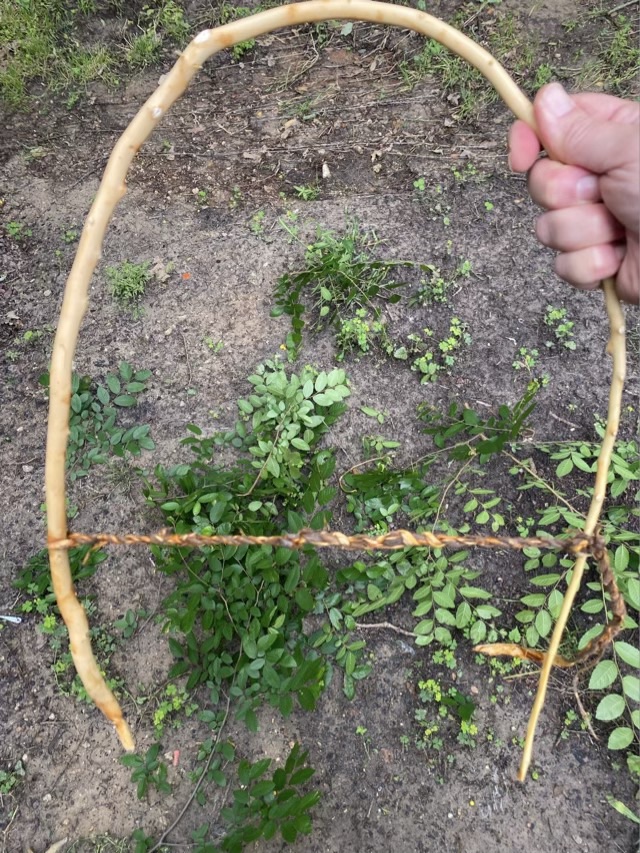
I was trimming the yard, and took down a sapling (iNaturalist identified it as a type of elm) growing near the AC units where it didn’t need to be. I noticed that the diameter was similar to some bent cane weaving frames that have been popping up on my Pinterest feed. Because I am easily distractible, my next task became making my own frame. As I stripped the side branches off, I noticed that the bark peeled off easily, like that of a mandarin orange. The bark was flexible, strong and fibrous, so I roughly split it into thick strands and twined the strands together to make a primitive rope. I used this rope to keep the branch in a nice curved shape while it dries.

Photo description: stripped elm cane bent into a narrow arch and secured with elm bark twine

I think this frame is on the small side for the kind of weaving I want to attempt, but it was a good exercise, and I have an acre of woods to source longer cane.

I will twine

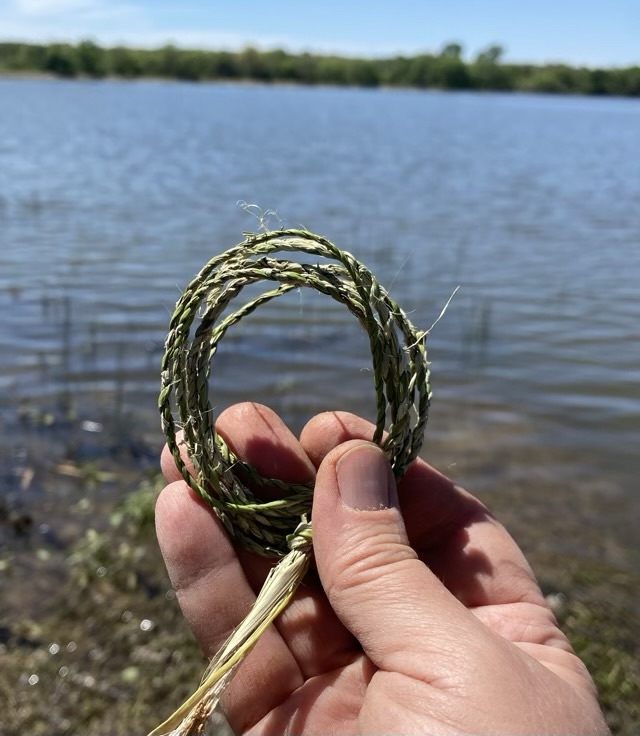
What to do at the lake when you’re waiting for the fish to bite and there are downed reeds at your feet? Twine! It was a beautiful day, but the fish weren’t frenetic and my worm duties were low, so I stripped down a reed that had washed up on shore. After removing the inner soft material from the strong outer casing and tearing it into even strips, I started to twine. I had a new technique from Sally Pointer (on YouTube) that I wanted to try. Instead of adding strands end to end, she adds the new strand in the middle, so each side gets new material. Nice!

Photo description: five wraps of green twine made from reed with the lake and blue skies in the background. This is about an hour’s worth of twine.

This twine was quite strong; I couldn’t break it with my hands. Next time I might see how fine I can twine.

Can I twine?

Now that the rains have passed and we are spending more time outdoors, I have been test twining various materials.

Bulrush (fresh) twine

At the lake, there are thick patches of bulrush. In the time between putting worms on hooks, I selected a stalk, split it into sections, and twined it together.

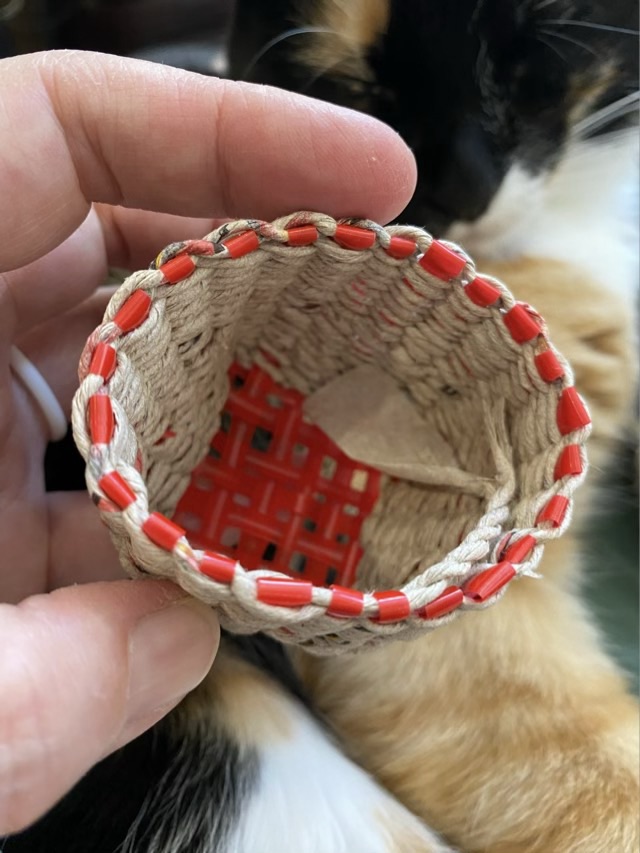
Twined basket made of bulrush

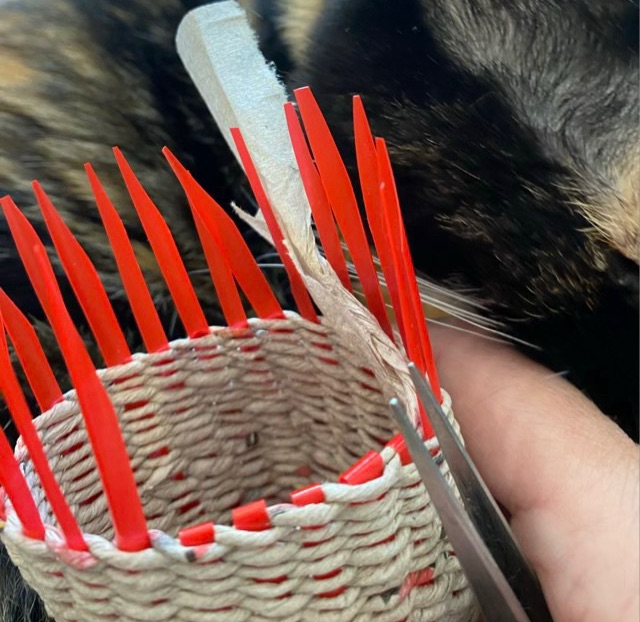
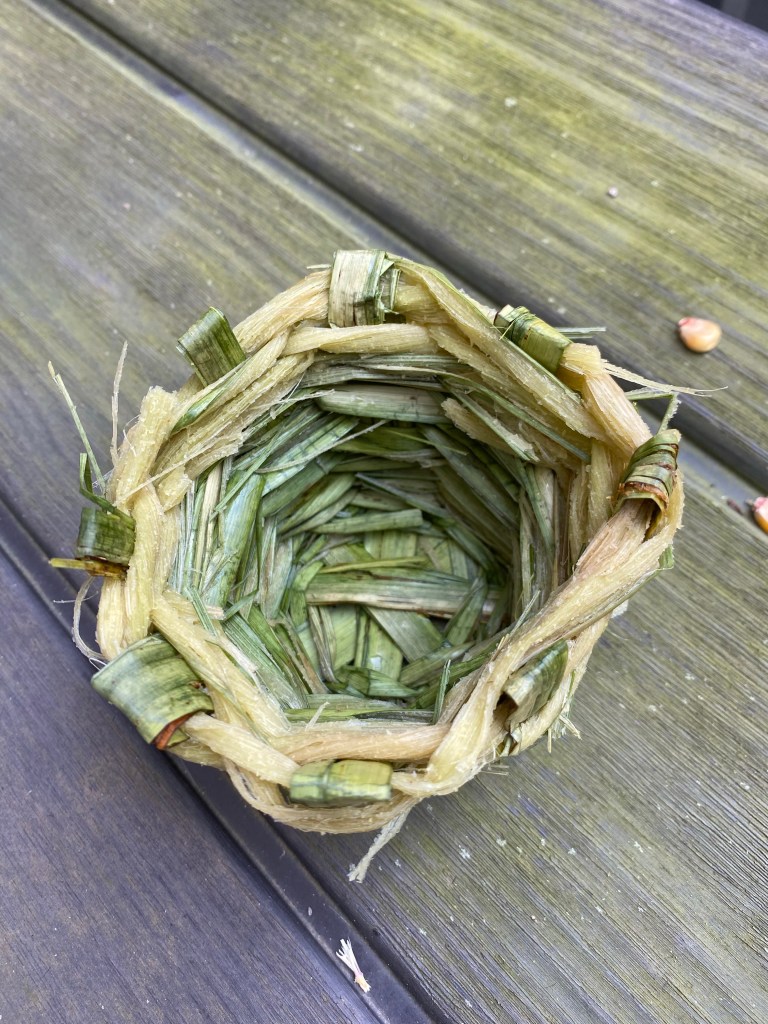
I took another bulrush stalk home and let it dry out, then rehydrated it and ran it through a pasta maker (because I don’t have a mangle, and this seemed to be the same concept), to flatten out the fibers. I did a small twined basket just to see if I understood the construction concepts. It is very rough, but at least recognizable as a basket.

Dried twine from grass

Weeding the front garden, the long strands of grass caught my attention, so I twined some. Some of the blades were too brittle fresh to take twist, but a different species was more supple and was easy to twine. When it dried out the strands separated (but it is still relatively strong).

Twined iris leaf

The irises in the front yard are starting to fade. I’ve read the wilted leaves make good weaving material, so I pulled some out and twined it. The supplest was easy to twine, but the leaves that had dried out more tended to break. Probably soaking them in water for a bit would bring them back (if I can believe what I’m reading).

Busy, busy grass spider’s web

The grass spiders have been particularly productive this summer and one attempted a web over a planting tray. Yes, I tried to twine it. I peeled up the web sheet (after making sure the spider had vacated), and twisted it up. It is a bit sticky and full of desiccated insect parts, which is quite gross, but I tried it.

Single twist of spider’s web

It is possible to spin spider’s silk, but the effort is Herculean. There is a stunning cape made of spider silk from Madagascar and apparently the crafters collected a million spiders and extracted the silk, rather than gathering webs. The project took over three years and numerous crafters. Here is an article.