Winding pause

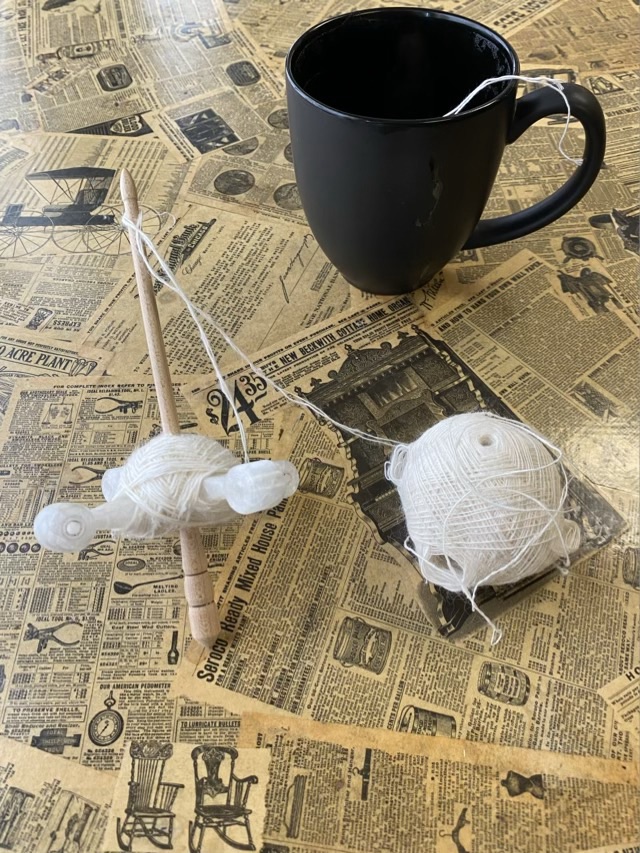
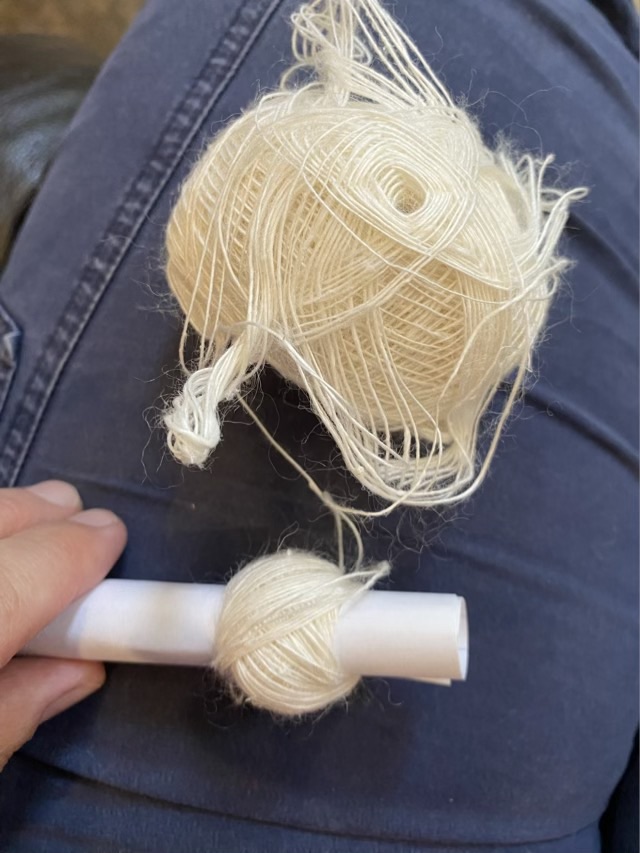
I was winding my single spun camel fiber from the drop spindle to a nostepinne style ball, using my fishing swivel chain hanging from a wall hook when life interrupted. I put my makeshift nostepinne (rolled up card stock) onto the wall hook.

Photo description: drop spindle hanging from a wall hook with a partially wound ball on a paper tube on the same hook

It may have stayed that way for a week. May is a busy time. I did eventually get back to it and finish winding.

Photo description: wound ball of camel single spun fiber on a scale reading 42g

It is good to know that I can pause my winding in this way. Life interrupts frequently and my hobbies need to be able to be set aside for an unexpected moment.

Spindle weight

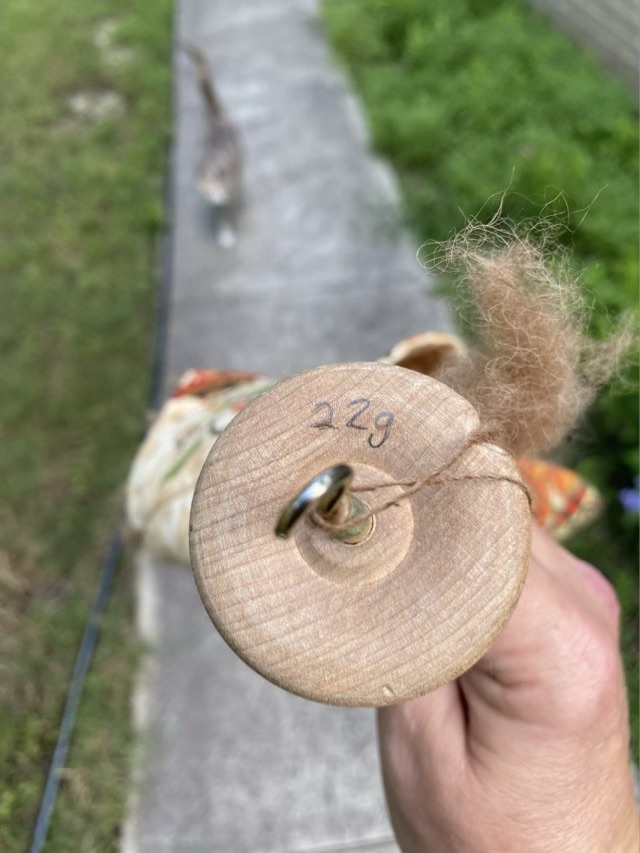
I wrote down the tare weight of my spindle so I could track the amount of yarn I’m building up.

Photo description: 22g written on the whorl of a hand made drop spindle, camel fiber and arm bag visible behind the whorl, calico cat on the sidewalk in the background

I’m working on a camel bump, which amuses me. Camel fiber is quite soft, and the mill processed it into a “bump”, which is roving wrapped into an oblong, much like how yarn is sold in the big box stores. I’m spinning it on my daily walks, then recording the weight.

Photo description: drop spindle with brown camel single spun yarn in a cop below the whorl, sitting on a digital scale that reads 26g
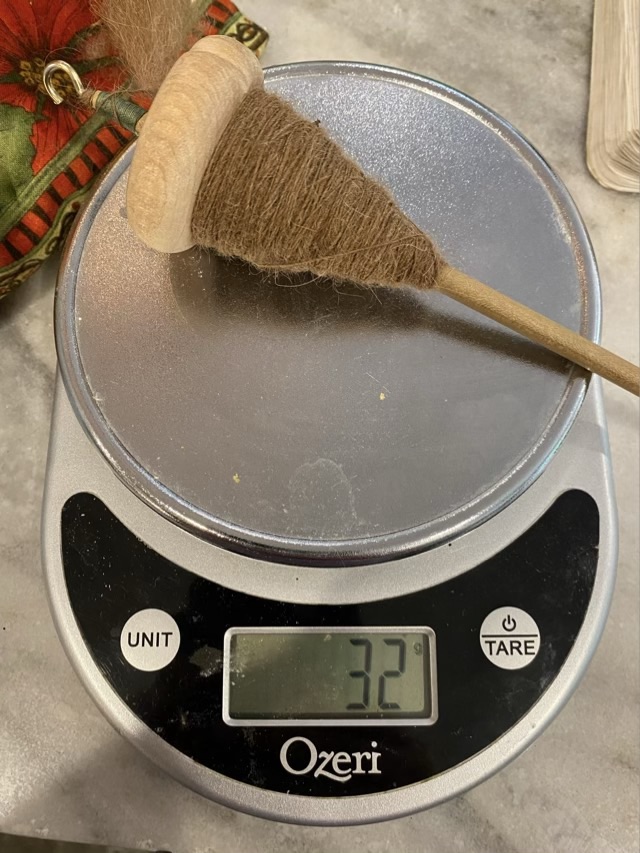
Photo description: same spindle the next day, and the scale reads 32g

My efficiency is improving, or I’m walking longer, which are both valuable outcomes. I spun 4g of fiber the first walk, and 6g on the second walk.

Shetland wool

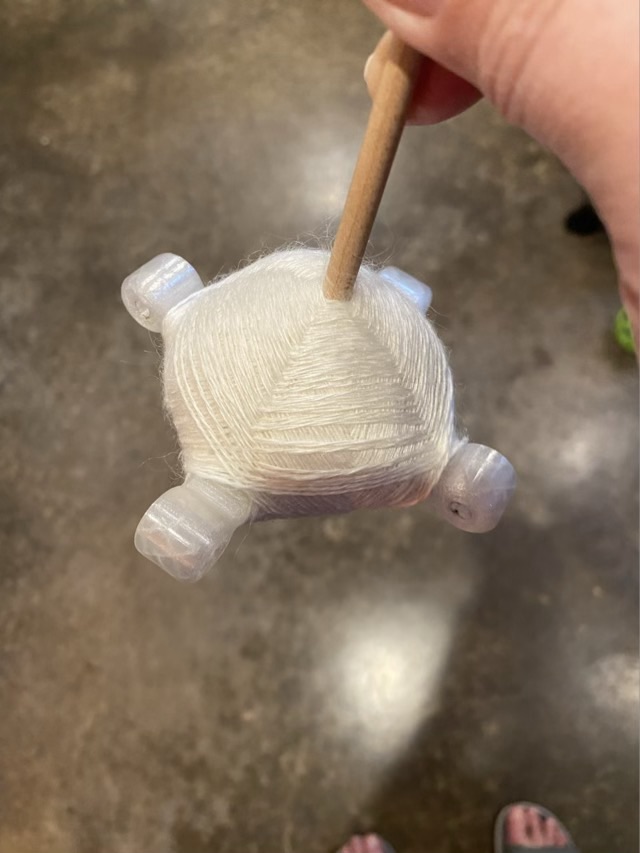
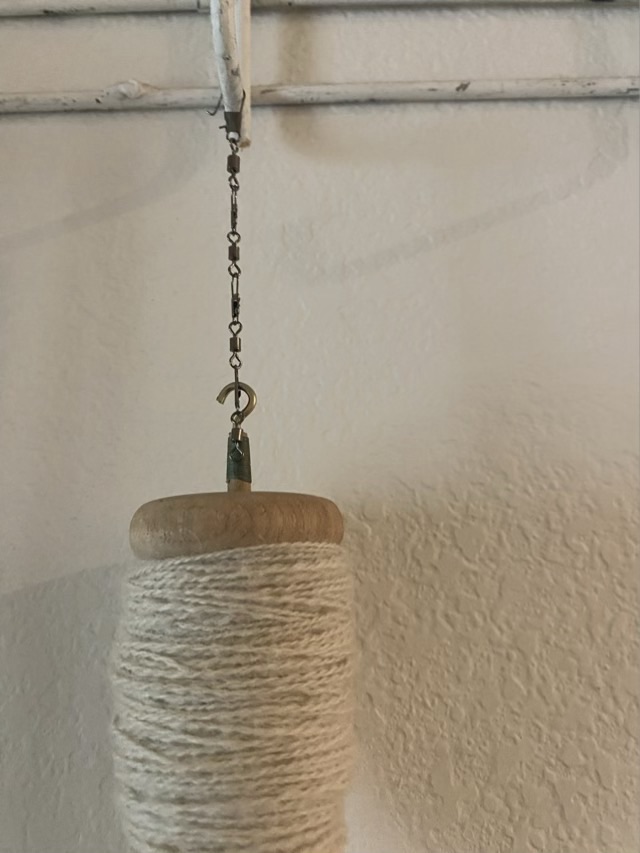
A couple weekends ago I spent about five hours doing spinning demonstrations at a local Earth Day market. I was spinning Shetland wool on a spindle that I have demonstrated on before, so only about half the yarn cop was spun that day, but it was enough to fill the spindle. I found that hanging the spindle from my canopy made it easier to off load the yarn. So at home I tried the same thing, but used fishing swivels instead of a loop of yarn, which works much better. Did I take pictures of the full spindle with single spun yarn? Or the nice nostepinne style center pull ball of yarn? No, much to my later self’s dismay. I did the photo record of the two ply yarn, and the resulting skein after blocking.

Photo description: using fishing swivels to hang a drop spindle from a broom rack for ease of off loading the yarn. Two ply Shetland wool on the spindle.
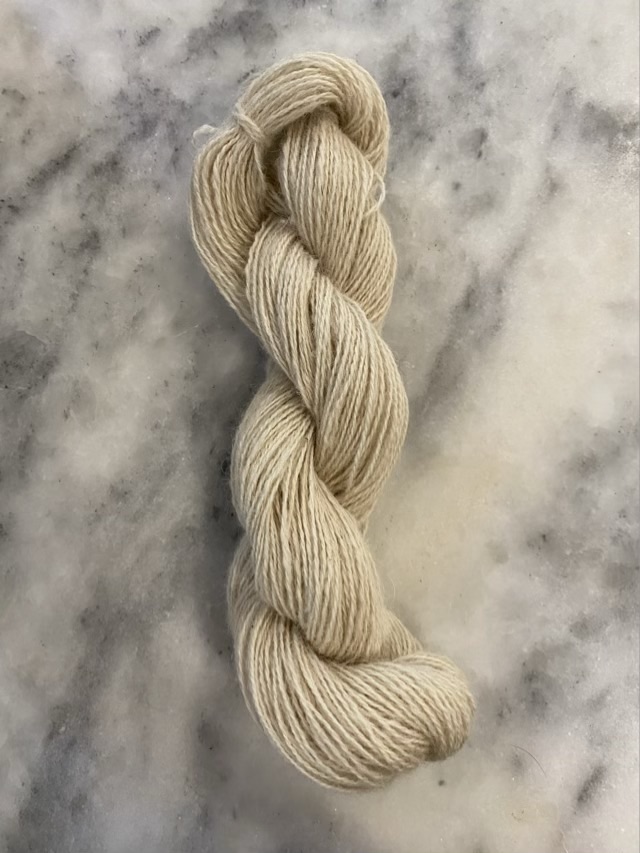
Photo description: two ply Shetland wool skein weighing 28g

I still have Shetland wool ready to spin, but a factor in off loading and plying this yarn now is that I don’t have a Shetland wool page in my fiber book. Oops. I demonstrating spinning it, but don’t have examples of the finished product. I’ll use this finished portion of yarn to make my swatches and complete a page in my book, then spin up the rest later.

Dividing yarn: subtractive method

I found painted yarn at my local yarn shop! This yarn is self striping by having a precise color repeat. I don’t need my socks to be identical, but I don’t like knitting two socks from the same ball because of tangle and twist issues, so I divided it in two using a scale and a ball winder.

Photo description: Printed yarn by Cascade with 51g on the scale, and 51g on the winder

I place the full amount of yarn on a scale to get the total weight, then I wind my yarn into a cake using a Royal wool winder until the scale reads half the original. I cut the yarn, and start a new yarn cake.

Photo description: two equal weight yarn cakes with pretty pastel shades of green, purple, blue, pink, white, and yellow.

It is harder to measure going from skein to cake because the skein is on an umbrella swift and the cake on a ball winder, both clamped to the table, but if you go a little past what you think is half, then weigh the cake, it is easy to wind off back onto the swift.

Soybean top page

I have finished a new fiber page for my spinning book! I mounted all my samples from hand spinning soybean top (top is the description of the fiber preparation, involves combing, and produces parallel fibers) on prepped black card stock. I would definitely use this fiber again, it is very strong, yet so soft.

Photo description: Soybean top fiber page. Clockwise from top left: original card from Hearthside Fibers reading “Soybean Top Developed in the USA in the 1930s by Henry Ford Used in Ford car upholstery pre-1940”, single spun, 2-ply, and 4 ply yarn samples, woven swatch, nålbinding swatch, crochet swatch, knit swatch, combed fiber.
Photo description: same page with swatches flipped up to show the writing underneath: plain weave on Clover mini loom, nålbinding Dalarna O/U O:U O, crochet 1.75mm hook, Stiockinet size 2 needle knit.