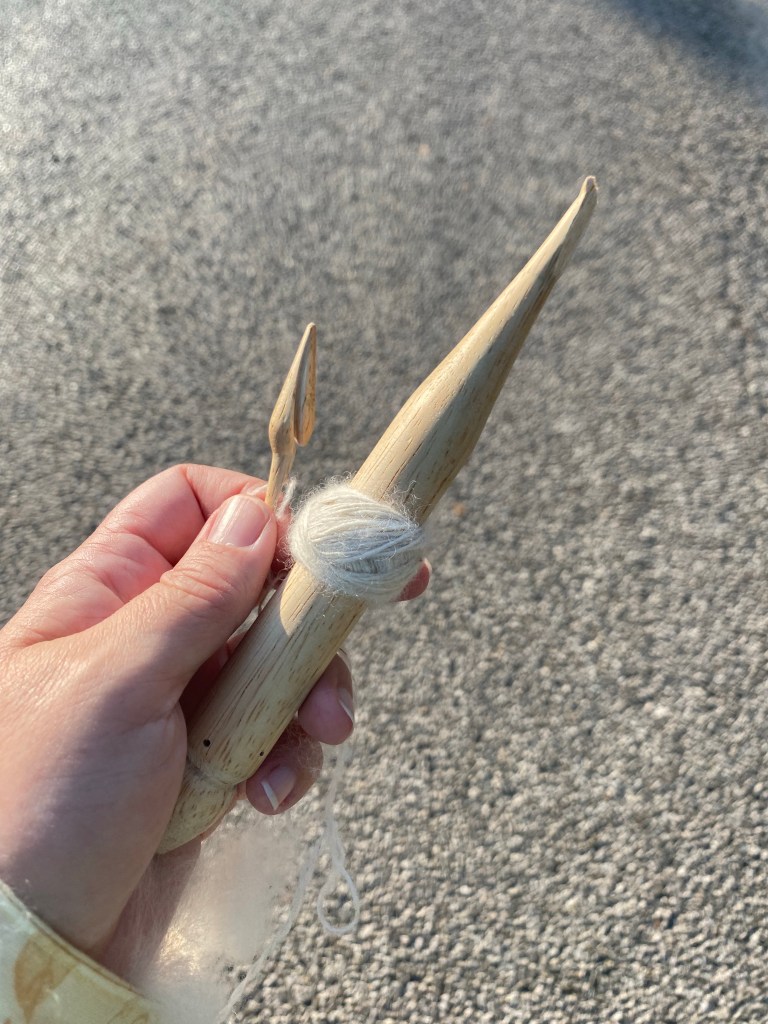
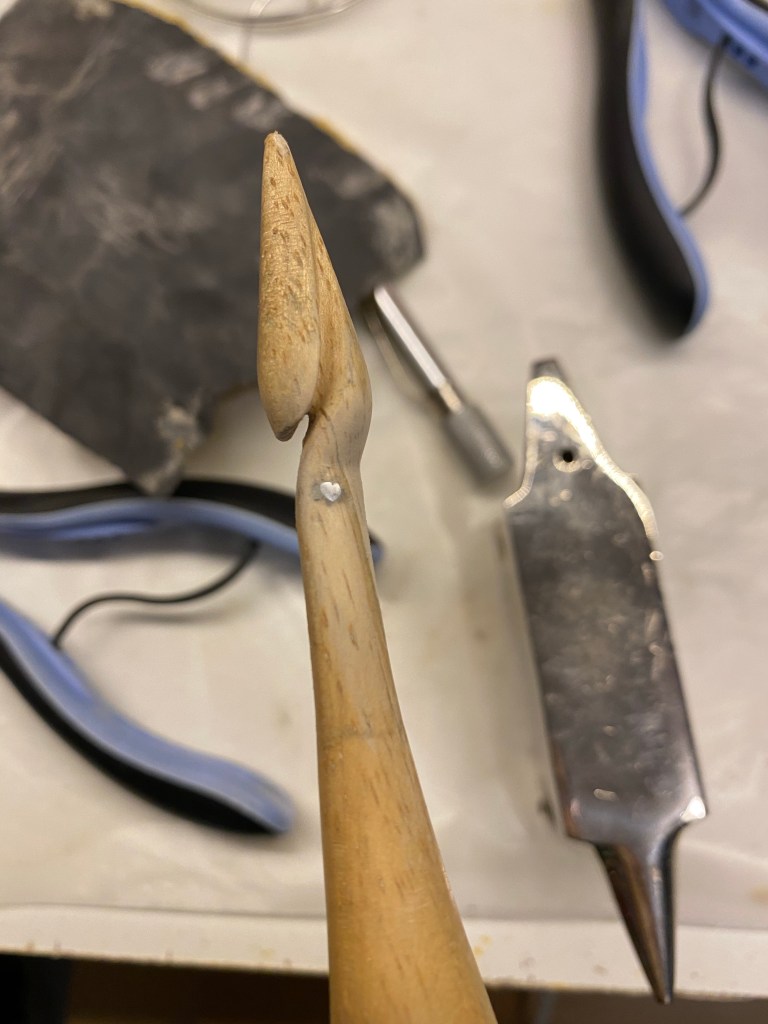
Spindles with hooks have a weak point where the hook screw connects with the wood, especially if the shaft is slender. I like slender shaft drop spindles because I feel I can control the spin better and the light weight is more comfortable. I don’t like when I drop it and the shaft cracks. To give the metal to wood join some reinforcements, I decided the wrap the weak area with waxed silk.
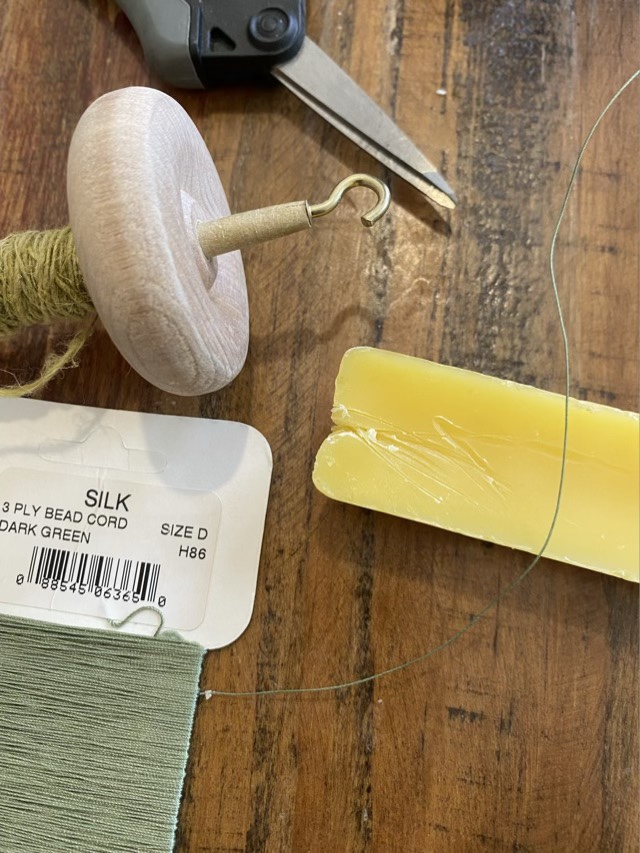
The method I used to wrap is called common whipping. Plugging those two words into your search engine will generate all sorts of illustrations and tutorials, as long as you get the words right. It took me an hour of searching to find the right words, I had a synonym of whipping in my head that I couldn’t dislodge. So, two words: “common whipping” are my gift to my readers today.
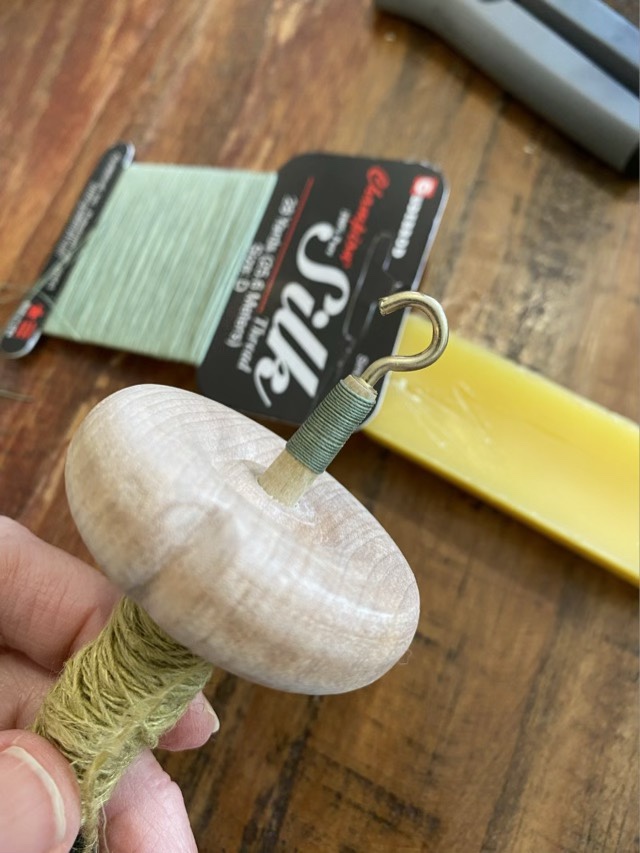
I ran an arms span of the silk cord through my wax block three or four times to build up a layer of wax. The wax helps protect the cord and makes it stay in place better. I start my whipping with a loop laid along the shaft. I wrap toward the loop, run the end of the cord through the loop, then pull the loop end to draw the ends into the middle of the wrap. (This is where the internet search comes in handy if you are a visual learner.)
I used silk because I tried hemp and it wasn’t strong enough and the diameter made a wrap thicker than I wanted. Waxed linen is also commonly used, and is strong, but I didn’t have any on hand.