Doll jacket

I used the gimp yarn I spun to make some more doll clothes, because there wasn’t near enough to do much else. I wanted to see if I understood the construction of a nålbound sweater, but it is very difficult to get a sweater on a doll, so I also tested cutting the fabric and finishing it.

Nålbound doll sweater made from the bottom up

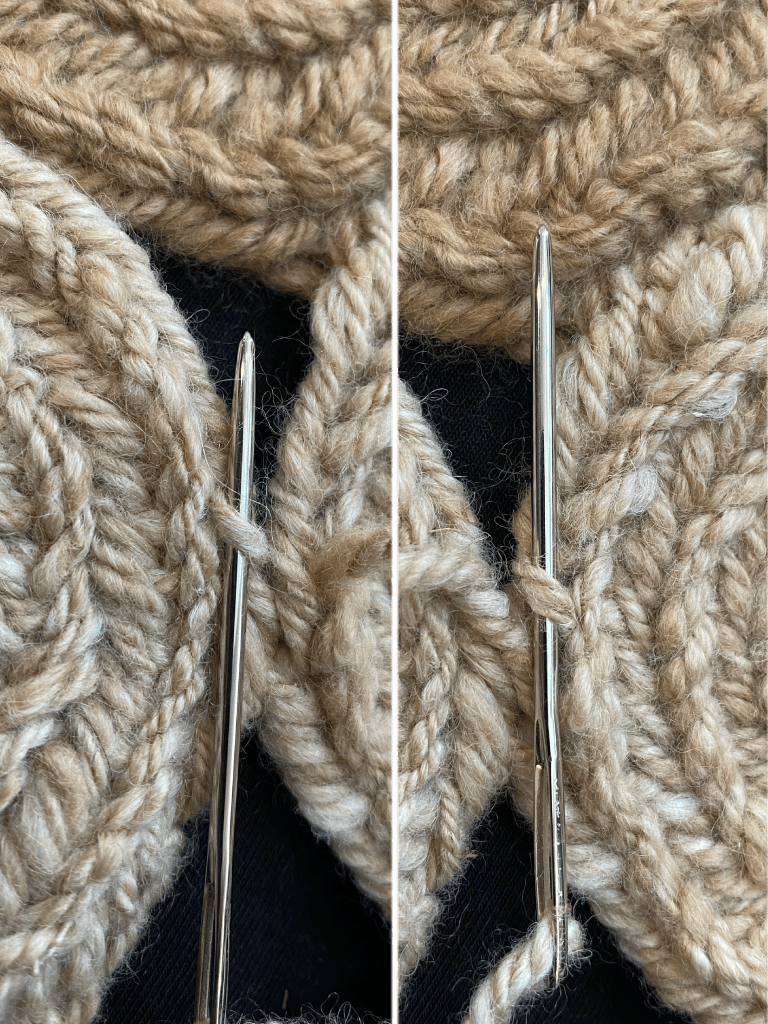
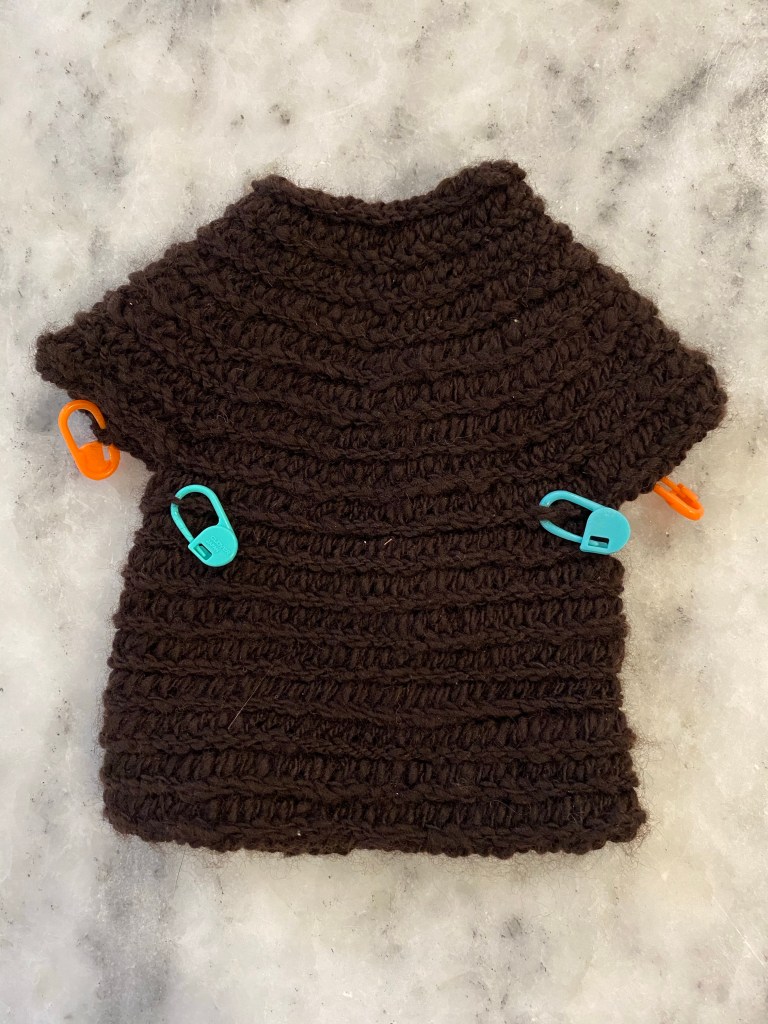
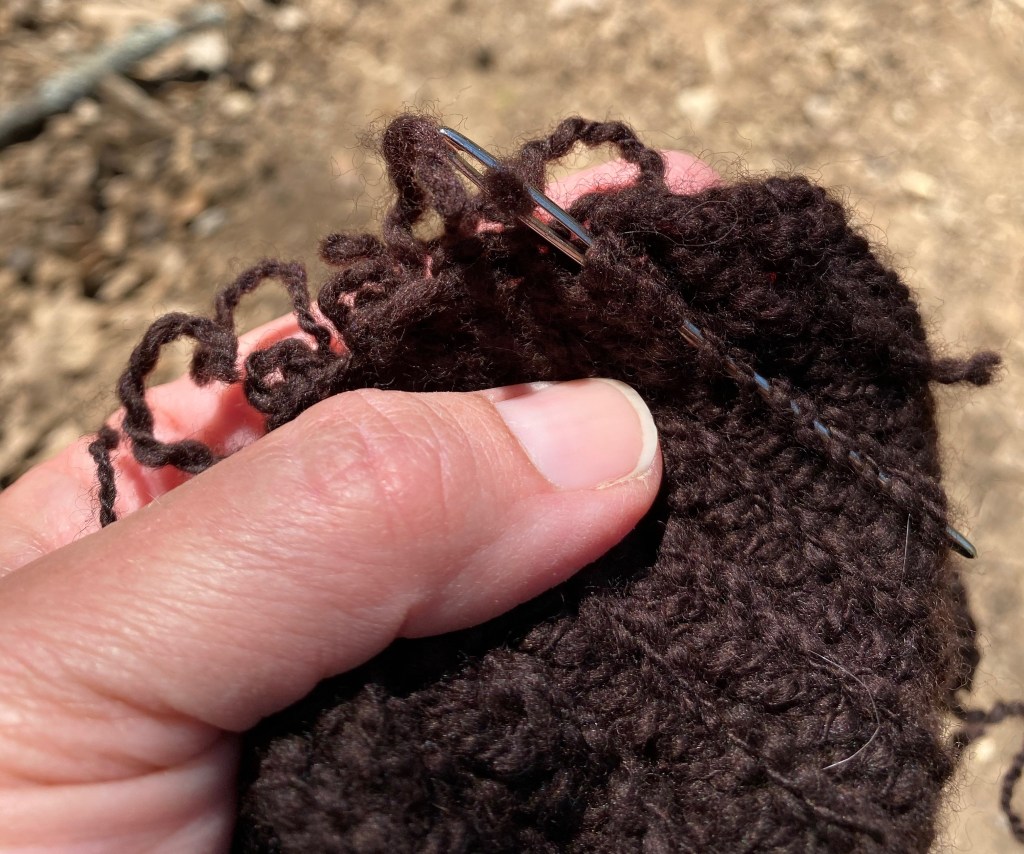
I used an existing shirt as a guide for the dimensions, and started from the bottom. When I reached the armpit area, I made a loop on each side, then calculated my decreases. I added 50 stitches with the arm holes and needed to reduce an additional 20, all over 7 rows, so each row needed 10 decreases. I placed markers and did decreases at and between the markers (so I didn’t have to count stitches!) I then cut the garment up the front and removed the partial strands, then pulled the attached threads snug. Using a tapestry needle I ran the ends back through the fabric on the inside.

Running the cut ends back through the fabric

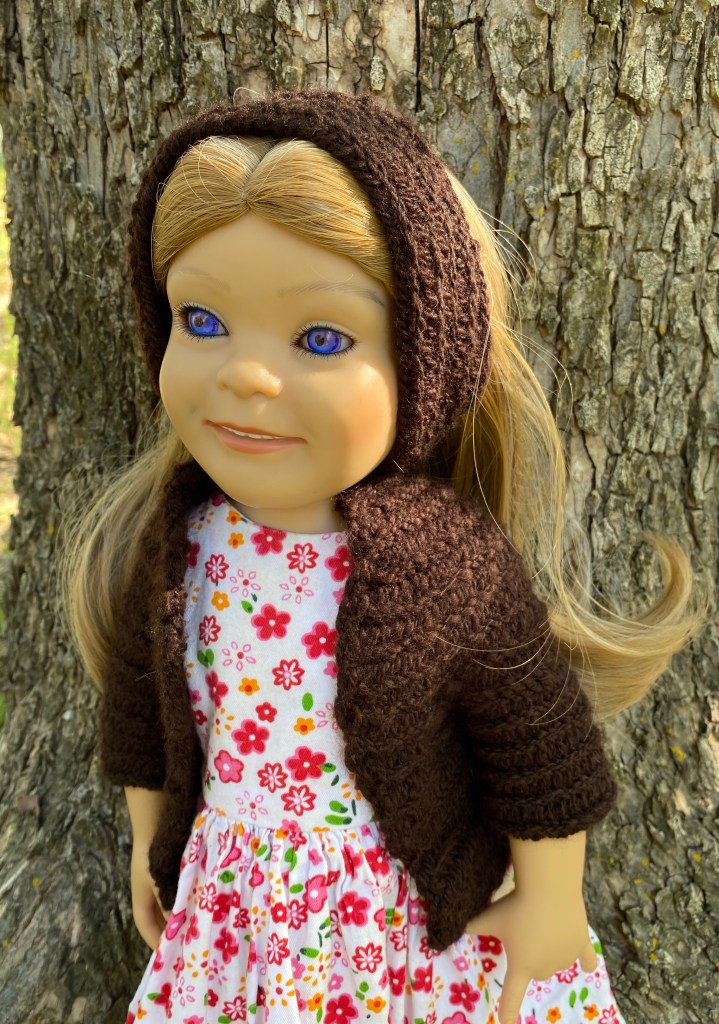
I was going to add an edging, but I quite liked how the edge came out just by neatening the cut yarn. Nålbinding is amazing! I then added sleeves to the arm holes. I had a little extra yarn, so I made a matching ear warmer as well.

Finished doll jacket and ear warmer, 2-ply gimp Merino wool hand spun, Finnish 1+2 F1 stitch

This doll is also sporting a new wig. Her old wig’s glue deteriorated and it fell off, so we ordered a new one that matched my daughter’s current hairstyle and superglued it in place. I’m not ready for doll hospital work, but was glad I could do a slight repair. Her original eye color faded due to moisture attack, however I am not up for changing eyes. That is intense. I used sharpies and some isopropyl alcohol to repaint the eyes so she didn’t look like she had heavy cataracts.

Nålbinding swatches

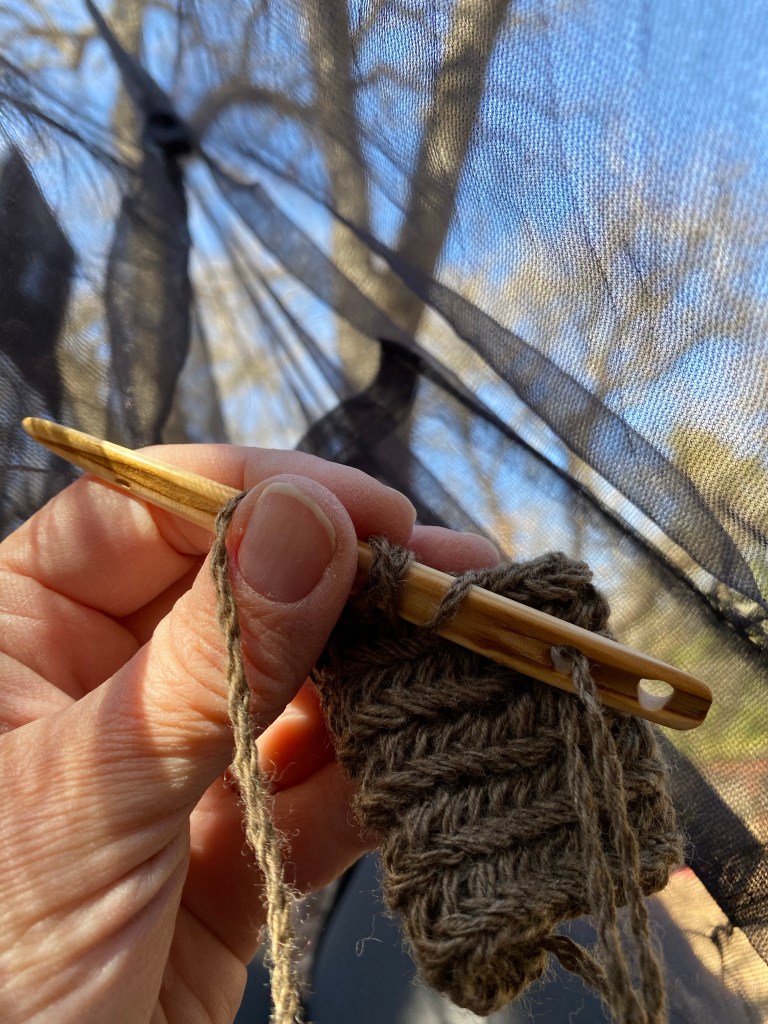
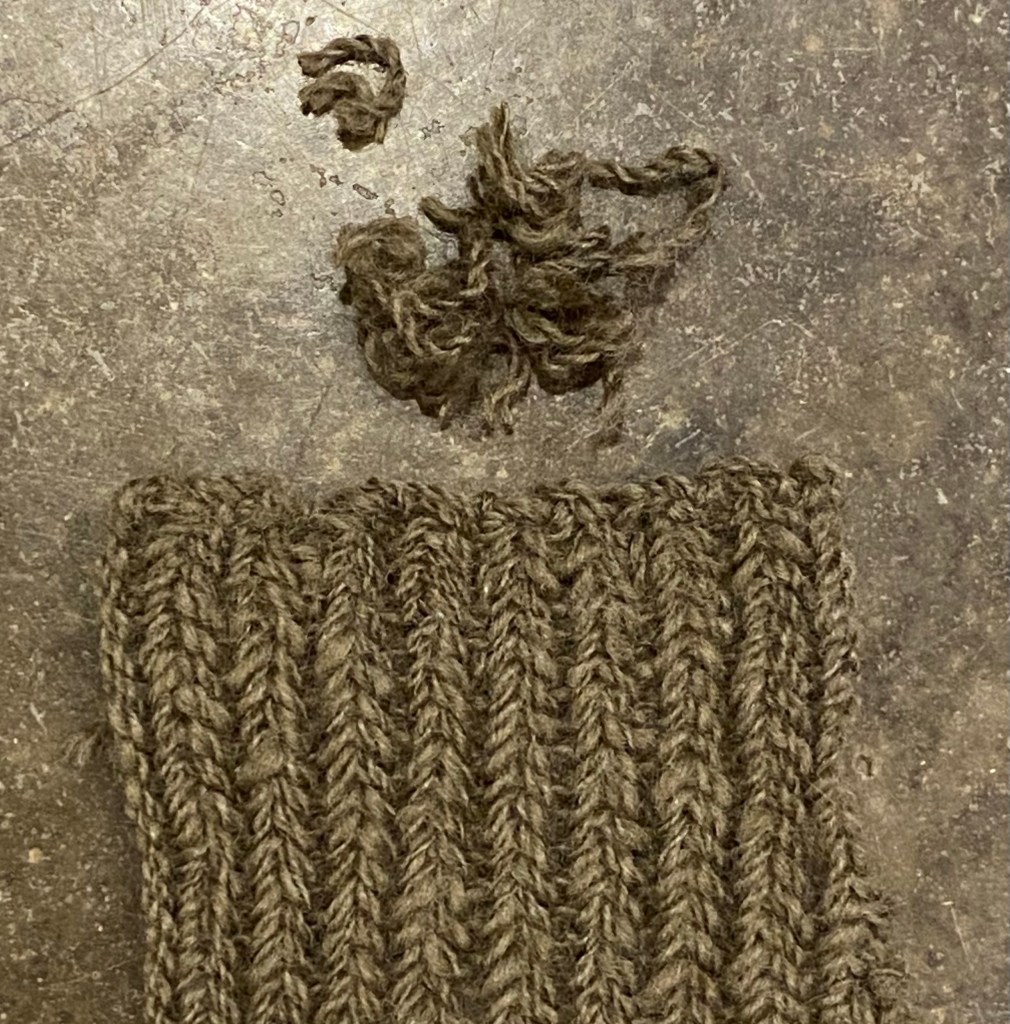
I did some crochet, some knitting, and now it is time for nålbinding! I only had two ply and four ply yarn left, but I tried using a tapestry needle as well as a hand-made nål on the two ply. Sizing the loops to the tapestry needle was much too small and much too tight, but the 25mm diameter nål made a nice fabric for both the two ply and the four strand cable ply. I stitched in the round, then cut the tubes open. The swatch does not unravel when cut! Although a few tiny bits of yarn do fall out. Of the three methods of fabric construction, nålbinding is the slowest, but I enjoy it the most. The process is soothing and the resulting fabric is nicely stretchy (at least with this stitch).

Nålbinding swatches made from hand spun merino wool
Nålbinding while laying outside in a hammock
Cleaned up the cut edge by removing the partial threads, snugging up the attached threads and running them down the back of the work

Two birds, one nål

I have had a little trouble getting back into walking. I’ve been taking walks with my dog Griffin for over seven years, but our newest dog, Missy, is scared of people on walks, and I don’t want to push her to a point of aggression, and she can’t be left alone. So that leaves me walking with no dog (and no people, because pandemic). When walking I have to hear my surroundings, so that nixes listening to music or audio recordings. Walking the neighborhood under these conditions is boring. What to do?

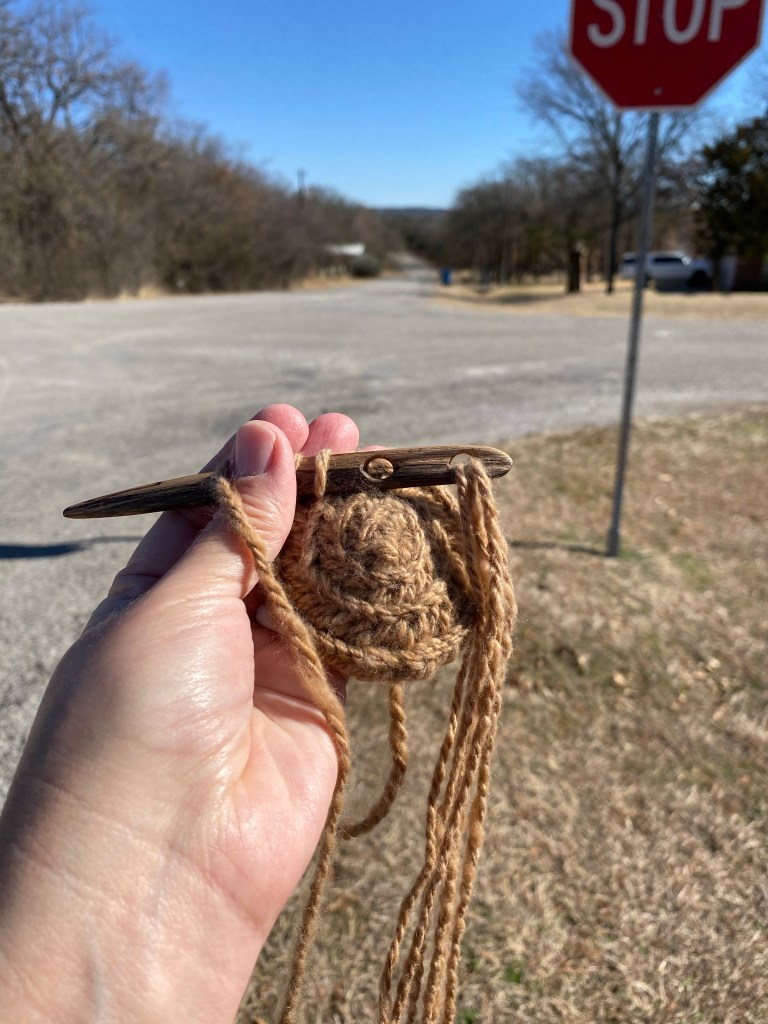
Nålbinding to the rescue! I have found that I can nålbind and walk at the same time. Now, it is with a stitch I am comfortable with (fun fact, there are 4,000 or so ways to loop yarn into a continuous fabric, and naming can be tricky and a bone of contention in nålbinding circles), I am working on small pieces (that will eventually be sewn together into something larger), and the road is fairly even. I have read that people can walk and spin, or even walk and knit, so compared to those nålbinding and walking is an achievable task. I do start my spirals before I venture out, because that is the trickiest bit, but once I’m in the steady rhythm of the pattern, I’m good to go. I think I may even be able to crochet and walk, if I had my yarn in a bag (I can make beanie hats from memory). Knitting and walking? I drop stitches sitting down, so that is probably out. Spinning and walking? Ooo, now there is an exciting goal!

Working on a nålbinding spiral as I walk the neighborhood
Finished spiral, still walking (but not for long, as it is now boring again and my feet hurt)

Loaded

Nålbinding needle loaded with yarn

Unlike knitting and crochet, nålbinding (which I have heard pronounced as nawl-bending) is made by passing lengths of yarn through loops. Since the yarn must pass through, the crafter works with sections of yarn, rather than from a ball. A way to increase the amount of yarn that can pass through a thumb-sized loop is to use a nål (needle) with two or more holes. I also carve a channel along the holes to reduce bulk. In the picture above I have the nål loaded as much as I dare! I made 4 four-foot loops and threaded two loops through each hole. As you work, you can pull the working yarn through the hole and keep the loops neat. If you would like to see a short video on an in-process piece, here it is.

So many circles

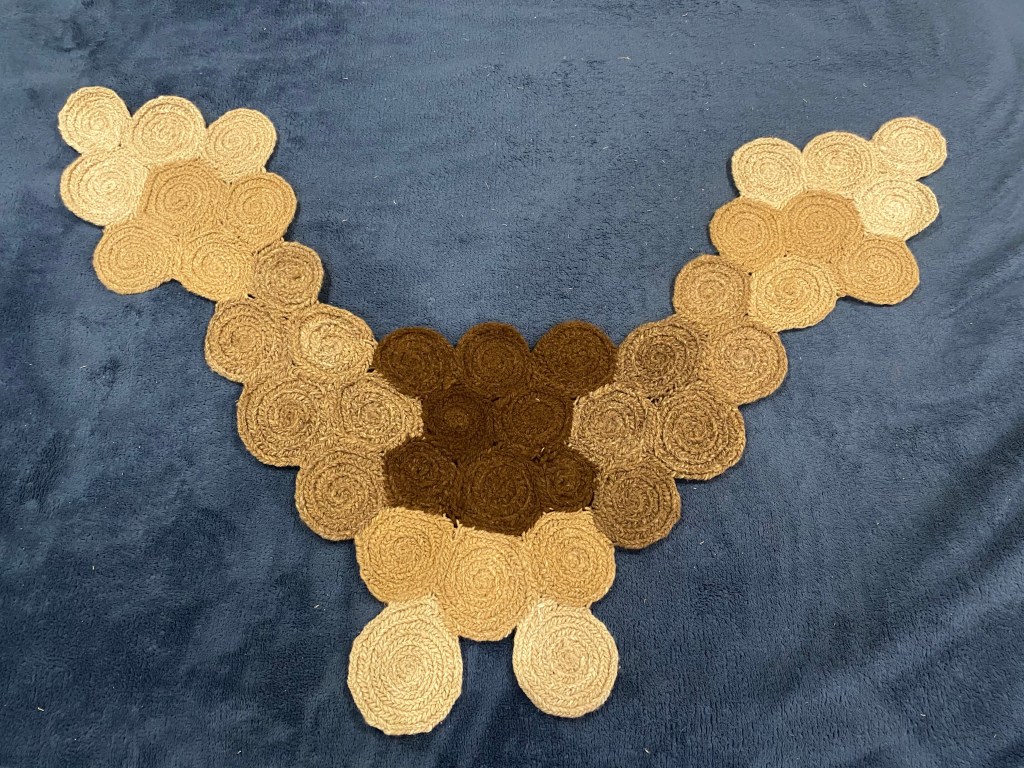
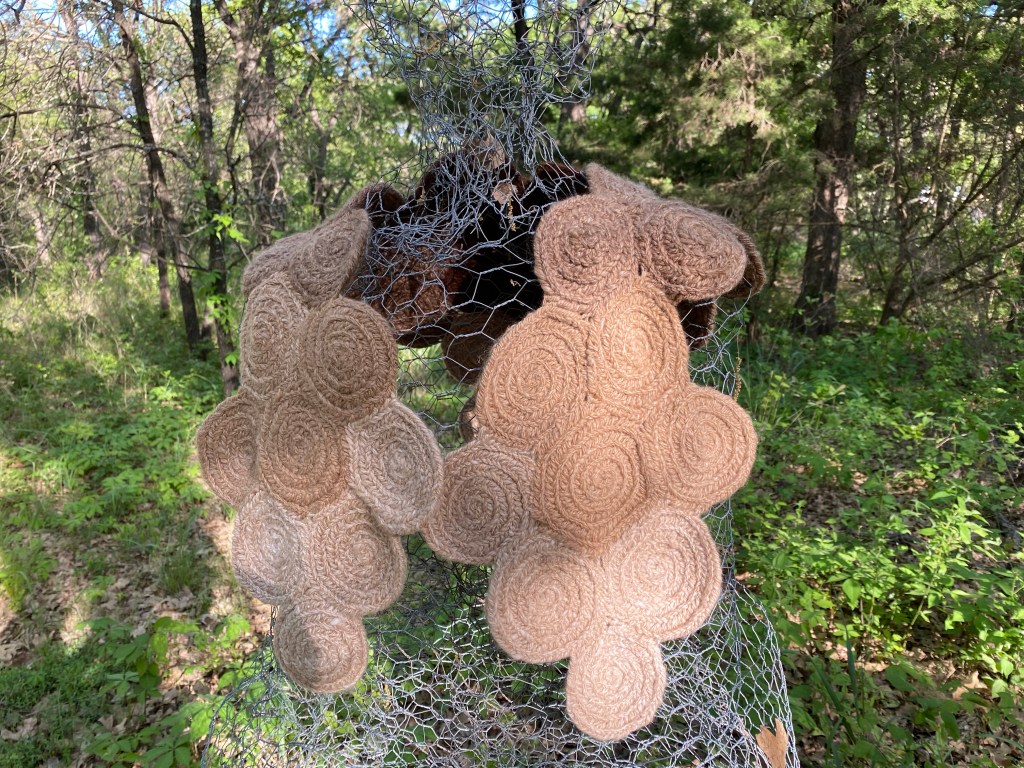
This is my forever project. I’m making something for me, so it is on the bottom of the priority list and I use it to fill the gaps between other projects. I decided to make spirals (I like spirals), and sew them all together, because it gives me flexibility if I change goals mid stream. Current goal is to make an ombre vest. I have made two hand spun yarn cakes into nålbound spirals, and have two more yarn cakes ready for nålbinding.

Nålbinding spirals (Mammon stitch) with yarn cakes
One spiral fell to the floor and the puppy found it. Ugh. I’m going to have to watch her for intestinal distress. It looks like she chewed off loop halves, which should pass OK. If this had been crochet or knitting, she would have been able to pull off and consume long strings in the same two minutes of chewing. So, yay, nålbinding.