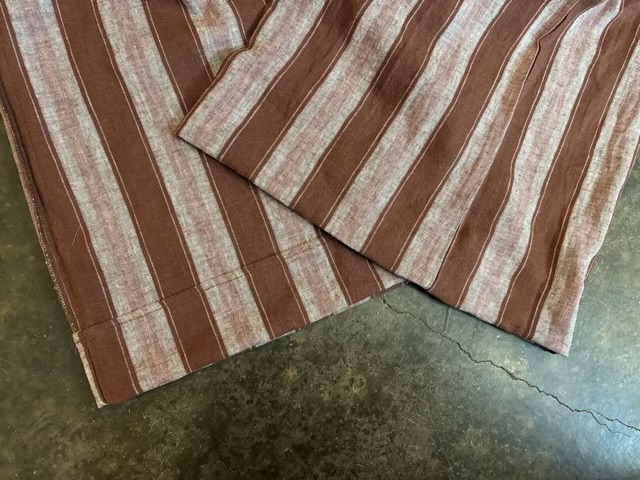
I hand hemmed a second pair of pants, this time one woven with stripes. They are straight leg pants, so I could line up the stripes, and they already had a small hem, which I used to hide the stitches completely with a slip stitch.
Photo description: hemmed pant legs, left one inside out, right one right side out
I love how the slip stitch is nearly entirely invisible!
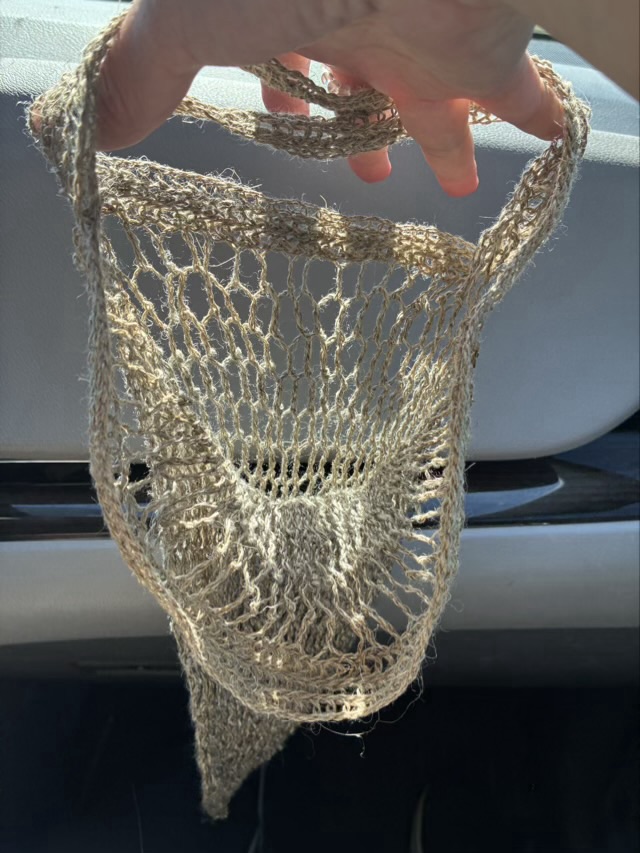
I finished nålbinding handles onto my loop-and-twist linen string bag.
Photo description: loop-and-twist bag made from twined flax and finished with nålbound handles
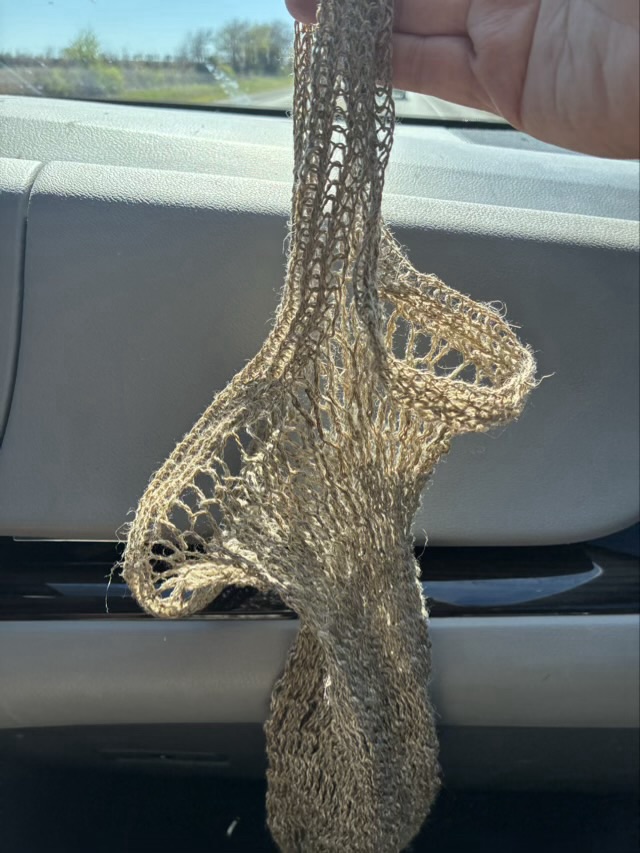
I thought I followed the pull strings that I installed originally, which split the top loops evenly. Hm. No. Not sure what happened, but the second handle had many more loops than the first.
Photo description: side view of the same bag showing the uneven split
The handles didn’t really work out like what was in my head either. The two handles work better as one handle, with access to contents from the sides. I actually think this would be lovely to hold my onions and garlic in the pantry. So while it didn’t fit my original vision, it still will have a use.
Note to my future self: a loose row of nålbinding as a top band, then two arced handles on the sides might work, like a tote bag.
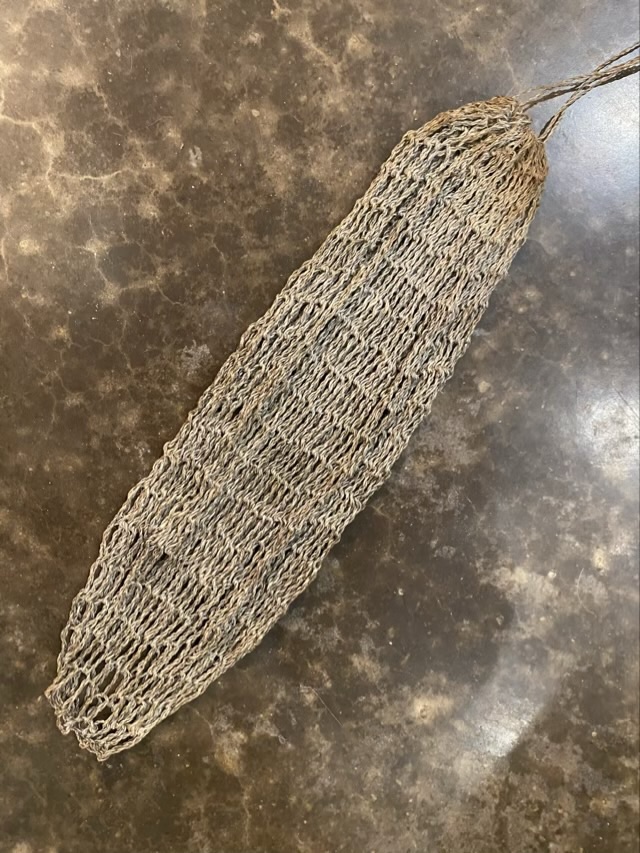
I finished twining and stitching a linen string bag using long line flax and a loop and twist construction. I would twine a section, then loop that section, so the bag was made with a continuous length of string. I did not used any tools other than my fingers. As you can see in the photo above it looks a little wonky. I took it to the sink, gave it a soak in tap water, then laid it out to dry. The transformation was remarkable.
Photo description: same bag after blocking
The bias twist in the stitches eased and it straightened out nicely. What wasn’t nice was the rust colored stains on the top.
Photo description: discoloration at the top of the bag
I used a different batch of flax for the last few rows, and I think something on my well water reacted to something in the flax, which is disappointing. I washed it with gentle laundry soap and laid it out to dry again.
Photo description: same bag after washing with gentle detergent
The rust color lessened, and now it looks more like a different batch of flax at the end, rather than a stain.
I’m also not pleased with the string ties. They are functional, but would be terrible to use to carry anything with much weight. The flax would hold, but the thin cord would cut into the flesh holding it. I do have an idea how to fix it.
My sister brought me some linen towels from the 70s. I liked the prints on them, so decided to use them as decoration. They all had a narrow sleeve at the top, so I cut down wire hangers to make hanging rods.
Photo description: white wire hangers cut with lineman’s pliers and the ends looped with needle nose pliers
I took leather cordage and tied it to the wire loops.
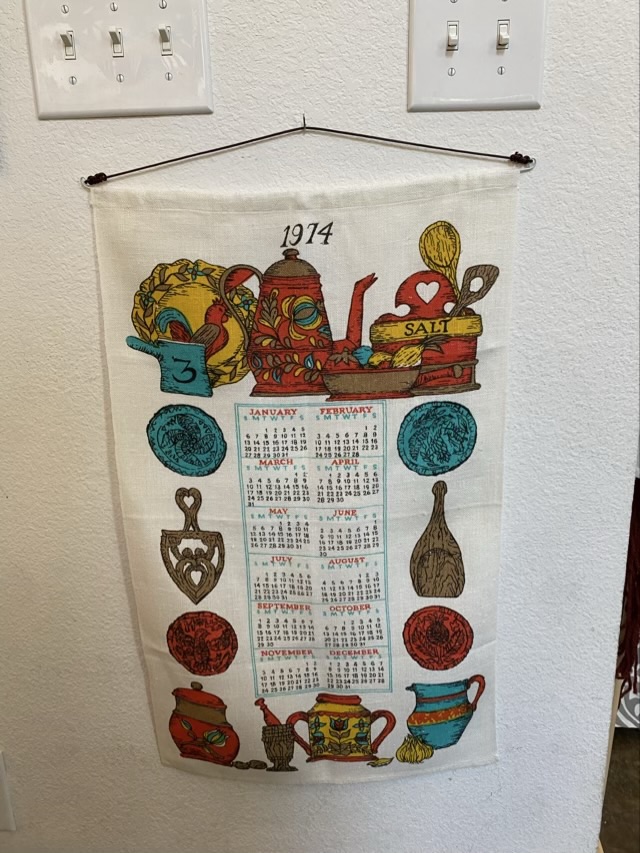
Photo description: calendar towel from 1974 with wire and leather hanging hardware
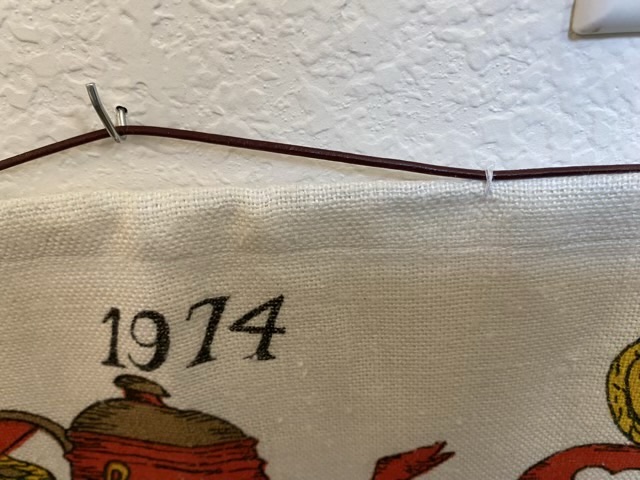
I didn’t like how the wire sagged, so I tacked the linen to the leather about a third of the way in with cotton thread.
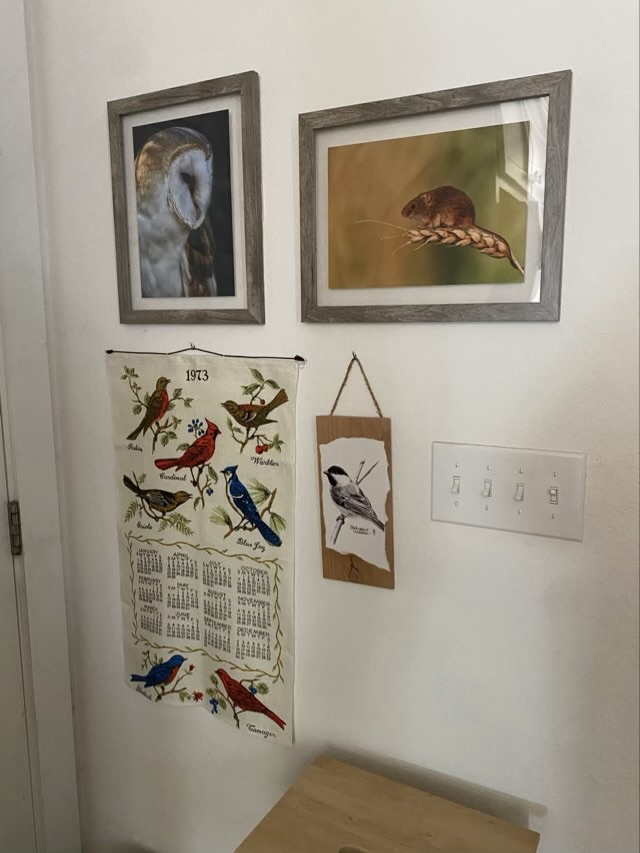
Photo description: closeup of tacked sectionPhoto description: same towel hanging on the wall, but with thread tacks and no sagging, towel has drawings of kitchen implements Photo description: linen calendar towel from 1973 with birds hanging on the wall with new hardware along with chickadee art, and photos of a barn owl and field mouse by Oliver Hellowell
The production of calendar towels began in the 1950s and was an invention of Stevens Linen Works in Dudley, Massachusetts.