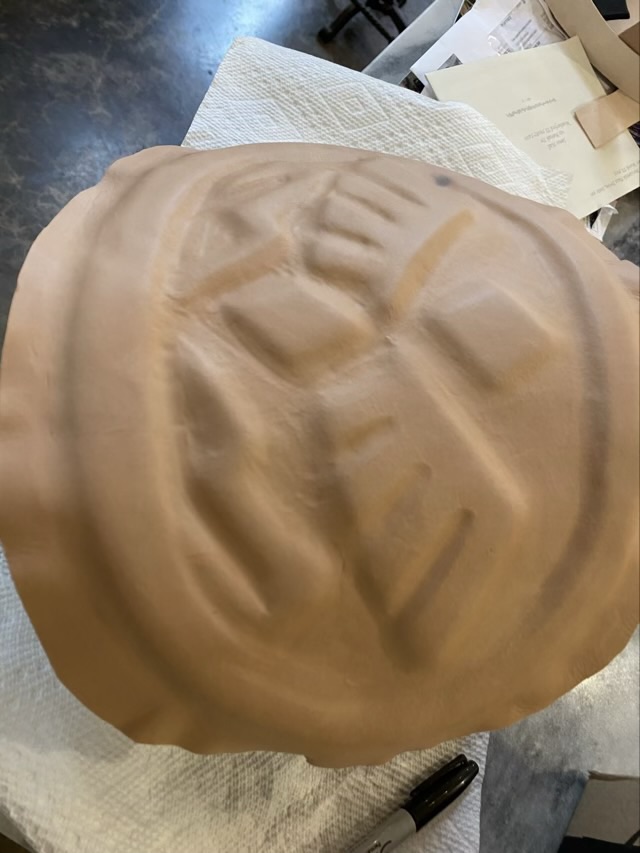
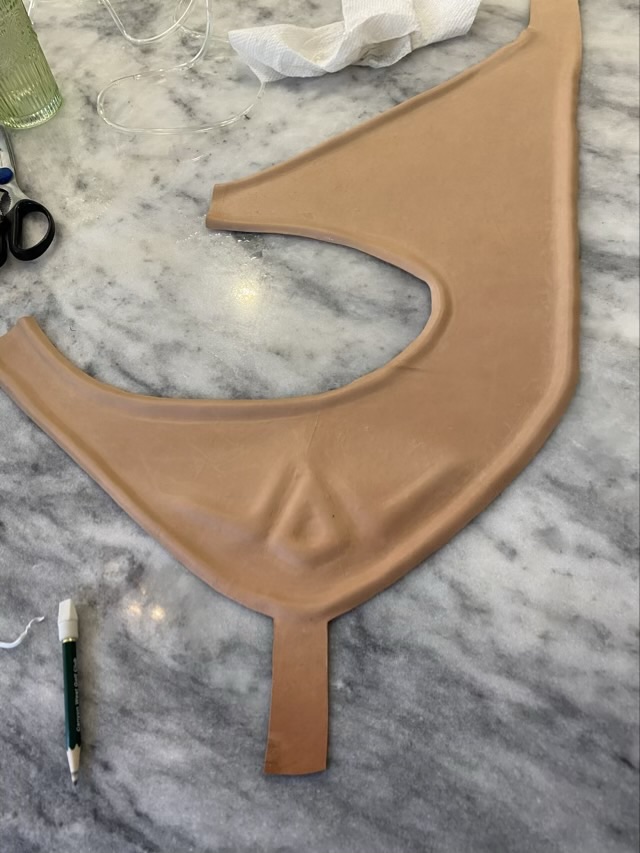
Now we get into wet shaping the leather I cut for the cosplay Link armor. To help bulk up the shape and give me something to shape to, I made forms from EVA foam sheet. The foam is water proof, so wet shaping the leather won’t damage it.
Photo description: EVA foam sheet formed into a two piece pauldron Photo description: 3/4 oz tanned leather wet formed over the EVA foam formPhoto description: leather vest wet formed with pieces of cut EVA foam and clear tubing
I continued to press the shape into the leather as it dried. The clear tube that I used the shape the edges of the vest worked well to start, then I removed it and hand shaped the ridge. When the pauldron pieces were dry, I trimmed the edges so they just wrapped the edges of the foam.
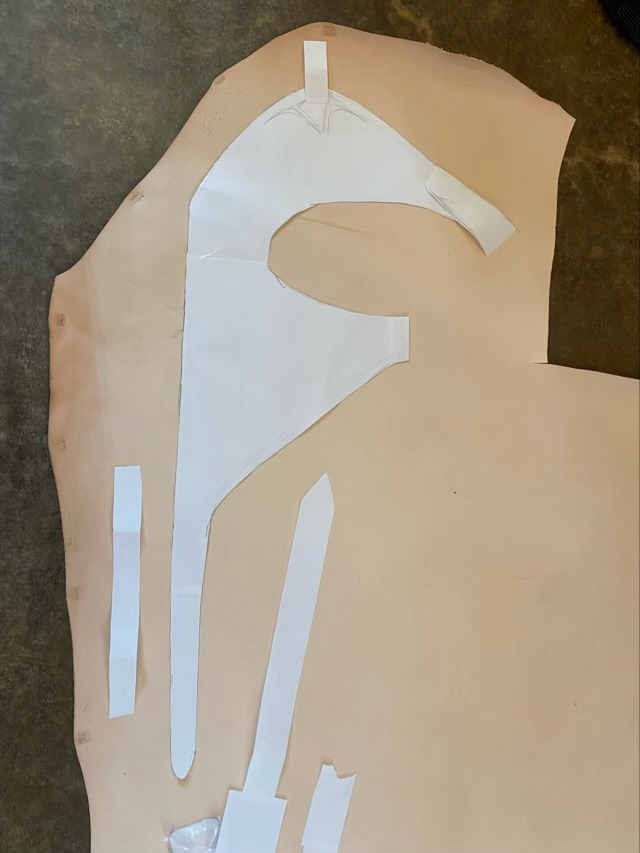
Yahaha! I’m not done making Zelda cosplay pieces! Yay! I also jumped on the opportunity to make some leather armor for a Link costume. I cut pattern pieces from paper for the fitting, then cut the leather using the paper as a guide. The leather is vegetable tanned tooling leather 3/4 oz, which is thinner than typically used for actual armor, but is suitable for cosplay where it is better to be light weight.
Photo description: paper patterns laid out on a side of tanned leather
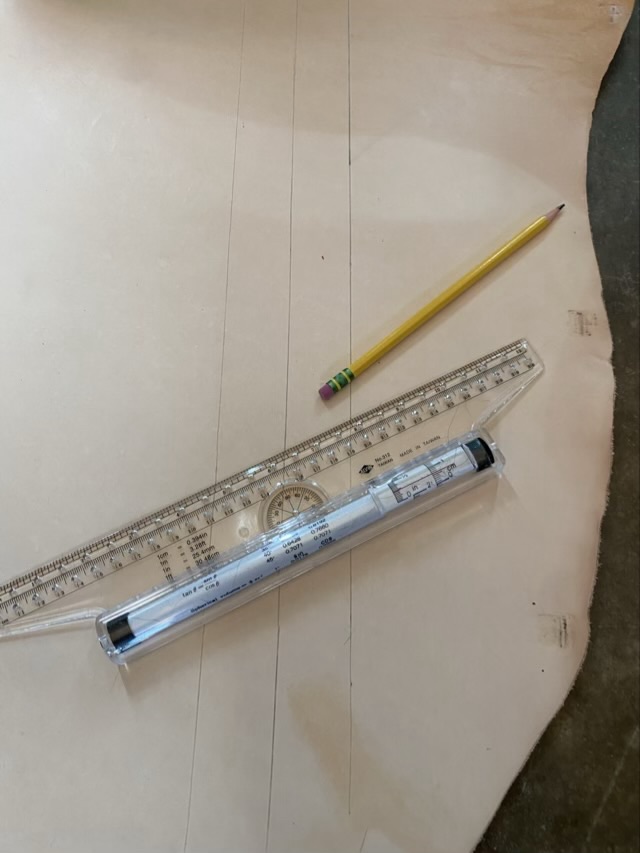
I used my rolling ruler to lay out strips of leather for belts. It isn’t as precise as a strip maker, but worked better than I thought it might.
Photo description: rolling ruler and number 1 pencil on a side of leather marked with pencil lead
3/4 oz leather can be cut easily with kitchen shears, which also makes it nice for cosplay applications.
My Dad has been experimenting with making hot sauce. I thought he needed a hot sauce holster for either sauces or spices so they are easy to grab, so I made him one from leather. I started the design process with card stock, so I could get the sizes and shapes right.
Photo description: gray card stock cut into various pieces with two spice jars, pencil, and ruler
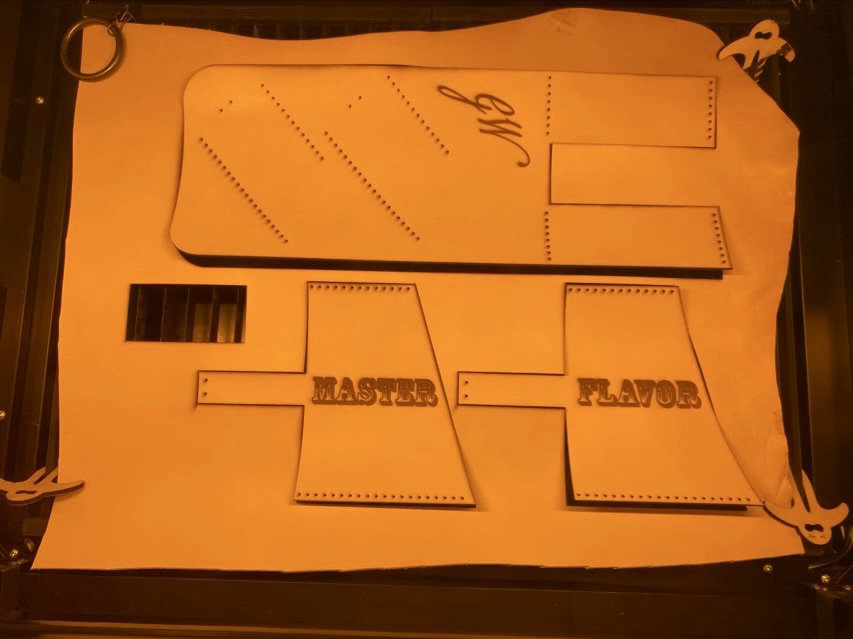
Once I was comfortable with my design, I used Adobe Illustrator to lay it out digitally, including engraving and lace holes. I included a “test” rectangle, which was very helpful and something I will include in future design projects, because I was able to use those elements to test my laser cutter settings before committing to larger objects.
Photo description: four test runs of the word “test” and outline and hole cuts on scrap leatherPhoto description: leather still in the laser cutter, test swatch missing and three holster pieces engraved and cut
I rinsed the leather with water to remove the soot and smoke marks, then dyed it with leather dye.
Photo description: leather dyed with buckskin colored dye
I used waxed linen to sew the pieces together. I absolutely love how even I can laser cut the holes. Neat stitching is 90% hole placement.
Photo description: sewing leather at 90 degrees with waxed linen cordPhoto description: sewn leather holster with 3/4” grommet installed using Dritz pliers
I’m had some space at the bottom of the holster and thought that places to hang things are always potentially useful, so installed a gold hued metal grommet. I finally bought a pair of grommet pliers for this size, and it makes installation so much easier than hammering dies together.
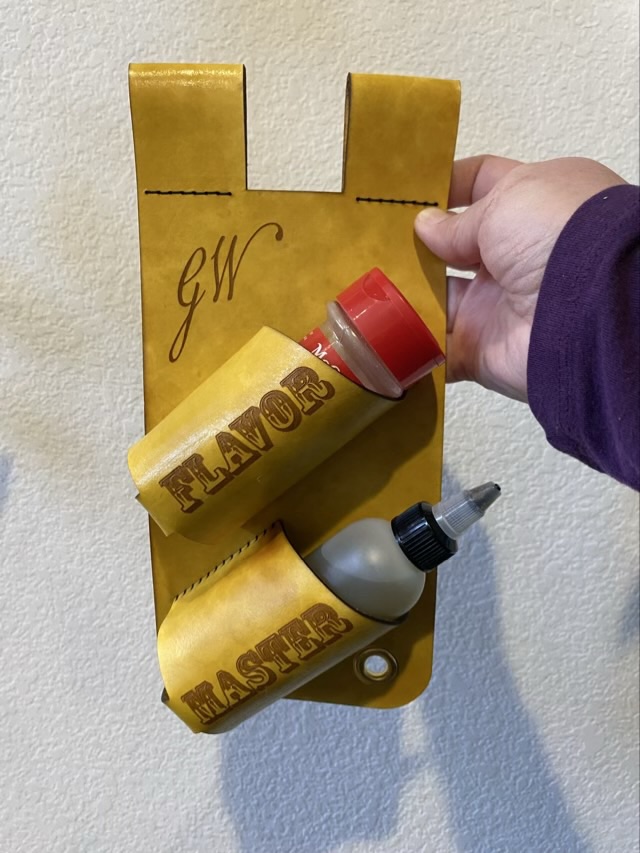
Photo description: Finished spice holster with one spice jar and one hot sauce bottle and the words “Flavor Master”
The holster is designed to hang from a belt, and since it is wide, I separated the belt loop into two sections so it can accommodate a belt loop if necessary.
My headphones were in a tangle in the bottom of my bag. I realized that I now have a way to design and cut leather quickly, and could make a holder! I laid out an SVG file in Adobe Illustrator inspired by a Pinterest pin, put a piece of scrap tooling leather in my laser cutter, and ran the program.
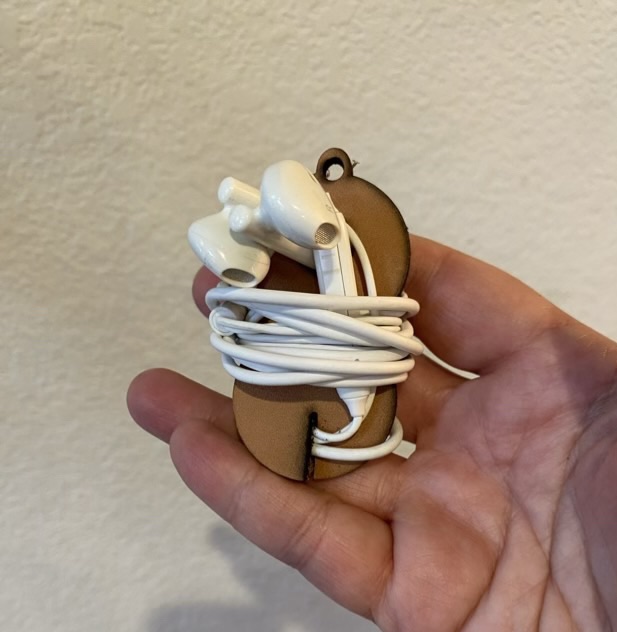
Photo description: prototype leather headphone holder with key chain hole, hole for the ear buds, and slit to hold the end of the cordPhoto description: headphones wrapped around the leather holder
Hm. Not as neat as I hoped. Still, first prototypes usually aren’t spot on. This design would probably work better with headphones that don’t have a volume button on the cord, and have different shaped ear buds. I also need to beef up the keychain ring. It’s looking a little thin. Back to the drawing board. (Really, I’ll do a pencil sketch first on paper this time, then go to the computer.)
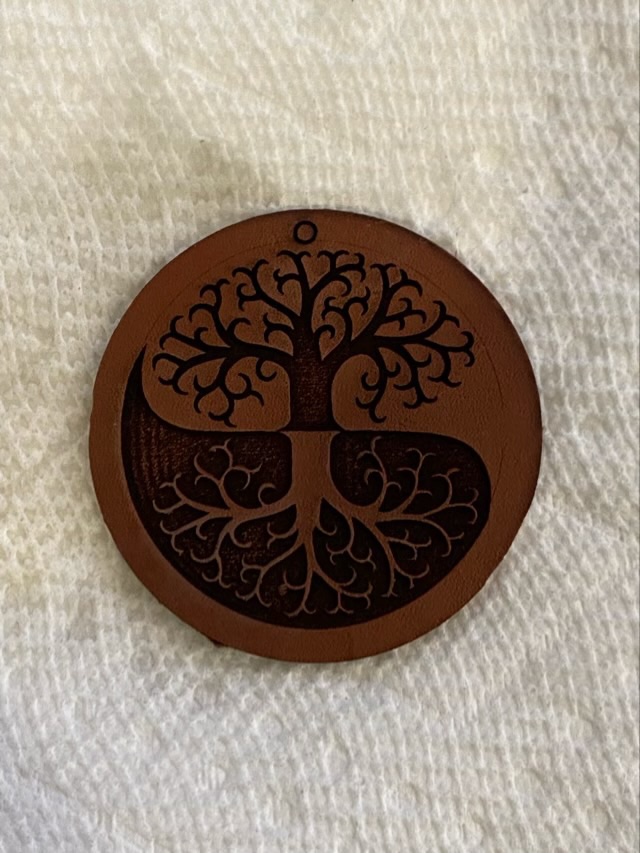
I did my first test of tooling leather in my laser cutter. I used a two color version of my business logo and did a fill engrave of the logo and a cut for the circle. The cut wasn’t quite powerful enough to go through the thick tooling leather, but not surprising for my first attempt.
Photo description: Caryn’s Creations tree logo burned into tooling leather with a laser cutter
I had to finish the cut with shears. There was smoke residue on the surface, but a quick rise removed it.
Photo description: same logo on leather, cut out and wetPhoto description: same leather logo now dry
I do take screen shots of the engraving and cutting settings because I’m pretty sure my software resets every time I open a file. I’m also starting to get a good feel for the settings.
I’m am now well and truly dangerous. I love working with tooling leather, and this opens up a whole realm of opportunities.