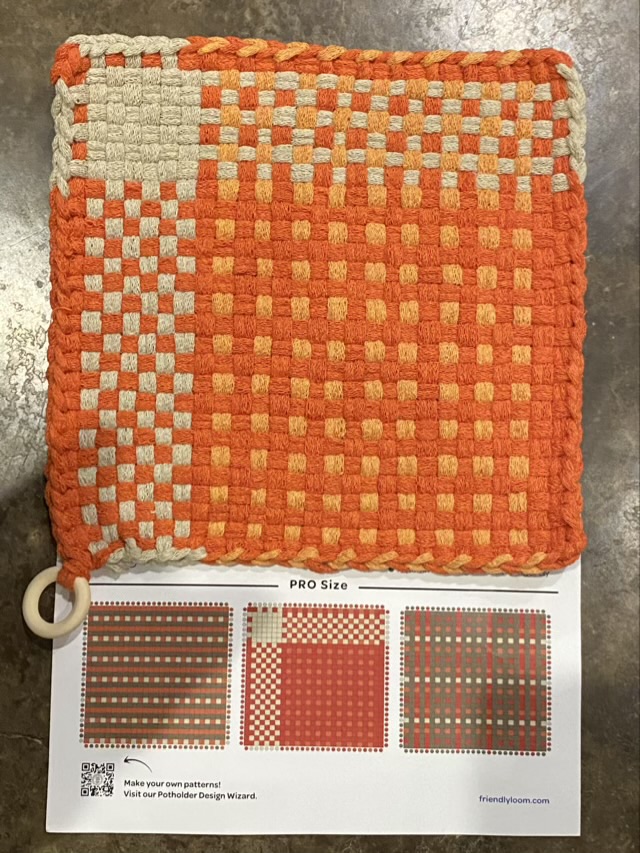
Friendly loom has my number, or rather, my email address, and had a sale and a color collection called “Pumpkin Spice.” I couldn’t resist, especially when I found out they had an online design app. Ooo.
I made one of the designs they suggested on a card they sent, and the card also has a link to the Potholder Design Wizard. Like I said, they have my number.
Photo description: Pro sized potholder made from flax, orange, and tiger lily colored cotton loops with wood ring sitting with the Friendly Loom design card with QR code
I ordered the wood rings too, since they are such a nice way to tie off the last loop, and I didn’t know about them before either. Ooo.
I made an experimental pouch for my phone for when I’m wearing pants with inadequate pockets. It strings onto a belt, has quilted sides and an open top. I made it with two pieces of quilting fabric and polyester batting using my model 66 Singer Treadle machine, including the quilting.
Photo description: quilted phone case with golden ivy on a cream background sitting on the table with of a Singer treadle sewing machine from 1916
I like that I made the pocket for the belt with the seam in the back. I like that it is quilted. I’m not sure how I feel that is it open on top. So far I haven’t dropped the phone out of the pouch, but it would ease my mind if there were a small retention flap in there somehow. Hm. I shall contemplate… I think I have an idea. I’ll make another test case.
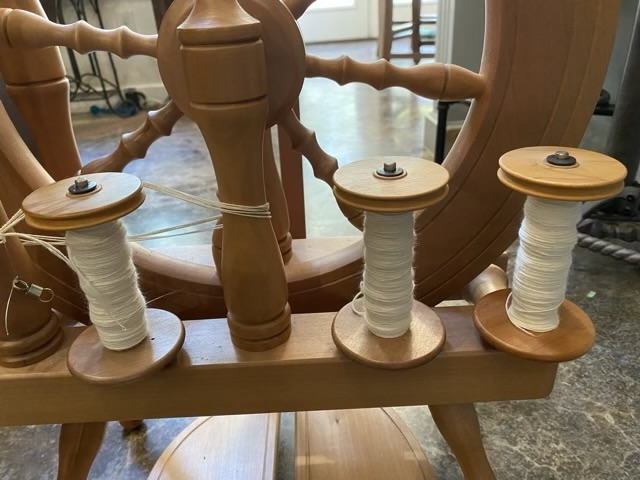
I finished spinning Egyptian cotton single spun yarn onto three bobbins on an Ashford Traveller spinning wheel (Yes! I spun cotton on a wheel using a high speed whorl.) I found the largest diameter on the high speed whorl, the one that matches the bobbin end diameter, worked best for me. The smaller diameter gears went too fast and I over spun. I also had the wheel set up with Scottish tension with a very light take up on the bobbin. I prefer to dictate the amount of spin in my yarn rather than have it controlled by the wheel.
Photo description: three wood bobbins with cotton singles on the lazy Kate built in to the Ashford Traveller
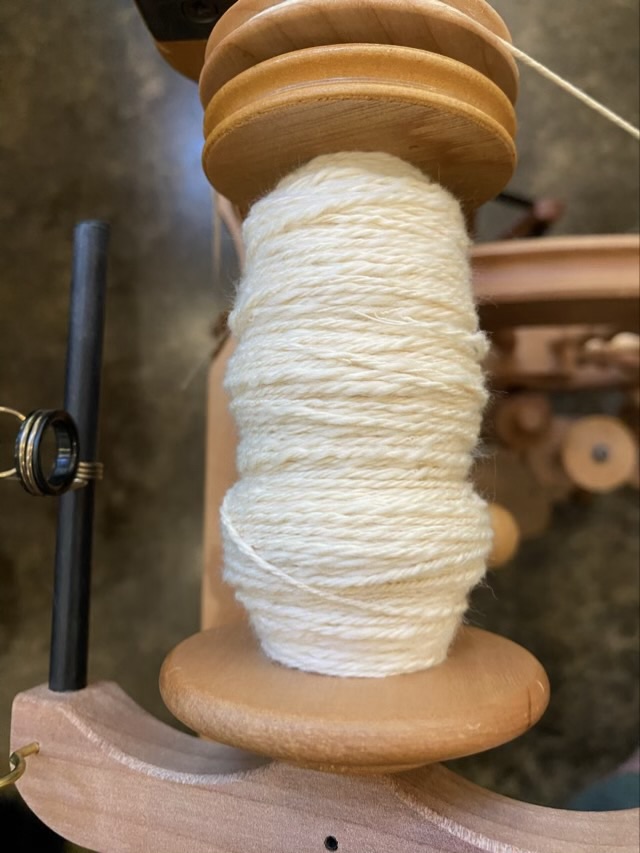
The next task was to ply the cotton. I was nervous about this because the singles had a high degree of twist, and liked to kink up. If a strand broke I would also be dealing with the rapid unwinding of the single, which results in a whole sale unbinding of a large section of yarn (ask me how I know). I did let the singles sit on the bobbin for a few days to set the twist a little. Remarkably, I was able to ply the yarn from the three bobbins with no breakage and only a few missed kinked knots.
Photo description: three ply Egyptian cotton yarn on a wood bobbin of an Ashford Traveller spinning wheel
My spinning definitely looks like homespun, but as I practiced, my technique improved and there were some sections of smooth and even spun yarn.
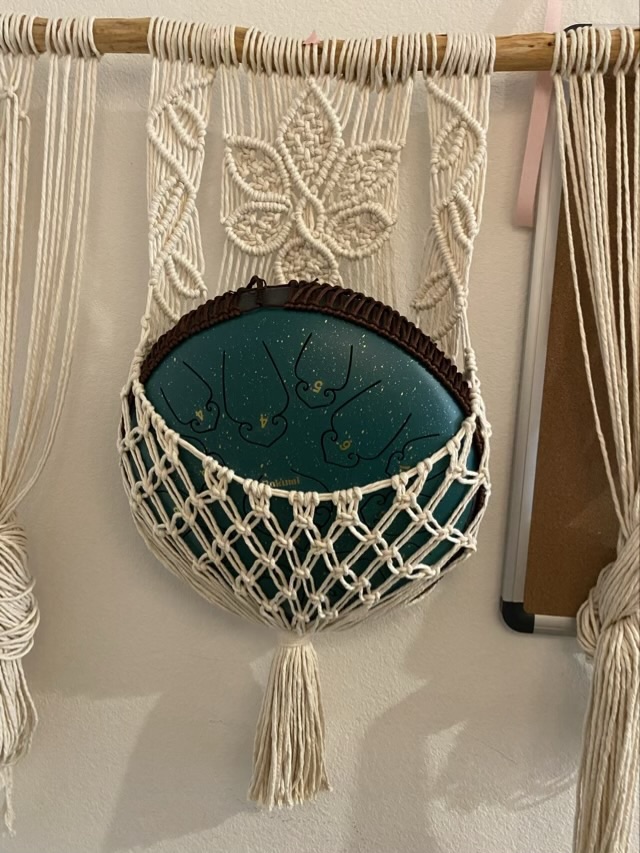
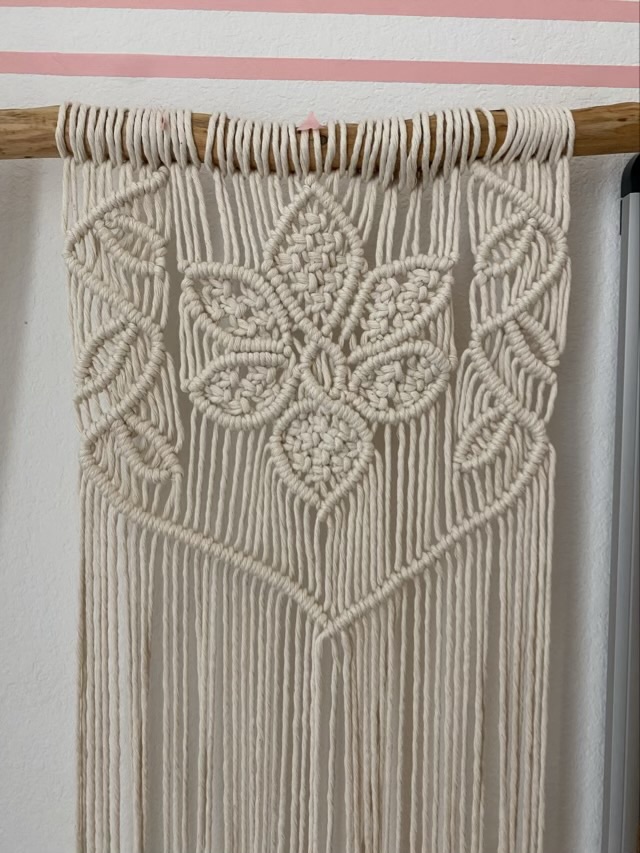
I’m slowly progressing on my macrame wall hanging. I finished the central design, now everything else will be storage pockets. The central design was my first attempt at making shapes with half hitch knots. The petals of the flower aren’t as even as the pictures in the tutorial (beware, the site is chock full of ads), but I was learning. Next time I’ll put a sketch behind the work to help keep the balance, rather than just eyeballing it.
Photo description: macrame wall hanging in progress with a six petal flower and leafed vines on each side made with cotton macrame cord
The side vines were an add-on from seeing variations of leafed vines, and I wanted to attempt them. I’m still having some left/right issues on my half hitches, and sometimes I get a full hitch and have to take it out. Here’s my tip: if you have a line of knots that need undoing, pull out the core cord so all the half hitches fall open. Much easier than untying each one.


 Critters and Craft