30 min series: Cord summary

Here are all the kinds cords I made laid side by side:
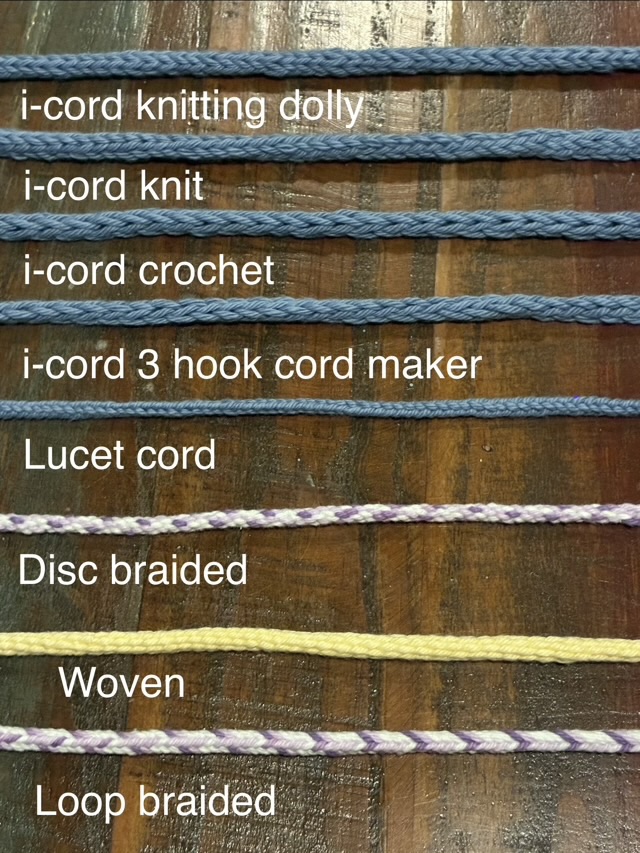
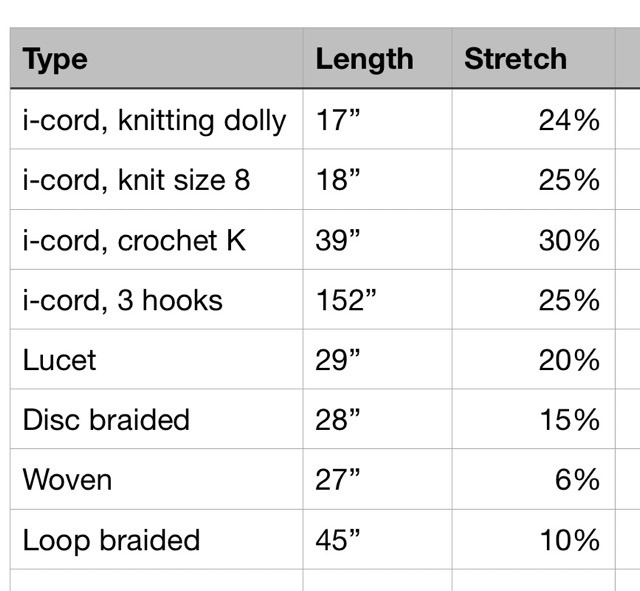
Photo description: eight cords made with different methods laid horizontally: 4 kinds of i-cord, lucet, disc braided, woven, and loop braided, all made from worsted weight cotton yarn
Photo description: chart for each type of cord, the length I made in 30 minutes, and how much each cord stretched

Apparently I can’t make charts in the app I use to write this blog, disappointing.

For i-cord, I found the knitting dolly gave the most even output, but if I needed long lengths quickly and didn’t care as much for the look or feel, I’d use a latch hook cord maker. If I needed a strong cord that wouldn’t stretch, I would weave it, but if I needed it long, I’d use a Lucet. If I wanted a spectacular demonstration of partner cord making, I’d do finger loop braiding. If I wanted something short but beautiful, I’d use a disc braider.

So each type of cord has its uses. My least favorite was crocheting an i-cord, but if crochet is what you are most comfortable with, it will work. In my tiny crochet days, I would slip stitch beaded rope, which in 30 minutes I would maybe make an inch!
30 min series: partner loop braiding

The traditional way to make longer lengths of loop braiding is to work in pairs. One person holds the loops on their fingers and makes the move, the other person is at the opposite end of the yarn bundle and tightens the braid after each move. The method of tightening, by pushing with the blade of the hand, or pulling the strands out at right angles, makes a difference in braid density, and it takes some practice to get an even cord. It is handy as well to have another person helping for when the braider drops a loop. There are hiccups in the braid where I dropped a loop and accidentally added an extra twist.

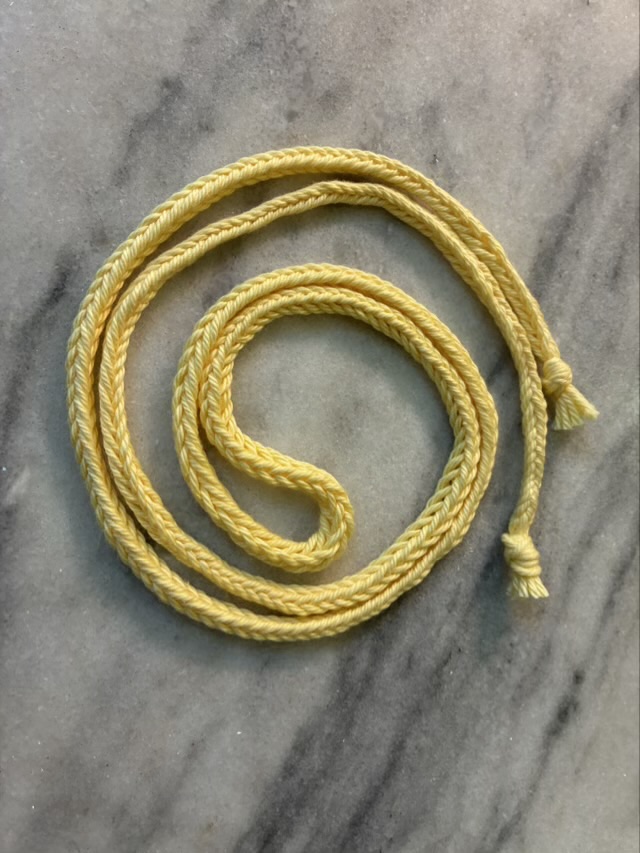
I recruited my eldest to help me during a visit and we made 45 inches of braid in 30 minutes, which is more than I can make with a lucet in the same time.

Photo description: partnered loop braided cord made from yellow worsted weight cotton yarn

At this point, I would choose the lucet method of cord making if I needed a long, strong, dense cord and I was working on my own. However, if I needed a known length, as for a belt or trim, and had access to help, the loop braiding is considerably faster and can make thicker cord.

30 min series: woven cord

I have read about weaving a round cord, and I’ve been wanting to laser cut a heddle to experiment more with back strap weaving, so I combined the two with my 30 minute series.

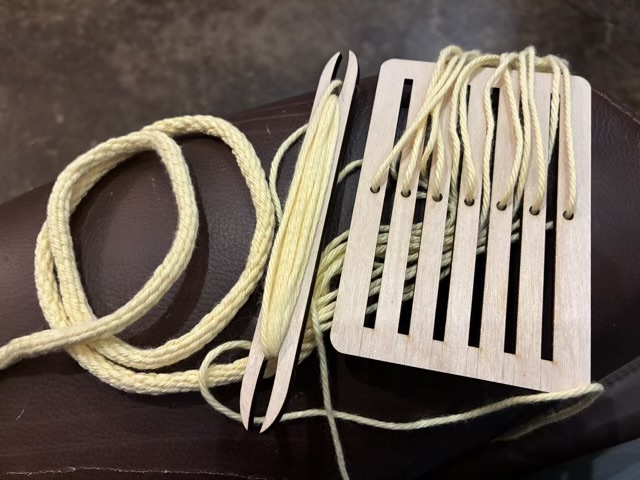
Photo description: laser cut rigid heddle and shuttle, with yellow worsted weight yarn woven into a cord

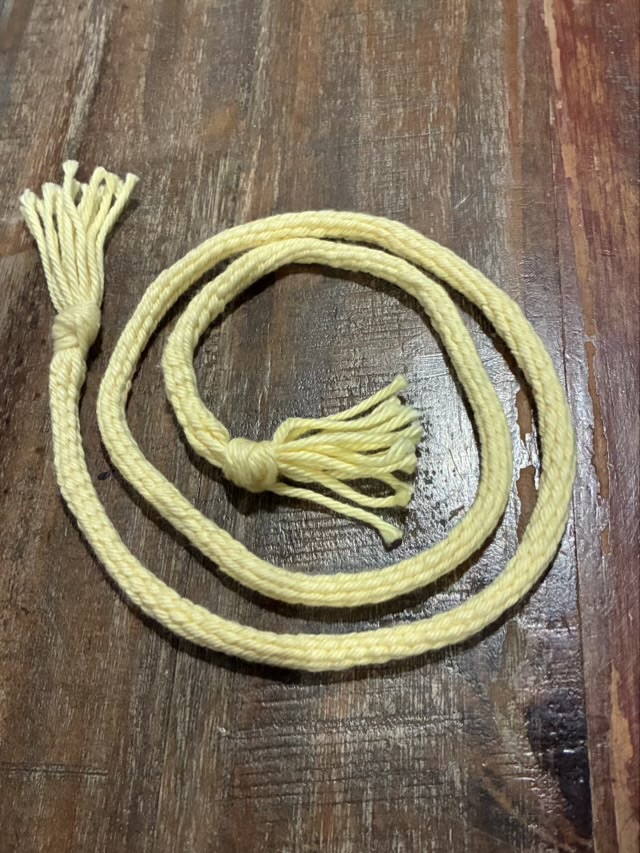
I cut 13 lengths of yarn and threaded them through the slots and holes in the rigid heddle, then tied knots at each end of the yarn bundle. I secured one end to my foot, and the other to my belt. I loaded the shuttle with yarn and started weaving. To weave a round cord the weft thread only goes one direction, rather than back and forth for a flat piece. It took a little time to get my rhythm, but once I learned to pull the weft yarn nice and tight, the cord making went smoothly.

Photo description: yellow woven cord with knots and tassels at the ends made from worsted weight cotton yarn

In 30 minutes I made 27 inches of cord. The cord is strong and dense with 6% stretch (27” stretched to 28.5”). Unlike i-cord or lucet cord, though, this type of woven cord has a limited length because the yarn needs to be cut before weaving begins. This is the kind of cord I would want for bag handles or load bearing clothing elements. It is also possible to weave around a core, which gives more strength and body options.

30 min series: crocheted i-cord

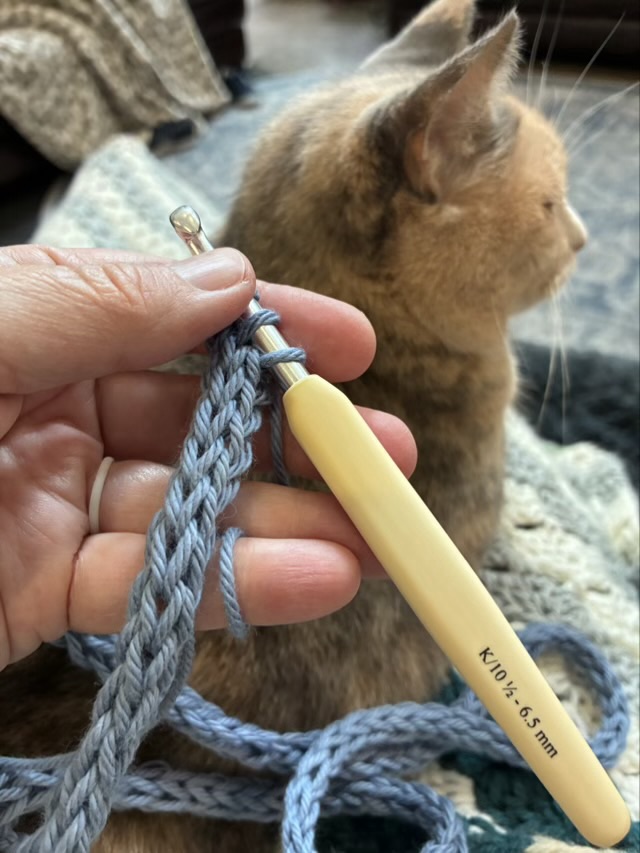
Crocheting i-cord is possible, if you really don’t like any other method than crochet. It involves having two live unsecured loops while you go back to the first loop with your hook. I find it fiddly and difficult to get going. I also tend to make my loops bigger so I don’t loose them.

Photo description: crocheting an i-cord with a size K crochet hook and blue cotton worsted weight yarn, dilute calico in the background

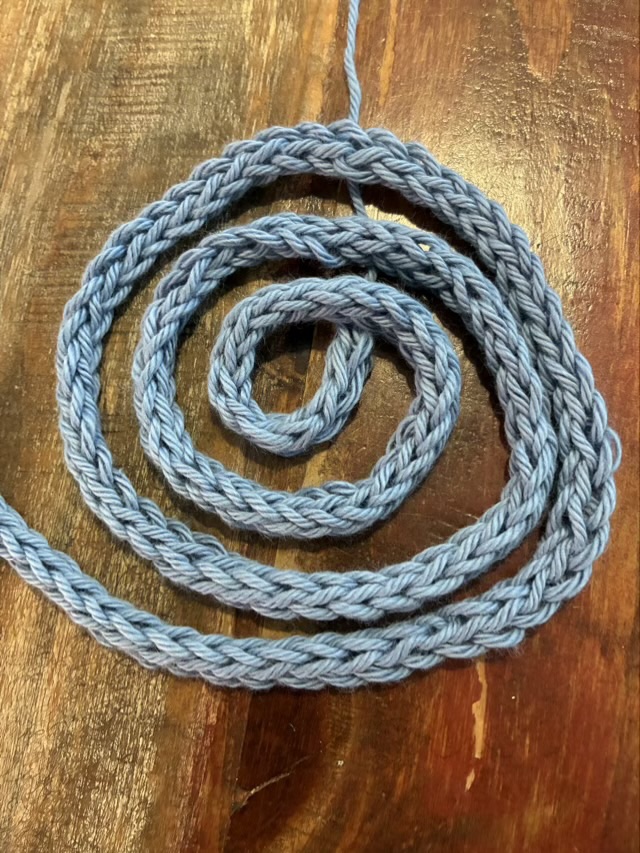
In 30 minutes I made 39” of cord. It is very loose and squishy, but fairly uniform. It has 30% stretch (I took twenty inches and could stretch it to 26 inches.) With practice and bravery, I could probably use a smaller hook to get a tighter cord, but honestly I will always choose a way that doesn’t have loose live loops if I can help it.

Photo description: loosely crocheted i-cord made from blue cotton worsted weight yarn

This is definitely my least favorite cord making method so far.

30 min series: i-cord maker

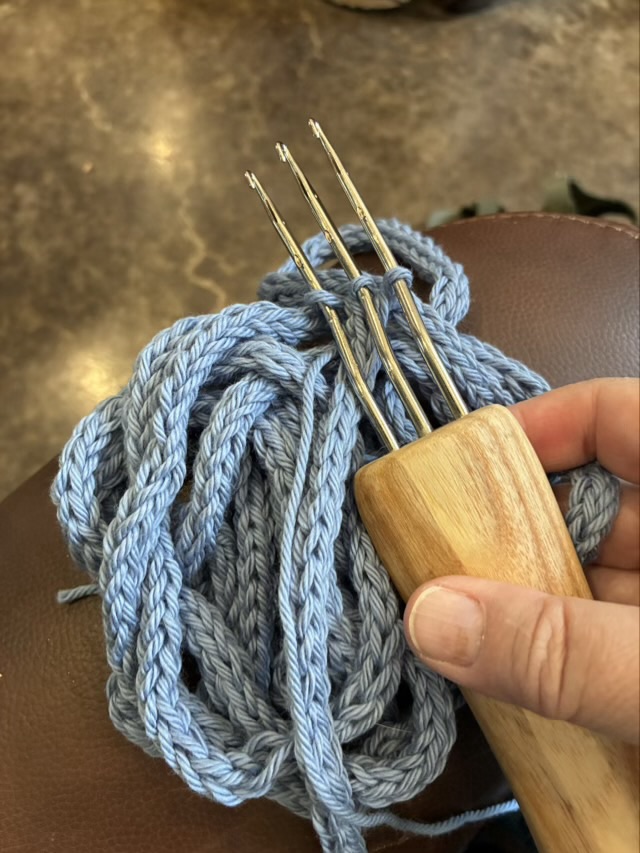
Three latch hooks mounted in a handle can make a long length of i-cord very quickly.

Photo description: handmade i-cord maker with three latch hooks in a hickory handle and a pile of cord made with worsted weight blue cotton yarn

In 30 minutes I made 152” of cord. The cord has a soft drape with 25% stretch (20 inches of cord stretched to 25 inches, I made my math easy.) When my attention wandered and a loop fell off, I did have some difficulty getting going again, and the cord shows an anomaly at those points.

I wouldn’t use this cord where it was a visual focus, but it makes a great filler.

While I handmade my tool, other makers have 3D printed versions made with machine knitting hooks (smaller versions of rug latch hooks) under various names.