30 min series: partner loop braiding

The traditional way to make longer lengths of loop braiding is to work in pairs. One person holds the loops on their fingers and makes the move, the other person is at the opposite end of the yarn bundle and tightens the braid after each move. The method of tightening, by pushing with the blade of the hand, or pulling the strands out at right angles, makes a difference in braid density, and it takes some practice to get an even cord. It is handy as well to have another person helping for when the braider drops a loop. There are hiccups in the braid where I dropped a loop and accidentally added an extra twist.

I recruited my eldest to help me during a visit and we made 45 inches of braid in 30 minutes, which is more than I can make with a lucet in the same time.
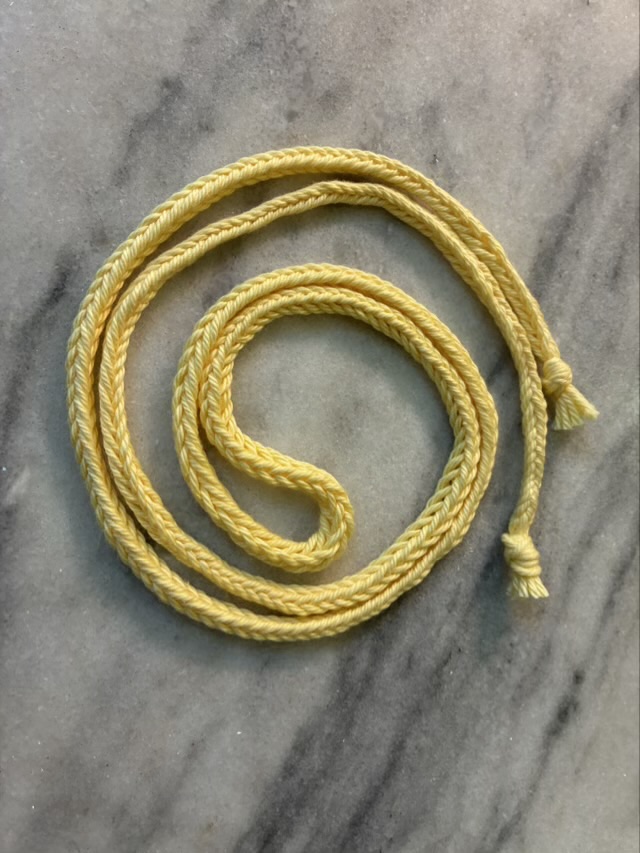
Photo description: partnered loop braided cord made from yellow worsted weight cotton yarn

At this point, I would choose the lucet method of cord making if I needed a long, strong, dense cord and I was working on my own. However, if I needed a known length, as for a belt or trim, and had access to help, the loop braiding is considerably faster and can make thicker cord.
30 min series: braided cord

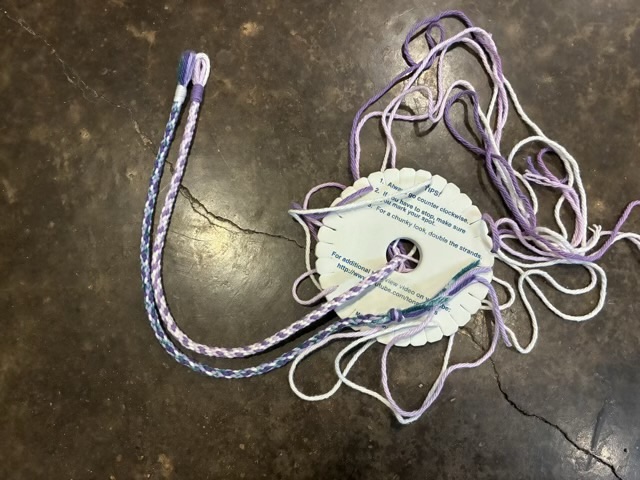
Braiding is common in cord making, so I did my 30 minute test with a foam disk (also called a Kumihimo disk). Here there is an added element of time wasting when dealing with the loose ends of the yarn. I initially cut lengths of cotton worsted weight yarn that I guessed would only take me 30 minutes to braid. It took 25 minutes. So I cut longer lengths and tried again. At the 30 minute mark I had a cord that was barely longer than the first cord because I had to manage the longer lengths of yarn tangling as I braided.

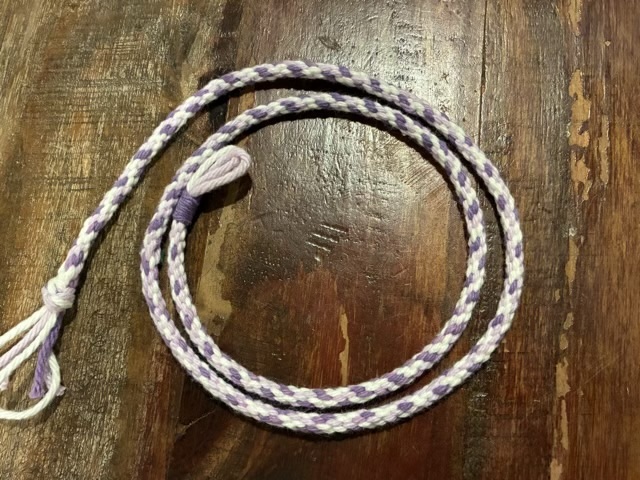
Photo description: foam braiding disk with a cord in process at the 30 minute mark and a finished cord that took 25 minutes, but is about the same length

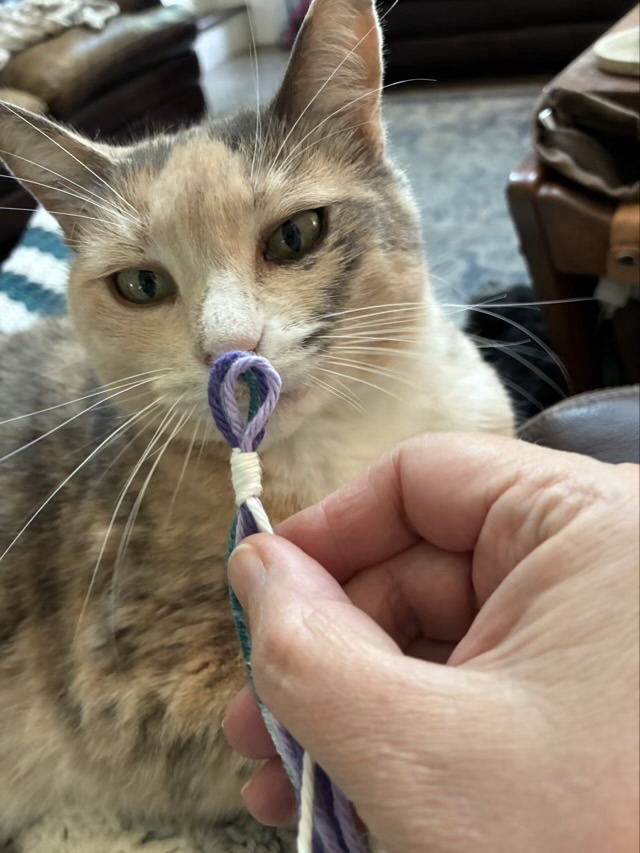
There are ways to manage longer lengths of yarn, such as using bobbins or spools. Sometimes those tangle too, and there is time used to unwind more yarn when needed. Dangling yarn ends also attract cat attention, which can cause delays.

Photo description: Sophie the cat sniffing the end of a lashed yarn bundle, she came up on my lap chasing the yarn

When I reached 30 minutes and still had unused yarn, I decided to push for another 30 minutes, rather than waste the yarn. In 60 minutes I created 28 inches of braided cord. The cord is dense and stiff, but has 15% stretch (20 inches can be stretched to 23 inches.)

Photo description: seven stranded finished cord braided with a foam disk in an hour

Braided cord is a length limited method because the yarn needs to be cut prior to beginning the braid. With yarn management, though, it is possible to braid quite a long cord. I wonder if the bobbins used for bobbin lace would work for braiding? Hm. Something to experiment with.

A different round braid method

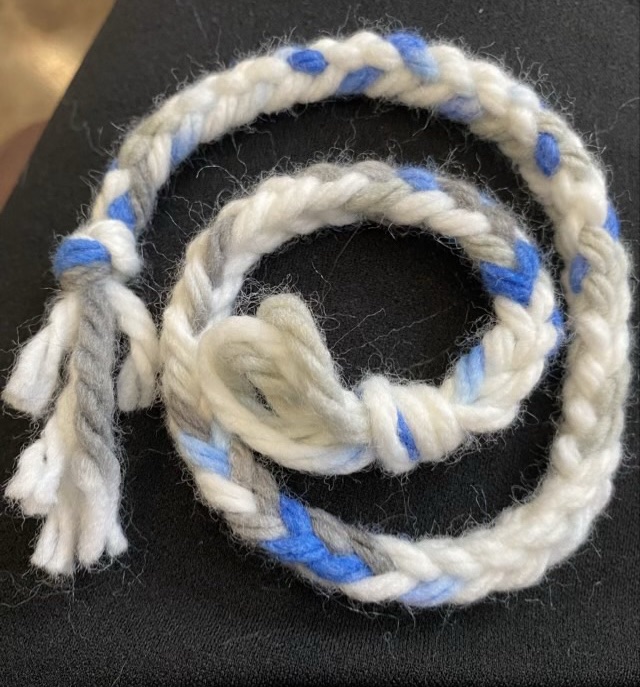
I came across an influencer video doing a round braid on hair and had to give it a go. When I tried it, it was a fail, but I figured out why. They didn’t show the twist of the side strands, which is the magic that makes the braid work and not just make two three-strand braids at the same time (which could be useful for other applications later). So to remember what I did, I recorded a video using thick yarn, so it was easier to see the twist action. I like this method because it is similar to a three strand braid, which I’ve been doing since I was 8 years old.

Photo description: round braid section made with six strands of chunky variegated yarn

This would be interesting to do with six different colors of yarn too. Hm.

Not long enough yet

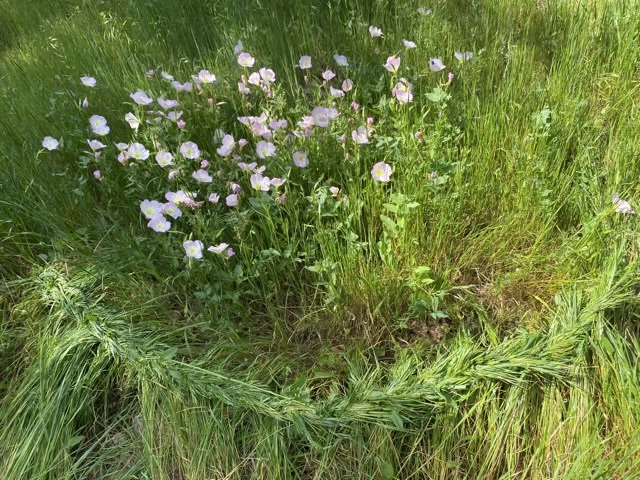
I’ve seen where people have french braided long grasses, so when I wandered through our meadow and saw the waving Spring grass I thought I would give it a try. (Yes, I was completely in the middle of another project for this side quest.)

Photo description: patch of evening primrose with a half circle of braided grass in front

I did more of a Dutch braid, where the braid lays on top of the joined strands, but it didn’t have as much definition as I hoped. I was also struggling to have enough grass to join in the braid and still get the curve I wanted. So in a few weeks, when the grass is higher, and I need a break from a task that takes me through the meadow again, I’ll give it another go.

Technicolor yawn

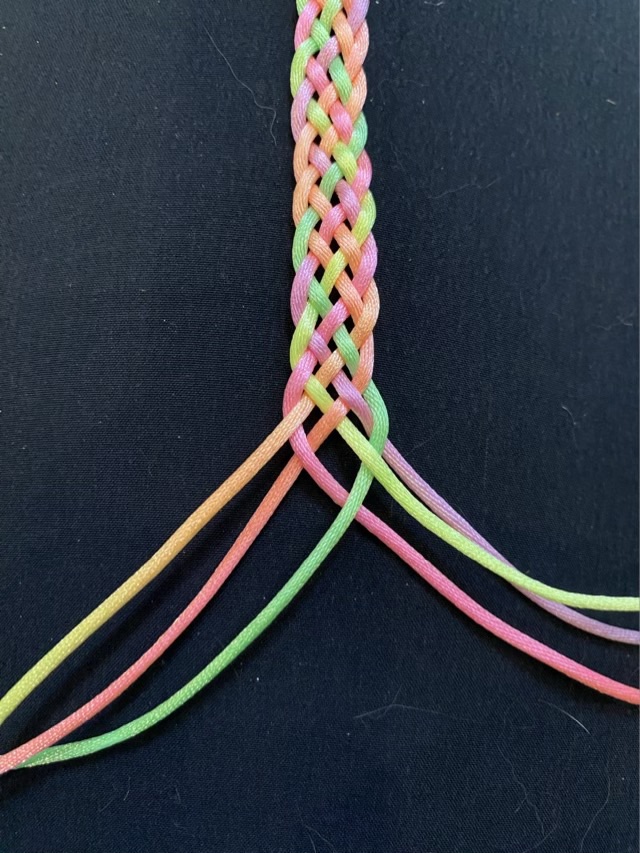
Not all color experiments come out well, which is why we call them experiments. I thought a six strand braid might be pretty and cut six long pieces of the neon rainbow satin cord, but didn’t pay attention to color layout, just randomly snipped.

Photo description: six strand braid in process with neon rainbow satin cord

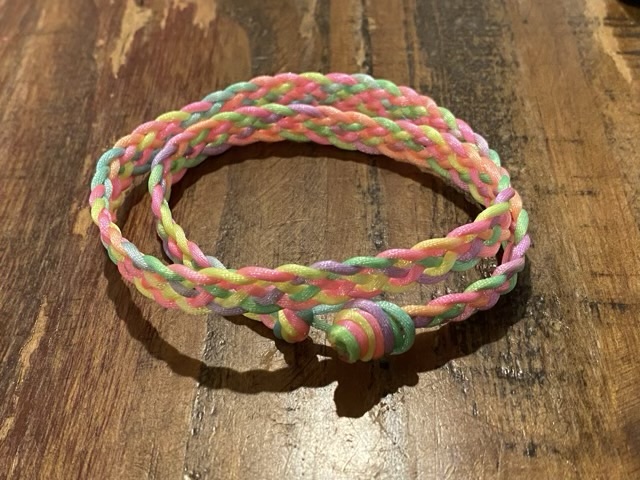
Closeup you can see the individual colors wondering through the braid. Move back and it becomes a solid mass of easter confetti, like the easter bunny ate a bad egg or twelve.

Photo description: finished braided double bracelet with loop and overhand knot

I had cut the strands so long I was able to braid the bracelet enough to be doubled, which didn’t improve the impression of… confetti.

So that gets filed in the “try it differently next time” bin.