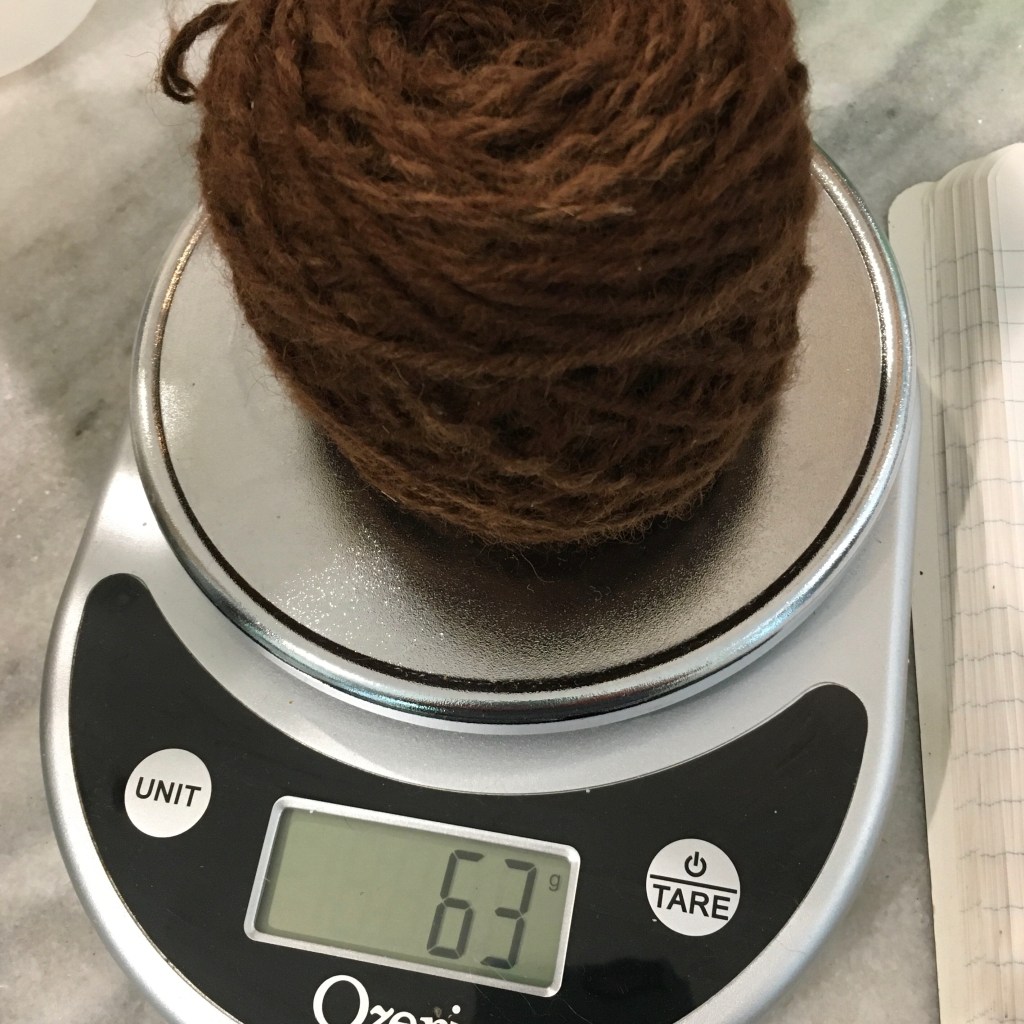
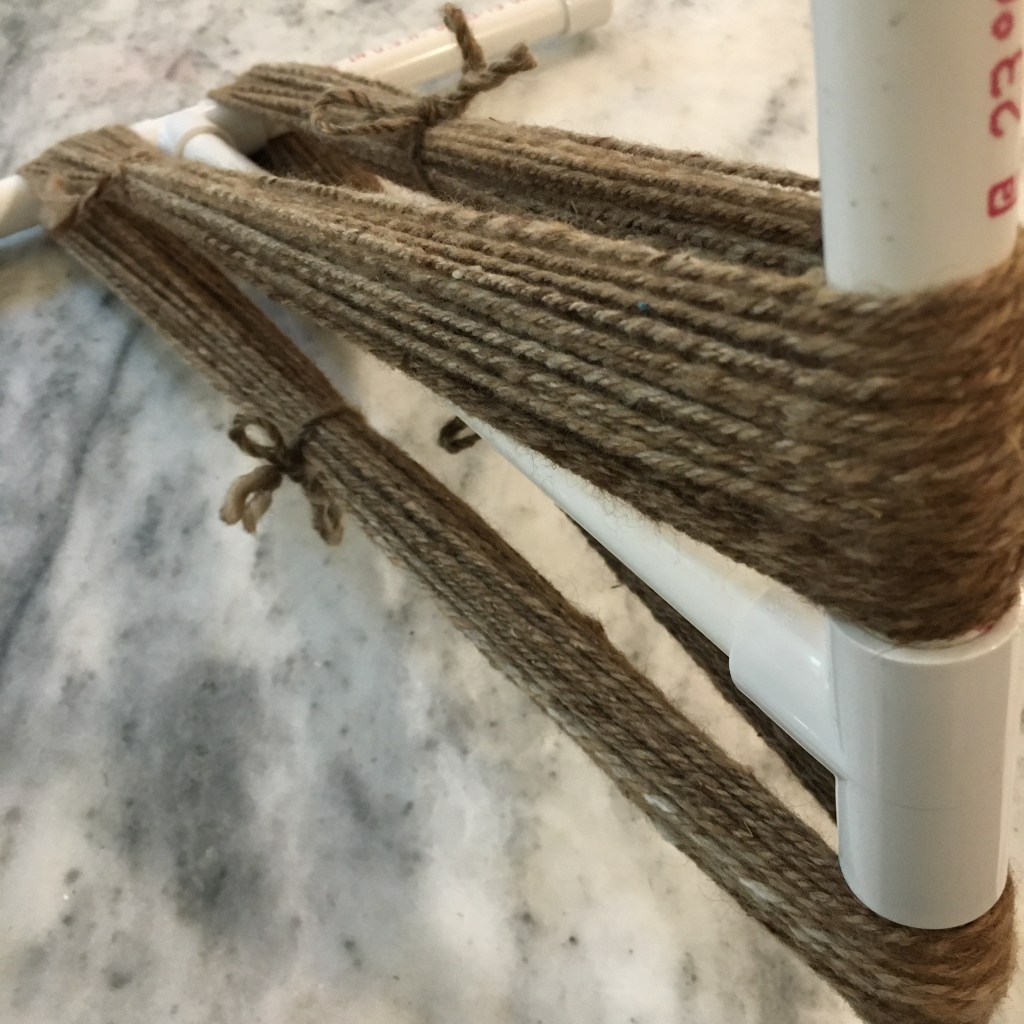
Sounds more like something to have in the evenings than to do with spinning. Ha. I transferred the first skein of alpaca off the niddy noddy and wound it into a cake so that I could wind the second spindle full onto the niddy noddy and wet it down. The next step is to card some more fleece!
Dark brown alpaca yarn cakeBlended alpaca yarn on a PVC niddy noddy
Oops. I could probably reduce the amount of fiber I spin into singles, that spindle is very full and hard to handle! But I did it. I plied all three singles onto a single spindle! I was pleased also that the singles were nearly all the same length. When the first one ran out, there was very little left of the other two. Neat.
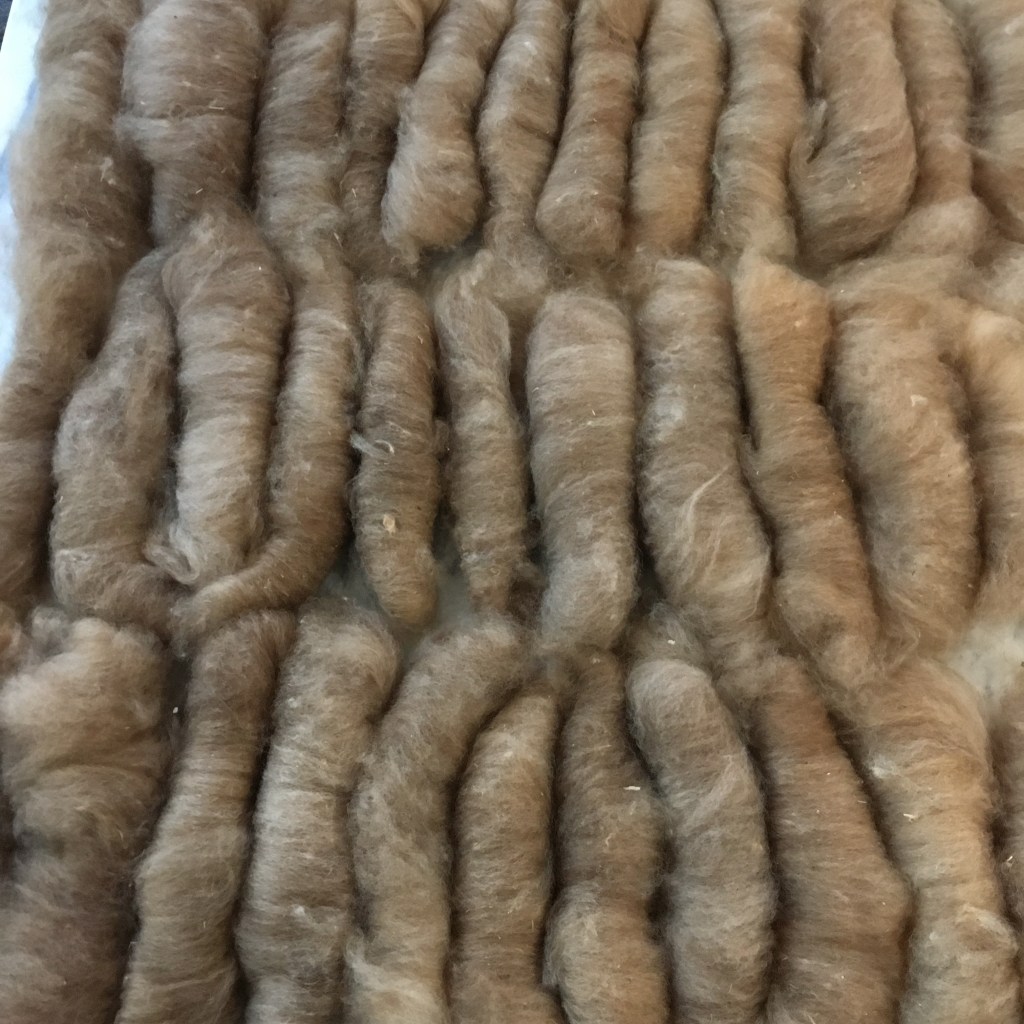
Carded rolags made with Aimee and Donabella’s fleece (alpaca)
I’ve moved on to my next color blend: fawn mixed with dark brown. I loaded the fawn color on my carder first, then added the dark brown so the fawn wouldn’t be overwhelmed by the brown. This worked much better. When all the rolags were prepared (I used a large box to hold them this time), I sorted them by shade in three groups. The idea is that if I spin each group, then ply them together, I will still get a gradual color fade in the final yarn. We’ll see.
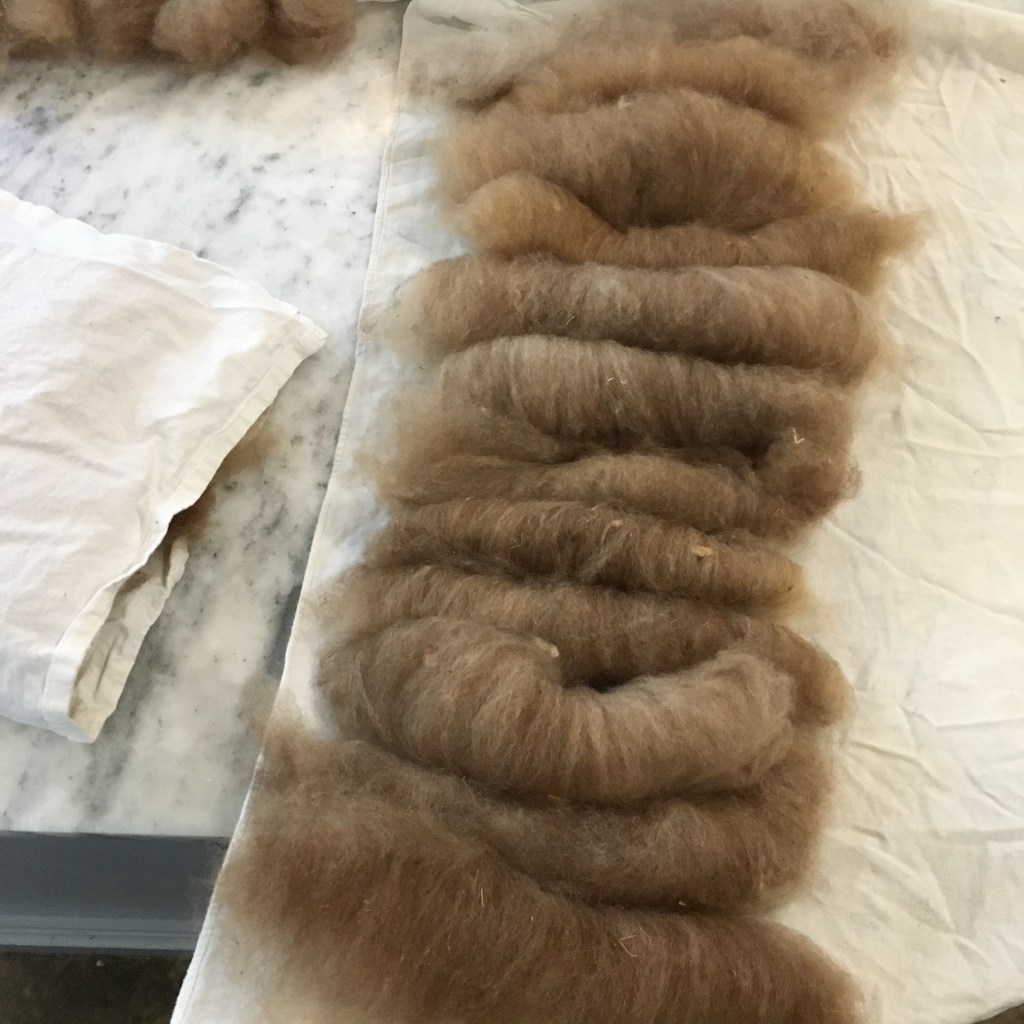
Folding the sorted rolags in dish towels
To keep my colors sorted, I gently folded each group in a dish towel so they stay neat and in order. There is still a fair amount of vegetative matter (VM) in the fiber, even after carding, but I have found that when I spin it is easy to remove most of it by plucking the yarn before I wrap it on the spindle. Some stubborn bits needs to be pulled out, but it is easy to feel and see where they are in the twist.
You would think that with the pandemic I would have more time to spin, but the opposite has been true. The time is being well spent: I’m baking with the kids, we are painting rocks and doing art, playing games, learning states and capitals, reading, and are starting into home schooling. All good things, just different from pre-pandemic. I think being flexible and able to roll with changes is important and I hope I‘m instilling that in my children. “Make hay while the sun shines.”
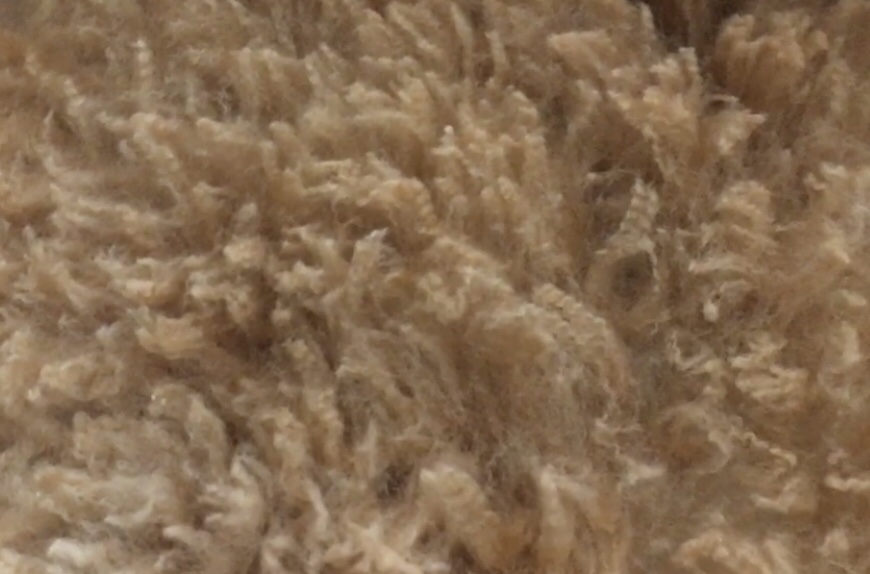
I had to share with you the way the alpaca fleece stays in a blanket after it is shorn off. It brings me joy; hope it brightens your morning. Here is the video!
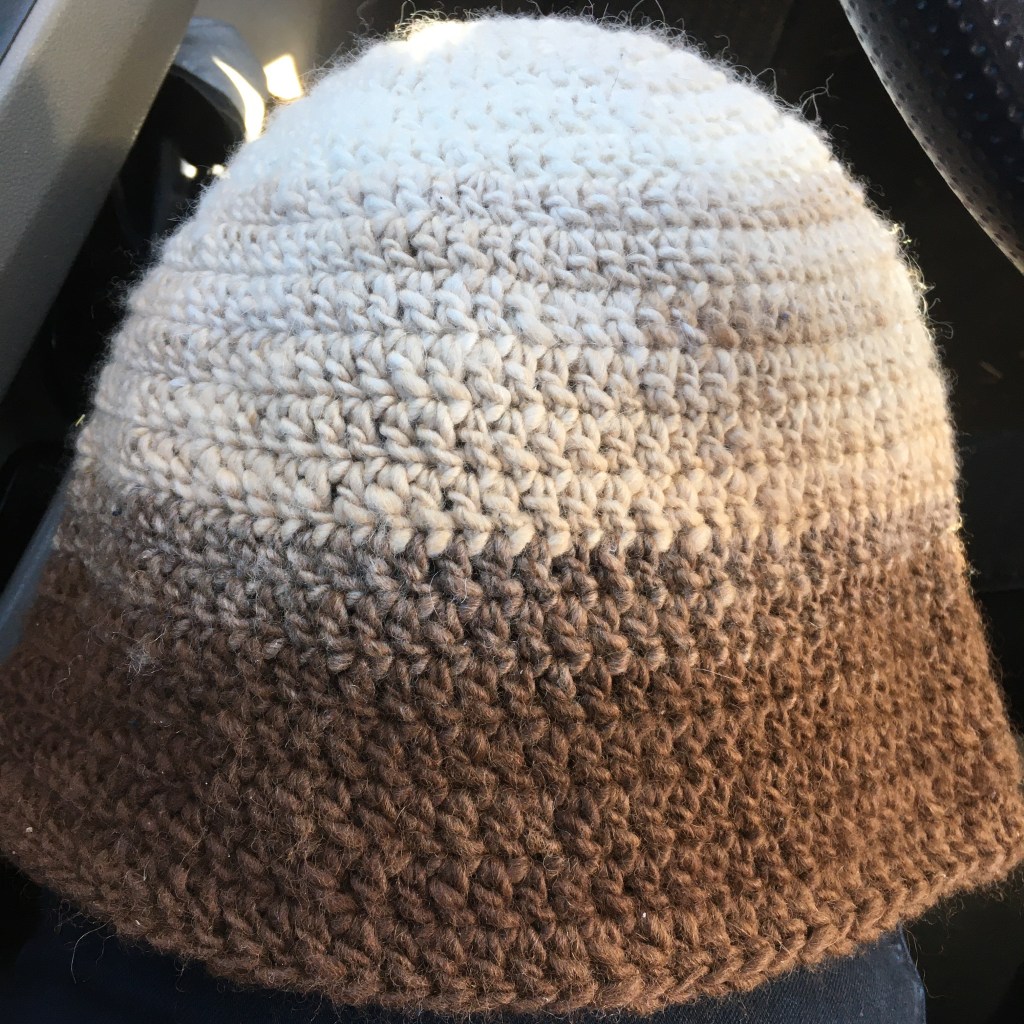
All spun up, it was time to craft my alpaca yarn into… something. I needed something to test the properties of the yarn, something to compare to other fibers, something I’m comfortable making… a hat! (I know, none of you are surprised.) I chose to crochet the hat because it goes quickly, and I was anxious to see how it performs. I have read that alpaca doesn’t have the elasticity of wool. There is something about the differences in the crimp of the fiber; wool has more crimp, alpaca less. I went with a smaller crochet hook to get a tighter fabric, to try to compensate for less elasticity.
100% undyed alpaca hat, unblocked
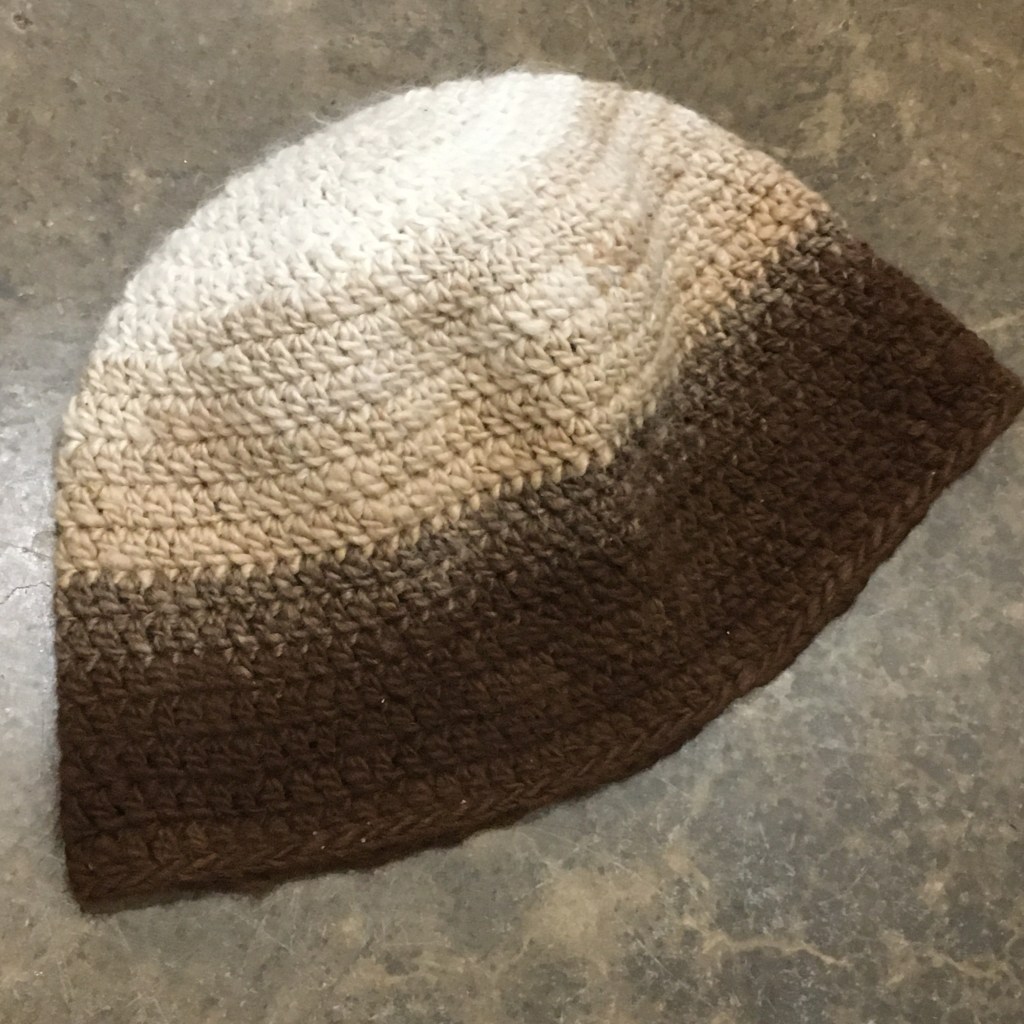
The color gradient turned out better than I expected. I would have liked a larger section between the fawn and brown color, but there is more here than I saw in the wound cake, so I’ll take it. The yarn crocheted up nicely. I do like single ply for crochet. The stitches look so much nicer; less like knots.
100% undyed alpaca hat, blocked
Interestingly, when I blocked the hat, it was still water resistant. It took some working to actually wet the hat so that I could lay it out to dry.