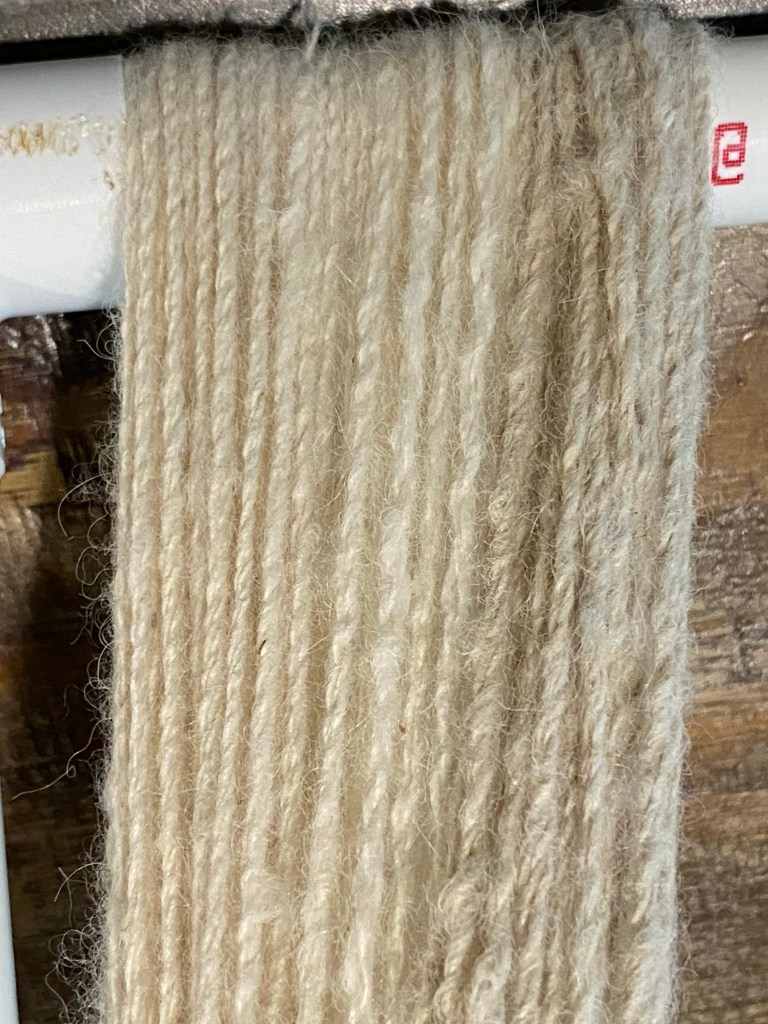
Next color experiment with my three colors of alpaca fiber is blending them all together with a little silk. (The silk makes it so strong I can’t break the singles by hand. I’m undecided how I feel about that.) I aimed for equal portions of each color, but I didn’t get out the scale, so I knew there would be variations in the rolags I produced from carding. (Honestly, there will be variation even if I weighed, but the subtle change in color can be quite pleasant.)
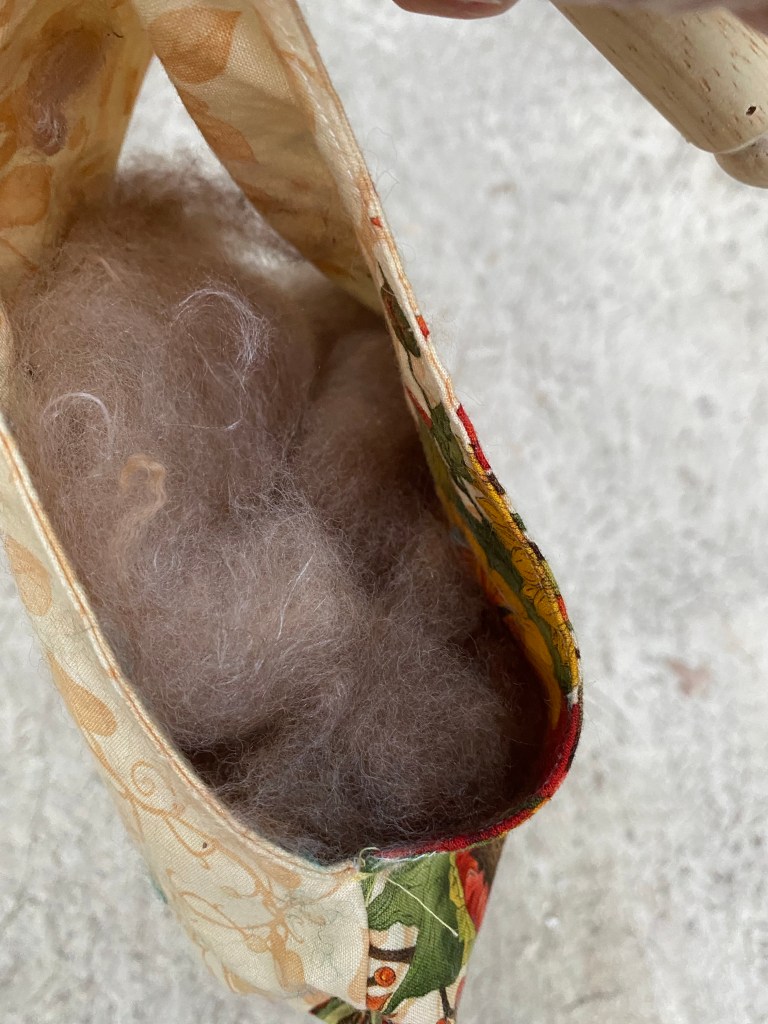
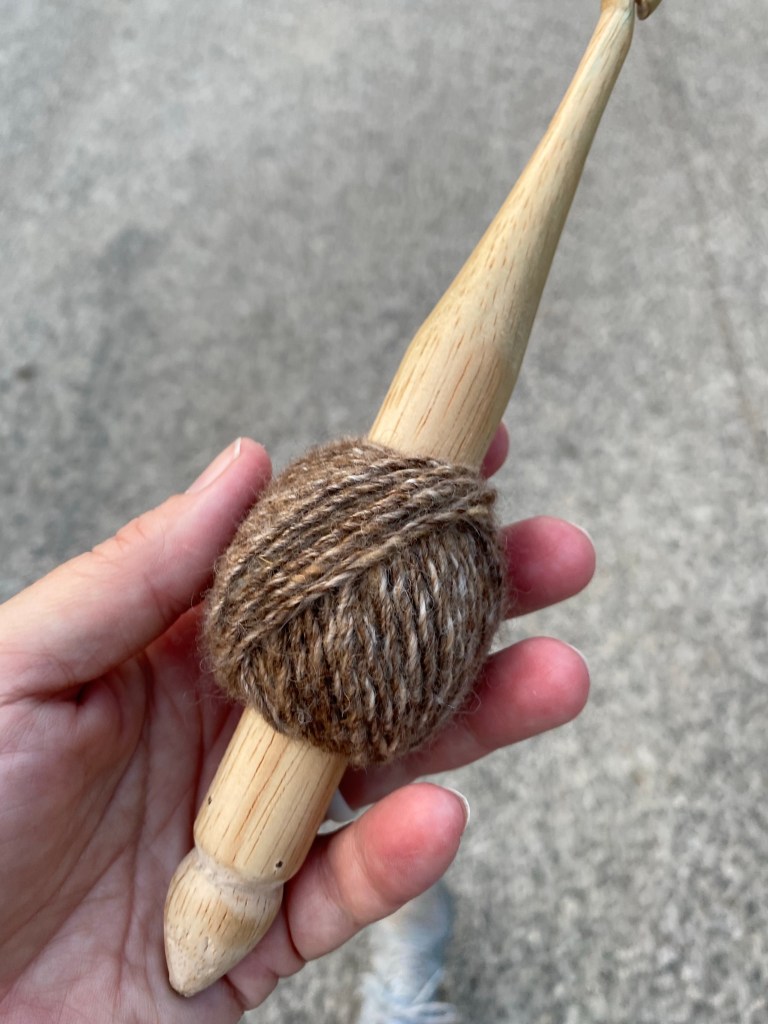
Blended alpaca silk rolags in my arm bag ready for spinningCable plied (4 ply: spun, plied, plied again) alpaca silk blend
I think I like the subtlety of this yarn, but I want to make it up into something to be sure. Yarns can look very different in the ball or skein than they do in a finished piece!
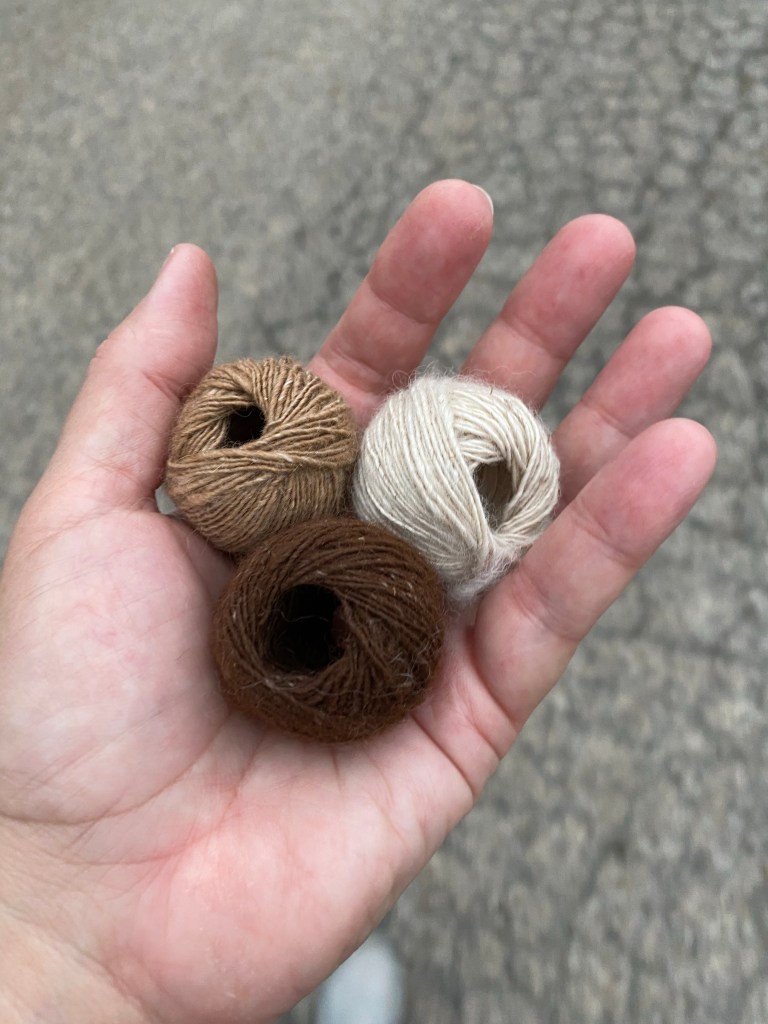
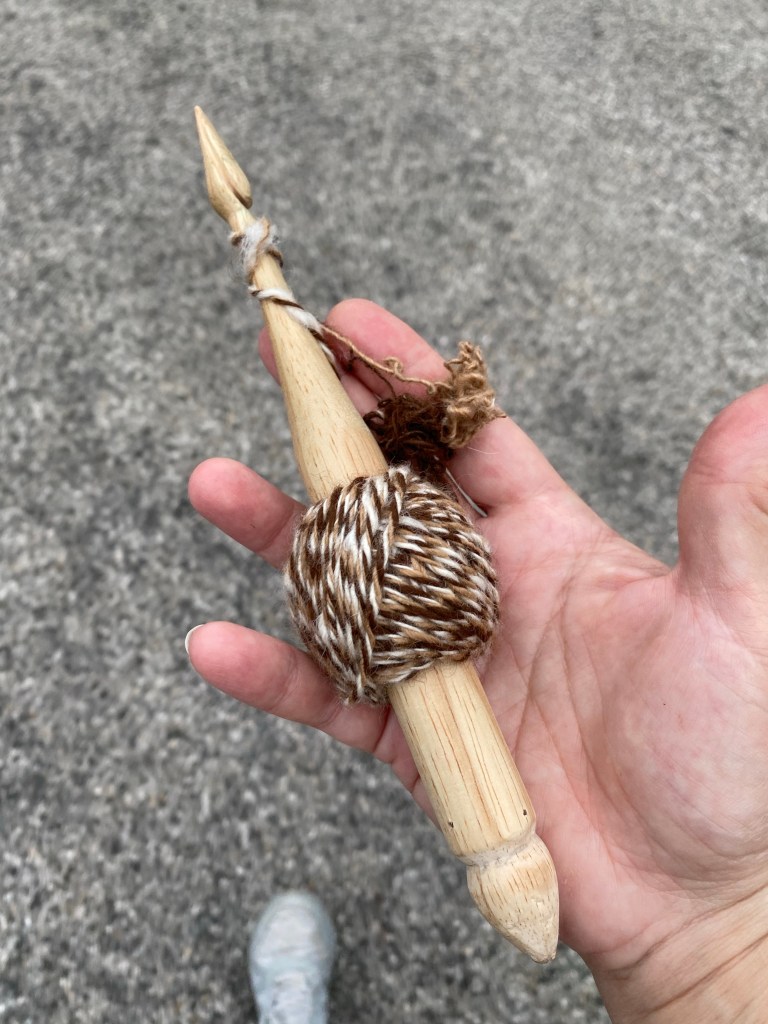
Three colors of alpaca, three ply yarn; seems a natural choice for my continued color combination experiments. I carded the colors separately again, but this time added a little silk to each preparation (as I have read that silk and alpaca complement each other), and then spun the colors individually. Taking the inside end of each tiny yarn ball, I plied them together. This made an interesting visual effect, very bold upclose.
Alpaca and silk singles Three-ply alpaca/silk yarn
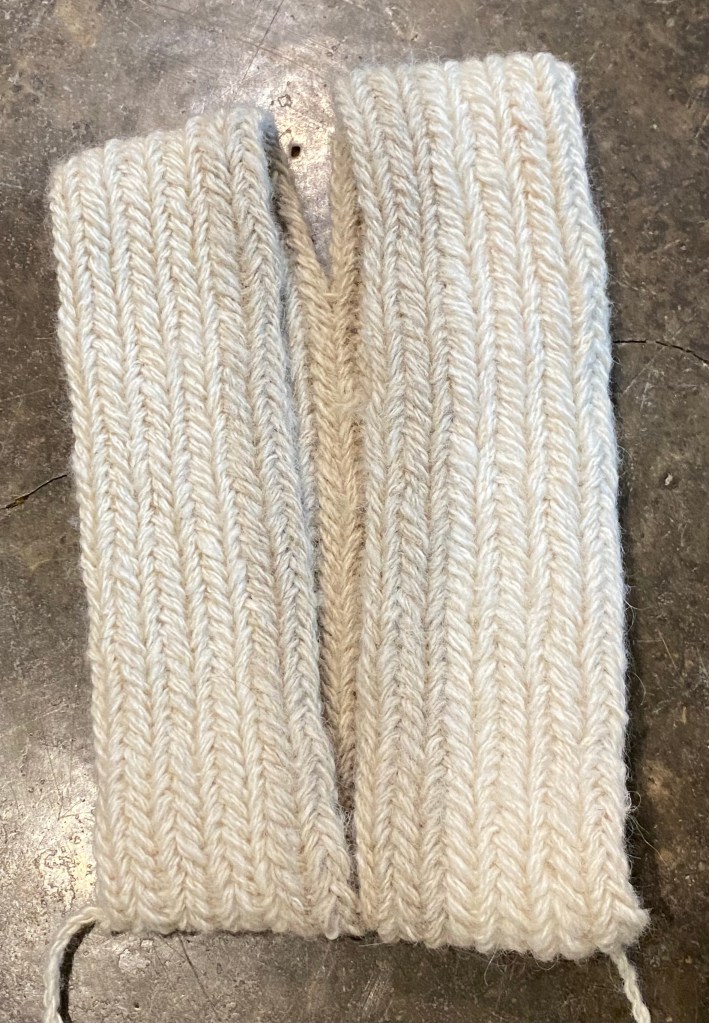
As I was contemplating what to make with the mini balls of test alpaca that I spun, my youngest announced that her other doll needed a new jacket. Ok, that can be done. I chose to nålbind (because I like it best) and used a Finish 2 + 2 stitch with an F2 connection. Because the three skeins were different colors, I decided to put the darkest in the center. I also tried a different construction technique, working in vertical rounds, rather than horizontal. Making the neck and front slit was just a matter of chaining along, rather than connecting, as long as I needed.
Doll vest before cutting
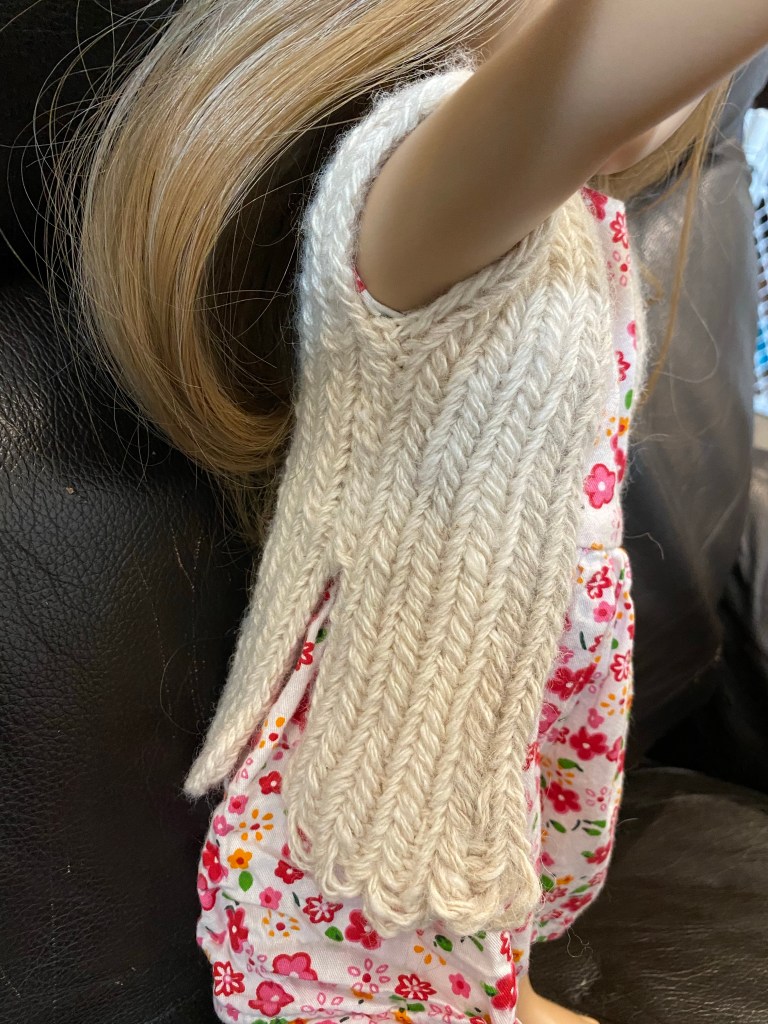
Once I had the sides of the vest even, I cut the bottom, pulled out the loose threads, and tightened and wove in the attached ends. I then sewed up a section of each side to form the arm holes but leave side slits.
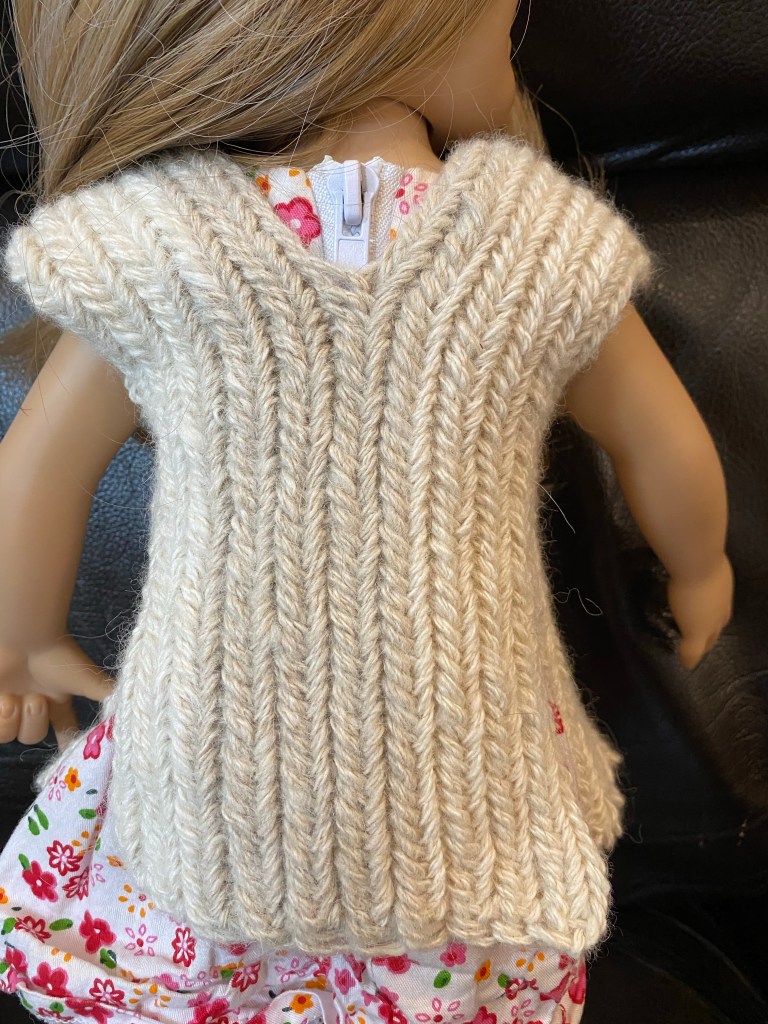
Bottom edge neatened (I like the scallops), and sides sewnBack of doll vest showing all three preparations of yarn
Really there was no difference in the three preparations of fiber after the initial single spinning. Even the finished fabric just has color variations, but is otherwise consistent in texture.
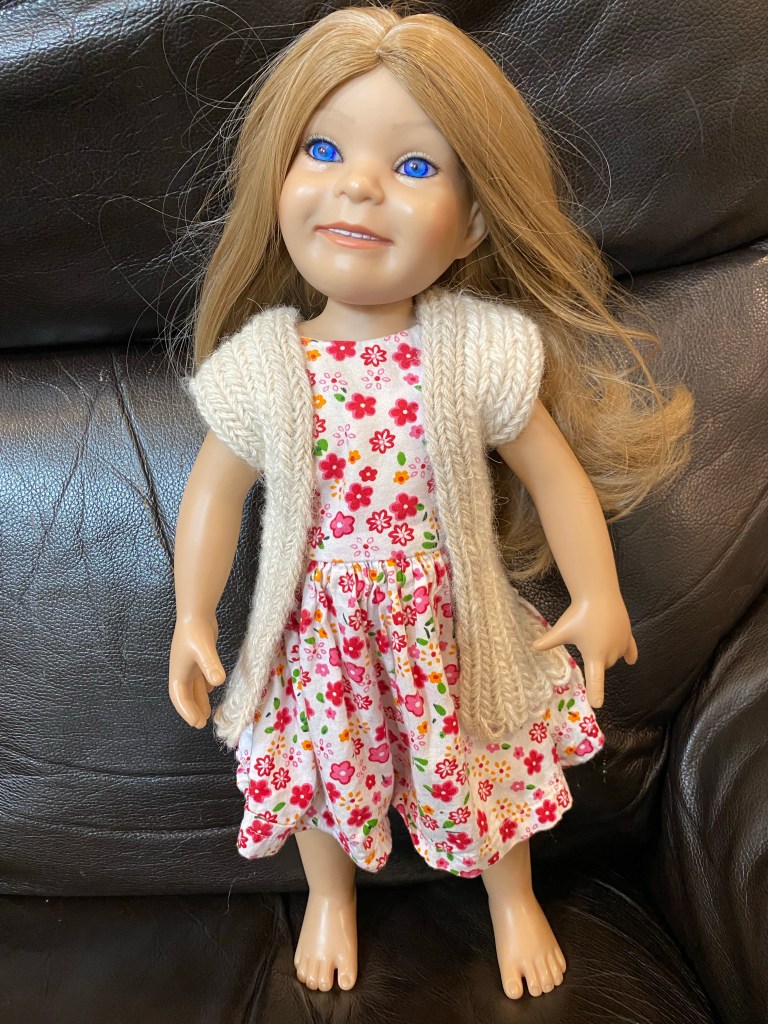
Front of doll vest
This was an excellent test. The alpaca yarn combined with this stitch made a very dense fabric. I think a human-sized version would be quite heavy.
I had a panic moment. My spinning and walking is going well, and my speed is improving, and I realized that once I was done with the current preparation of fiber I didn’t have anything ready to spin. The horror!!
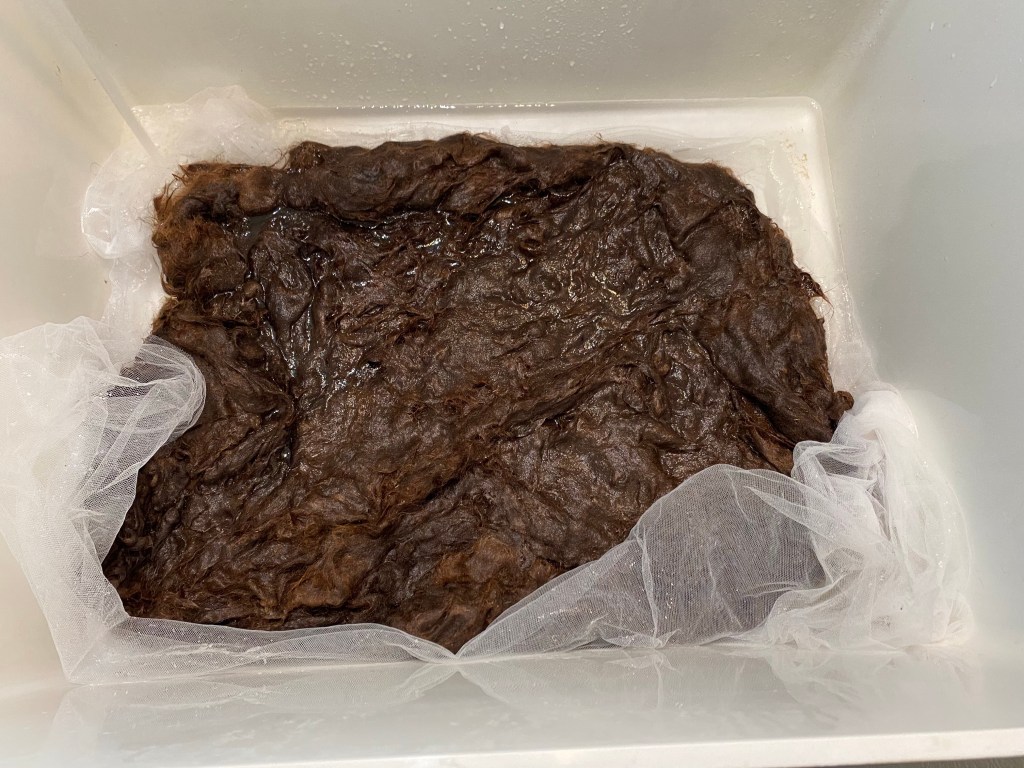
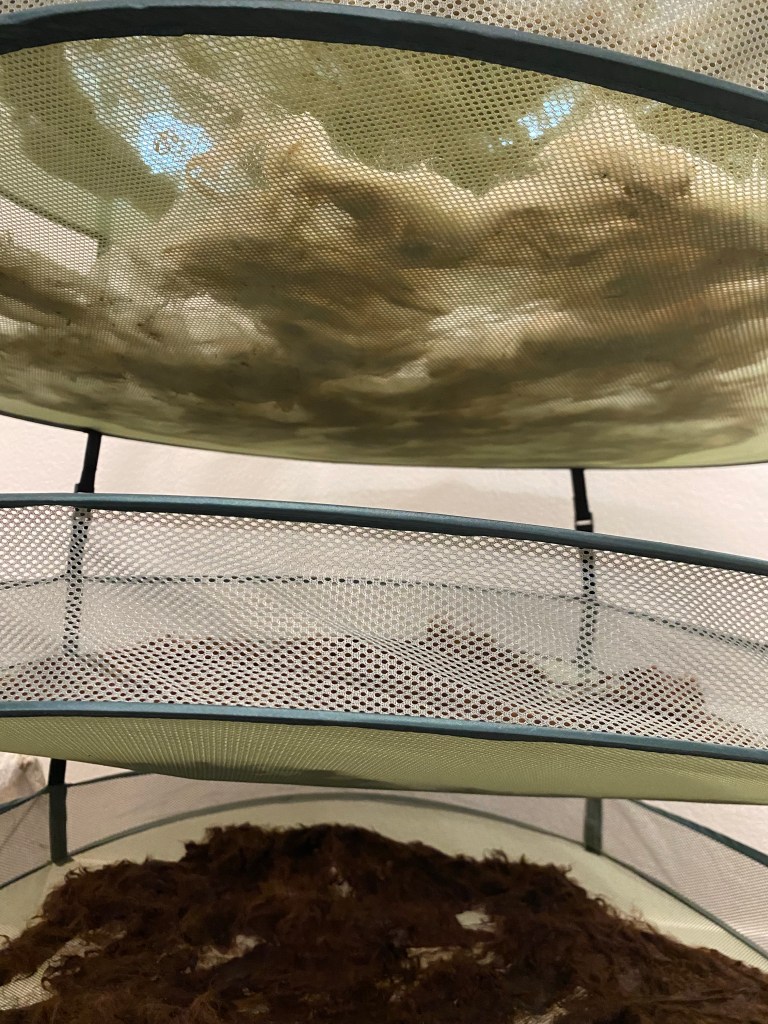
So I washed up some more alpaca fiber, this time using the utility sink and some netting, rather than bowls and towels. Since alpaca does not have heavy lanolin to scour away, I was not concerned about the wash water going down the drain. It was much like washing a dog. To keep the fibers out of the drain, I used a section of netting, which also helped squeeze out the water gently to avoid felting the fleece. I used Amway LOC liquid soap and rinsed each section three times. So much dirt. I laid each section out to dry on my hanging circular trays. There is still some vegetable matter (VM) in the fleece, but I am planning on picking and carding most of that out. I figure the evening activity will be carding and then I can spin in the morning.
Part of Aimee’s fleece after rinsing
I washed the last of Donna Bella’s fleece, and about half each of Sugar Plum’s and Aimee’s. I have five trays full of fiber. That should get me through the summer! Maybe longer.
I have read that some people spin alpaca fiber without washing it. Alpaca fleece does not have heavy deposits of lanolin like the wool from sheep. There seems to be a great debate on whether it needs to be washed, or at least very strong feelings, so I thought I would make up my own mind in the matter with a little experiment.
Singles spun from washed and carded alpaca, washed alpaca, and unwashed alpaca (respectively)
I took three samples from the same fleece (Sugar Plum’s). Two were washed (not scoured, but washed in warm water with mild soap), and third I pulled from the cleanest part of the fleece. One of the washed sections I carded using fine toothed hand carders and made rolags. The second washed section I left uncarded and spun from handfuls. The unwashed section I also spun from handfuls. I did attempt to pull out a rough roving-type bundle of fibers, but after sitting in my bag a couple of minutes, there was little cohesion and it was just easier to spin small sections.
Cabled yarn plied from washed and carded alpaca, washed alpaca, and unwashed alpaca (respectively)
The biggest difference was in spinning the singles. The washed and carded fleece spun smoothly and consistently. The washed uncarded was a little more fiddly to spin especially when I reached clumps of thicker fibers. I had to distribute these sturdier hairs with the finer fibers to keep the yarn from drifting apart. The single also had considerably more halo (fibers sticking out), than the carded sample. It was the same with the unwashed fiber, clumps of fiddly bits and more halo, but in addition, my fingers felt like I had applied lotion. There is definitely some kind of coating on the unwashed alpaca fiber, but it was not unpleasant. I did wrap the unwashed single onto my niddy noddy and gave it a soak in warm water and no-rinse wool wash. Nothing came out of the water. Even though I know the color can change throughout a fleece, I still felt the darker color was due to trapped dirt.
Close up of cabled yarn on the niddy noddy from washed and carded alpaca, washed alpaca, and unwashed alpaca (respectively)
I decided to cable the yarn (ply twice to get a four strand yarn). The differences in fiber preparation made no difference in the mechanics of plying. The uncarded samples still have a more pronounced halo as you can see in the photo above, as well as a less smooth appearance. My plan is to nålbind all the samples with the same stitch (I want to practice a new stitch, so this is a good opportunity).
So how do I stand on the wash or no wash discussion? If I had fleece with very little vegetable matter (VM) and mud, perhaps from a coated animal (the farmer can put coats on to keep the dirt off somewhat, but I don’t know how the animal feels about that), I wouldn’t mind spinning directly from the fleece. The fleeces currently in my possession are not that clean, so I will be washing and carding henceforth.