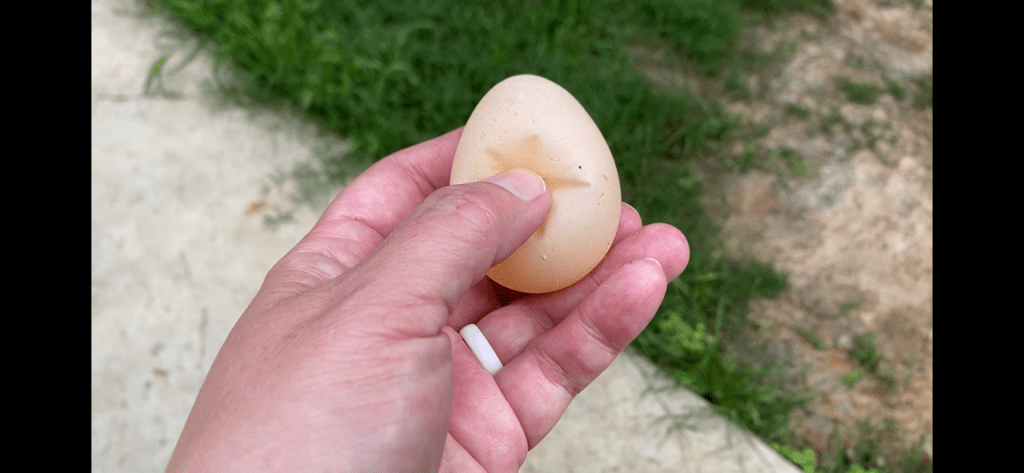
I found an egg under the roost with no shell again. It doesn’t happen often, but it has happened multiple times since they started laying. The egg membrane is intact, so it is possible to pick up, but it certainly has an interesting texture, much like an egg that has been soaked in vinegar to remove the shell, but without the bouncing. I recorded a video to show the squishiness, if you are interested. These eggs typically go to the dogs!
I am doing a spinning experiment (the results of which will be posted later, but this was funny, so I thought I would share.) The gist is that I am spinning bits of fluff as I am walking, which gets a bit problematic when there is some wind and a loose tuff of fiber. It must have been quite the scene with my bit of alpaca fleece rolling merrily down the street with me chasing after it.
Alpaca fleece rolling down the road, making a run for it
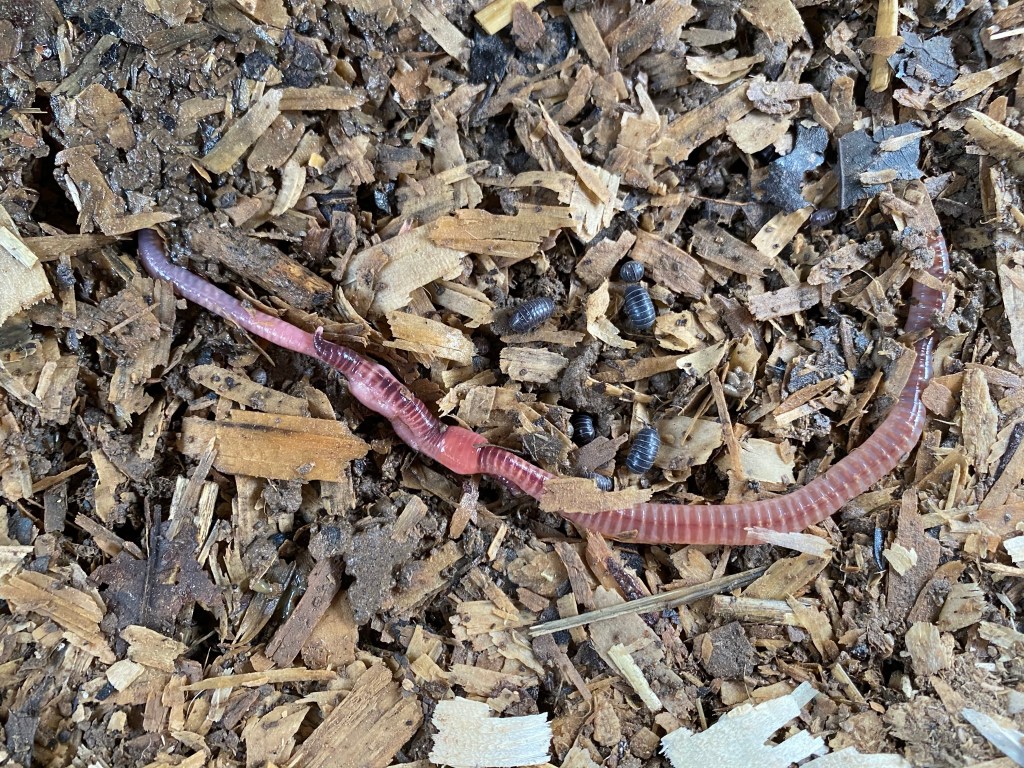
Underneath the chicken foot bath (a shallow dish of water in the run because my hens like to cool their heels), some night crawlers have been hanging out for a few weeks. I picked up the bath to rinse and refill and found that they have decided to start an earthworm family there. Hm. I had to go look up the earthworm life cycle because I honestly didn’t know how new worms were made. Earthworms are hermaphrodites, but not asexual. Two organisms need to exchange genetic material before they can lay cocoons in which the new generation of worms develop. Here is an interesting article if you are so inclined. Learn something new everyday.
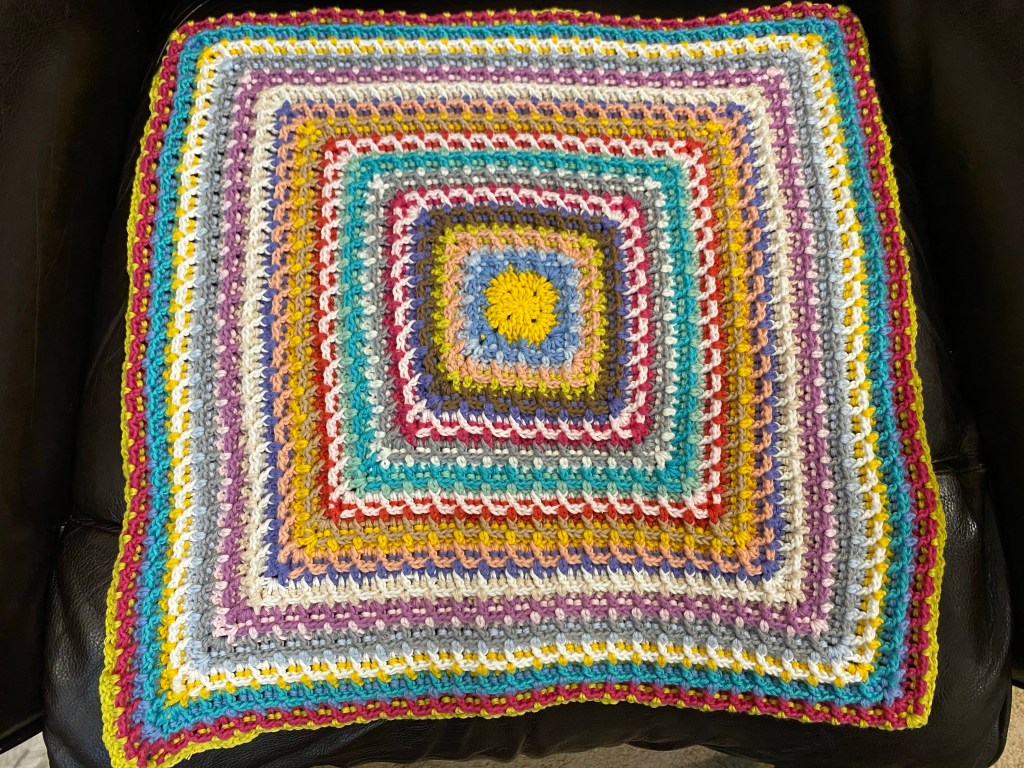
I had a small bag of little skeins of cotton in a variety of colors. The bright hues and soft cotton seemed a good match for a baby blanket. I found an intriguing pattern for a waffle stitch blanket that starts in the middle, which is ideal for an item made of odds and ends, as when the yarn is done, so is the project. I also wanted stripes (which frankly made my project more complicated for yardage calculations, but the color interaction in this stitch was worth it). The reason the stripes increased the difficulty is that I needed enough yarn of one color to make it all the way around. Not a problem at the beginning, but quite the conundrum nearing the edge. I ended up weighing the last few skeins and putting them in order from lightest to heaviest to make it more likely to have enough.
Baby blanket in cotton, crocheted waffle stitch, center start
The instructions had me turn the work at the end, which to me seems to defeat the purpose of crocheting in the round. I do really like the two-row repeat, which makes it a very easy pattern to memorize, and the simple row pattern makes it easier to recognize where the stitches need to go. This idea works fine working only from the front, with no turns. To illustrate, I put together a chart (I like charts better anyway). I made this one in Adobe Fresco, but I think if I needed to make one with any more rows, I would work on a desktop in Illustrator so I could align the rows more precisely.
Crochet chart for waffle stitch with a center start, to increase size, repeat rows 3 and 4
I’m still a student of colors and how they interact (and probably always will be), and the fascinating thing about the build of this blanket was the way the the colors looked pastel crammed together in the bag, but became quite bright the way I ordered them in the blanket. I made a hat in double crochet stitch (American notation) from the bits and bobs left over from the odds and ends of the blanket and the overall color feel is quite different.