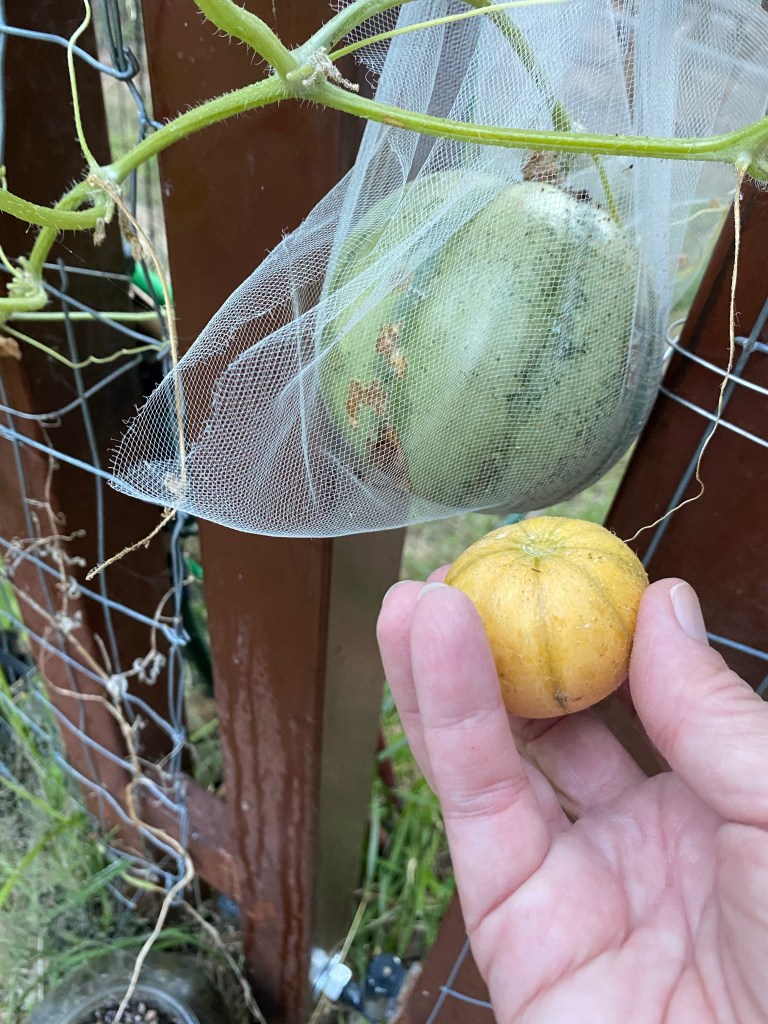
Tiny ripe melon compared to melon still on the vine
I spotted a flash of round yellow on the ground near my garden. It seems that I missed slinging one of the developing melons, it grew too heavy for the vine, dropped to the ground, and ripened there. The neem spray did the job to keep the bugs away, and although it was small, it smelled and tasted like melon. Still waiting on the “large” melon to ripen!
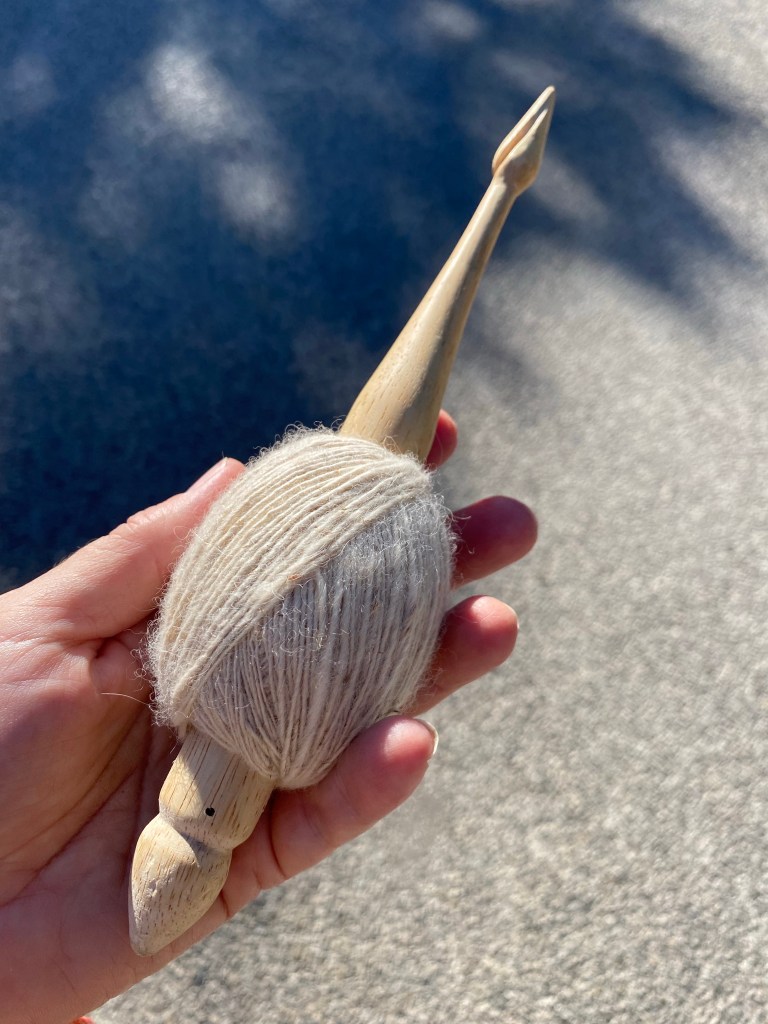
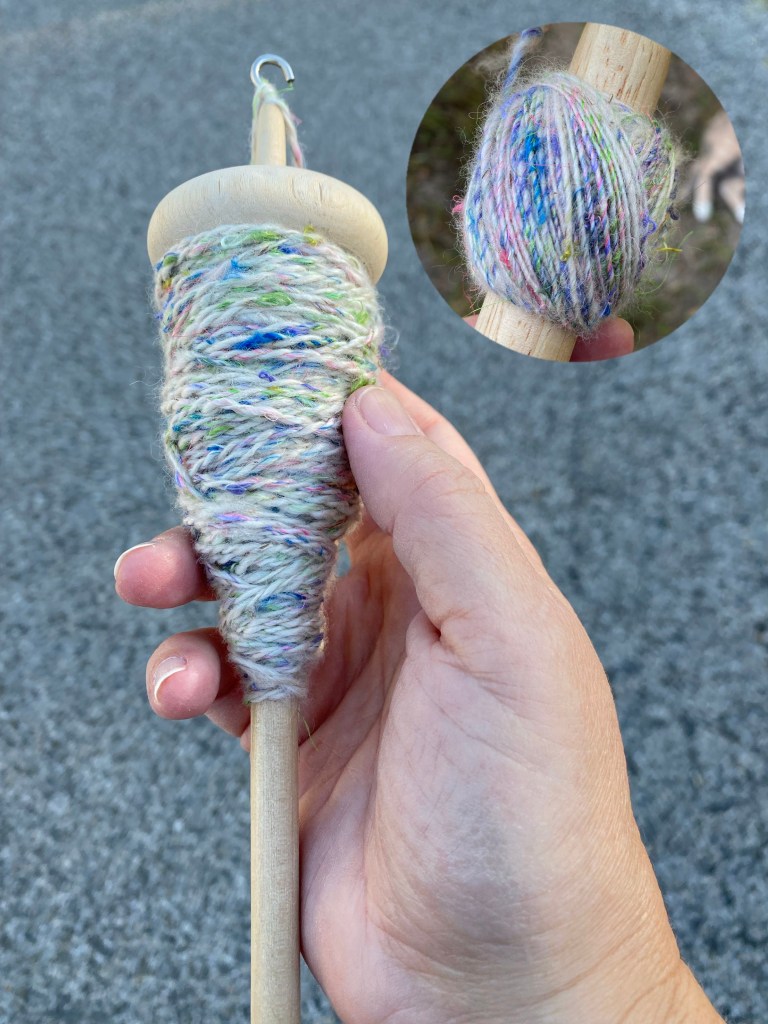
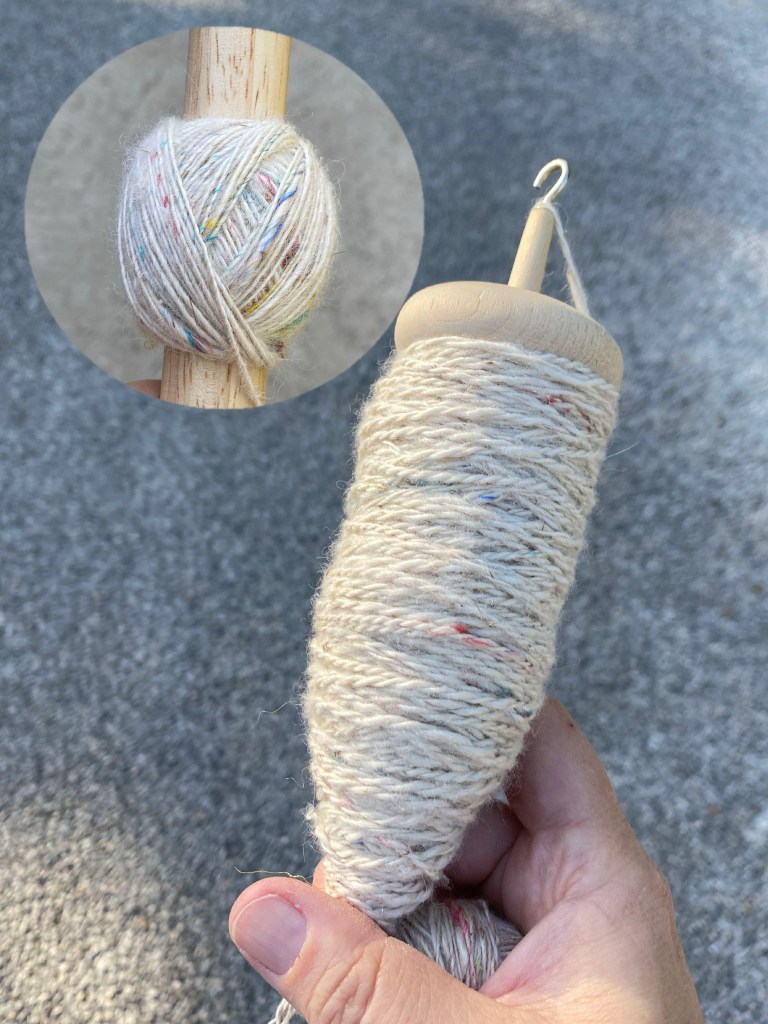
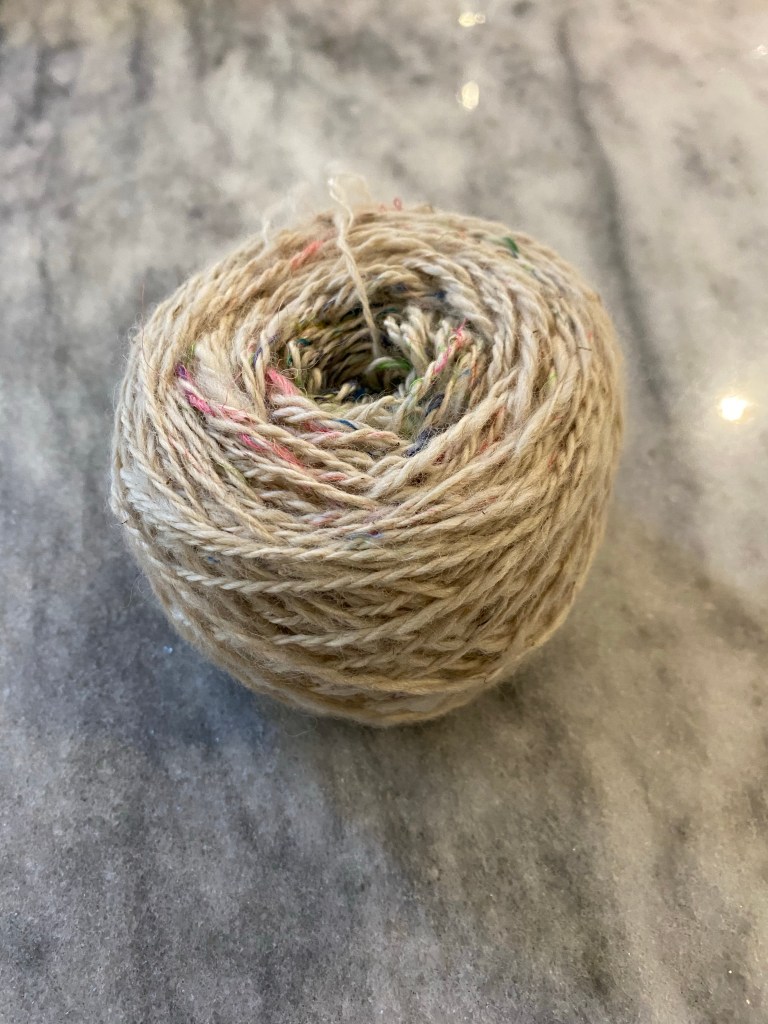
I spun up some pure alpaca to ply with the balls of alpaca and sari silk, to see what that did to the color density. Rather than make three small balls and try to match the yardage, I spun up 9 rolags into a single ball, then plied the colored singles with the uncolored into one cob.
Singles with the most color plied with uncolored alpacaSingles with the least color plied with uncolored alpacaSingles with a little more color plied with uncolored alpaca
Diluting the color with the uncolored ply had the most impact on the single with the most color. I like the yarn with just touches of color, and reducing the percentage of color makes it even better for me.
I had a bit more of the uncolored than the colored, which was perfect. Rather than scrap the extra bit of white, I doubled it up and plied to the end. No waste at all, which is definitely a plus for making a two ply.
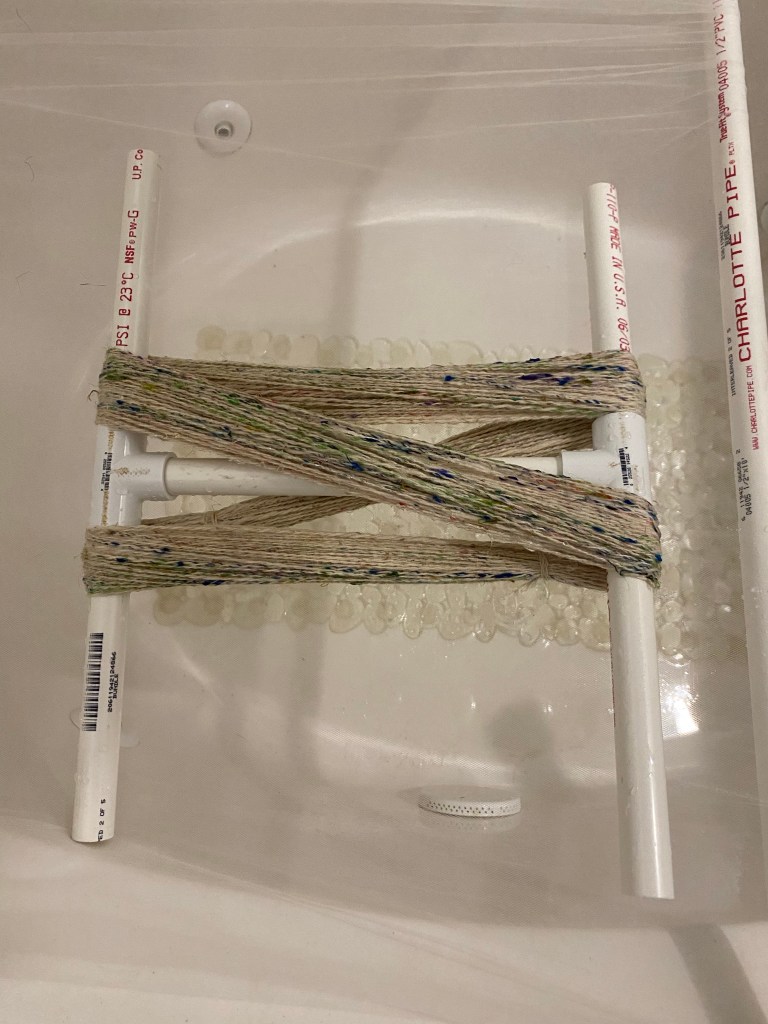
Rinsed yarn on a PVC niddy noddy
I wound up the plied yarn on my PVC niddy noddy and gave it a rinse to set the twist. I ended up with about 117 yards of two ply alpaca and mixed fiber sari waste yarn. It took five walks to spin and ply this yarn. (It is a good thing that it is the spinning and the process that makes me happy.)
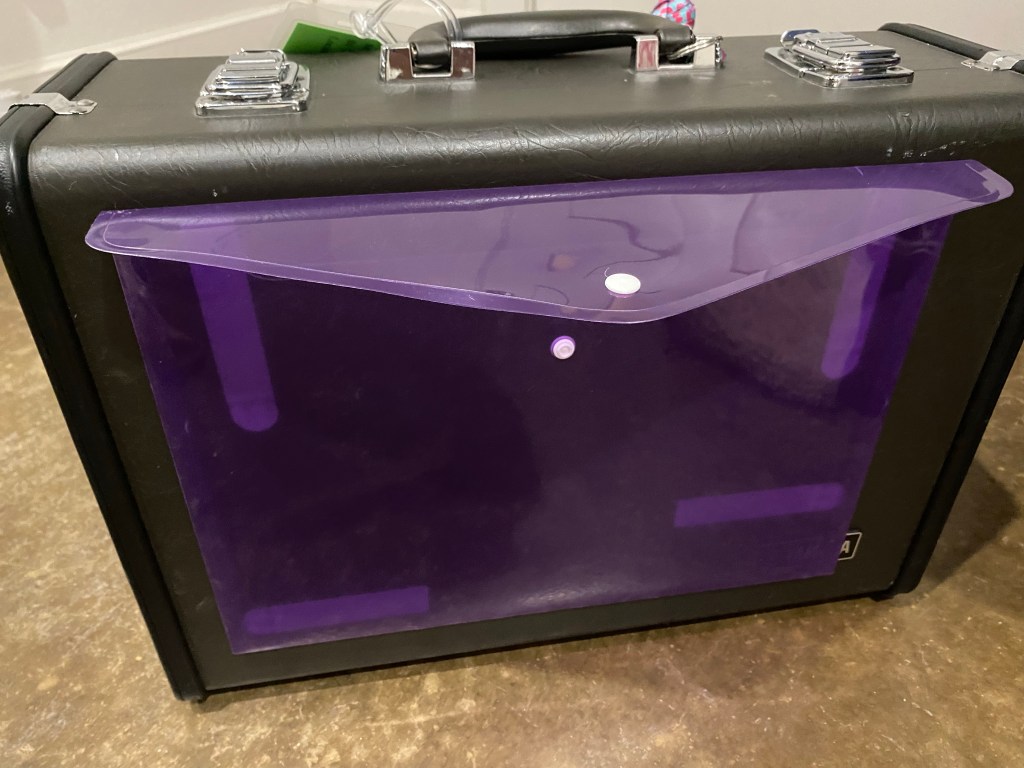
We needed another modification to my youngest’s coronet case. She was carrying around her lesson book because it wouldn’t fit in the case. So we used command strips to attach a plastic pouch to the outside. Now the music stays with the instrument, but if we need to remove the pouch, the command strips should allow it to come off cleanly.
Plastic pouch attached to a coronet case with command strips
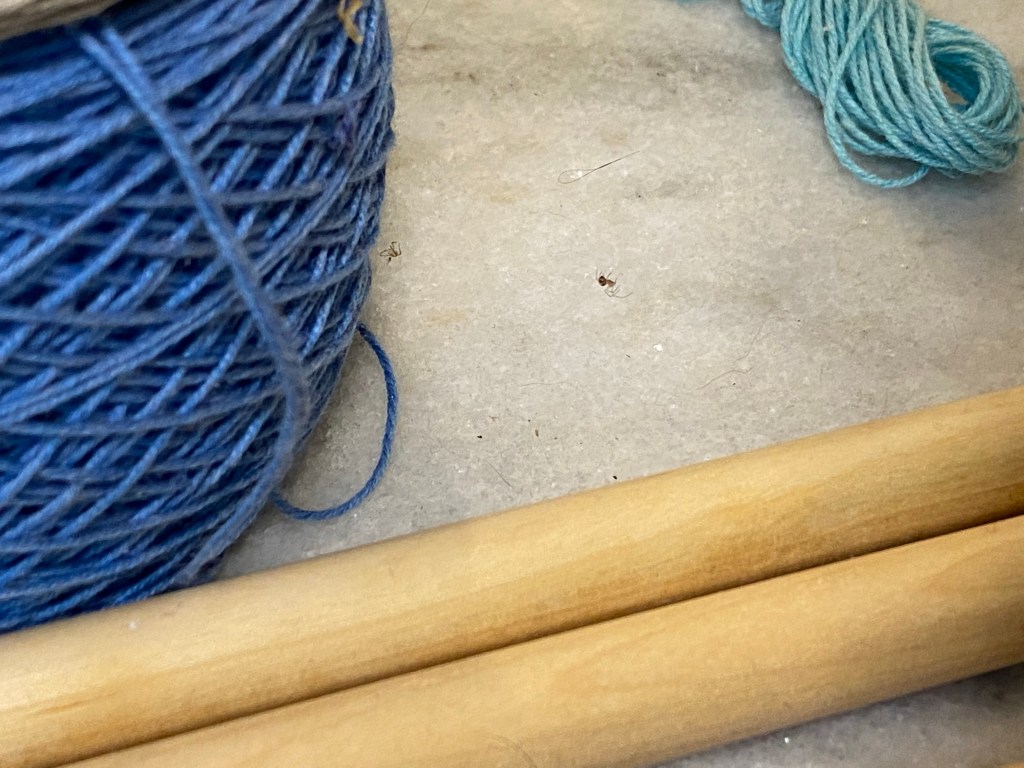
I am working on the weaving, really. Bits here and bits there, but apparently this little spider thought I needed more assistance, or maybe a model of an efficient productive weaver, as she set up shop right behind my loom. Saucy.
My eldest needs a journal as a prop for a play. The play is set in the 1920s and we didn’t want bright white crisp paper in the leather bound journal (I’ll get to the assembly of the journal in another post). I searched the internet and only came up with tea and coffee stains (and one that recommended burying the paper in the ground for two weeks). I needed eighteen sheets of paper aged; and the paper won’t hold up to handling when wet (we tried the tea method, no go). We also tried using a flame to slightly singe the paper, which was also time consuming with spotty (literally) results. I remembered a science experiment with invisible ink made from lemon juice. Could that work to slightly brown the paper? Yes, yes it can.
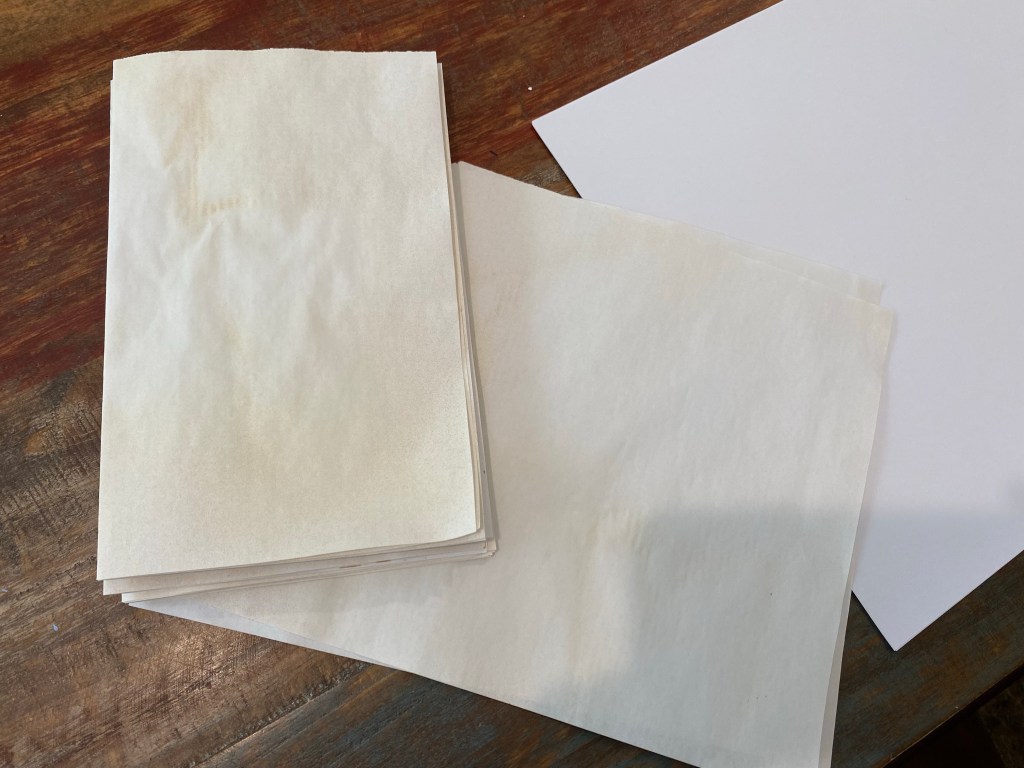
Aged paper folded into signatures (left) versus original paper (far right)
The method I found that worked best was to heat the oven to 350 degrees F, put a large cookie sheet in the oven, lay one piece of paper on the cookie sheet and mist it with a 50/50 mixture of lemon juice and water, and leave it in the oven for 3 minutes. I then flipped the paper over, misted again, and baked for 3 more minutes. An eye cleaner spray bottle works great for mist. The technique also wrinkles up the paper, so I needed to give the sheets a quick iron to get it to lay a little more flat. The results were exactly as I hoped! Now to finish the cover so I can assemble the journal.