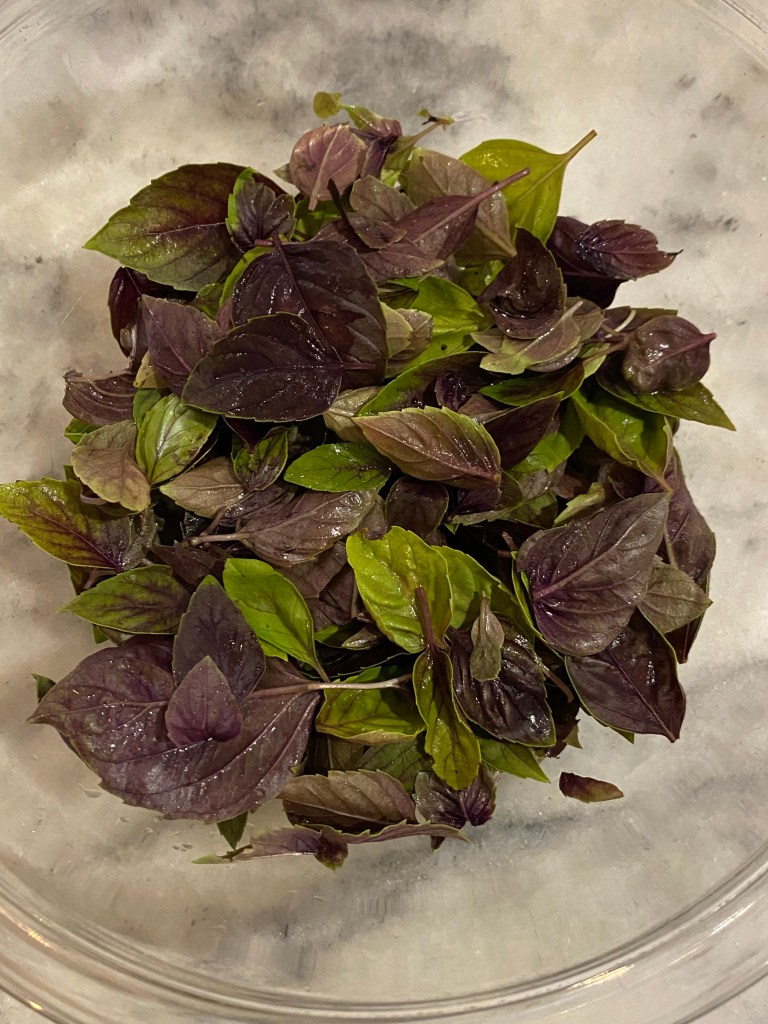
The cold weather is coming to Texas, albeit briefly. My basil plants turn black if it dips below 40 degrees, so this year I harvested it all before it could turn. There isn’t that much, but enough to make Thai Chicken Basil (I made it a couple weeks ago and so the basil reserves were low anyway).
Red basil washed and removed from the stems
I enjoy the coloration of the red basil, the purple and green are pretty in the garden. Basil is one of the few things I can actually grow!
The tapestry loom experiment provided valuable data: mostly that I don’t like to sit still and weave. After taking up space on my kitchen counter for many, many months, I finally decided to take it off the loom. It is a shame that I couldn’t bear making it into a scarf size; the fabric drapes beautifully and has a nice feel, but I truly could not face the project any longer. The killer was the loose stripes. My concept for the weaving was “identity crisis” and to show that I had two striped color schemes warring across the field of fabric. I intended to have several “loose” stripes instead of just two, but those two slowed my production to a near standstill. Once I decided to move on, the remaining stripes went fairly quickly. I removed it from the loom and let it rest for a couple weeks. Then I finished the edges by braiding the warp threads, weaving in the loose weft threads, and machine sewing a hem on the top and bottom.
“Identity Crisis” weaving cotton and acrylic
I do like the “war” between the color schemes, and I may cut down the very large (to me) tapestry frame to a lap size, but for now there are many, many portable projects to pursue.
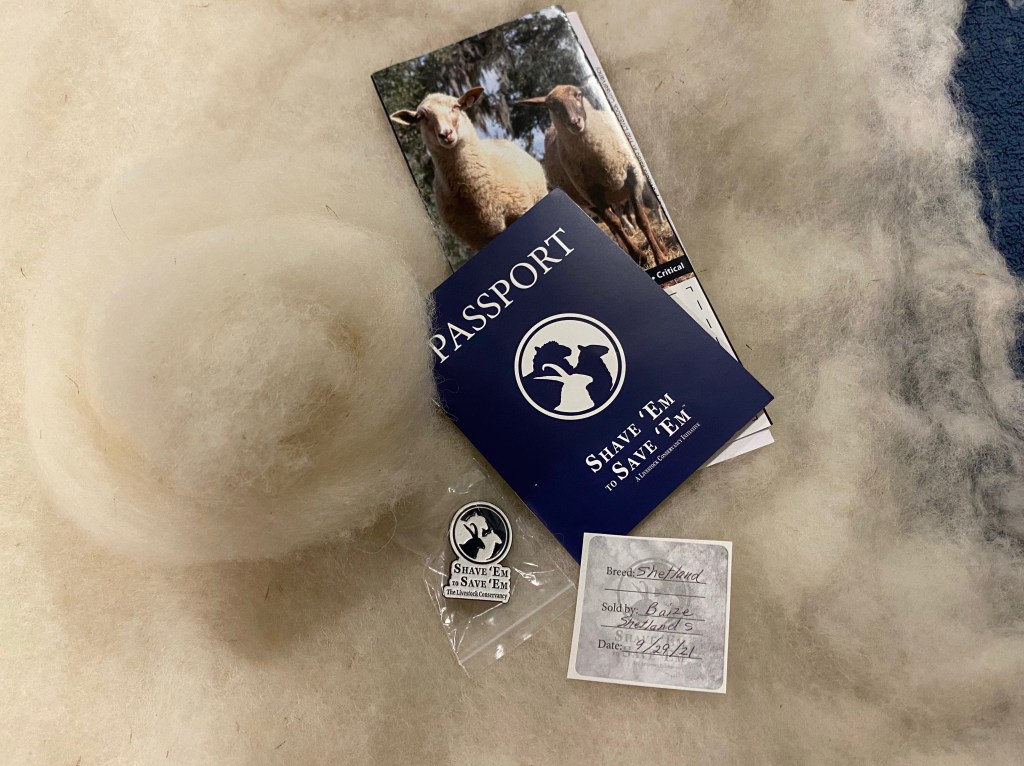
I found some more Texas grown spinning fiber! I was connected to another spinner through our local coffee shop, and she sent me many resources, including the name of a Texas rancher that raises Shetland Sheep (https://baizeshetlands.weebly.com/). Shetland sheep were developed in Scotland to be competition for Italian Merino wool. These sheep are also thriving in the Davis mountains of Texas! I ordered a prepared batt, since I wanted to see how the fiber is supposed to handle before I delve into the raw fleece. In the box with the wool was a passport stamp for the Shave ‘Em to Save ‘Em initiative by the Livestock conservancy. So of course I ordered a passport for my new sticker. There are many breeds of endangered sheep in the passport, and so many opportunities to learn about different wool!
Shetland wool batt from Baize Shetland Sheep with my new wool passport
The Shetland knitters are known for “wedding ring” shawls; large lacy knitted fabric that is so fine, it can be passed through a wedding ring. I am awed by their skill. I read more and found out that the lace uses only knit stitches, no purl stitches so it is double sided. I am not fond of purl stitches, so this might be a way for me to enjoy knitting. I don’t intend on embarking on a wedding ring shawl, but maybe trying some of this lace on a small project. It seems only fitting to try Shetland knitting with Shetland wool. Oh, and knitters in Scotland historically used a knitting belt, which allowed them to walk and knit. I have my work cut out for me.
When we carved our Halloween pumpkins, we waited until the day before, and did not treat the carvings with bleach or other preservatives, so after Halloween the hollowed out vegetables could go to the chickens. The chickens love it. We didn’t put all the pumpkins in the run at once, but are spacing them out and replacing hollowed out pumpkin with a carved pumpkin (after checking for mold).
Chickens tucking in to a jack-o-lantern (photo credit to my eldest)