Since setting up the chicken foot baths to fill automatically, the area around the shallow dishes has been more damp. The little snakes and frogs that move in don’t stand a chance if the chickens see them, but one industrious toad has dug an expansive mansion under the tray, and is big enough that the chickens leave her alone.
My eldest and I have been experimenting with fruit smoothies and we have stumbled on a really good combination: Melon and vanilla. I’m growing Aspire melons, which are small 1-2 pound melons with sweet orange flesh. They taste like what I grew up calling cantaloupe. The flesh scoops out of the rind like a dream, and it blends well with our smoothie base.
Using a spoon to scoop out melon
For two shakes:
1 cup milk
1/2 cup plain greek yogurt
3 Tbsp Sweetener (sugar, Splenda) or to taste
1 tsp vanilla extract
About 1 pound of melon scooped from the rind
1 cup crushed ice
Add ingredients in order in a blender, blend until smooth.
Melon smoothies
This is reminds me of a treat we would have when I was young: a scoop of vanilla ice cream in a cantaloupe half. Nom nom.
I’m so excited to pass on the knowledge of wire tree making to my eldest. She used a cut agate geode as the base, floral wire for the tree, and labradorite chip beads for the leaves. No glue was used on this piece at all; the wires wrap the stone.
Wire tree (photo credit to my eldest)
I haven’t made any of my own wire trees in awhile, mostly because they are a serious investment in time and space (totally worth it, but still). I have several ideas saved in my sketch book for the time I do delve back in. It was good to see my eldest engaged in the process, though. Making wire trees can be meditative, and is similar to bonsai training, but with no worry about forgetting to water.
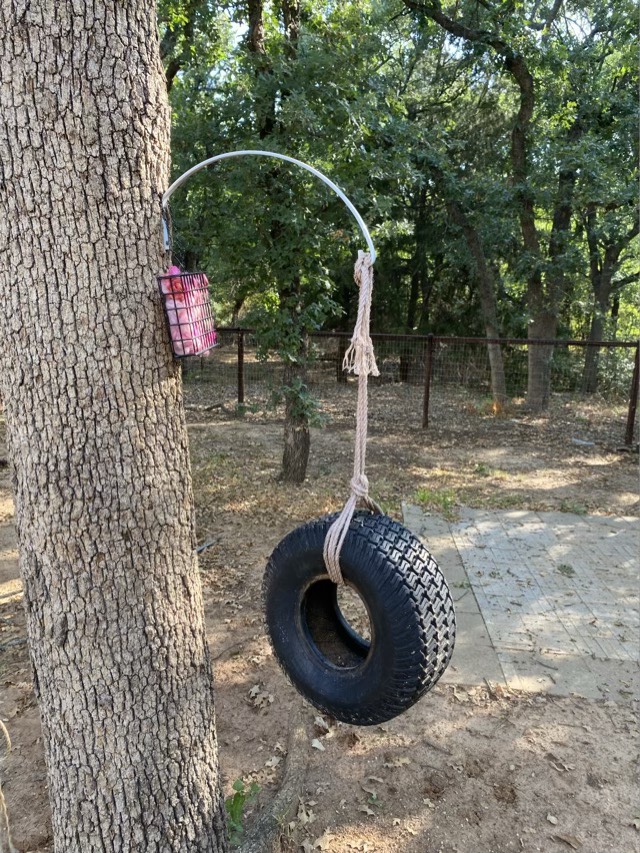
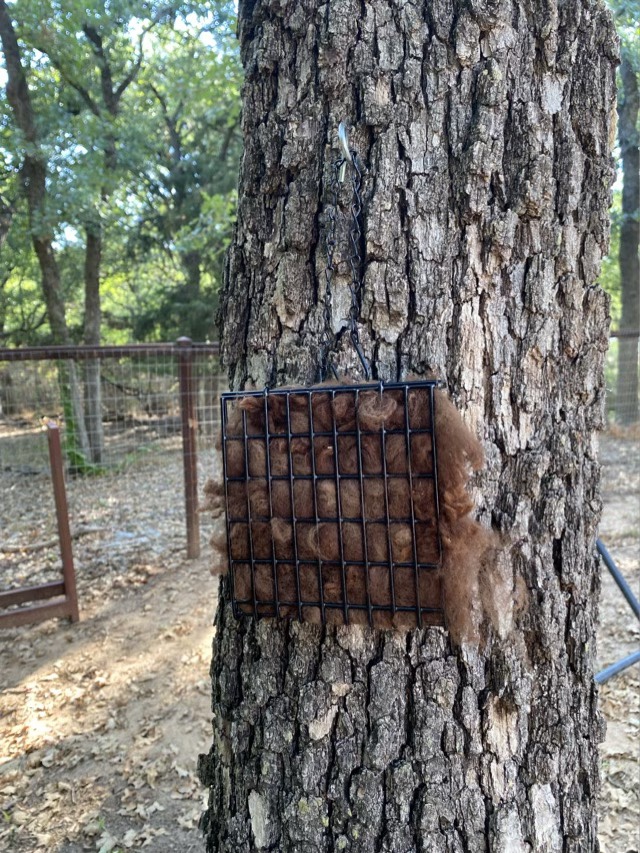
Someone had a really great idea using a suet holder as a cage for fiber for birds to use in their nests. I bought two suet cages and filled one with scraps of wool fiber, and the other with washed alpaca.
Suet feeders used as fiber cages
The birds may utilize it, but I’m really putting it out for our squirrels. I have been strewing alpaca fiber across the branches and bark of the trees. This seems a much neater option.
Fiber filled suet cage near the squirrel feederAlpaca fiber filled suet cage
I’m hoping that by providing fiber the squirrels stop trying to shred my ropes. I think the natural fiber has been warmer and better for raising kits, as we have seen two young squirrels at the feeder this year.
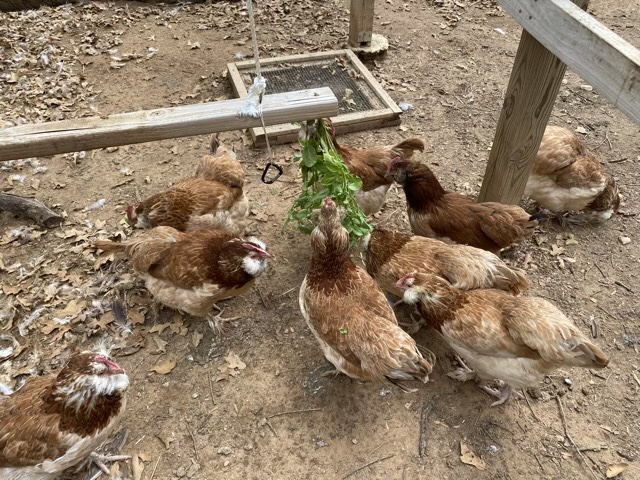
After collecting the leaves I needed for my recipe (Thai Chicken Basil uses at least three cups of fresh basil), I took the branches that still had leaves out to the chickens. My chickens really like basil.
Hens tucking in to hanging basil
I shove the thick stems into a hole in their chicken swing, which holds it secure so the hens can rip off leaves.
Basil branches stripped bare
It doesn’t take long for the flock to strip off all the leaves!