Double Knit Cowl

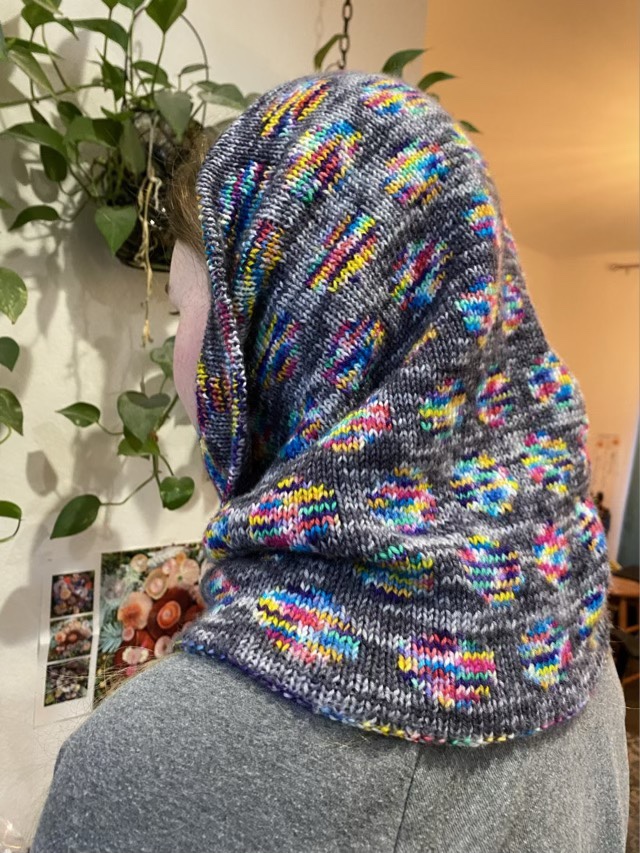
I am calling this finished project (yay finished!) the “Polka Dot Glitch”. It is double knit with “Fiesta!” and “Fade to Black” variegated hand-dyed fingering weight yarns by Bashful Armadillo.
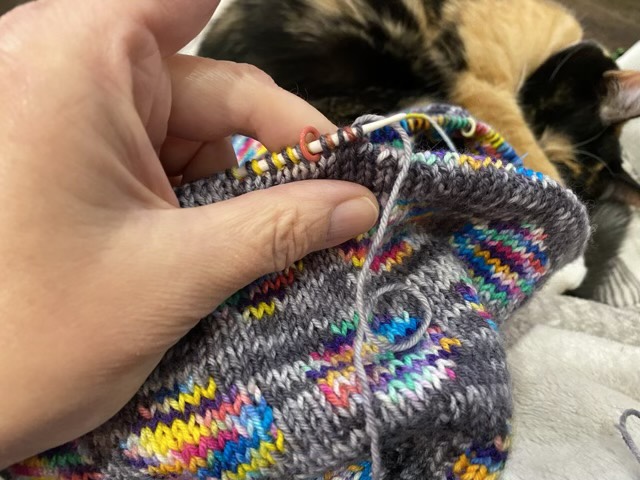
Finishing a double knit with a modified Kitchner stitch
Folded cowl showing both sides
Cowl modeled

I used size 2 circular needles and graphed the polka dots before I started. I cast on 288 stitches (144 of each color) with markers every 24 stitches. I found this cast on easiest to deal with, and these Kitchner stitch instructions for casting off.
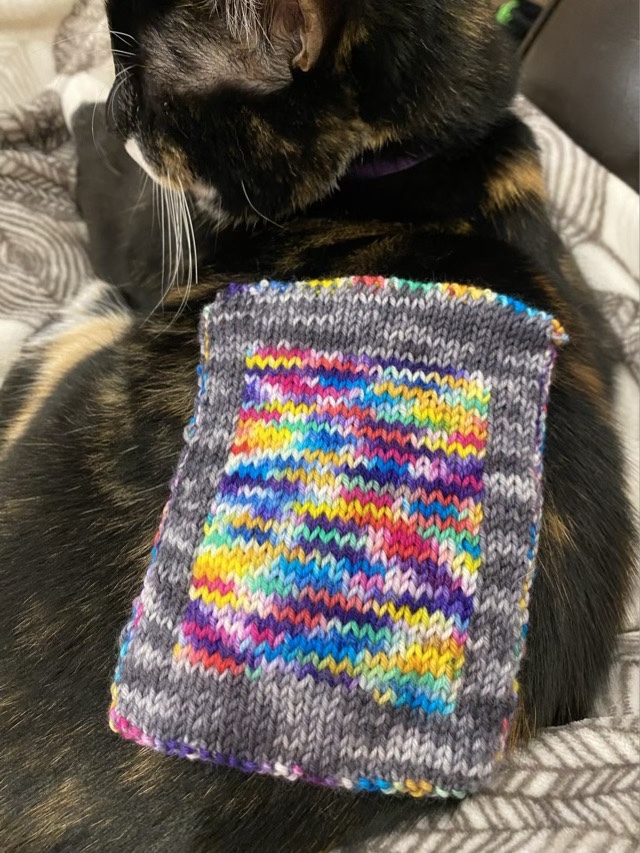
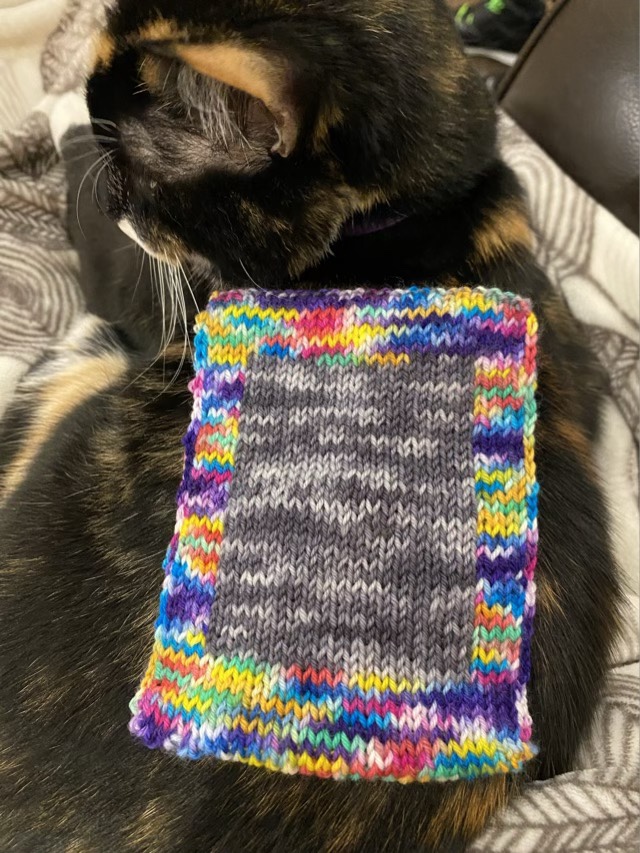
Doll blanket swatch

When I need to swatch my yarn work, I make the tiny sample of stitches the size of my youngest’s doll blankets. I get the data and she gets more throws for her doll house.

Doll blanket sized swatch (not cat sized)

I needed to practice the Kitchner stitch to finish off a double knit project, so made a swatch.

Reverse side of the double knit swatch

Making the doll blanket to practice the stitch was a good decision. I messed up the first couple passes, but by the end had the rhythm down and knew about how tight my stitches needed to be.

Kitchner bind off for double knit

Kitchner stitches are used to make a seamless graft between two pieces of knitting. It is usually done on two needles, but I found this video that shows the variations needed to work off one needle, for double knit items. Fabulous.

Ice leaves

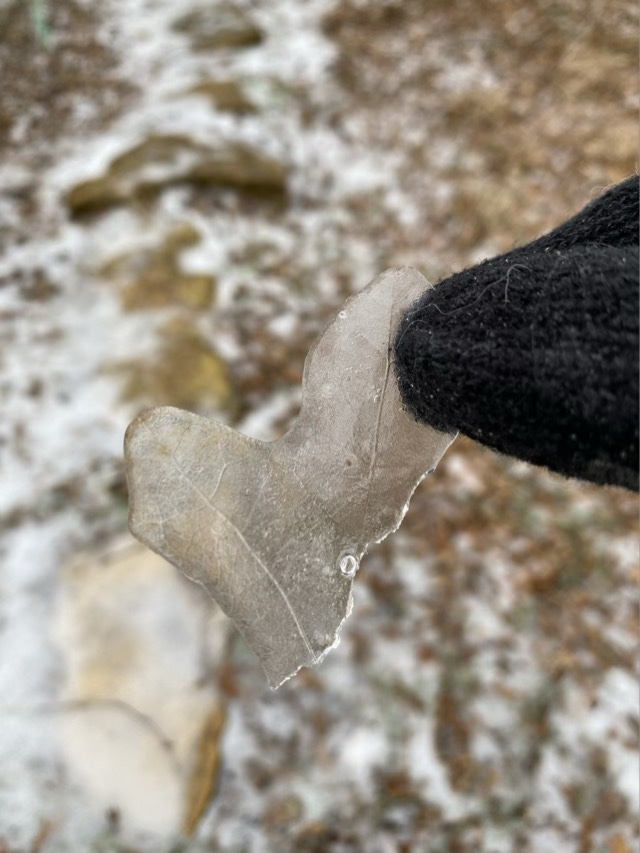
The ONLY good thing about rain that freezes when it hits the ground is the discovery of ice leaves.

Ice leaf

I was sliding my way out to the chickens when I noticed all the leaves I stepped on looked like broken glass. Hm. Yup, I could peel the layer of ice off and get a shard of crystal leaf. Here is a short video. I would have investigated the phenomenon further, but it was raining. Raining. And freezing.

Shearing Sheep

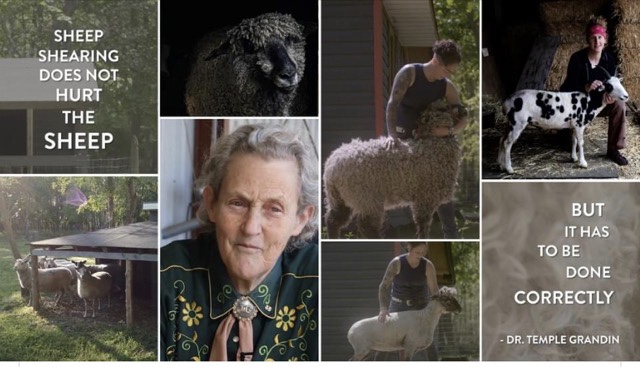
The Livestock Conservancy has released a quality 12 minute video on good sheep shearing and the importance of humane animal handling. I think it is important to understand our history and our future with the animals we’ve nurtured.

https://livestockconservancy.org/resources/how-to-shear-a-sheep-and-why/

Plus, the more people interested in working with natural materials, the more demand there will be, thus more farmers than can make a living from their animals, which means more variety available. It is a happy circle.

Taking it on the road

My rainbow scarf has been languishing next to my chair at home. The problem is that I can’t stop in the middle of a row, and with brioche knitting each row requires two passes to complete. At home I am frequently required to lay down my craft for a pet or kid urgency, and I am really uncomfortable stopping mid row on this piece. So it is time for a move. I have bravely put the pool noodle holder into a project bag and moved the project to the car. I was quite surprised not only how well the section of pool noodle fits in the bag, but that the whole assembly works well as a car-rider-line project. Now we’ll see how progress goes getting attention for an hour a day, five days a week!

Rainbow scarf project moved to a project bag, with split pool noodle holder