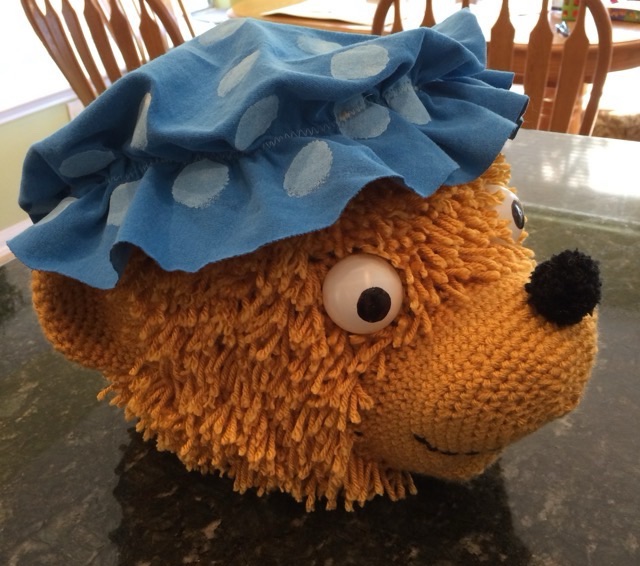
Going back to a pumpkin contest in 2016, here is my hand crafted pumpkin cover of Mama Bear of the Berenstain bears.
Photo description: crocheted bear head with latch hooked “fur”, half ping pong ball eyes, black pom pom nose, and blue mop hat sewn from an old t-shirt hand painted with polka dots
It probably really isn’t in the spirit of pumpkin carving, but at the time we lived in such a humid environment that pumpkins started rotting on day 1. The library would host an uncarved pumpkin contest (paint and glued decorations only) to avoid the rot. I rather like the crocheted cover, it is reusable.
I put American Bison wool insoles from the Buffalo Wool Company in my shoes to help give them some cushion, and I knew I would need to keep them up and away from the cat. Thor the cat loves natural wool, and he loves my shoes, so I was taking a large gamble combining the two. For a couple weeks I was very good about keeping the shoes up on the shoe rack, then I was reminded why when I set my shoes on my chair before my morning walk and came back to a suspiciously happy cat cuddled in next to the shoes.
Photo description: black Vionic walking shoes with American Bison wool insoles sitting in a leather arm chair with a gray tabby, eyes closed, cuddled next to the shoes
The insoles remain unmolested, but I must be vigilant.
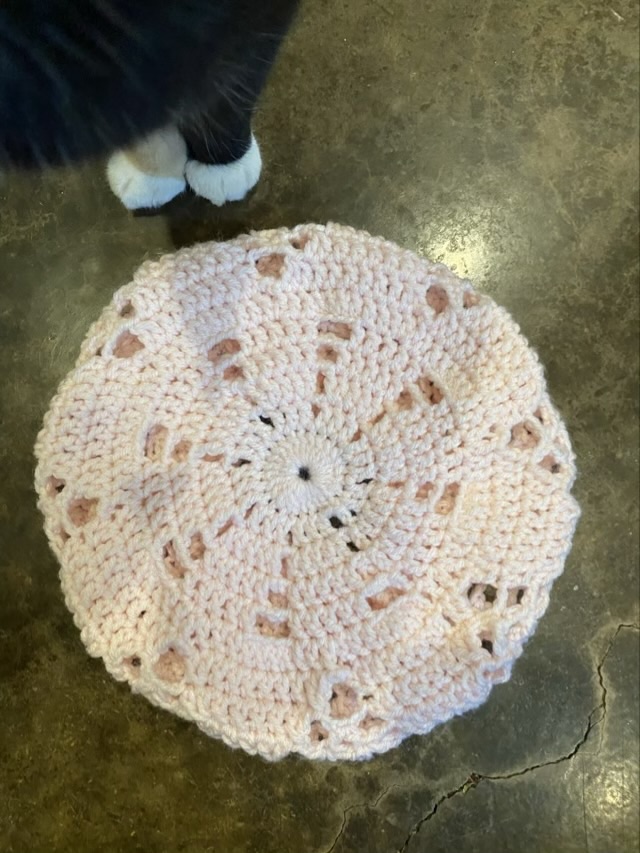
So doilies are round and flat, and berets start out round and flat, so if I find a pretty doily pattern that might work for a beret, right? Um, depends. I found a pattern with a flower center that was quite attractive as a doily. When translated to larger yarn, I had the necessary width before the center flower was done, resulting in a beret with symmetrical holes, rather than a lovely lace.
Photo description: light pink beret top with deliberate holes, sort of in a star pattern, cat feets for the photo bombPhoto description: brim side of the beret with single crochet ribbing
Back to the drawing board. I’m starting to see the end of the bag of gifted acrylic yarn though!
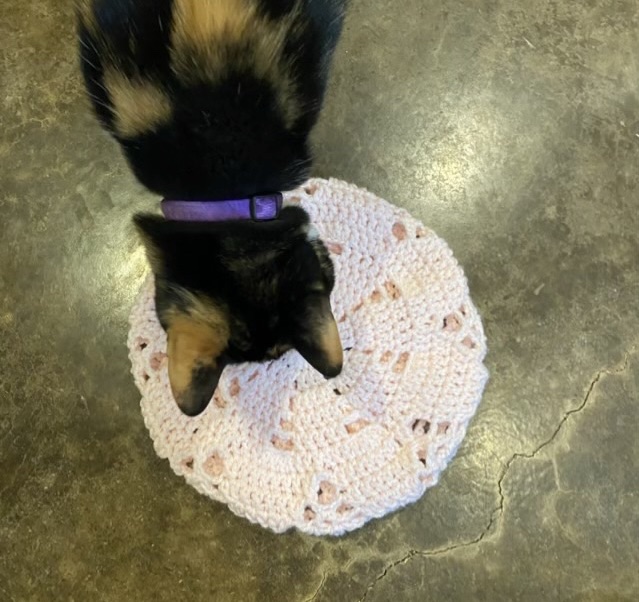
Photo description: cat photo bomb of the light pink beret, she went to sniff the hat when I put it down. Must have been close to feeding time.
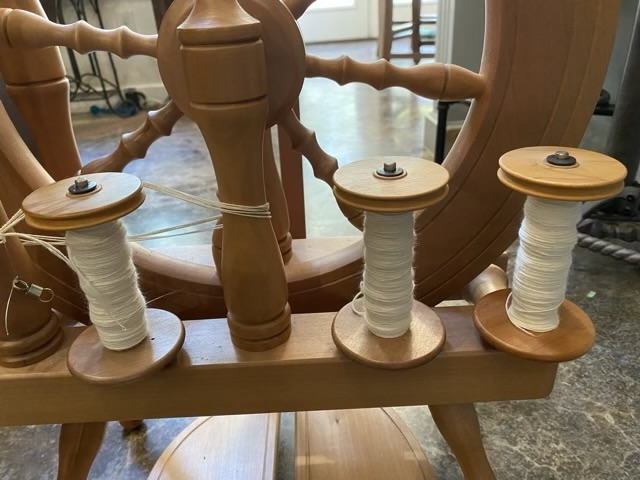
I finished spinning Egyptian cotton single spun yarn onto three bobbins on an Ashford Traveller spinning wheel (Yes! I spun cotton on a wheel using a high speed whorl.) I found the largest diameter on the high speed whorl, the one that matches the bobbin end diameter, worked best for me. The smaller diameter gears went too fast and I over spun. I also had the wheel set up with Scottish tension with a very light take up on the bobbin. I prefer to dictate the amount of spin in my yarn rather than have it controlled by the wheel.
Photo description: three wood bobbins with cotton singles on the lazy Kate built in to the Ashford Traveller
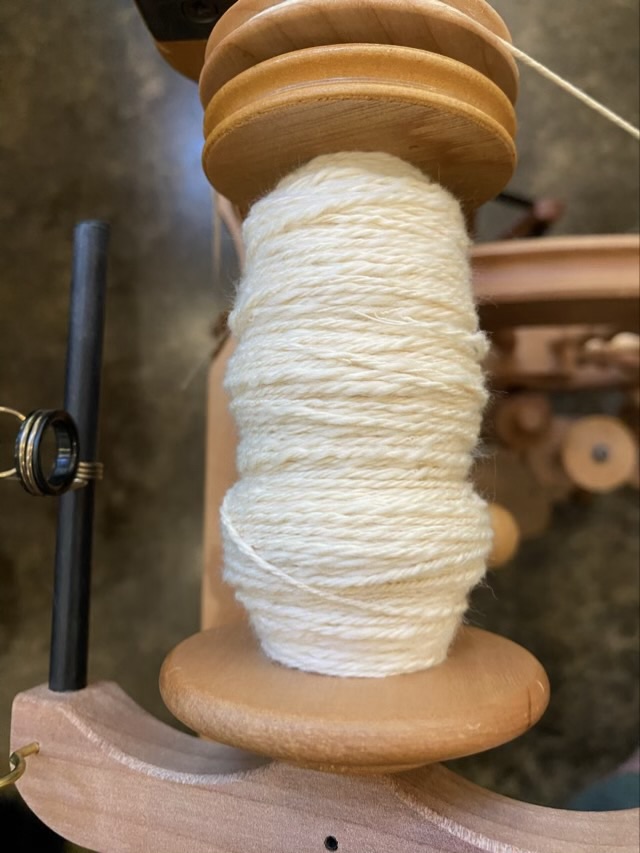
The next task was to ply the cotton. I was nervous about this because the singles had a high degree of twist, and liked to kink up. If a strand broke I would also be dealing with the rapid unwinding of the single, which results in a whole sale unbinding of a large section of yarn (ask me how I know). I did let the singles sit on the bobbin for a few days to set the twist a little. Remarkably, I was able to ply the yarn from the three bobbins with no breakage and only a few missed kinked knots.
Photo description: three ply Egyptian cotton yarn on a wood bobbin of an Ashford Traveller spinning wheel
My spinning definitely looks like homespun, but as I practiced, my technique improved and there were some sections of smooth and even spun yarn.