I have been designing this graphic in my head for about two years, and have finally made it happen! It is available on Redbubble and TeePublic (which are sister sites, but carry different styles).


I have been designing this graphic in my head for about two years, and have finally made it happen! It is available on Redbubble and TeePublic (which are sister sites, but carry different styles).
In September 2011 I was experimenting with ways to make jewelry from buttons without destroying the button. One of Grandma’s pet peeves was when buttons had been glued or cut to “upcycle” them (she was a button collector).
I came up with a wire wrap that utilized a four hole button, making it into a link component.
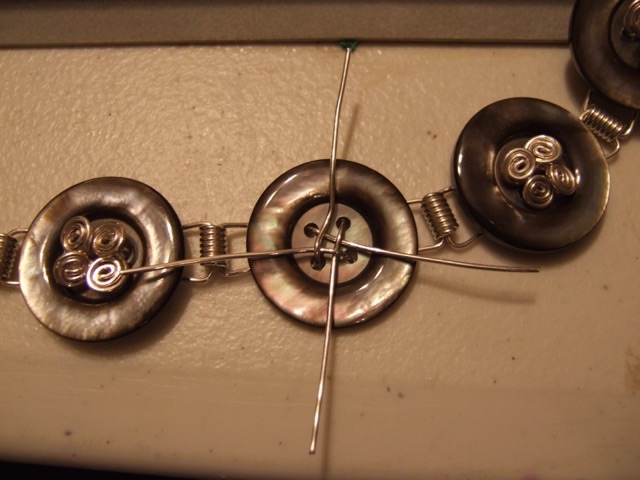
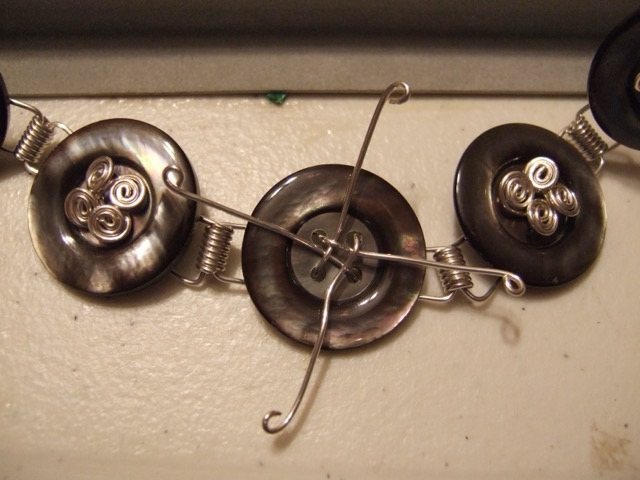
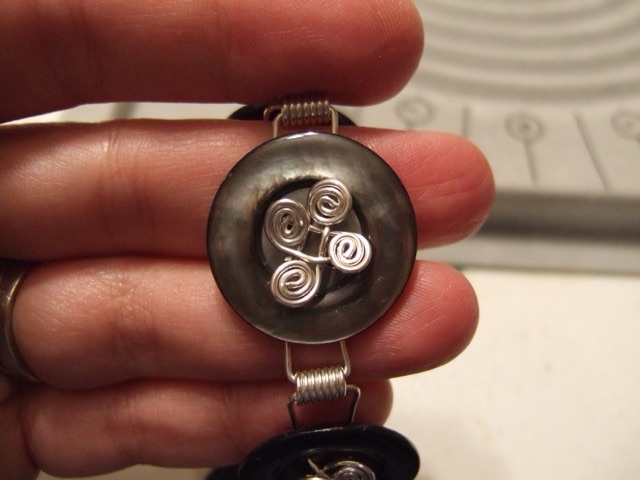

I actually took production photos for this necklace, for which I am now very thankful.

I tried cutting this shape from purple heart, but it was too brittle and crumbled coming out of the machine. The plywood is a little better; it still has some flex but still breaks easily with the thinness of the design. As I experiment, I hope to learn solid design parameters as applied to laser cuts. Let the experiments continue!
I hope y’all have a year full of creativity and purpose! Thank you for taking the time to read my blog. I hope it brings some inspiration and amusement.
My mother-in-law asked me to take a look at a broken bracelet. It is a lovely piece with metal beads and a metal focal, that was strung with elastic. The elastic had been knotted and fitted with knot covers that then connected to jump rings, and those knot covers were where the elastic failed. Knot covers are risky jewelry components. They work well for silk strung lightweight beads with a large solid knot that will hold inside the knot cover. Elastic is hard to knot securely, especially at the end. Metal beads are also hard on both elastic and silk, and tend to fray the stringing material faster than smooth beads.
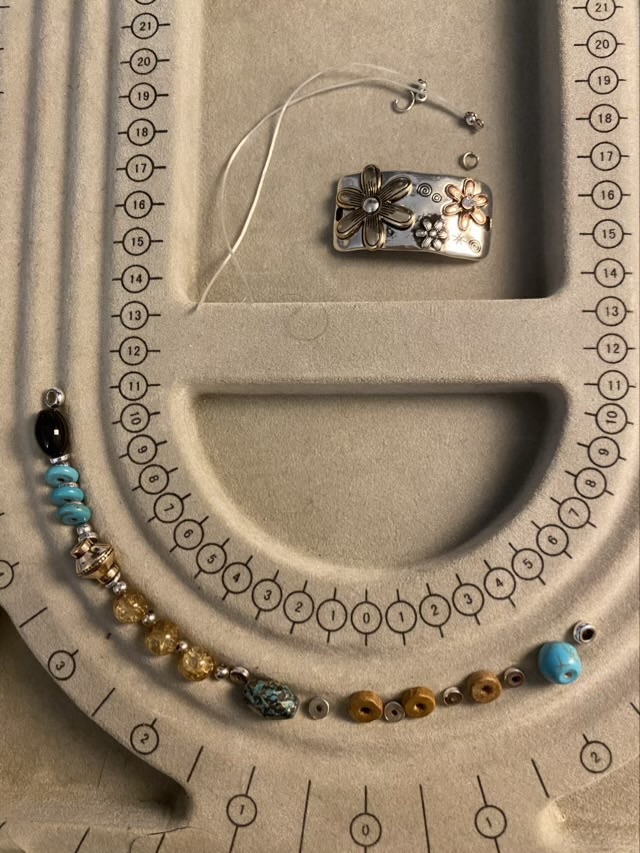
Rather than risk another elastic mishap, I switched the bracelet to a clasp style. The focal actually works well to receive a lobster style clasp. I used 49 strand beading wire with double crimp beads for durability and added some coordinating metal beads to make enough length that the bracelet is loose when clasped.


I can’t guarantee the bracelet won’t break again. It is one of the reasons I don’t make and sell jewelry anymore: even well made jewelry wears out and is prone to breakage. I don’t mind this kind of fixing, though.
The other reasons I don’t make jewelry: over a third of booths at every craft show I’ve been to sell jewelry, and I don’t wear necklaces and rarely bracelets so I’m not even advertising my own work.
I crocheted my hand spun camel yarn into a beanie style cap with ribbed band. I used a 2.25mm crochet hook and a double crochet for the fingering weight yarn, but found switching to a 3.25mm hook for the single crochet ribbing of the band made it feel more flexible and soft.
I thought I had plenty of yarn for a hat, but the yarn chicken squawked a challenge as I made the band. After I sewed the band together, I had only a few inches of yarn left. So there, yarn chicken.

Camel is a soft fiber, but my preparation still had some guard hairs and vegetable matter, so to make sure the inside was scratch free, I brushed it with a boars bristle brush. The brushing brought the soft fibers to the surface and gave it a lovely surface feel.
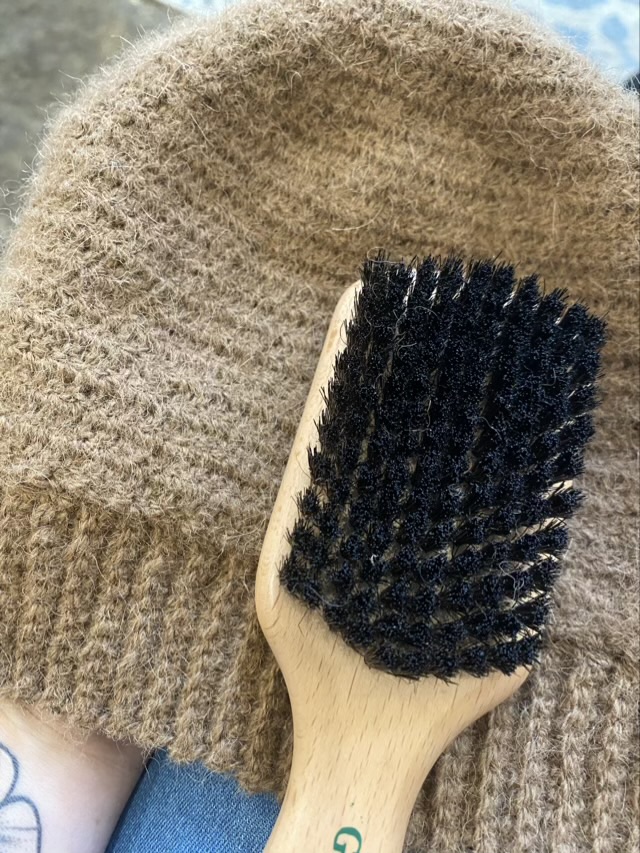

I made this for my father in law, and I did make it a larger size. My Dad has reported that my wool hats shrink with wear (a natural fulling effect, I believe), so I didn’t want it to get too small. I may have gone too large though.

