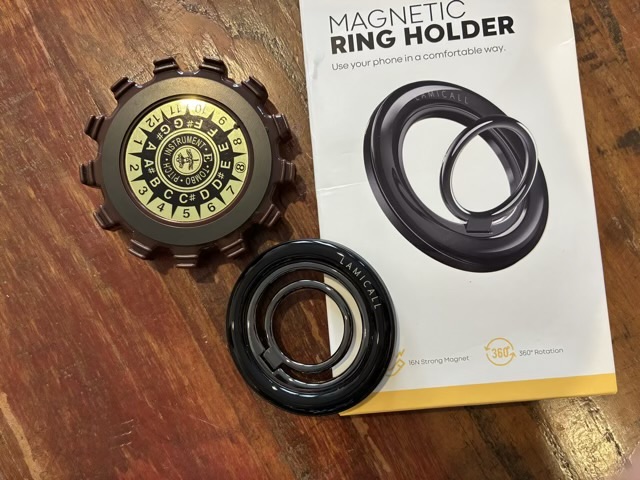
In Barbershop singing, the initial pitch (note) is played on a small instrument called a pitch pipe. When performing, if the pitch piper doesn’t have pockets in their costume, the quandary of where to put the pipe after playing the pitch is a problem. Some pitch pipes are made of metal, so a concealed magnet under the clothing can hold onto the instrument, usually placed near the small of the back. Other pitch pipes have a plastic case, which, of course, is not magnetic. I discovered that a magnetic phone ring made for magsafe phones, is the perfect size for the Tombo pitch pipe as well.
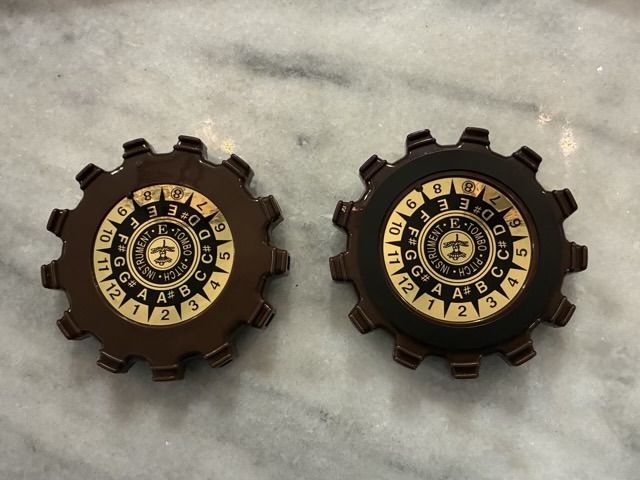
Photo description: magnetic ring holder intended for a magsafe phones, but with the included metal sticker placed on the face of a Tombo pitch pipePhoto description: two Tombo E pitch pipes, the one on the left is original, the one on the right has a magnetic adhesive ring attached
The adhesive ring included in the package fits the face of the pipe perfectly. It still allows the label to be seen and doesn’t interfere with the blow holes.
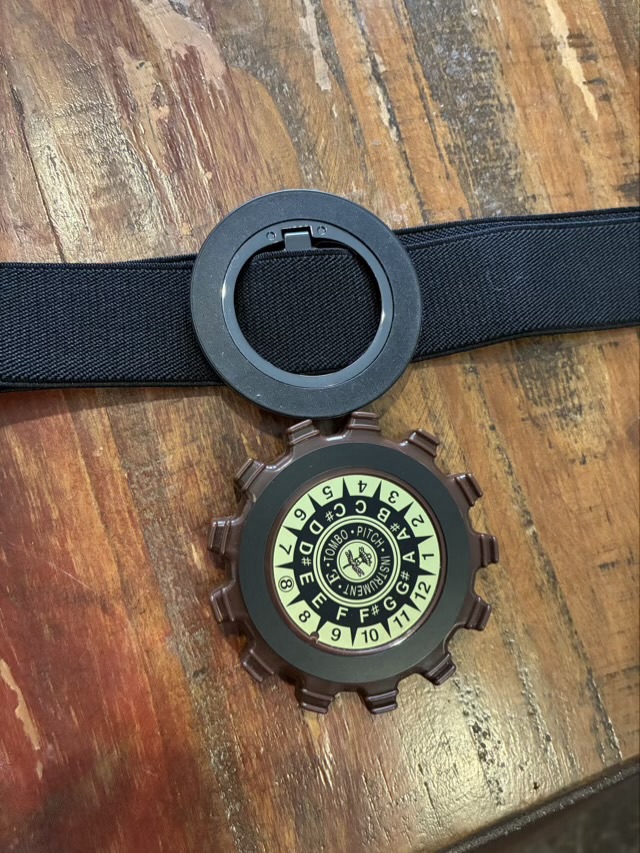
To use, I am going to try attaching the main magnet to a belt that I will wear under my costume.
Photo description: magnetic ring holder clipped onto an elastic no-show belt
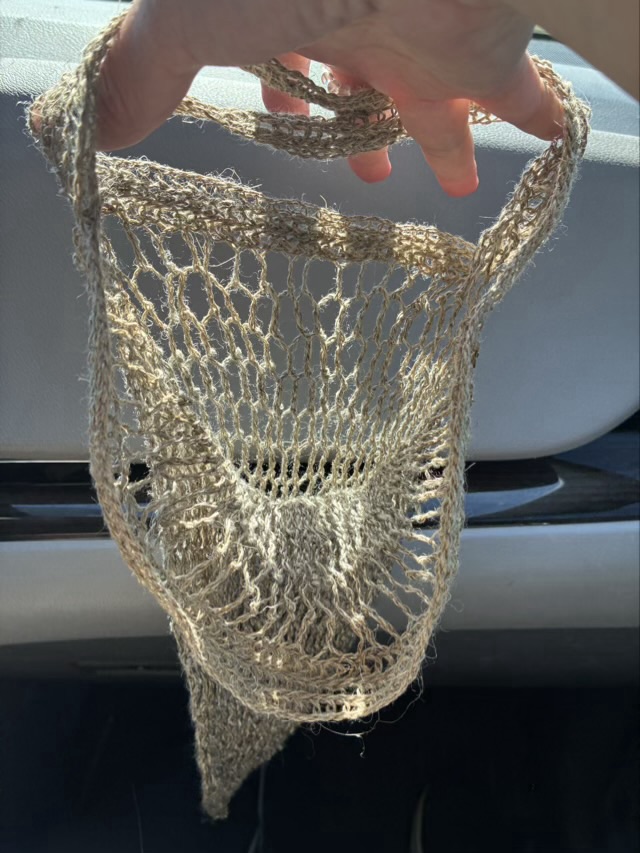
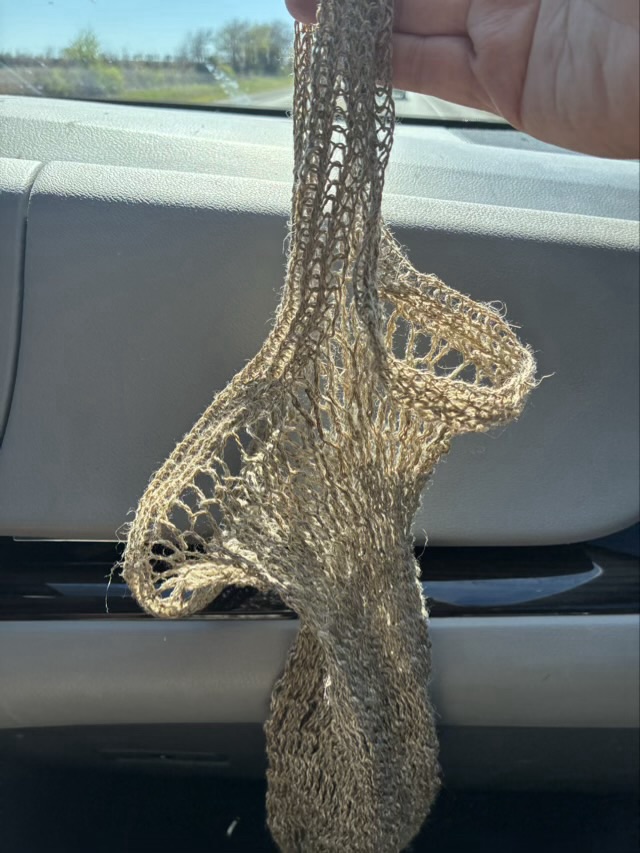
I finished nålbinding handles onto my loop-and-twist linen string bag.
Photo description: loop-and-twist bag made from twined flax and finished with nålbound handles
I thought I followed the pull strings that I installed originally, which split the top loops evenly. Hm. No. Not sure what happened, but the second handle had many more loops than the first.
Photo description: side view of the same bag showing the uneven split
The handles didn’t really work out like what was in my head either. The two handles work better as one handle, with access to contents from the sides. I actually think this would be lovely to hold my onions and garlic in the pantry. So while it didn’t fit my original vision, it still will have a use.
Note to my future self: a loose row of nålbinding as a top band, then two arced handles on the sides might work, like a tote bag.
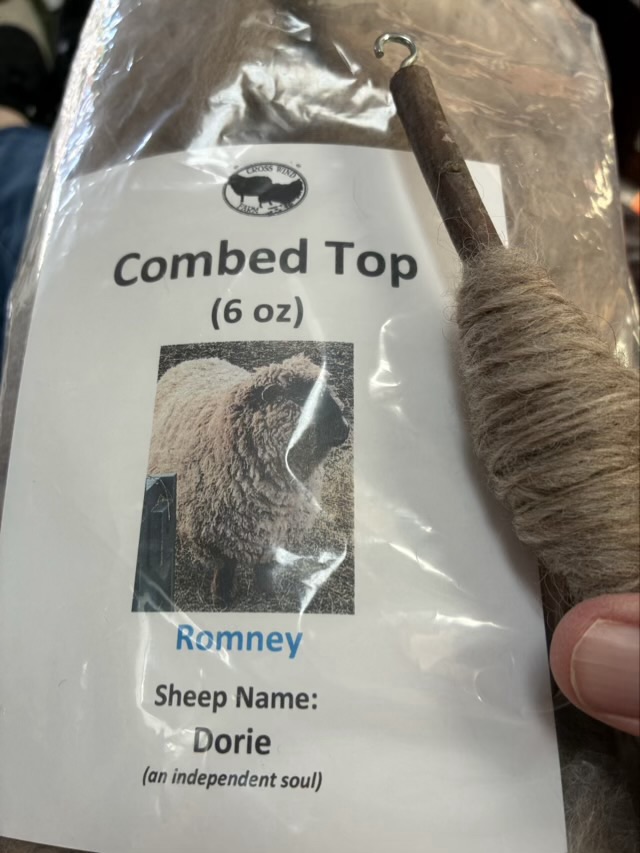
When I forgot to bring my spindle on my trip, I also left behind my fiber, which gave me an excuse to visit a local weaving shop and get more fiber. I was pleasantly surprised that the Woven Art Yarn Shop in East Lansing had some natural colored roving options, and picked a bag of Romney combed top from Dorie the sheep, who is apparently “an independent soul”, according to the label.
Photo description: Bag of Romney combed top fiber from Cross Wind Farms with a single spun on a stick with the bark still on and a cup hook screwed to the top
I love Romney wool, it spins up easily and is soft. Since I spun with a finger twirled stick, I made a thicker single because it needs less twist to hold together.
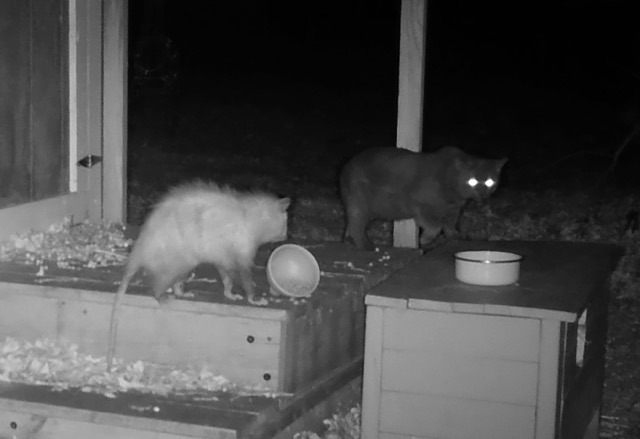
It has been while since I checked trail cams. Mostly the SD cards were full of cats, raccoons, and opossums, but there was a series of photos where an opossum was investigating the cat food when a cat came along.
Photo description: night vision view of a back step off the coop with a young opossum, back to the camera, and a black short haired cat, facing the camera
The result was a no-contest. The cat went straight to the bowl of the food on the cat box, away from the opossum, and when the cat settled in to eat and not attack, the opossum left. I’m pretty sure the cat is the one we call Greebo, who has scars from fighting and his fur is thinned with some kind of mange. He actually looks healthier since he joined the neighborhood colony. The last couple years he and Fang show up in the Fall and then head out again in Spring or Summer.
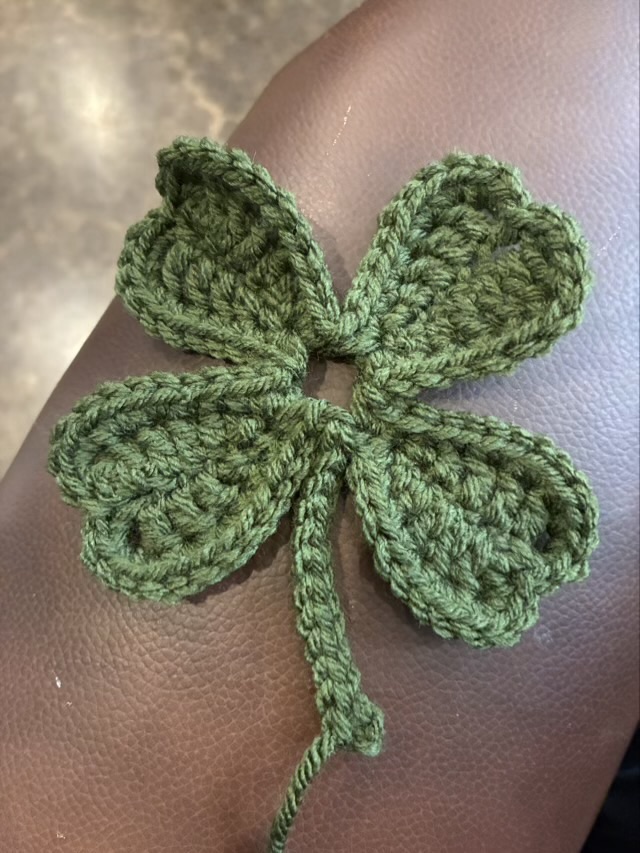
Shame on me, really, for not doing my due diligence on my purchase. I wanted to crochet a shamrock, and went looking for patterns. I found one that looked cute and was “on sale” with high ratings and over a thousand purchases for the shop in Etsy. I bought it because I really do want to support pattern makers. The pictures were beautiful, but not helpful, and the instructions were skeletal and incomplete. The layout looked like it was copied and pasted from the free version of ChatGPT version 1. I did attempt to make the shamrock, and found that I had to lean heavily on my own crochet knowledge to puzzle out what to do on a pattern listed as “beginner friendly.” My shamrock had a hole in the middle.
Photo description: crocheted shamrock fail
So this post is going to be about what to look for when purchasing patterns.
Check how long the shop has been in business (on Etsy this information is on the shop page). Under a year is suspect.
Check the shop name. Does it match the logo or has there been numbers tacked on? The logo might look professional and familiar, but if the shop name is different, it is someone pretending to be a different shop.
Read the 1 star reviews, even if you have to scroll for while.
You get what you pay for. A $2 pattern is not going to be a complete tutorial on how to crochet. (Although in my professional opinion if it says beginner, it should, regardless of price.)
Reach out to the shop owner. I did get a prompt response, with canned answers. It was obvious from the first interaction that the answers were not from someone well versed in crochet or helping or teaching.
My $2 purchase cost me more time and hassle than it was worth. What really makes me boil is that there are beginner crafters out there looking for patterns and this kind of garbage causes doubt in their own ability, rather than looking to the pattern as the fault.
And all those 5 star reviews? I strongly suspect that they are all the same person (or group of people?) posting the same fake or pirated photos under different accounts. A complicated ruse, but a profitable one, unfortunately.

 Critters and Craft