Phase spindle (my design)

I have decided to name my 3D printed spindle design a “Phase Spindle”. It takes on many aspects of traditional spindle and tool design and combines them to increase the functionality. The barrel shape of this whorl-less spindle comes from the Scottish dealgan, and is used to create a center pull ball as you spin. Where the dealgan has a flat base, this has a point so it can be used as a supported spindle as well as a drop spindle. The head of the spindle has grooves to bring the yarn closer to the center of the spin and stabilize the spindle. There are two grooves so they work spinning clockwise or counterclockwise. The center of the spindle is hollow to reduce weight. As a bonus, the cavity is large enough to add beads if the user wishes to add weight to the spindle. The spindle is made of Tough Resin, which resists breakage when dropped, better than wood.

This project has been on the shelf for a while because I needed to reevaluate the head design. The printed spindle had a convex head, which didn’t give enough finger tip contact for flicking the spindle into action. I sanded each head into a straight to slightly convex curve to make spinning it easier.
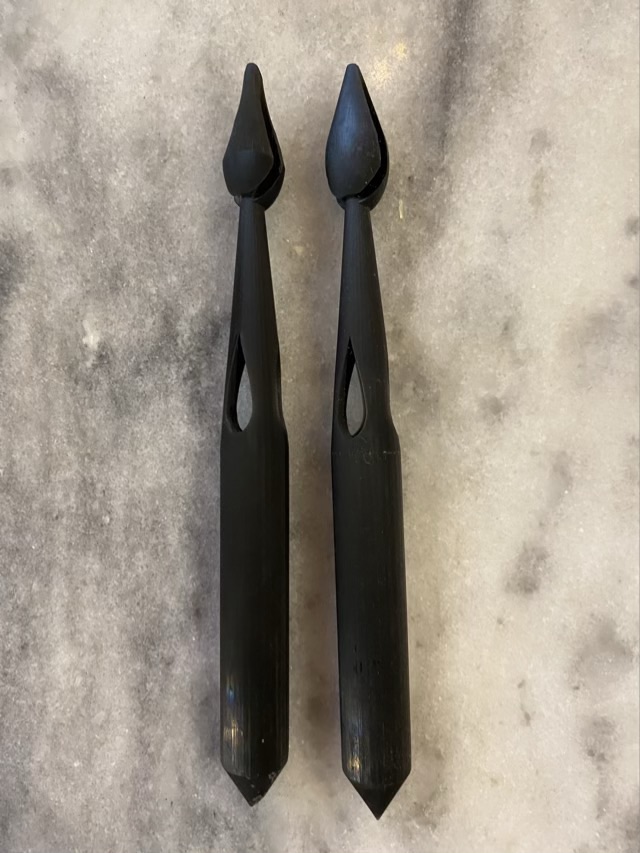
Photo description: two black Phase Spindles, the one on the left has the head re-contoured with a concave tip, the one on the right shows the convex curve.

One side of the spindle has the lovely chatoyancy created by the precise parallel lines 3D printers make, but the other side had artifacts from the support structures. I sanded these smooth and used a stencil that I designed and cut out of removable vinyl to paint on a moon graphic.

Photo description: removable vinyl stencil applied to the barrel of a small Phase Spindle, my favorite weeding tool to the right.

To seal in the paint and protect it, I finished each spindle with a double coat of micro crystalline wax. The wax helps enhance the color of the resin as well.
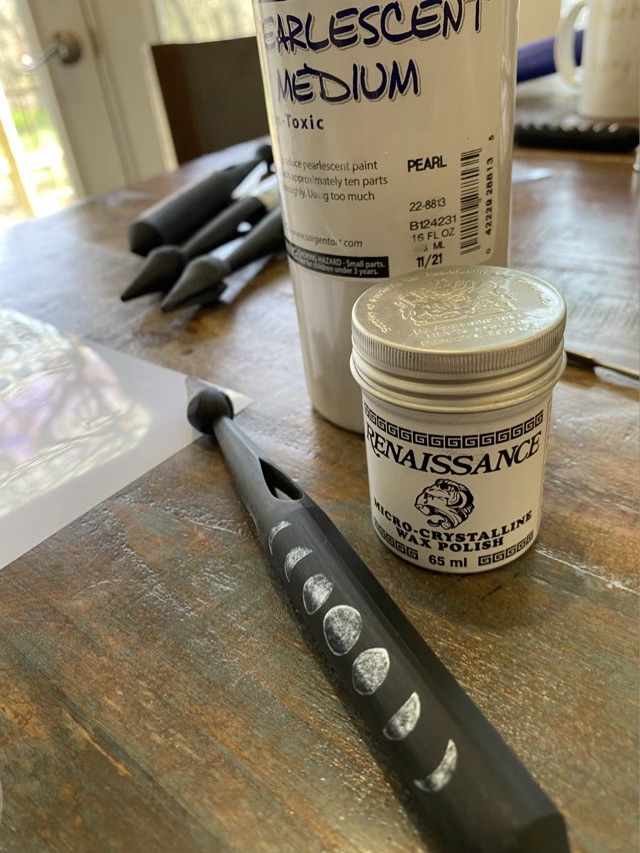
Photo description: small Phase Spindle with moon graphic in iridescent silver and sealed with microcrystalline wax. Bottles of pearlescent paint and wax in the background.

I quite like the way the moon graphic came out. As a bonus, I also have moon phase stickers weeded from the stencil.
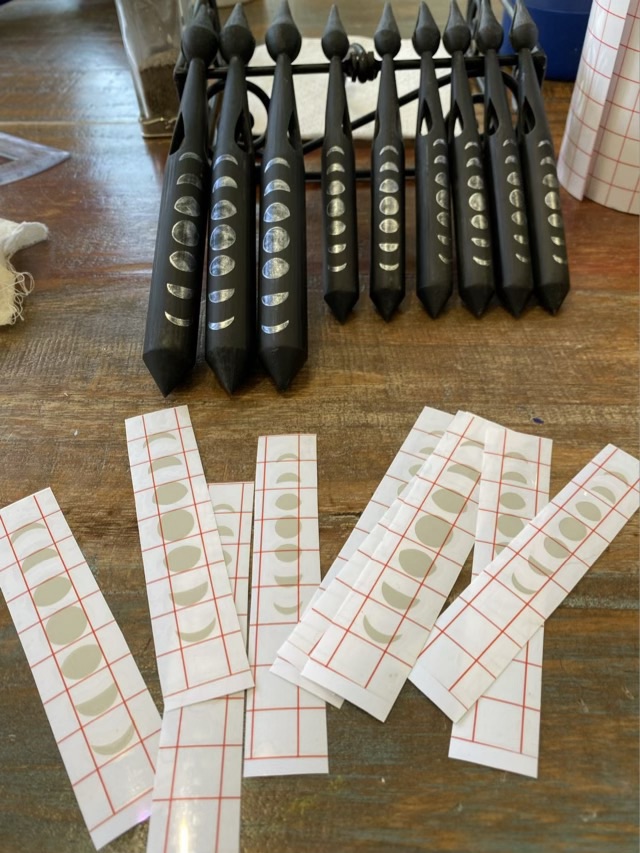
Photo description: three large Phase Spindles and six small Phase spindles with moon graphics applied. Bonus moon phase stickers shown in the foreground.

Next task: packaging.

Antler nål

I have made my first nål for nålbinding out of antler bone! I have made several out of wood, and was hesitant about bone, but it turns out it is easy to work. I do wear a dust mask at all times because I don’t want that bone dust in my lungs. I like how well it buffs to a shine without applying a finish coat.

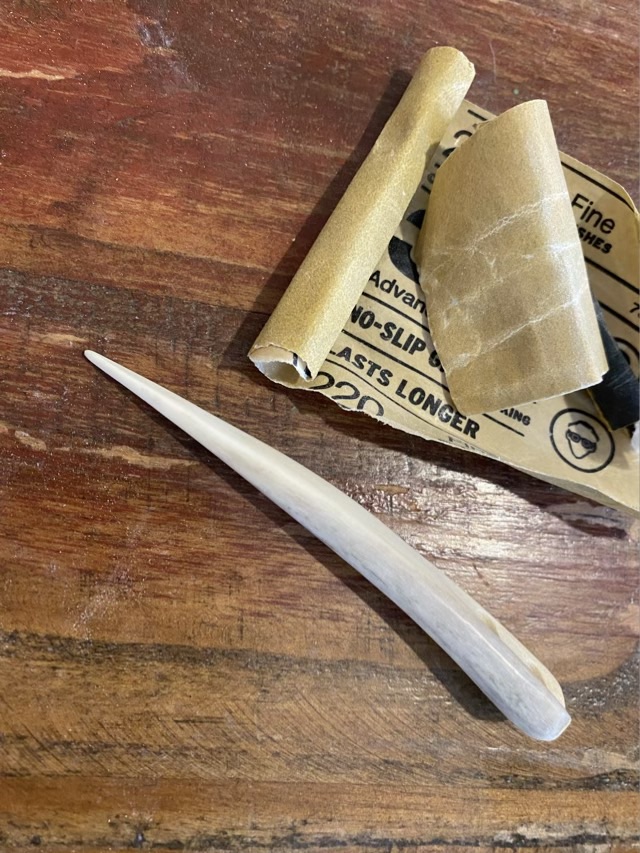
Photo description: thick bone needle with two holes on a table with scraps of sandpaper.
Photo description: side view of the same nål, showing the natural curve from the antler tip.

This nål came out a little thicker than I care for, so I’m going to experiment with some other methods of construction. I just sanded this one down to shape; for the next one I’ll try cutting it lengthwise then sanding down, and I will try a different curve.

Throwback Thursday: wood cup

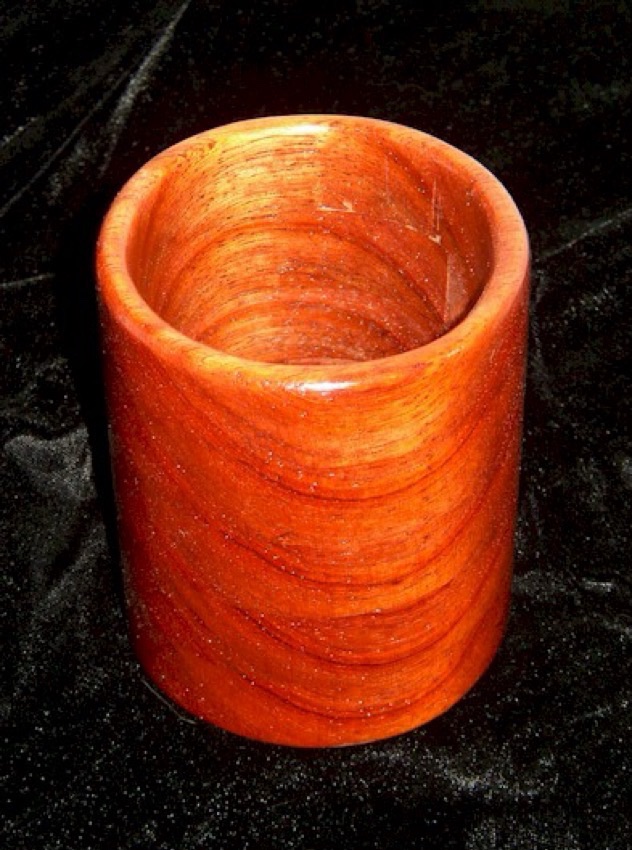
Here is a throwback from 2003 of a wooden cup I made by stacking rings of cut wood. I didn’t have a lathe, but did have a scroll saw, so made a solid circle for the base, and matching rings for the sides. I glued the stack together and clamped it, then hand sanded it before sealing the wood (I was very into urethane finish at the time, so that is probably what I used).

Photo description: Wood cup made in 2003 on a black velvet background.

I was also fond of photographing items on black velvet, which makes me cringe a bit now. I do like the way the wood growth rings line up to make a wave. It was intended as a pencil holder, which I believe it does admirably.

Hard to resist

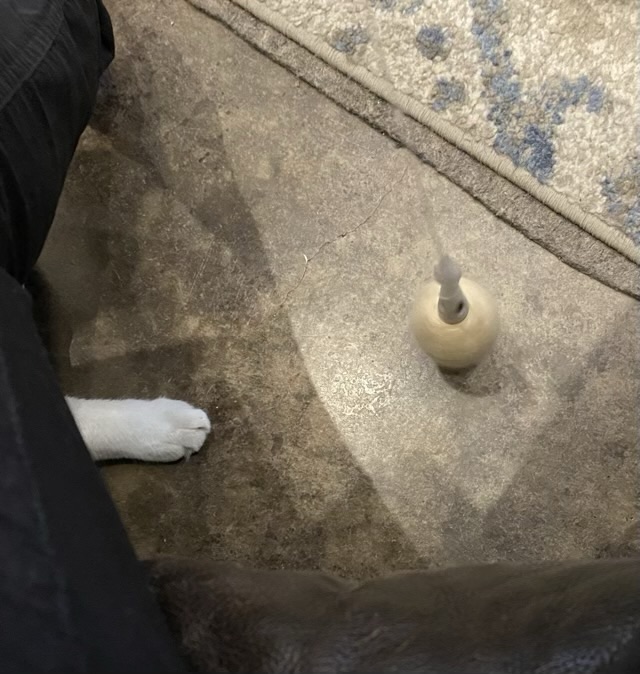
Photo description: spindle spinning on the floor with the line of yarn going up, white cat paw reaching toward the spindle.

Thor the cat is really fascinated with spinning yarn. He is a good boy in that I tell him it isn’t his and he backs off, but he does try to get as close as he can. He is particularly tempted when I am spinning a drop spindle while seated.

Blocking magic

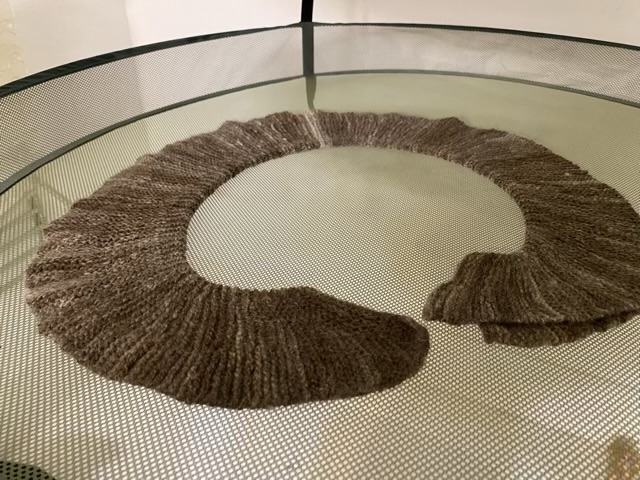
Blocking a knit item really can work wonders. My Helix scarf increased in length about a third, making it a nice size. I’m glad I didn’t add on.

Photo description: Helix scarf knitted from hand spun blended wool and silk yarn, then soaked with water and laid out to dry in a semicircle shape
Photo description: nearly dry Helix scarf hanging from the drying rack showing off the lovely undulations created by short rows.

This could be my favorite piece of spinning and knitting that I’ve done. I started spinning the yarn about a year ago, and knitting it took me about a month. That being said, this was not my only project during that time. I call myself a serial crafter, but really I should consider the title parallel crafter. A parallel serial crafter. A craft dispatcher. Hm. This train derailed, but I’m glad the scarf made it to the station.