I made this book stand in December of 2004 and graffitied it with pen, paint, and pyrography as an homage to Terry Prachett’s Disc World book series, specifically the wizard’s university library.
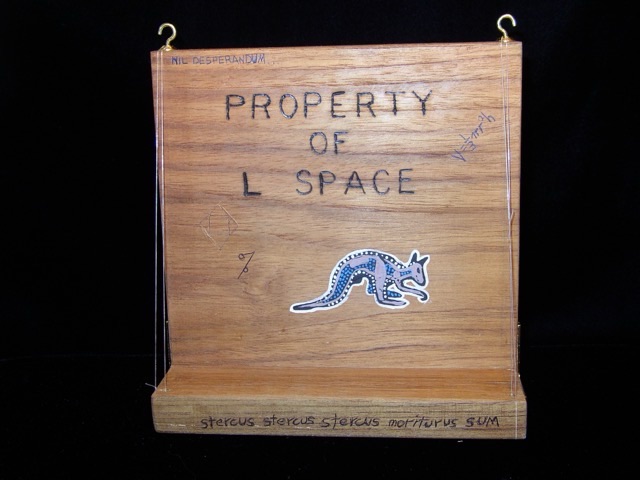
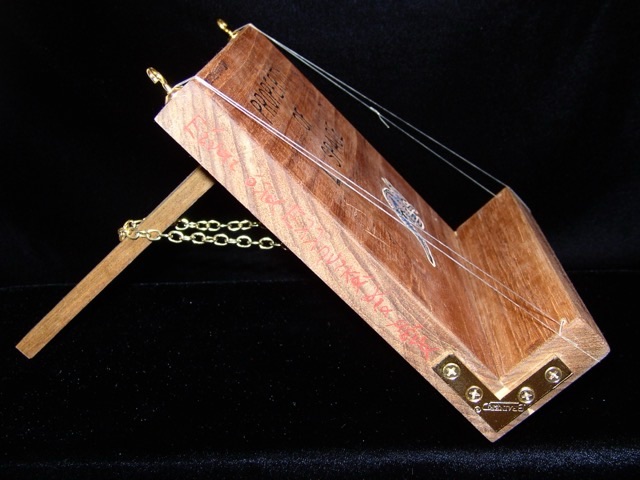
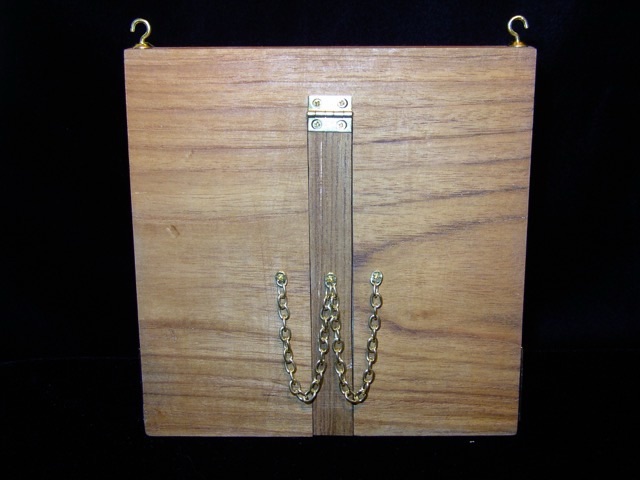
I finished the wood with a clear coat of urethane.

I made this book stand in December of 2004 and graffitied it with pen, paint, and pyrography as an homage to Terry Prachett’s Disc World book series, specifically the wizard’s university library.
I finished the wood with a clear coat of urethane.
My chorus is using kazoos as a training device to learn to increase resonance. To keep the kazoo close, I made a lanyard with sliding knots and a Lucet cord.

It took me a couple hours to braid and knot the cord, and it is rather fiddly to work. When I stepped away, my brain came up with a much simpler way. Here is a video on how to do a simple, removable wrap on a kazoo using a string necklace (large loop of string).
Sometimes it is good to take a step back, or go do something else for a while, or go for a walk, to let ideas coalesce.
Today we are going back to December of 2004 and a leather book weight I made and decorated with painted bees. It seemed appropriate to share this in nod to my bee visitor this week.
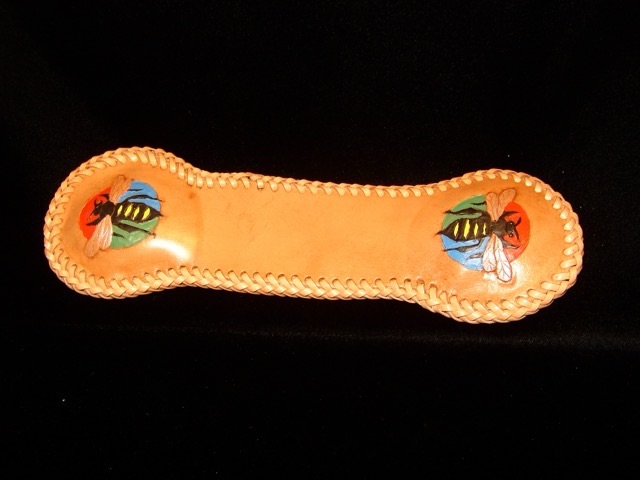
The ends of the book weight are filled with small bags of sand to give it enough heft to hold a book open. The back side is suede to be gentle on the pages and have a bit of grip. I’m still quite pleased with the stitches around the outside, I love a good decorative braid stitch. I do have to admit that I have to look up how to make the braid every time.
A couple weekends ago I spent about five hours doing spinning demonstrations at a local Earth Day market. I was spinning Shetland wool on a spindle that I have demonstrated on before, so only about half the yarn cop was spun that day, but it was enough to fill the spindle. I found that hanging the spindle from my canopy made it easier to off load the yarn. So at home I tried the same thing, but used fishing swivels instead of a loop of yarn, which works much better. Did I take pictures of the full spindle with single spun yarn? Or the nice nostepinne style center pull ball of yarn? No, much to my later self’s dismay. I did the photo record of the two ply yarn, and the resulting skein after blocking.
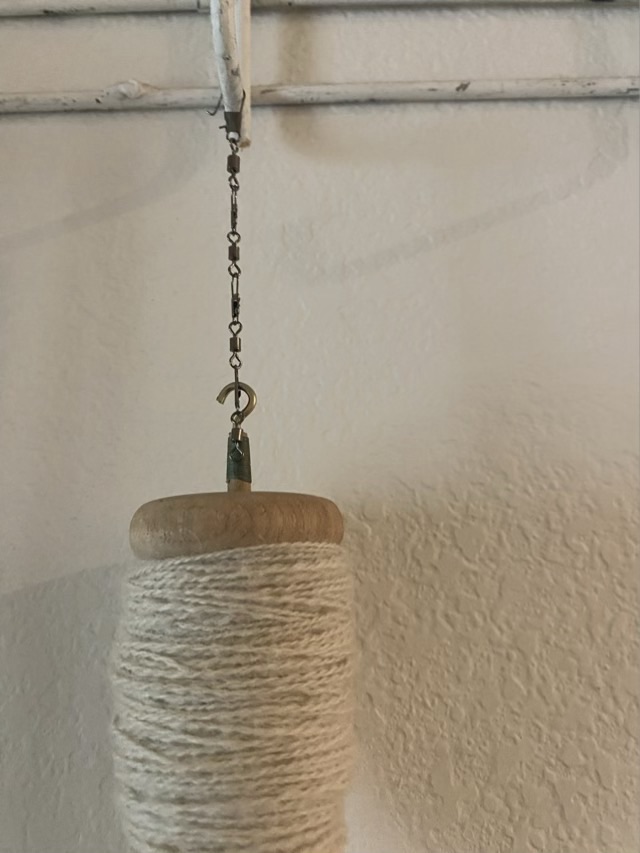
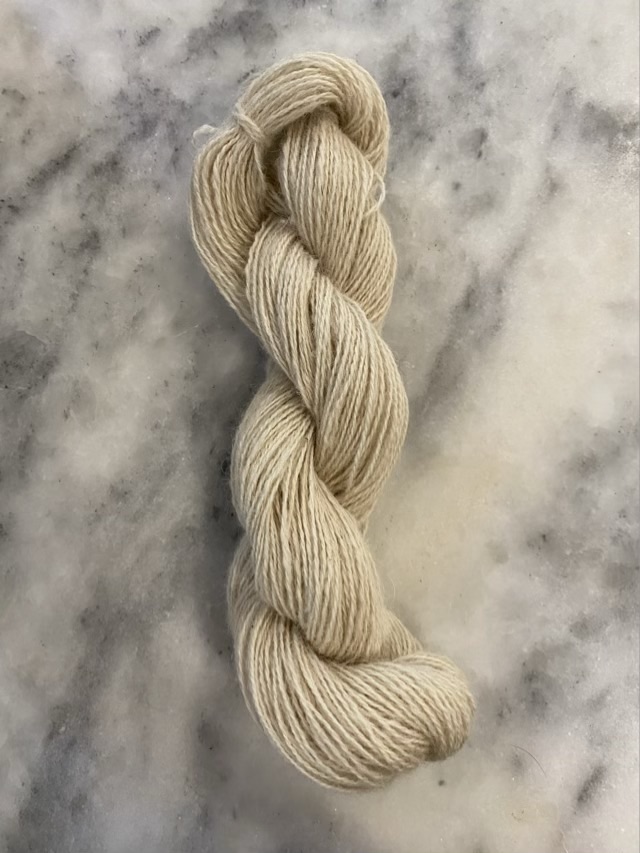
I still have Shetland wool ready to spin, but a factor in off loading and plying this yarn now is that I don’t have a Shetland wool page in my fiber book. Oops. I demonstrating spinning it, but don’t have examples of the finished product. I’ll use this finished portion of yarn to make my swatches and complete a page in my book, then spin up the rest later.
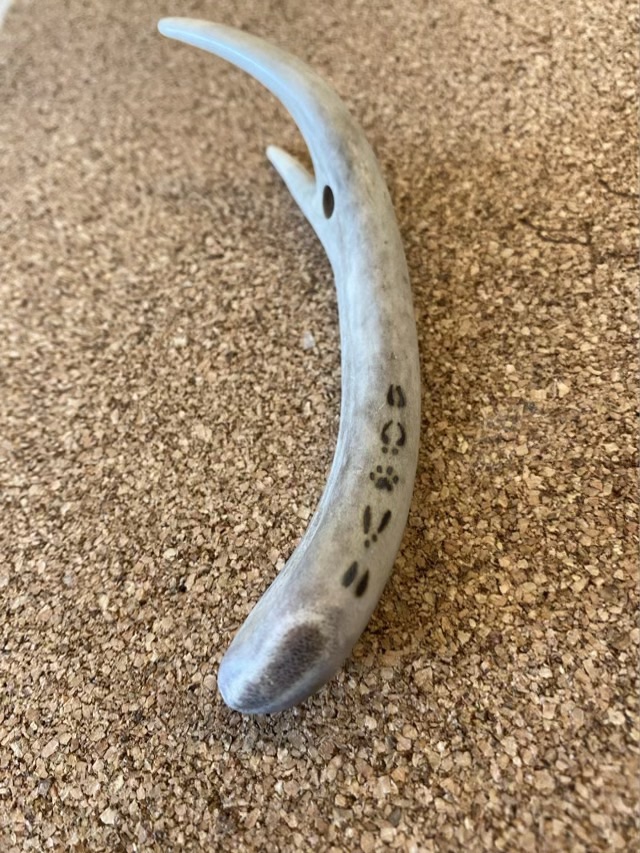
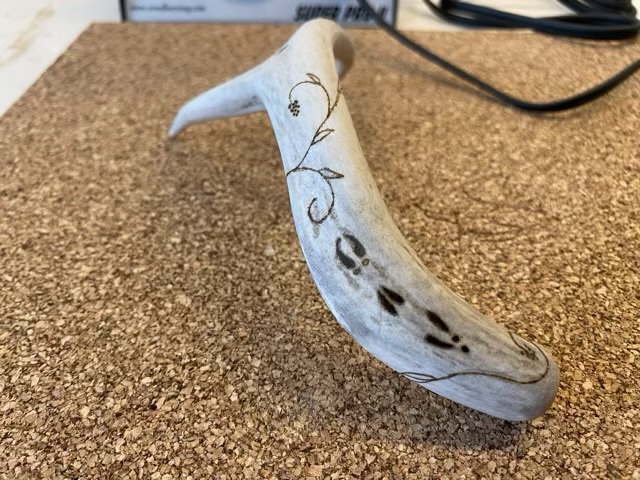
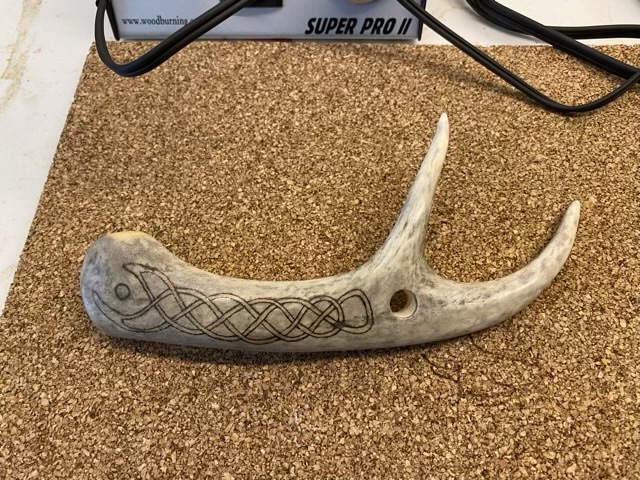
The pyrography pen is out, all things must be adorned.

 Critters and Craft