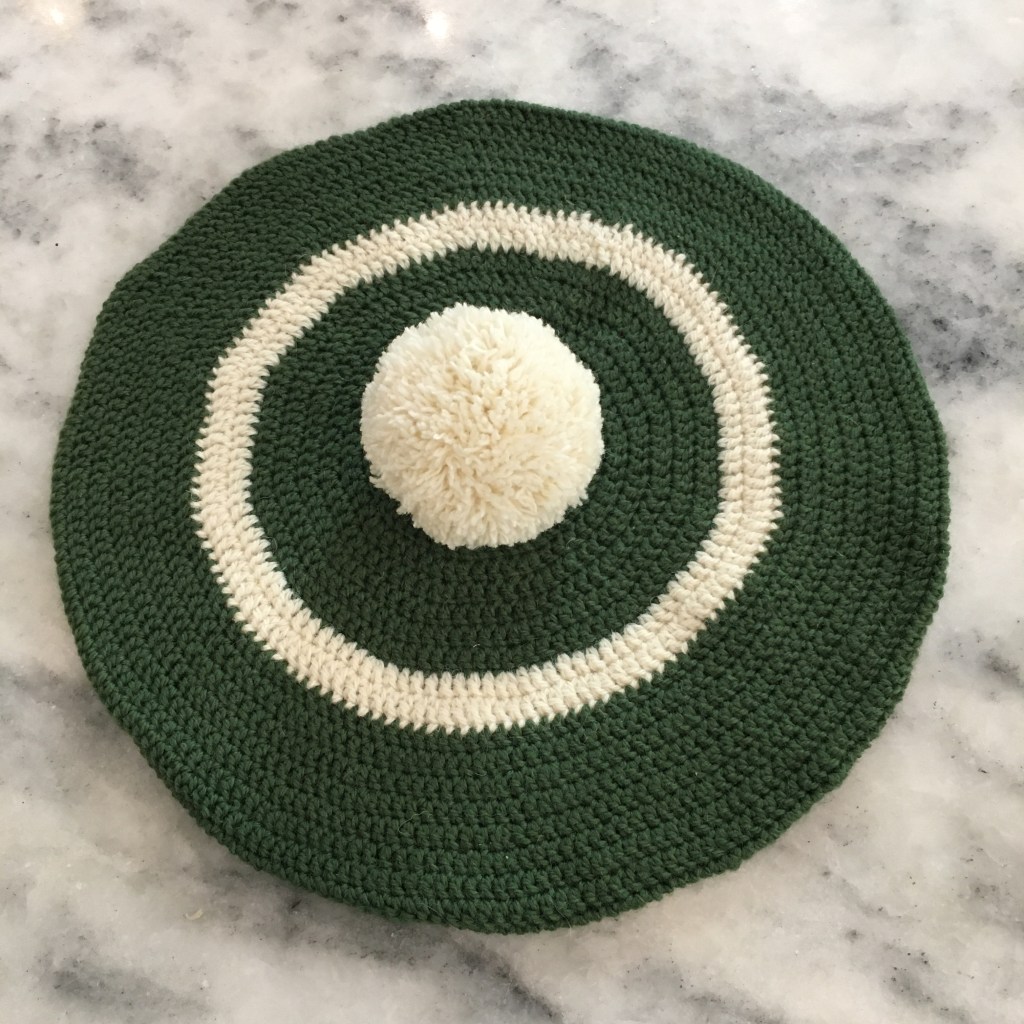
My eldest likes to play Pokémon and picked for her avatar a green and white beret. As I was watching her play, I realized that I could make a hat like that! She didn’t make a negative face, so I sat down with my fingering wool and worked on recreating the hat (but without the cross bar, as she requested).
Crocheted beret with pom pom (100% wool)Pokémon trainer hatHat flat
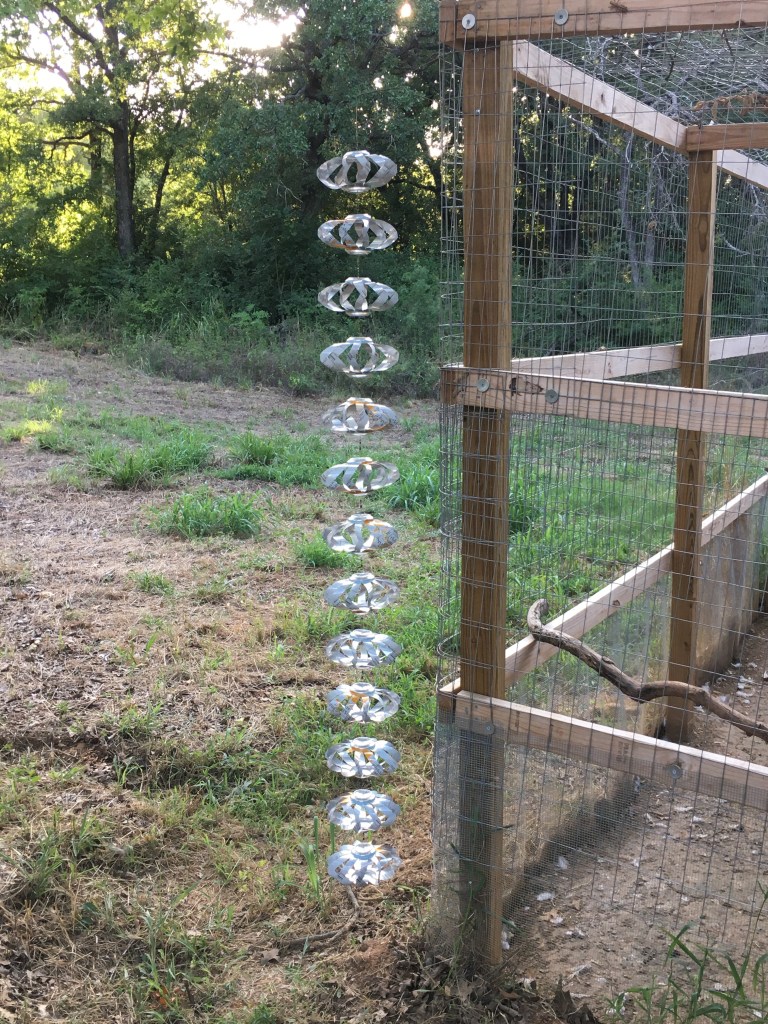
I’ve made more aluminum can wind spinners. As long as I was making, I put together a time lapse video showing my process for making them. My written instructions are on a previous post here. I had the idea of mounting a whole string of these as a column! So much spinning joy!
Wind spinner column mounted on the chicken run
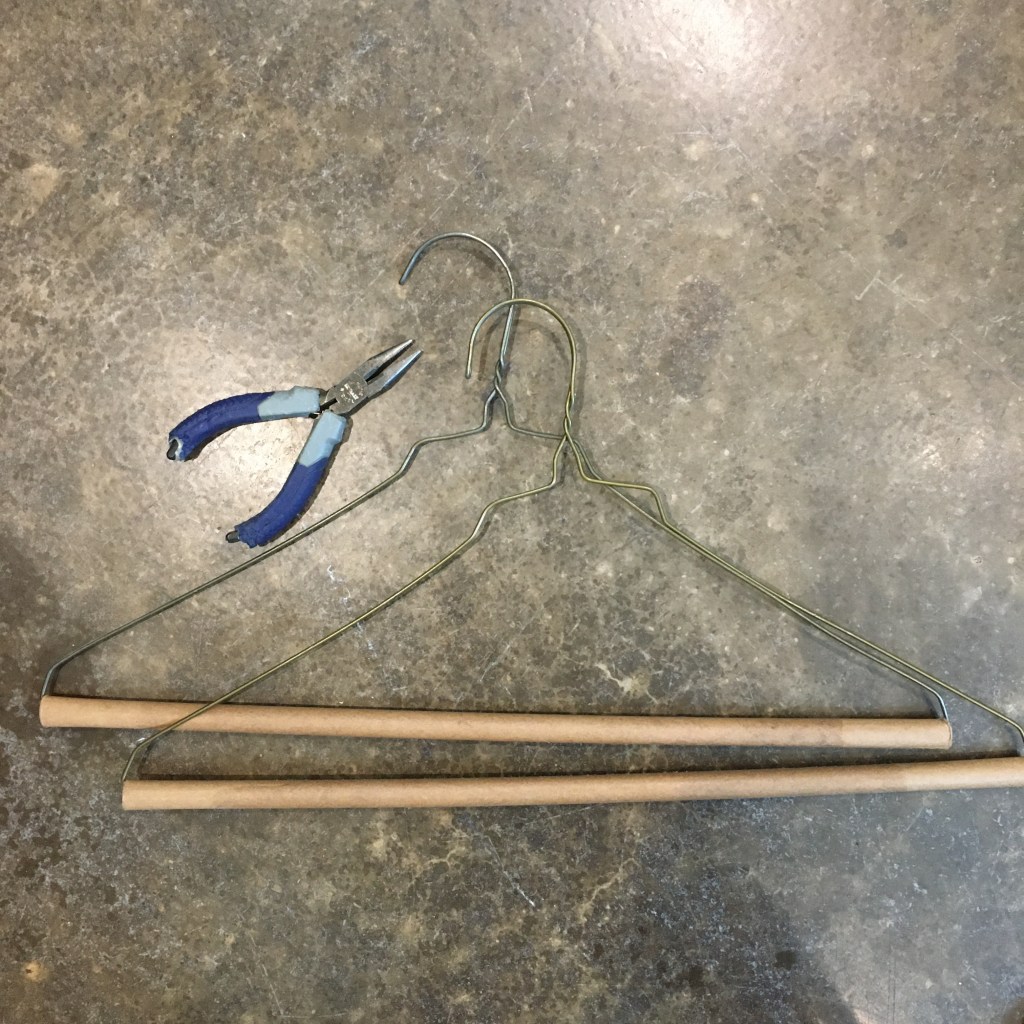
I used wire hangers designed for pants for the support brackets.
Two hangers and a pair of pliers
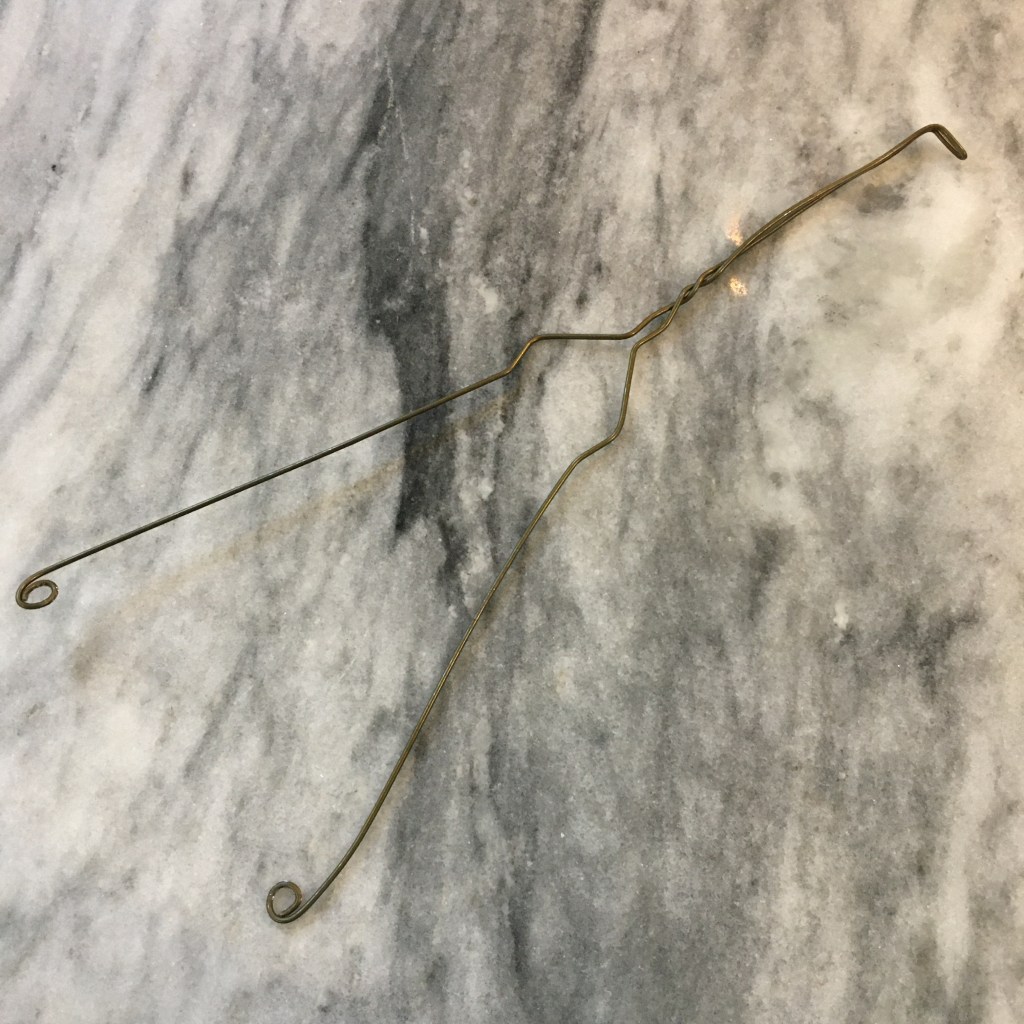
I removed the cardboard tube, and broke off the ends that go into the tubes (I learned the hard way that the sharp bend is already brittle). I made loops for screws, and straightened the curve. I put a 90 degree bend in the folded end to hold the cable for the spinners.
Modified hanger to make bracket for the wind spinner column
I used lath screws to attach the brackets to a corner of the chicken run. I started with the top bracket, then hung the column of wind spinners. I attached the bottom bracket to hold the column steady so the wind doesn’t blow it into the structure. When complete, it looks like the column is floating, which is a nifty bonus!
Wind spinner column mounted to the catio
I mounted another wind spinner column on the catio. Obsessed? Me? Maybe. Here is a video for your spinning enjoyment.
I have been hearing about paint pouring projects for about two years. At the beginning of the summer I purchased some flow agent (Floetrol, but there are others), but didn’t get around to giving it a try until now. I’m sorry I waited, this was fun! My kids really liked it, and it wasn’t nearly as messy as I feared it would be.
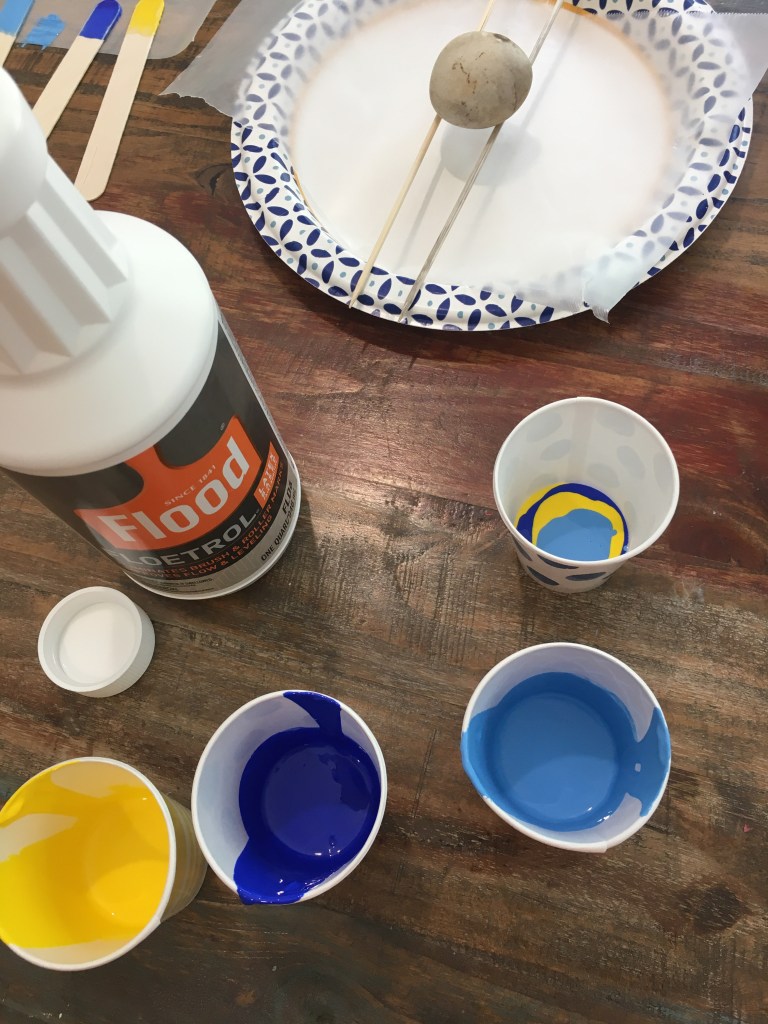
Preparing to paint pour
I lined paper plates with wax paper to catch the drippings. (When the paint is dry we will use the drippings for another project.) I put bamboo sticks across the plates to hold the rocks above the plate. I used 5oz paper cups for mixing and pouring. I mixed about twice as much Floetrol as paint, so the consistency was about the same as pancake syrup. When the solid colors were mixed, I poured spots of color into a different cup. Then I handed over the cup and let the kids pour!
Paint poured rock by my eldest
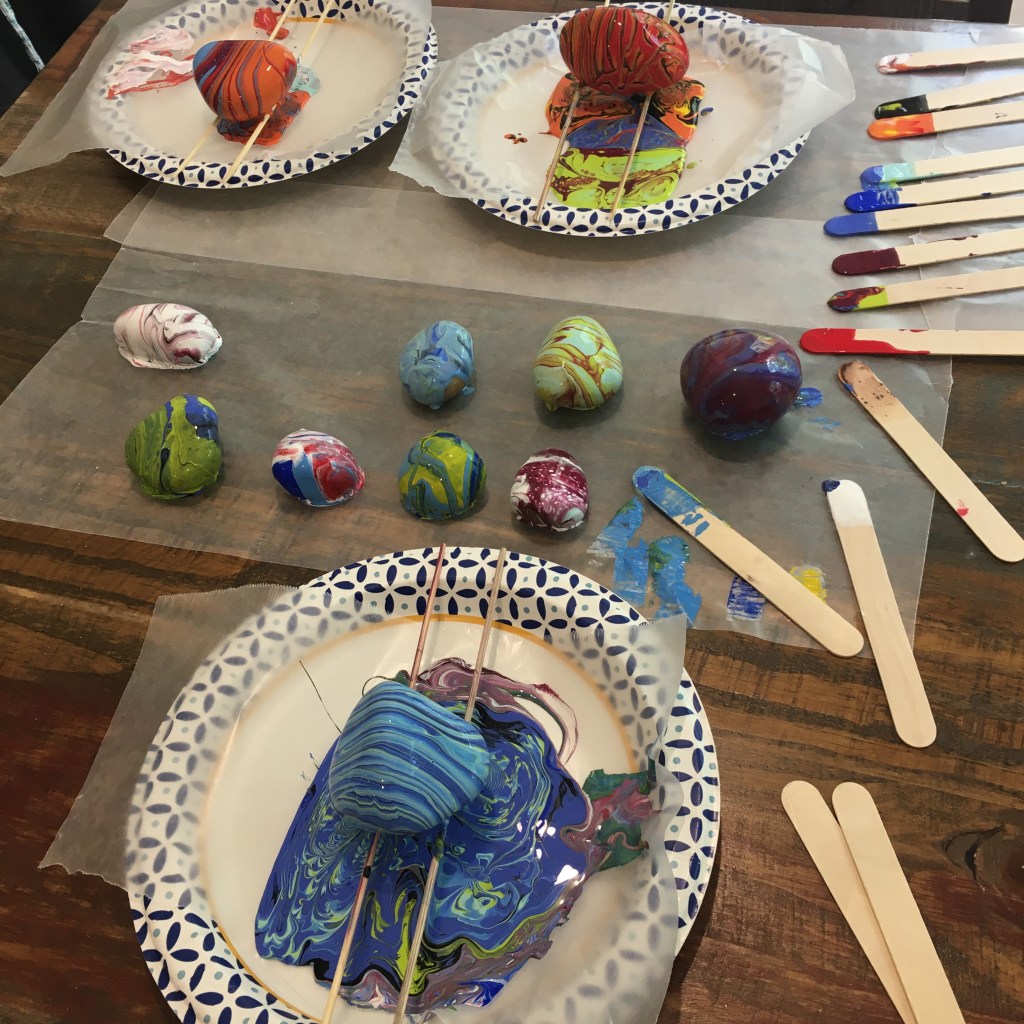
After pouring, we let the rocks sit for a bit, then moved them over to another sheet of wax paper so we could pour more.
Paint poured rocks waiting to dry
I don’t feel like we have wasted paint since we caught the drippings and used up all the mixed paint. The stir sticks will dry and can be used again. Some artists use washable cups, which is a good idea if this becomes a frequent craft for us.
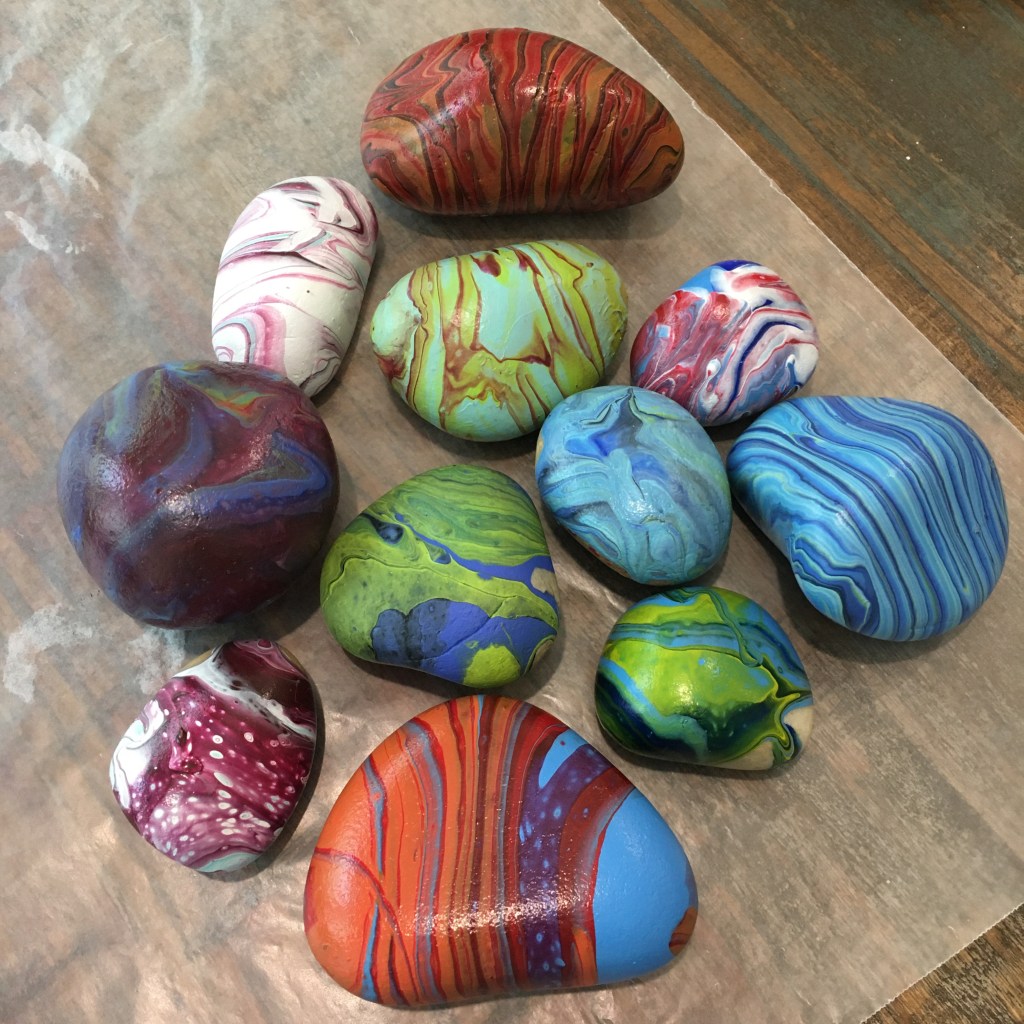
Dried paint poured rocks
Once these have sat a couple days, I will put on a protective clear coat. These are too pretty to just leave to the elements!
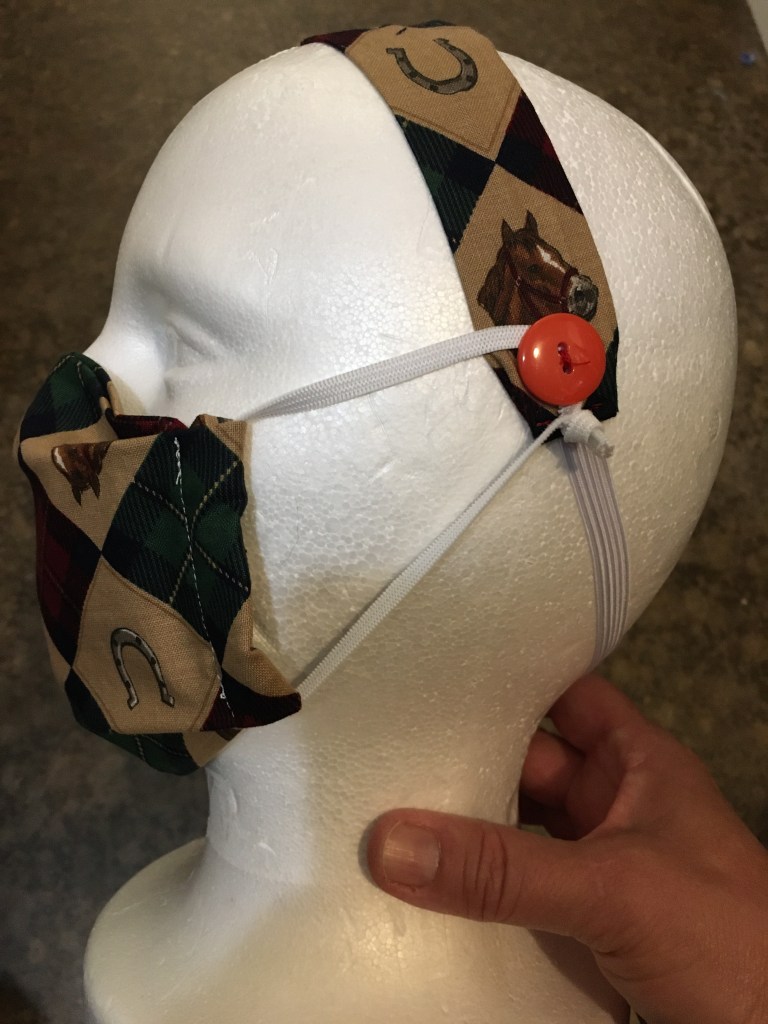
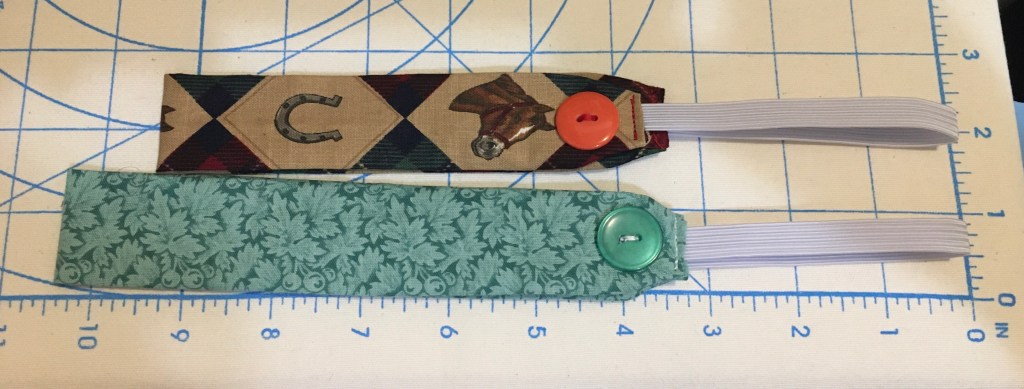
As I make masks, I have long strips of waste fabric, so I made some head bands with buttons to try as ear savers!
Child’s mask attached to buttons on a head band
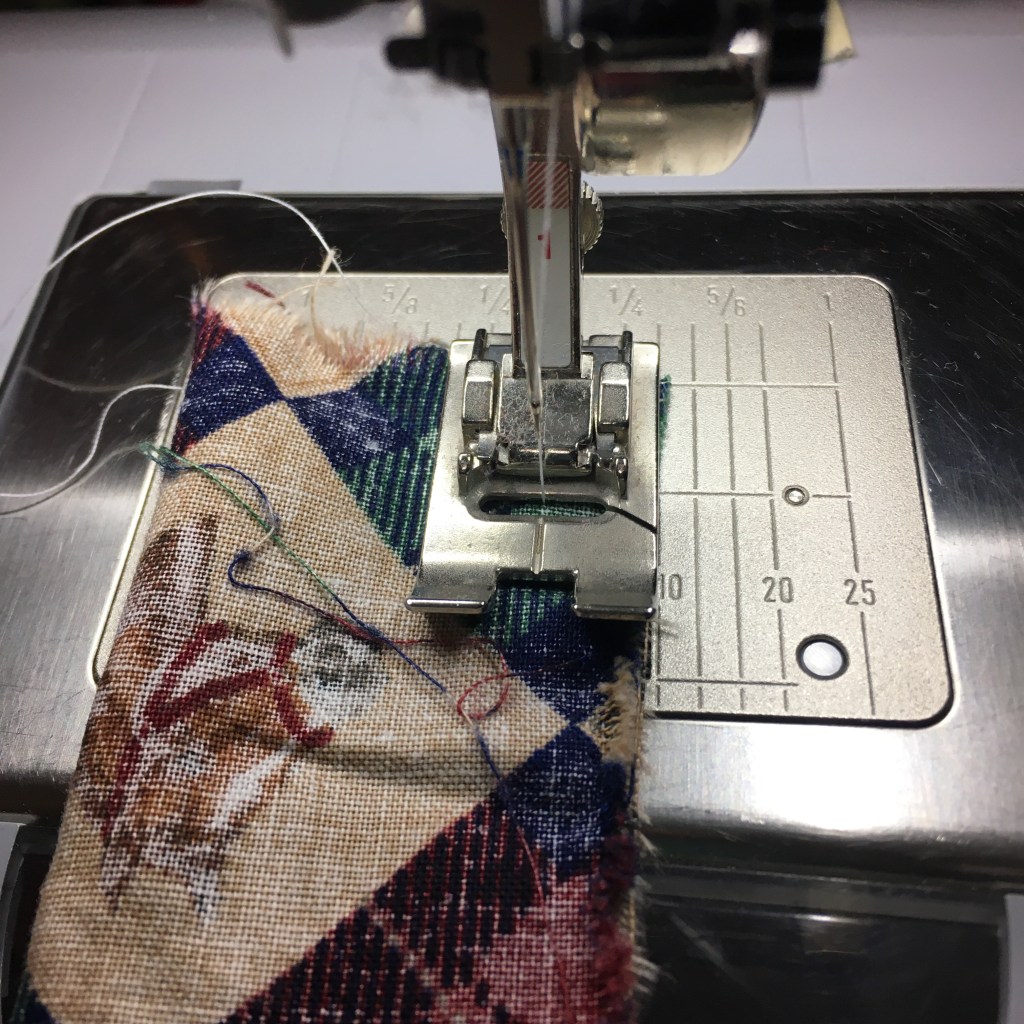
To make the headband, I made a strip of fabric 3” wide and 15” long for an adult size, or 3” x 12” for a child size. I folded the strip lengthwise with right sides together and sewed a 3/8” seam.
Sewing the seam for the headband
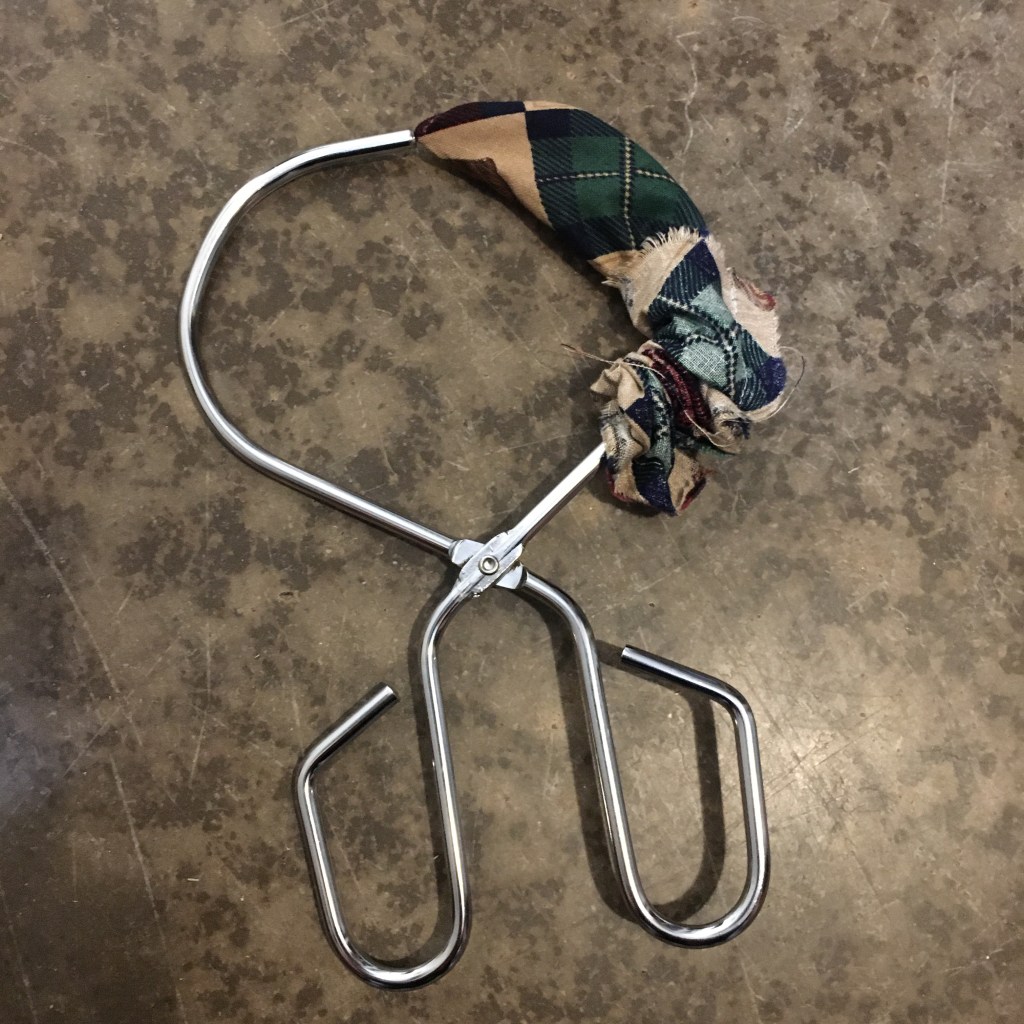
I used a tube turner to turn the fabric tube inside out, then pressed it flat.
Tube turner
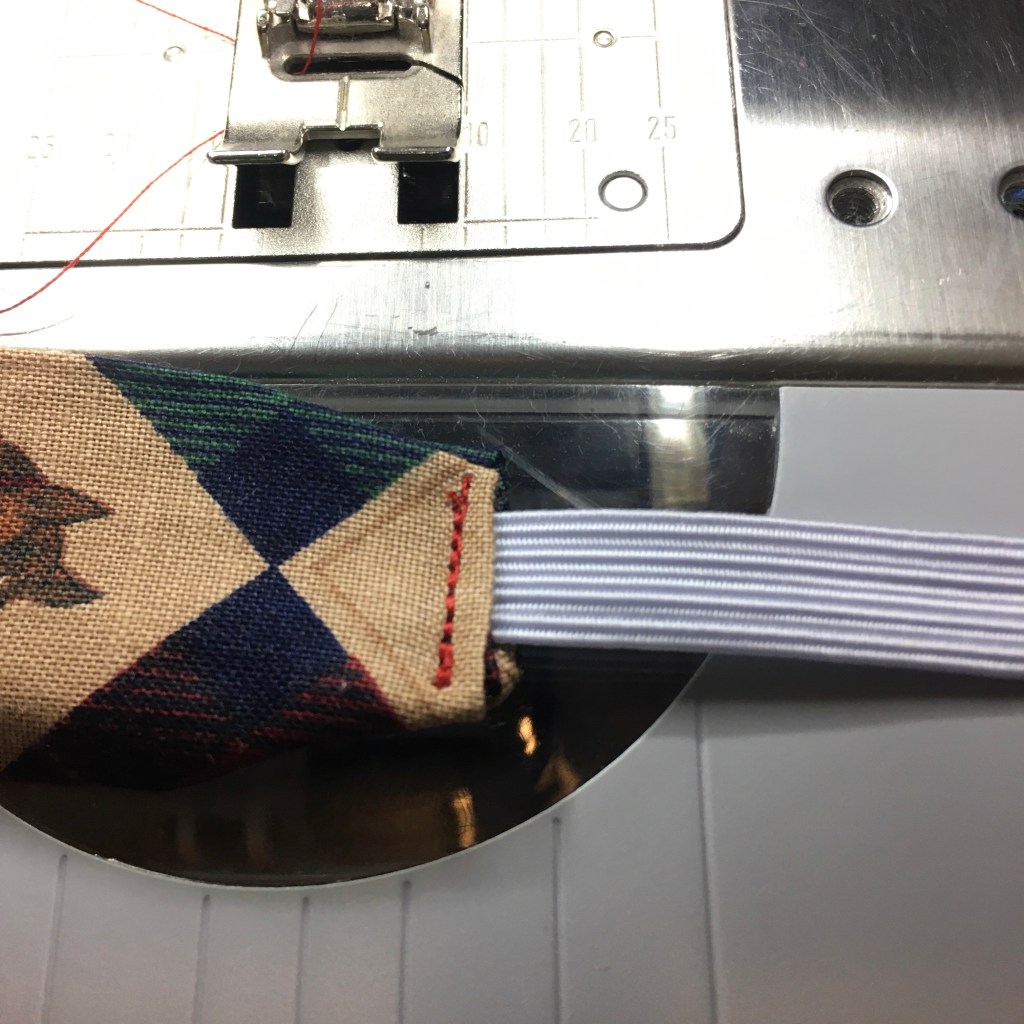
To attach the 3/8” elastic, I folded the end of the tube to the inside, then made two inverted folds on the sides to reduce the width of the headband (other sizes of elastic would work as well). I sewed across the end to secure the elastic.
Elastic sewn in
After sewing in the elastic on one side, I measured 21.5” from the end of the fabric for the adult size (19.5” for the child size), cut the elastic, and sewed in the second side. With the elastic secured, I sewed on machine washable buttons.
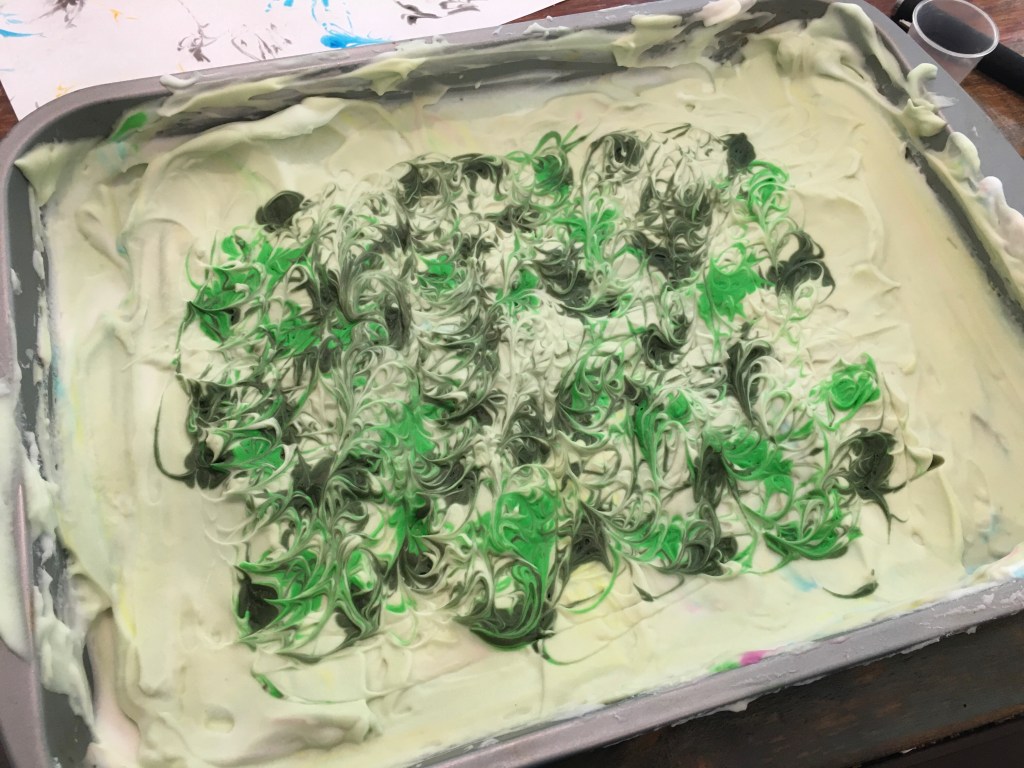
Today’s crafty thing comes from my kids. I bought shaving cream to test the anti-fogging properties on glasses (it doesn’t work). When my kids saw the shaving cream they wanted to get their hands in it! Ok? I gave them each a baking pan and they emptied the little can. They asked for color, so I pulled out the soap colorants I had in the cupboard (food coloring stains skin, so we avoided that). My eldest learned a marbling technique in art class and showed me how that works. So cool!
Pan of shaving cream with liquid color
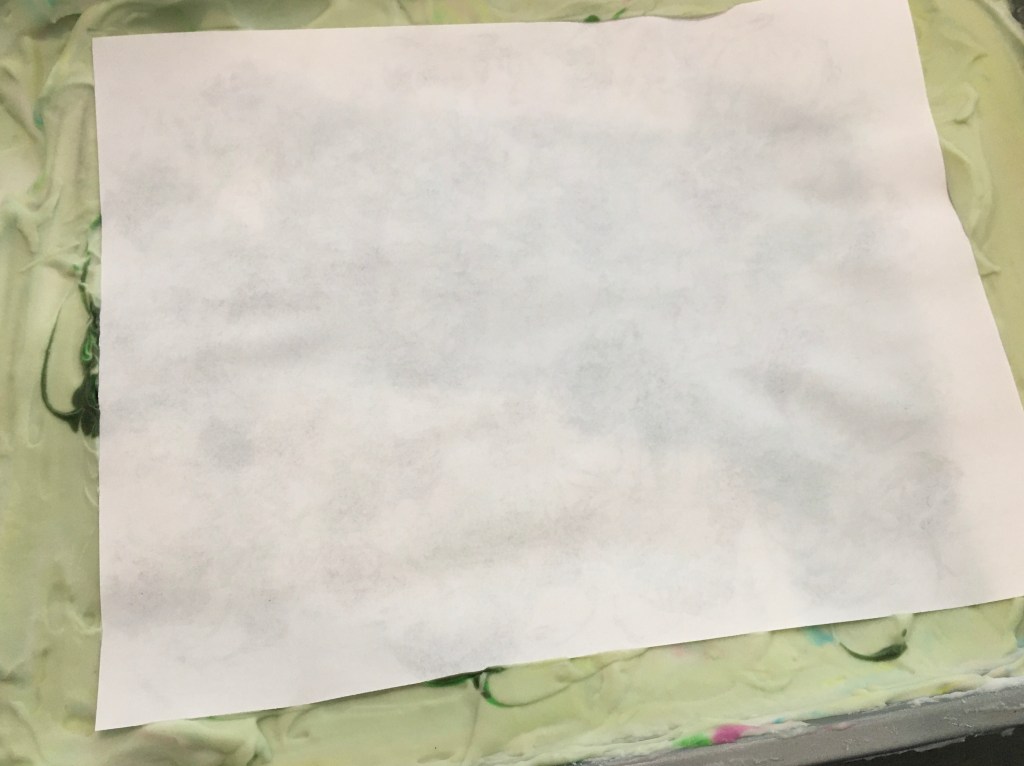
When the kids were done, I played a little. I mixed up their colored foam, added more color, and swirled it with a tooth pick. Then I pressed a piece of paper down gently on the top.
Paper pressed on shaving cream
I made three prints, added some blue, and did three more prints. I ran out of room on the table at that point, but I think I could have continued to print!
Shaving cream prints
If you do an image search on “shaving cream marbling” people have achieved some really gorgeous results.