Here is an idea for hand made cards: printing a large “thank you” outline, and drawing within the words. It is a fun artistic exercise to come up with different ways to fill in the blanks. And the kids actually finished their thank you notes!
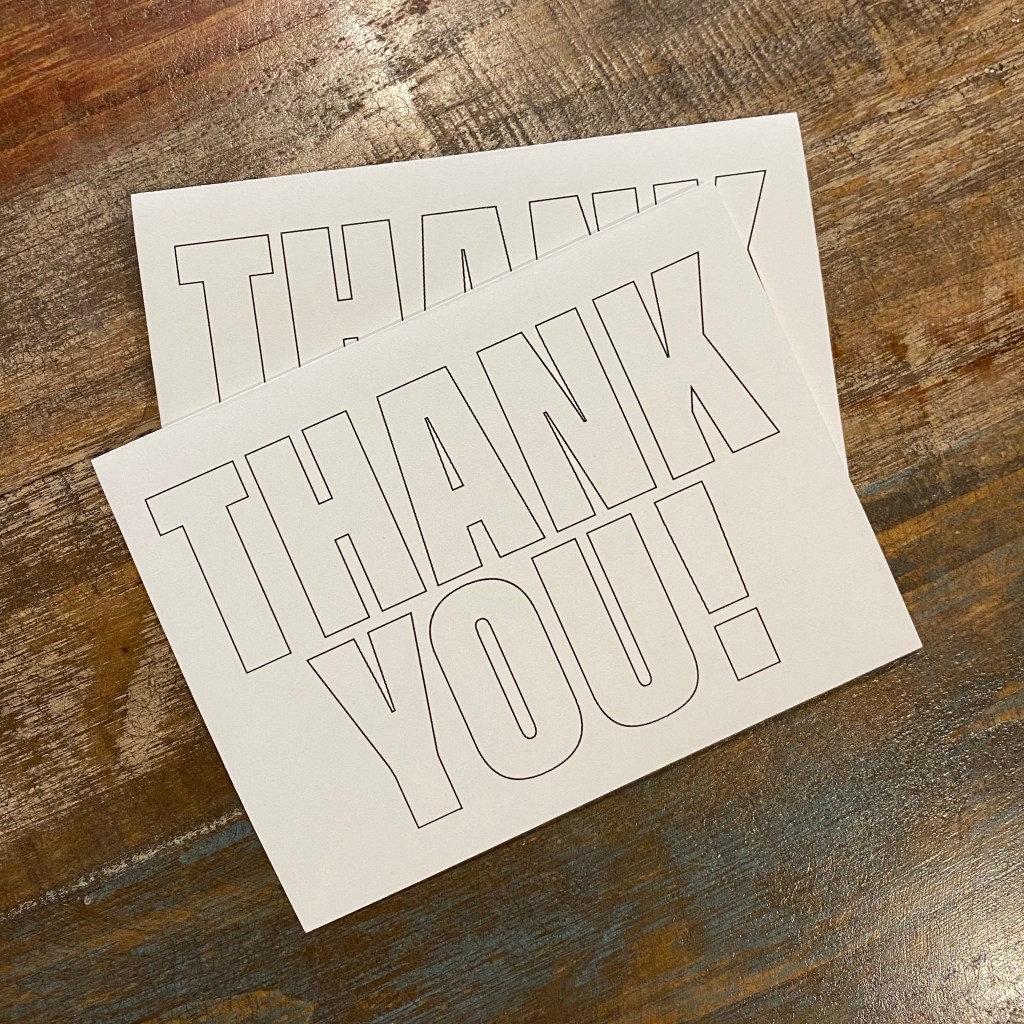
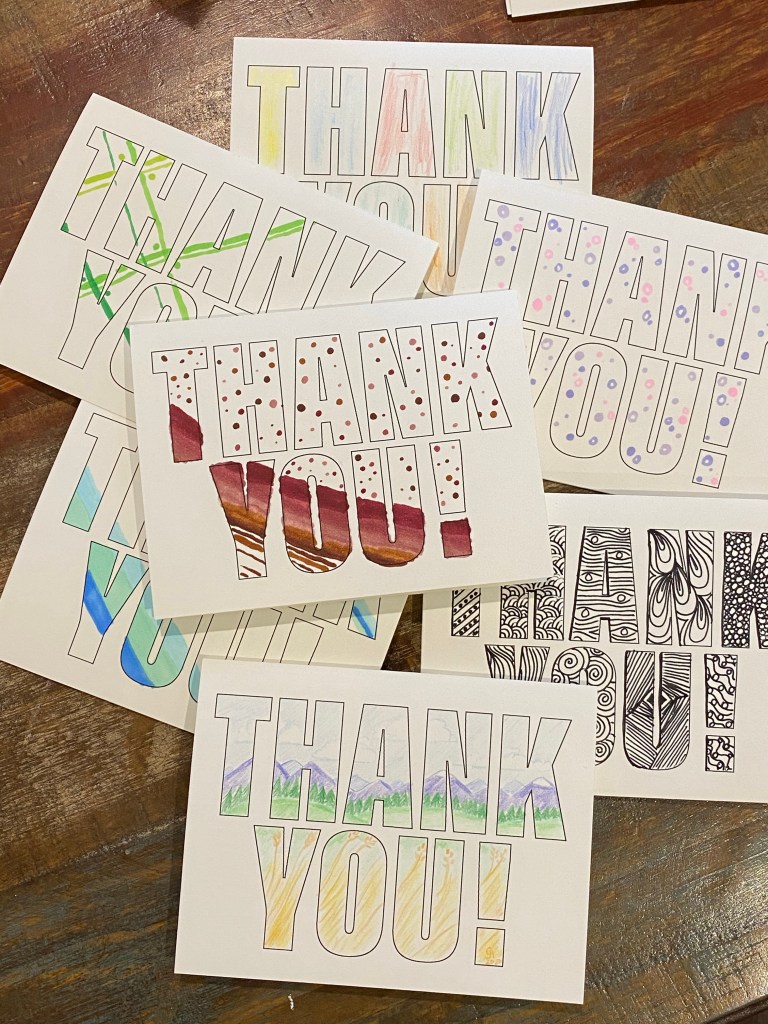

Here is an idea for hand made cards: printing a large “thank you” outline, and drawing within the words. It is a fun artistic exercise to come up with different ways to fill in the blanks. And the kids actually finished their thank you notes!
I have had a little trouble getting back into walking. I’ve been taking walks with my dog Griffin for over seven years, but our newest dog, Missy, is scared of people on walks, and I don’t want to push her to a point of aggression, and she can’t be left alone. So that leaves me walking with no dog (and no people, because pandemic). When walking I have to hear my surroundings, so that nixes listening to music or audio recordings. Walking the neighborhood under these conditions is boring. What to do?
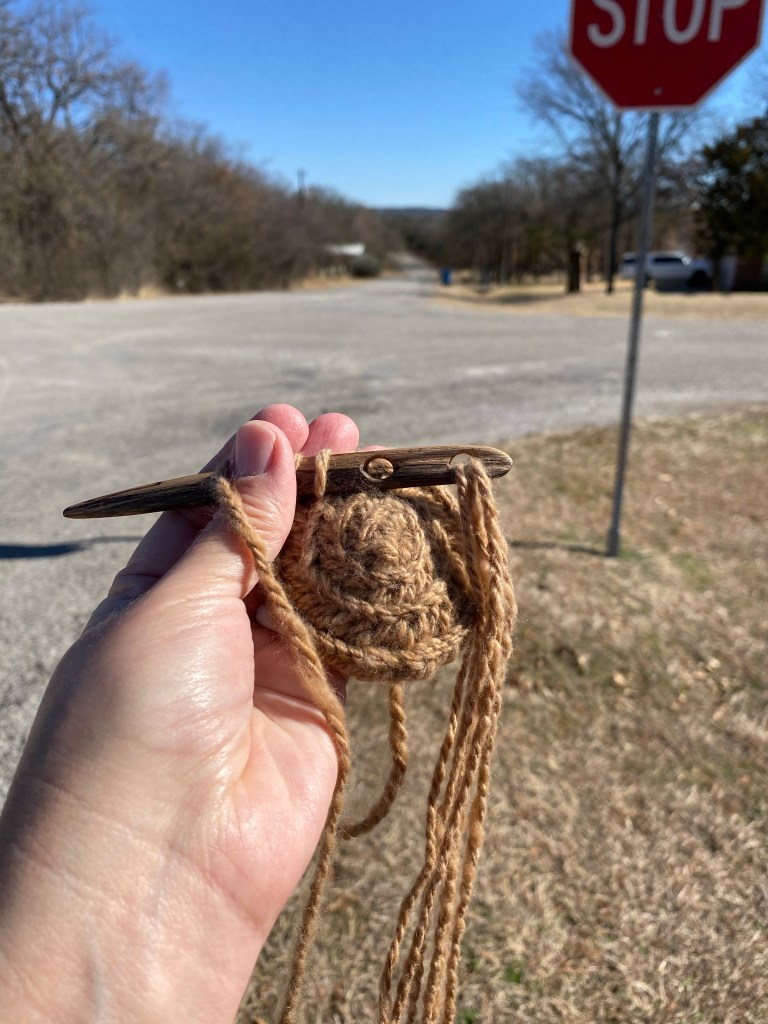
Nålbinding to the rescue! I have found that I can nålbind and walk at the same time. Now, it is with a stitch I am comfortable with (fun fact, there are 4,000 or so ways to loop yarn into a continuous fabric, and naming can be tricky and a bone of contention in nålbinding circles), I am working on small pieces (that will eventually be sewn together into something larger), and the road is fairly even. I have read that people can walk and spin, or even walk and knit, so compared to those nålbinding and walking is an achievable task. I do start my spirals before I venture out, because that is the trickiest bit, but once I’m in the steady rhythm of the pattern, I’m good to go. I think I may even be able to crochet and walk, if I had my yarn in a bag (I can make beanie hats from memory). Knitting and walking? I drop stitches sitting down, so that is probably out. Spinning and walking? Ooo, now there is an exciting goal!

I’m trying out the tapestry weaving bobbins that I made the other day with my current weaving practice.
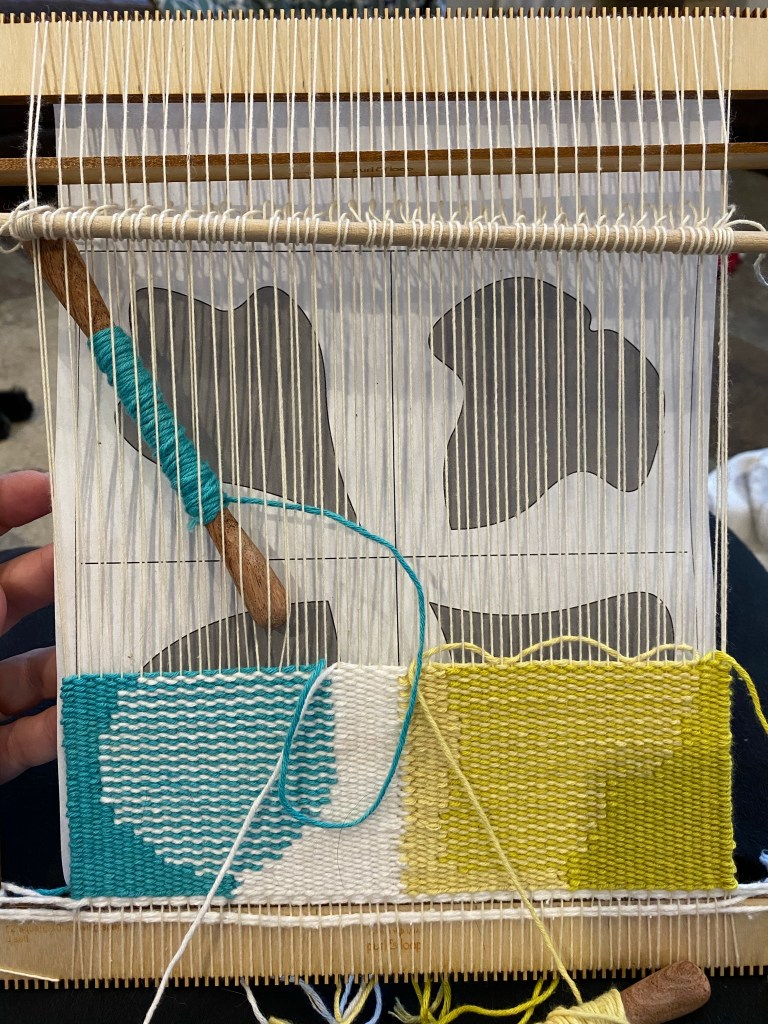
There is a bit of a learning curve with the bobbins. They work better when they are passed through the shed vertically, rather than horizontally as you would do with a shuttle, because then the yarn wrapped around doesn’t catch on the warp threads. Using a half hitch to secure the yarn on the bobbin works well, and it is much easier to pass the bobbin through a large area of the shed, compared to a yarn butterfly. I can also get down to just a few wraps on the bobbin, which means I have to deal with far less tail tucking. These bobbins are a bit big for my little frame loom, but they feel nice in my hand, so I’ll leave them as they are. They also make a pleasing clink noise when they tap together, which is not a weaving pro or con, but does make me happy, like listening to nice wooden wind chimes.
I have been weaving with my yarn tied into butterflies (not onto butterflies, which would be cruel and flappy, but the practice of looping yarn over two fingers and tying in the middle resembles a butterfly). They are easy to tie and require no additional equipment. For the most part the yarn management is easy, until near the end when you either have to retie the butterfly or deal with a long end. After looking through my book and magazine, I decided to make some tapestry weaving bobbins.
I chose mesquite because I had some scrap laying on my bench. I used the band saw to cut square dowels about 6 inches long and about 1/2 inch in diameter. The scrap from this looked useful, so I also made some small yarn shuttles.
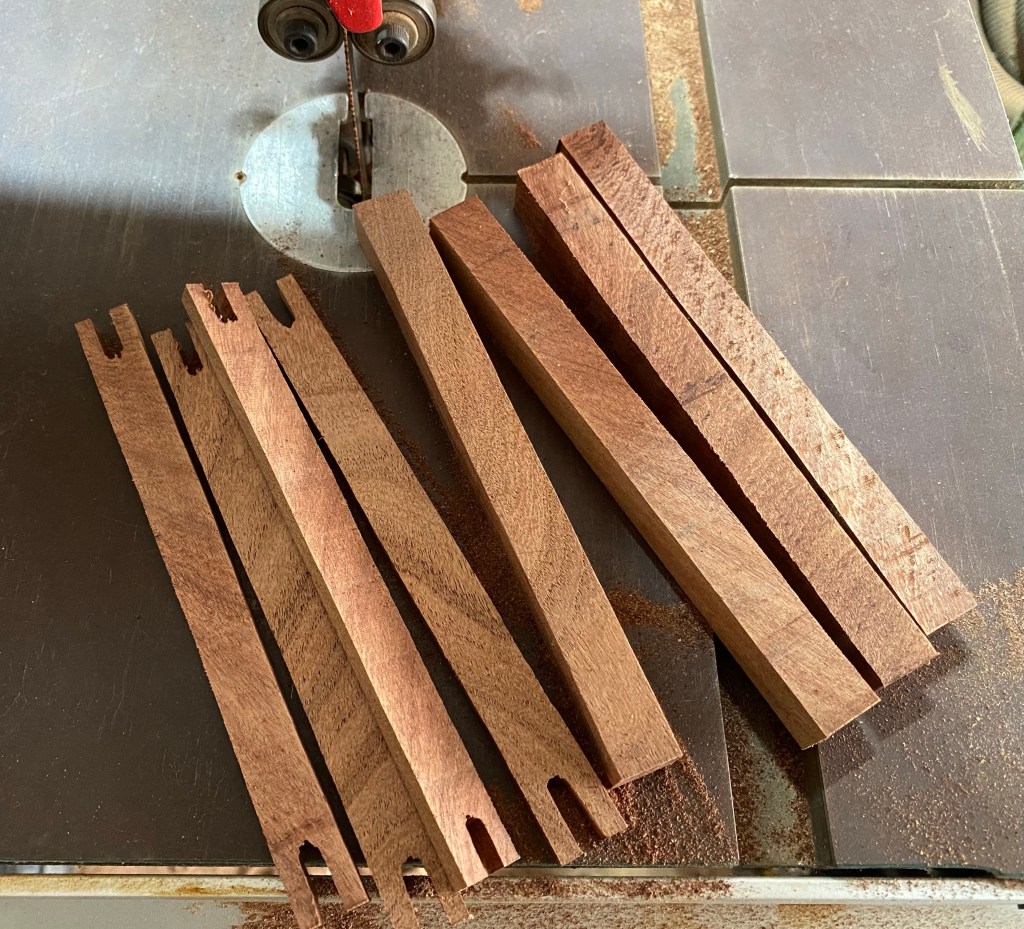
Then I moved on to my band sander to shape the bobbins, and smooth the shuttles.
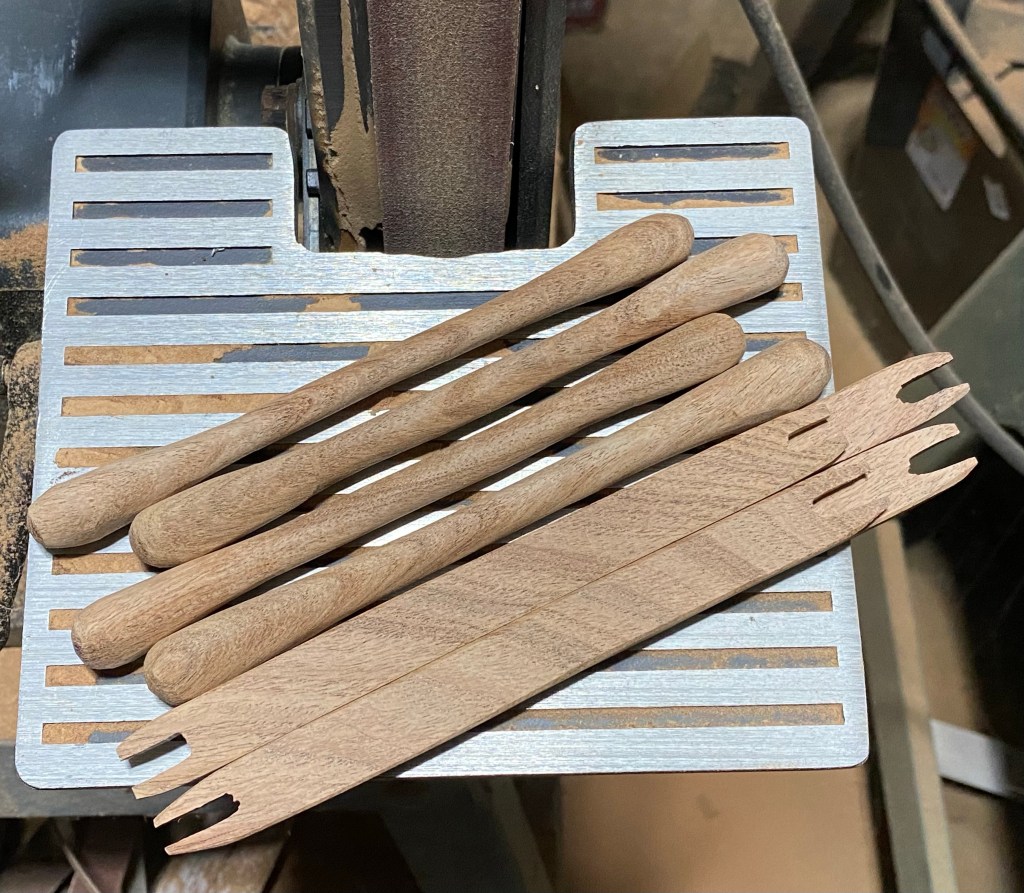
After roughing in the shape, I hand sanded all the pieces down to 400 grit. I have not finished them yet, as I am not sure they are at their final size (and I really wanted to start using them, and not wait for tung oil to dry!)
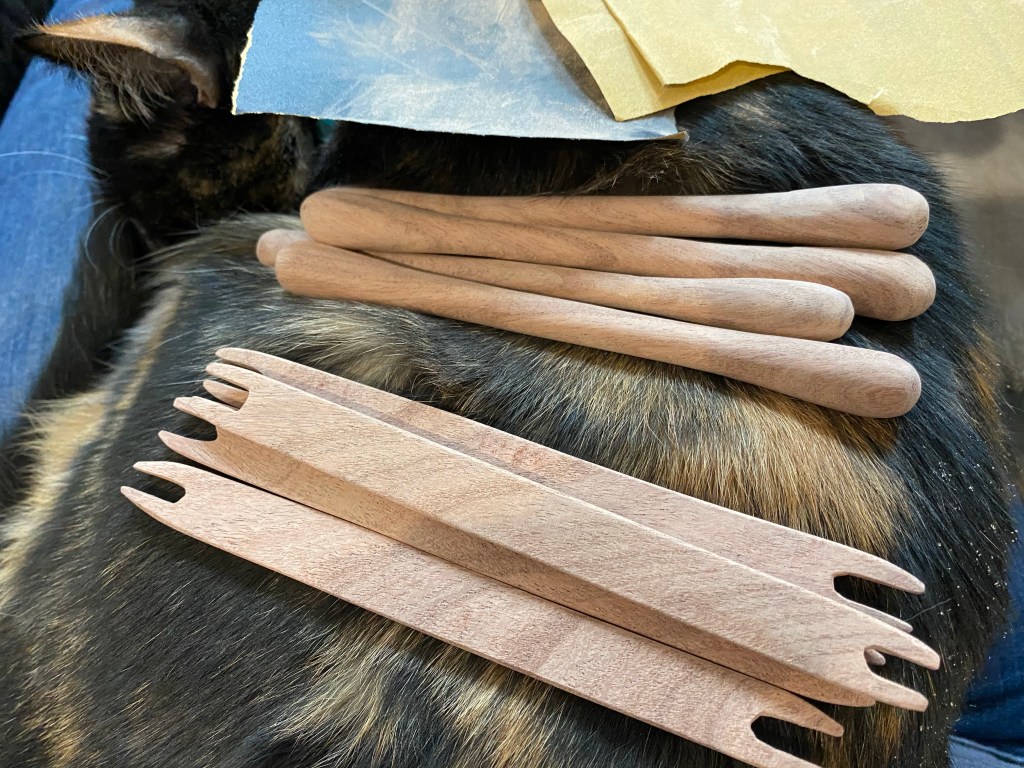
I am pleased with the shape and feel of my bobbins. They could have been more regular if I turned them on a lathe, but I still haven’t secured my lathe in the rearranged garage, so this will do. Hand shaping has given them an organic feel, which is nice as well.
Interesting to note, I will have to be more careful when working with mesquite in the future. Like wearing a mask when I’m sanding, even if I only think it will take a few minutes (wear your dust mask kids!) After sanding I felt light headed, and the next day I had a headache. This is not my first wood sensitivity; I’m outright allergic to walnut and can’t work the wood at all. I did find a nifty chart with wood allergies and toxicity here (https://www.wood-database.com/wood-articles/wood-allergies-and-toxicity/), which lists Mesquite as sensitizing. So there you go.
My husband has had the same dopp kit bag since before Iraq, and it has been falling apart since (and even has desert dust still in it). So I made him a leather dopp kit. I used finished leather because I had time restraints, a heavy duty brass zipper, and cotton lining. The leather was soft enough that my sewing machine could go through, so I was able to machine sew the zipper and seams (with an occasional boost using the band crank). I hand sewed the lining to the inside of the zipper.
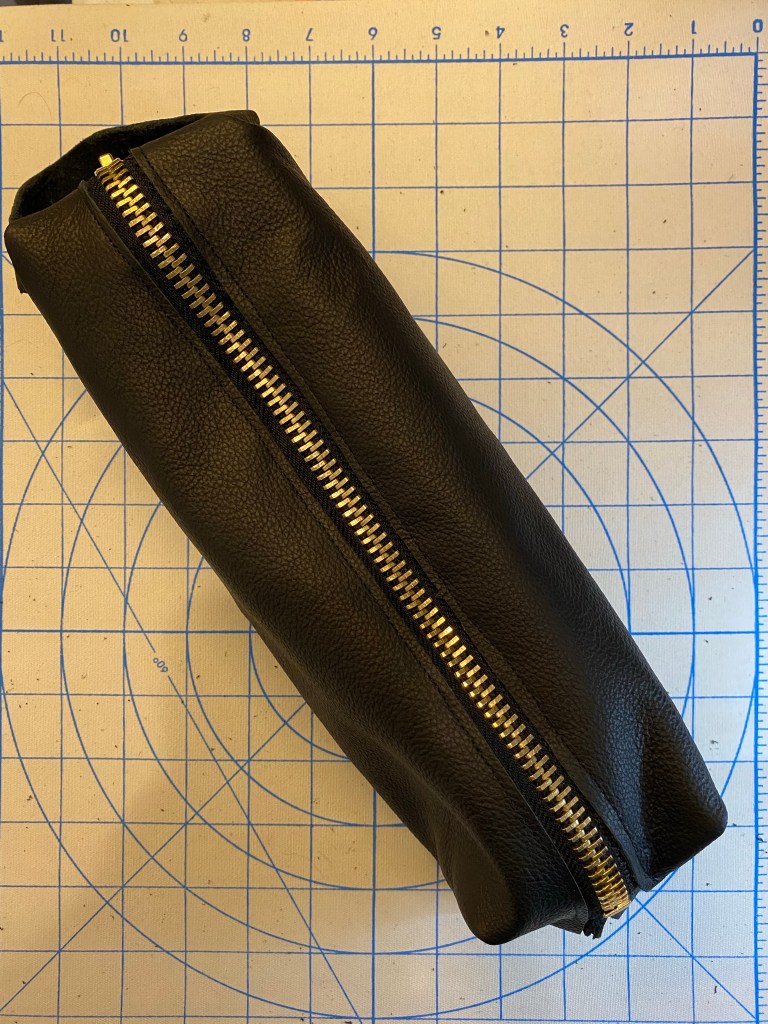
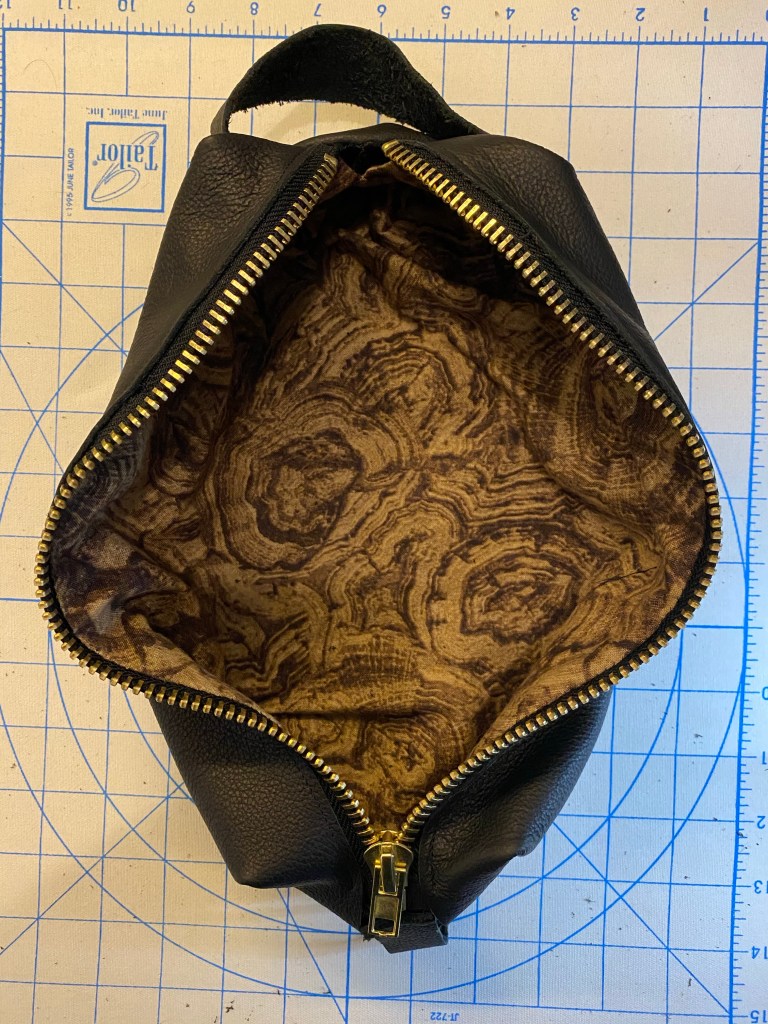
I’ve been meaning to make this for awhile. It is ironic that I made the time to make it, but there is still no travel for the foreseeable future. I may try my hand at another one, but this time in stiffer leather, which will have to be all hand sewn and finished. I rather like hand sewing, so it won’t be a hardship. Especially now that I know how they go together.

