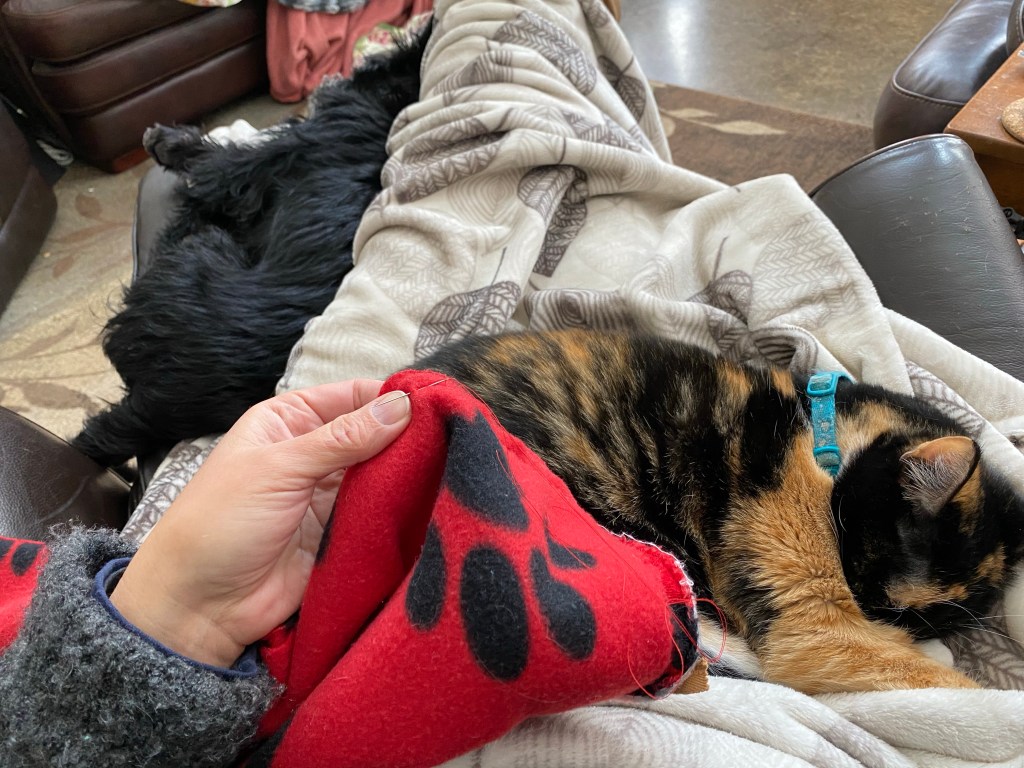
When the cat and dog require a warm lap, what to do? Grab some sewing and give them the lap. Yes, this project would have gone quicker with the sewing machine, but at the time power was still intermittent and I was also cold.
Hand sewing because my lap was required
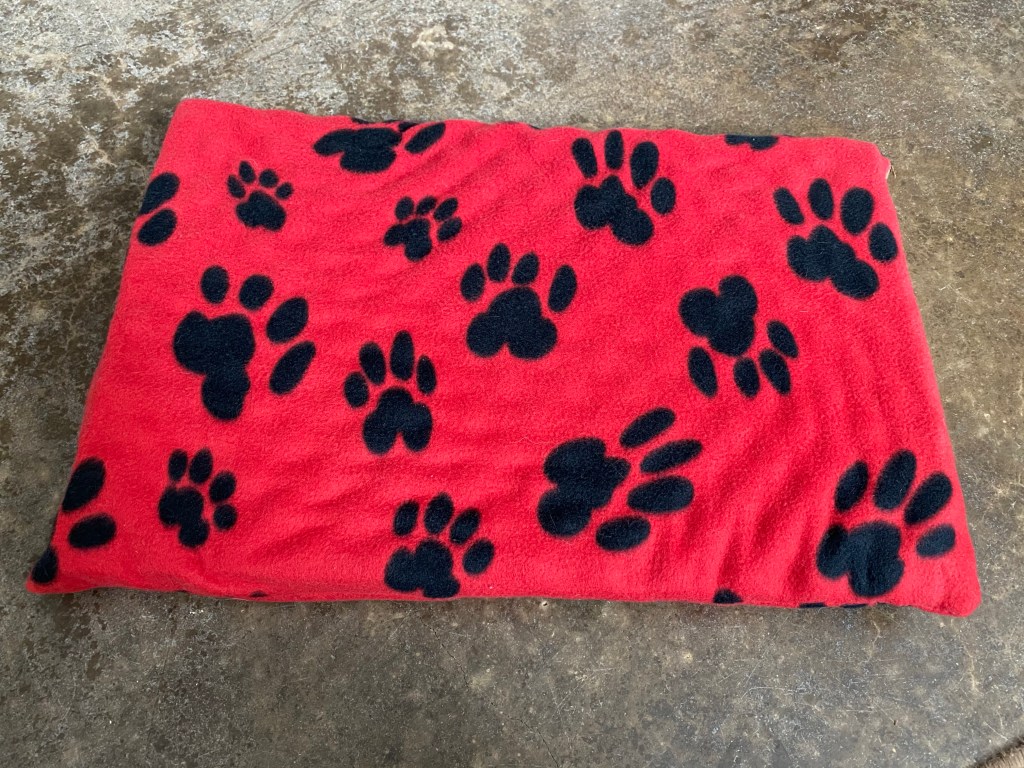
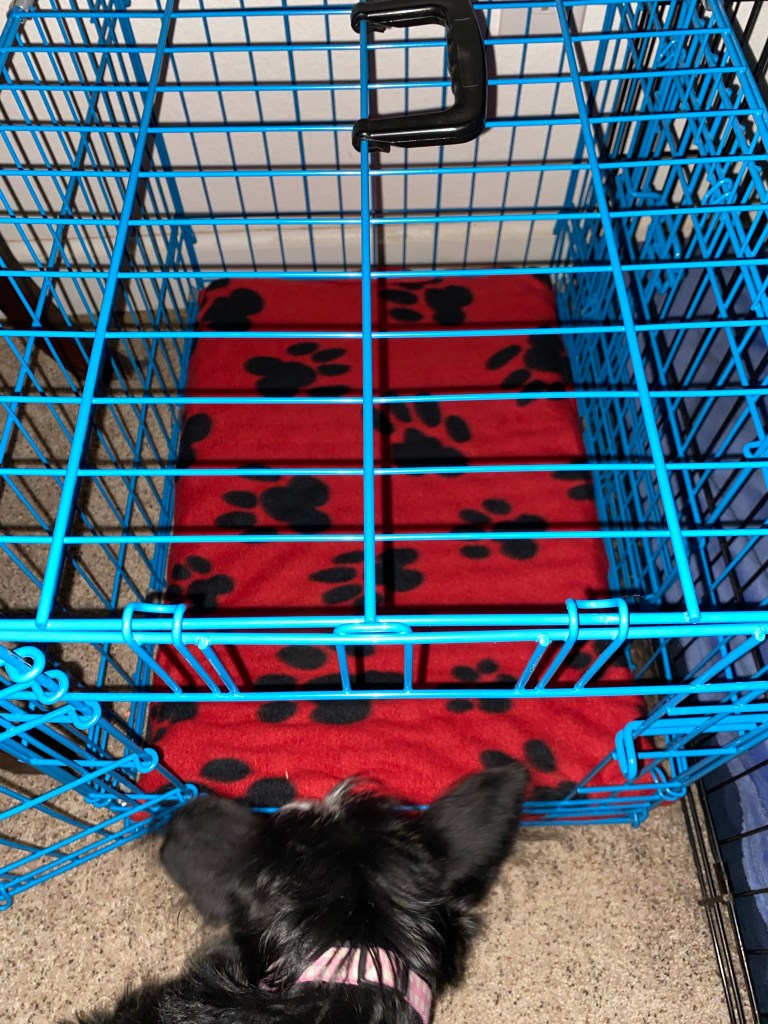
The project was a new pad for Missy’s cage. None of the pads available to order quite fit right, so I ordered some fleece and some egg crate foam (twin sized because it was the most economical). The zipper came from my stash, and I hand sewed that in first, sewed the sides, then cut two rectangles of foam about an inch smaller than the case. It helped to fold the foam in half to slide it into the case, the zip it up.
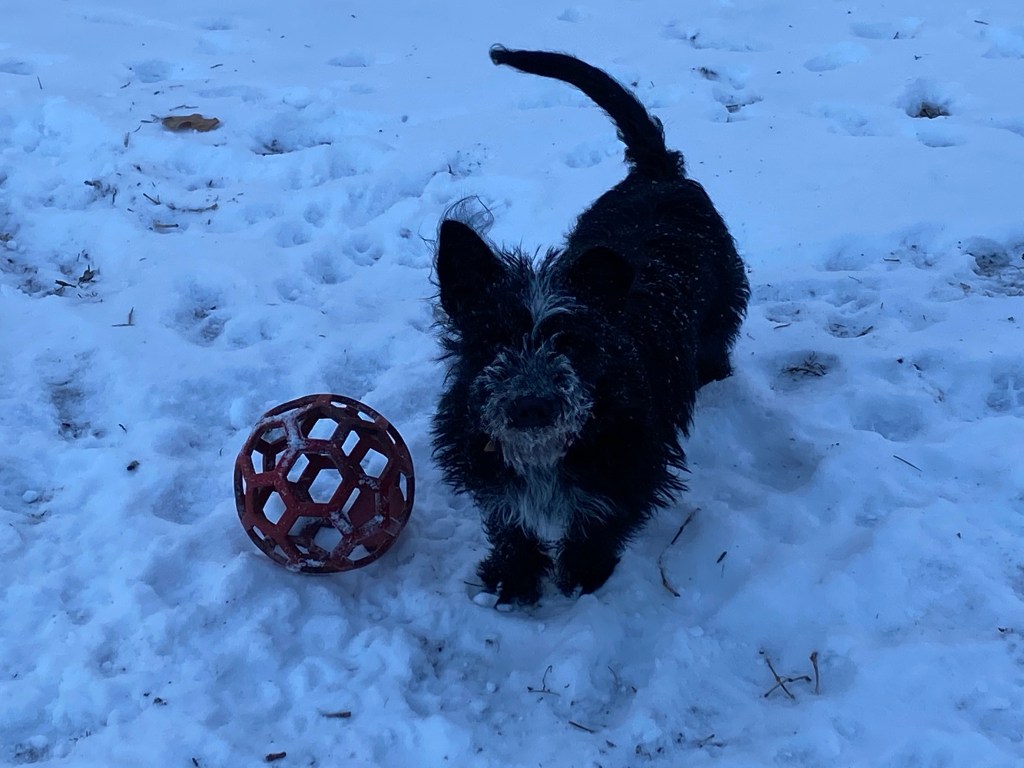
Finished crate matMissy investigating the new mat (sorry for the flash, no power)
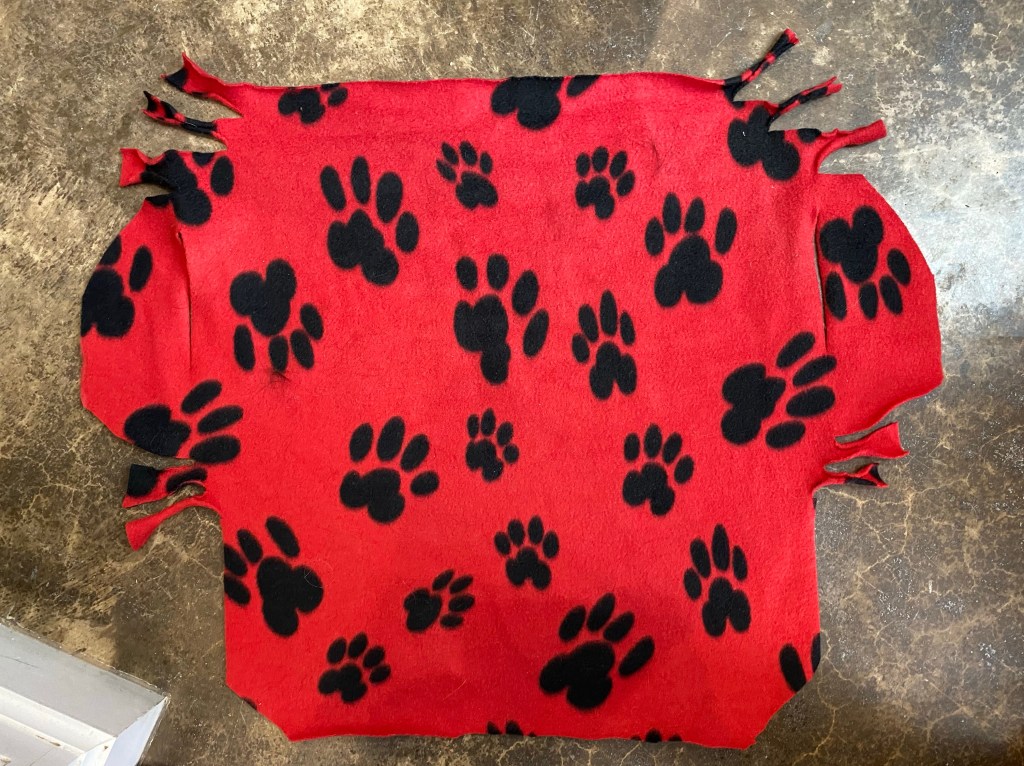
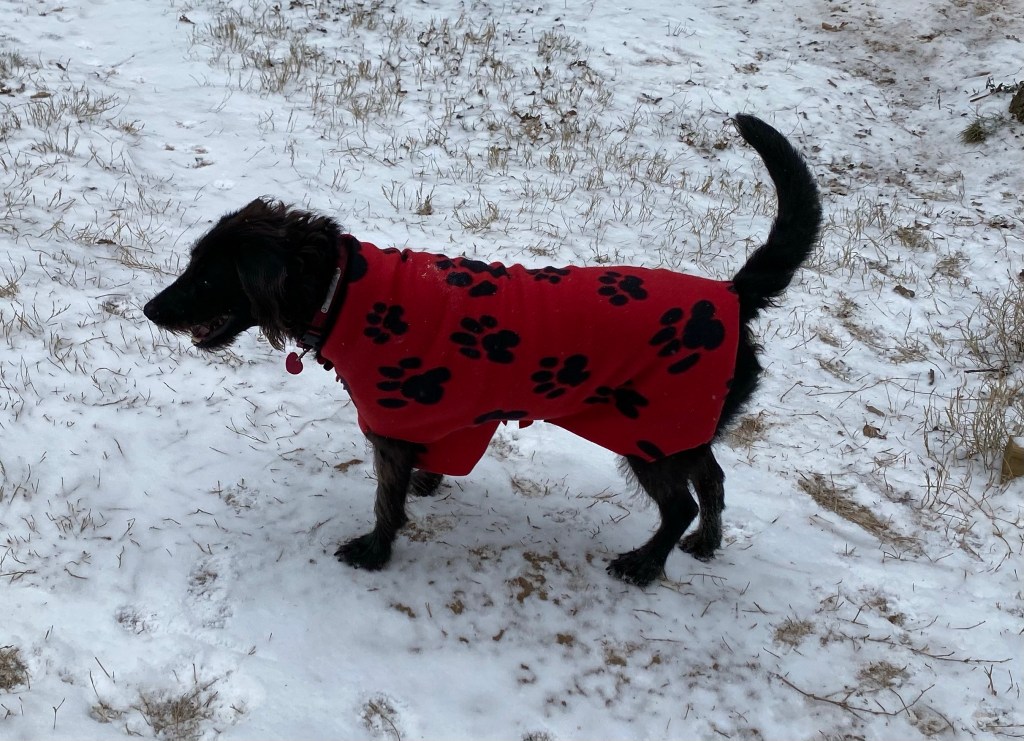
This is unprecedented cold for Texas. Griffin usually doesn’t care about the cold, however zero degrees is a whole other matter. He outgrew the sweater I knit for him ages ago, and we needed something so he could at least go out for a couple minutes to do business. So I took some fleece earmarked to make beds and used some to whip him up a coat. I measured around his chest and added a couple inches, then measured from neck to tail. I cut a rectangle using those measurements, then cut leg holes and shaped around the hips. Strips cut along the neckline and chest made it easy to tie the sides together rather than sewing. Within about 10 minutes he had a new coat. He loves his coat!
Shape of no sew dog coatGriffin happy in his no sew coat, at least for a few minutes (it is really cold for us Texans!!)Missy has more cold tolerance due to twice as much fur
I thought I would be at the park and draft stage of spindle spinning forever. There I would sit forever, spinning the spindle to build twist, then catching the spindle between my knees, or under one leg, or arm, and only then letting the twist run into my fiber as I drafted. Managing both spin and drafting seemed unattainable. I was actually OK with it, except for the lure of an idea. The idea to spin and walk.
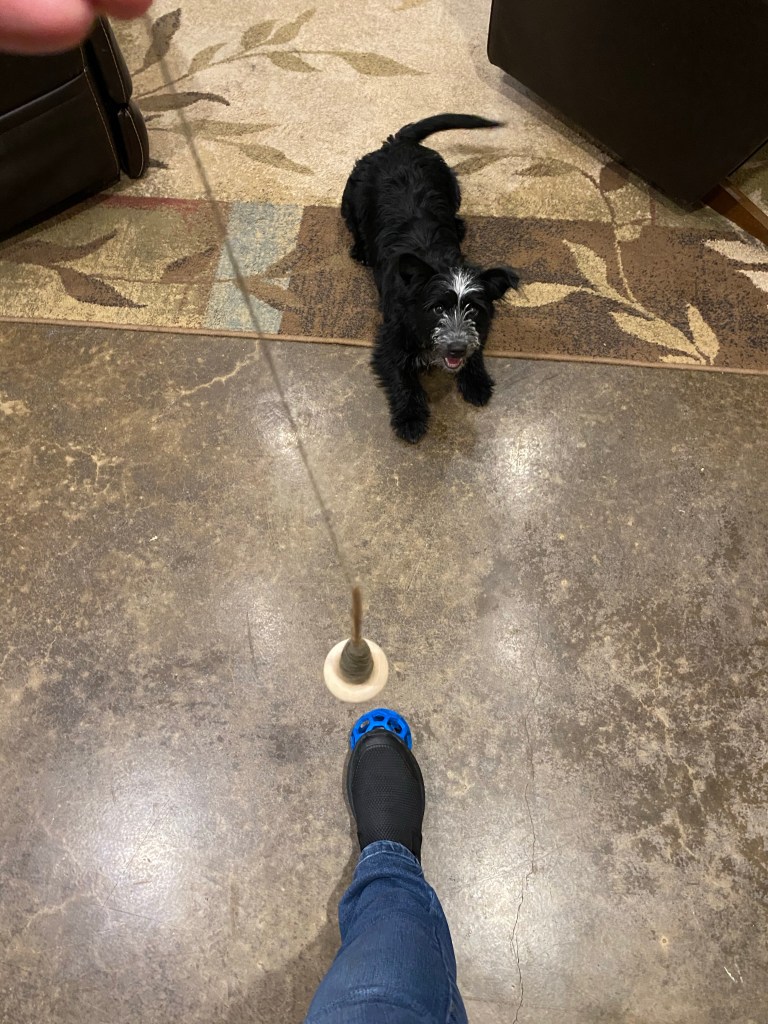
So I grabbed my Turkish spindle and some prepared merino roving and tried again. The spindle seemed too heavy, so I took off the arms and slid a light wood whorl down the shaft to make a bottom whorl spindle. (With park and draft I preferred a top whorl.) Oh my goodness, something clicked. Yes, I dropped the spindle a few times as I figured out which direction I was spinning (I couldn’t think S or Z, I had to think counterclockwise or clockwise). I tried using my distaff, but kept getting the fibers wrapped tight around it, so instead wrapped some roving around my arm. The fiber was bunching up, so I divided the roving in half. That seemed to do the trick! I was spinning while standing! Missy the pup helped me with the next step because when I am standing that means I can kick her ball, right? And if I can kick her ball, maybe I can walk and spin. For now, spinning will continue indoors, as it is cold outside. But when it warms up, it will be time to try to walk!
Missy helping me with the spinning goals by asking me to kick her ball while I spin.
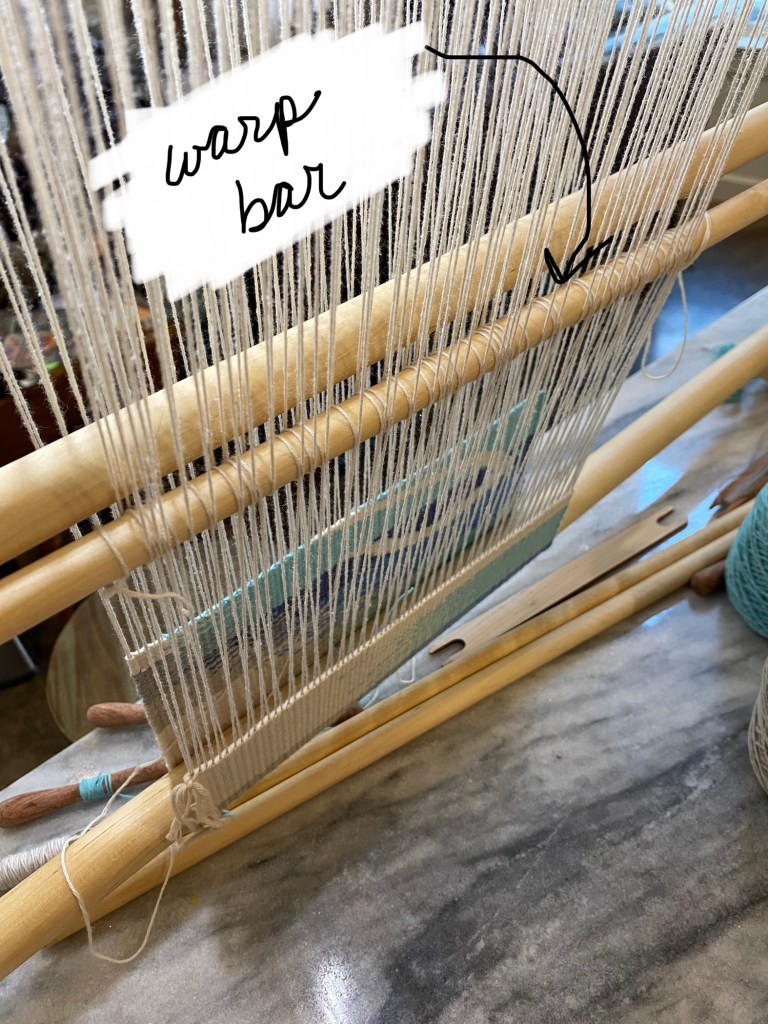
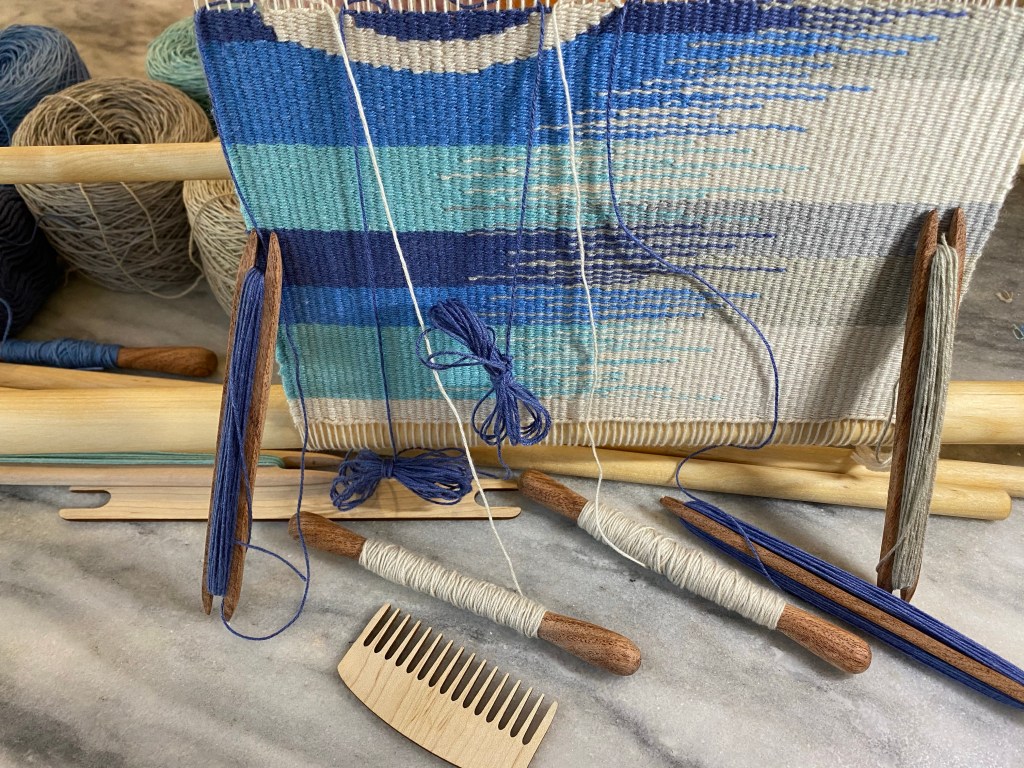
My new loom uses the continuous warp method. Which means the warp is wrapped all around the frame and you can weave something nearly twice as long as the loom is tall. I followed the directions but was honestly unsure how it was going to work. The warp bar holds the top and bottom loops, and before the warp is strung, the bar is wedged in place. It turns out that the opposing forces from the top and bottom loops hold the warp securely, so that when it comes time to move the weaving, you loosen the tension a bit and the weaving slides easily around the outer frame. Neat!
I’ve run out of bobbins and shuttles on my current weaving, so have added butterflies of yarn as well. I could go make more shuttles or bobbins, but I’m having fun weaving. I had every intention of doing a simple striped woven scarf, which lasted not even half an inch before I had other ideas. Now we’ll just see where the weft takes me.