Color play

I tried another hatching weaving with smaller squares and lots more colors.

Front of weaving
Back of weaving before weaving in ends
Back of weaving with ends split and woven in

Things I like: The color play and overall look of the piece. Still a big fan of splitting the ends before weaving in, I had trouble telling the front from the back.

Things I learned: Keeping long lines straight needs work! When twining the bottom and top with multiple colors, I need to connect the strands.

Details: approximately 8”x8”, 100% cotton weft, warp suspected cotton (from stash), woven on an 8 sett frame loom. First and last pass twined. Warp drawn through piece to finish.

Shapes

This weaving had a two fold inspiration. My sister loves bees, and my daughter recently has been drawing the cutest simple bees. I did ask my eldest if it was OK that I borrow her bee style!

Bee and hexagon weaving, steamed flat
Back of weaving, before steaming

Things I like: My eldest suggested the bee abdomen have thicker stripes, which really turned out well with the thinner hatching stripes on the wings. Steaming also helped smooth things out.

Things I learned: I need to work on consistent angles. I used a cartoon (pattern), but decided to do the angle mathematically, up two over one, rather than follow the line. Or maybe I need to adjust my math.

Details: approximately 8”x8”, 100% cotton weft, warp suspected cotton (from stash), woven on an 8 sett frame loom. First and last pass twined. Warp drawn through piece to finish.

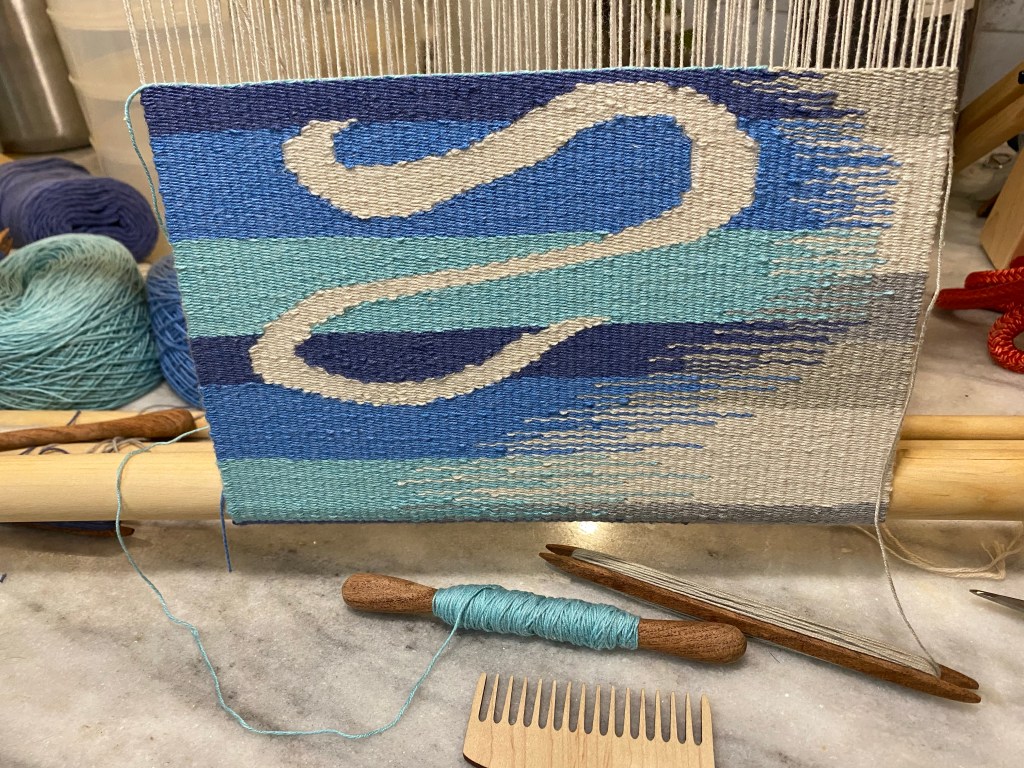
Curves

My next finished experimental weaving where I tried curves and hatching.

Front of cotton weaving
Back of cotton weaving

Things I like: Still like hatching. The curves are fun! I split the ends to be woven in, which made a huge difference on the neatness of the back.

Things I learned: Taking the time to do a continuous string heddle saves time and frustration especially when unweaving. Using a line drawing taped behind the loom as a guide is very helpful as well, however, I need to make sure I use the same viewing angle each time I reference the cartoon.

Details: approximately 8”x8”, 100% cotton weft, warp suspected cotton (from stash), woven on an 8 sett frame loom. First and last pass twined. Warp drawn through piece to finish.

Happy New Year! May this year be better than last (asking little). I have a few more wrap up items for posts from the holidays, then exciting new things for the new year!

Wooden ergonomic crochet hook

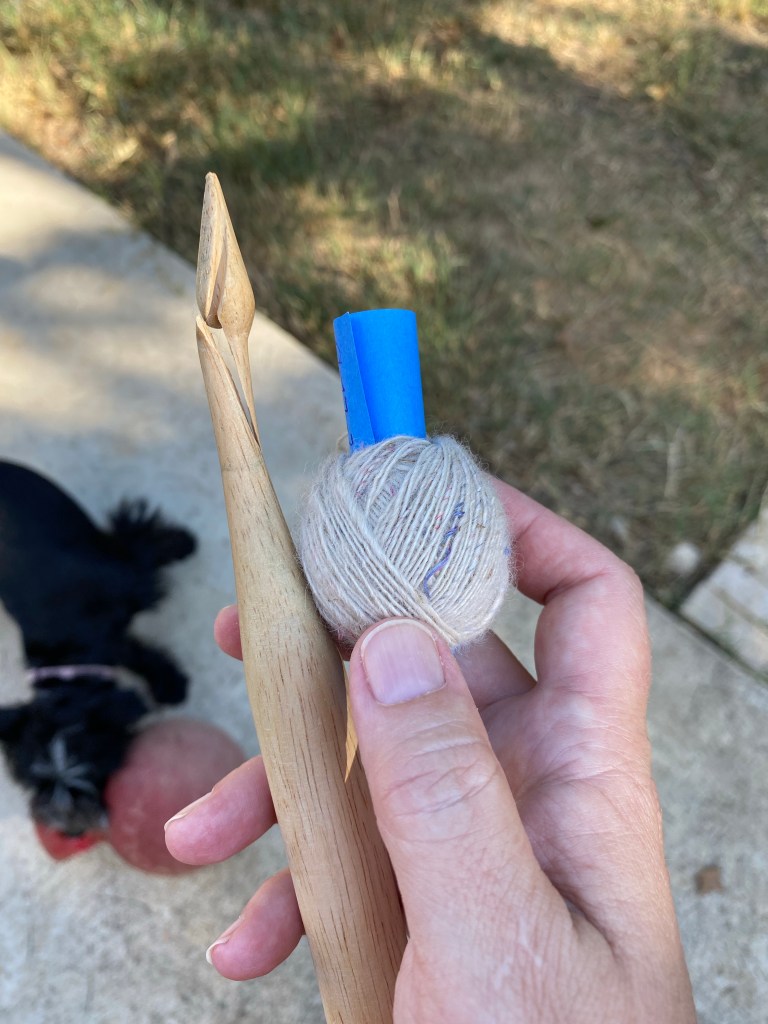
Well this was fun! I made a crochet hook out of a chunk of mesquite. Rather than a straight dowel (which are harder to hold and manipulate), I made a handle shaped to my hand, then chiseled out an indentation for my thumb. Then I shaped the actual shaft and hook. It took me a couple tries to get the length right (I used some scrap cotton to test), but found a good length and refined the head. I sanded down to 400 grit and sealed with tung oil. The shaft is a size K hook. I could probably have gone smaller, but we’ll see how this one performs. I sent it off to my Mom for the holidays!

Finished mesquite crochet hook
Back of crochet hook with wood burned lettering
Side of crochet hook

Hatching

I finished the first experiment with weaving with hatching.

Front of cotton woven cloth
Back of cotton woven cloth

Things I like: Hatching! Neat, neat technique with so many possibilities, and solid joins between colors.

Things I learned: Pay careful attention to each pass. Finding a missed warp thread four passes later is frustrating. No, I didn’t unweave, this is a learning piece. Also, weaving in the ends makes lumps on the back. Also, marking the warp threads with washable ink means you have to give the item a proper wash, not just a blocking. Even that doesn’t guarantee the ink will wash out of the white areas.

Details: approximately 8”x8”, 100% cotton weft, warp suspected cotton (from stash), woven on an 8 sett frame loom. First row twined to space warp threads. Warp drawn through piece to finish.